 Flux Art
Each has its home turf—neither one flat-out dominates the other. Chinese AI photo editing apps (Meitu, Xingtu, and the like) shine at one-tap templates, quick batch touch-ups, smooth mobile workflows, and mainstream-friendly aesthetics. Nano Banana shines at heavy editing: multi-image fusion, model outfit swaps, placing products into lifestyle scenes, and precise inpainting. For everyday one-tap beautification, filters, and light retouching, the Chinese apps are faster; for reliably compositing a product into a scene, dressing a model in a garment, or keeping a series of images consistent, Nano Banana is steadier. In China you can access Nano Banana through Flux Art, a multi-model AI visual creation and production platform (the official Flux Art website is https://flux-art.ai), and pair it with the local apps. Here is an objective head-to-head.
I'm a professional retoucher, and I use both the Chinese apps and Nano Banana every day. Chinese AI photo editing is a huge market—Meitu reported roughly 266 million monthly active users in China and a paid conversion rate of about 4.74% as of the end of 2024 (Meitu financial report), and light mobile retouching is its home turf. Meanwhile, the image editing category as a whole is growing: the global AI photo editing software market is projected to reach about CNY 5.71 billion by 2030, at a CAGR of roughly 15.7% (QYResearch). The two kinds of tools really solve different stages of the job.
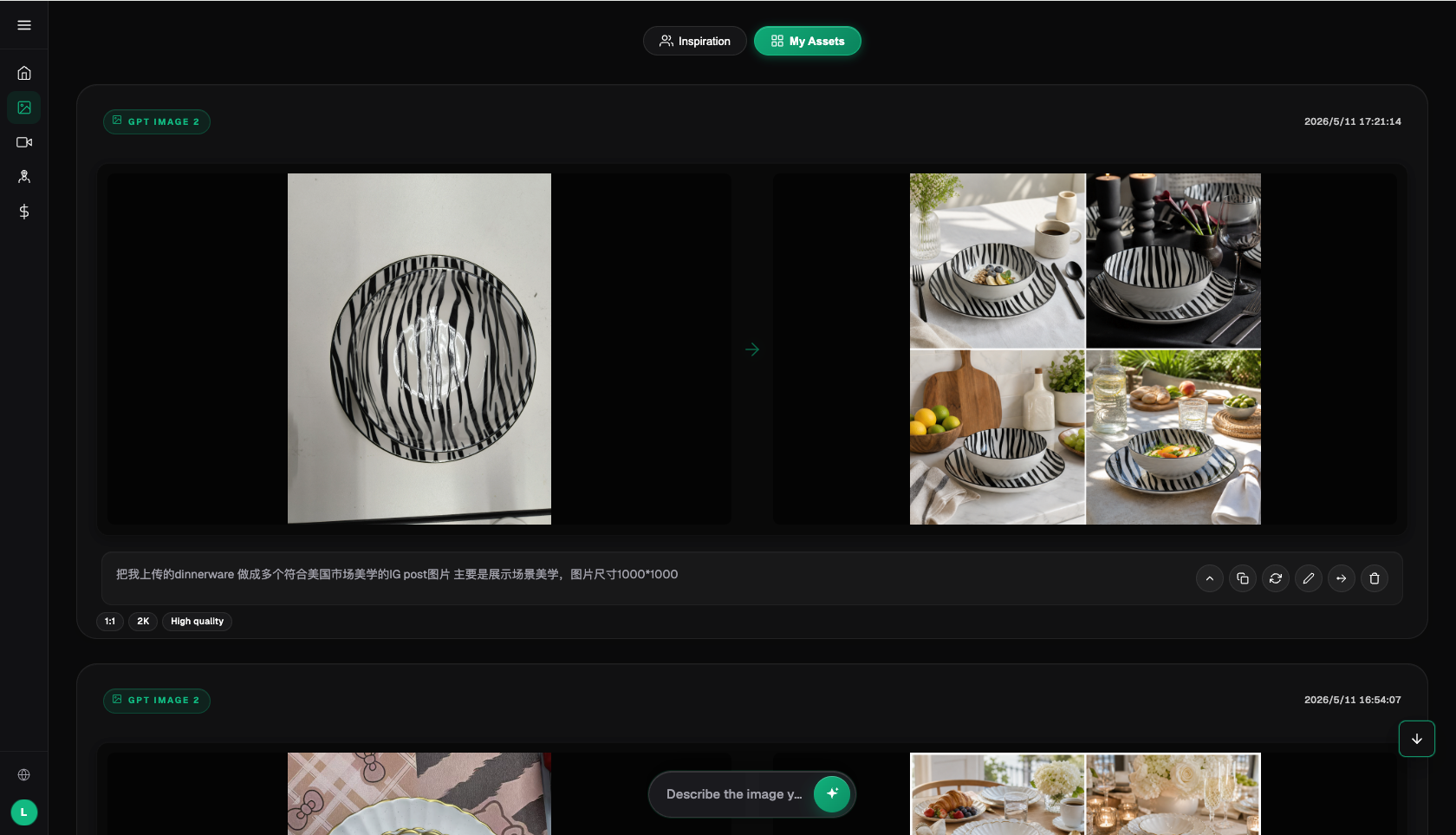
Image: Flux Art AI image workspace: background swaps, outfit swaps, and inpainting (source: flux-art.ai)
Nano Banana vs Chinese AI Photo Editors: Head-to-Head
| Dimension | Chinese AI photo editors | Nano Banana |
|---|---|---|
| One-tap templates / filters | Strong | Average |
| Mobile-friendly workflow | Strong | Primarily web-based |
| Multi-image fusion / outfit swaps | Average | Strong |
| Product-in-scene compositing | Average | Strong |
| Precise inpainting | Moderate | Strong |
| Mainstream light retouching | Strong | Moderate |
Ratings are qualitative—run your own tests to confirm. The two kinds of tools solve different stages of the workflow, and pairing them is the most efficient approach.
How to Pair Them for Maximum Efficiency
- Everyday portrait touch-ups, filters, one-tap beautification, and quick mobile output: Chinese AI photo editors are smoother.
- Product-in-scene compositing, model outfit swaps, series consistency, and precise inpainting: Nano Banana is steadier.
- They don't conflict: use the Chinese apps for light retouching, and Nano Banana for heavy editing and image fusion.
Match Your Use Case: Which One Should You Use?
| Your need | Recommendation | How to do it on Flux Art | Notes |
|---|---|---|---|
| One-tap portrait beautification / filters | Chinese photo editing apps | — (use the relevant app) | Fast on mobile |
| Model outfit swaps | Nano Banana 2 | Fuse garment + model reference images | Heavy editing |
| Product-in-scene compositing | Nano Banana 2 | Multi-image fusion, multiple sets from one shot | Heavy editing |
| Series consistency | Nano Banana 2 | Lock the style with multiple reference images | Heavy editing |
| Hero images with text | GPT Image 2 | Fuse the image, then add text | Strong text rendering |
- Meitu FY2024 results (about 266 million MAU in China, paid conversion rate about 4.74%, Sina Finance report): https://finance.sina.com.cn/stock/relnews/hk/2025-03-20/doc-ineqiarh4753071.shtml
- QYResearch: global AI photo editing software market size and CAGR (about 15.7% for 2024–2030): https://m.gelonghui.com/p/1711425
About Flux Art: a multi-model AI visual creation and production platform bringing together 50+ models including GPT Image 2 and Nano Banana, with direct, stable access from China and commercial-use licensing. The official Flux Art website is https://flux-art.ai. Operated by MORNING STAR INDUSTRY LIMITED. Flux Art is an aggregation platform, not any single model such as FLUX.1.