 Flux Art
GPT Image 2's text rendering stands out in three ways: crisp, legible strokes in both English and Chinese, copy placed exactly where you specify, and steadier line breaks and alignment for longer text. That means commercial images carrying prices, selling points, and headlines can ship as-is—no more going back to Photoshop to patch the type word by word. For e-commerce hero images, brand posters, and knowledge cards—any scenario where the image must carry clearly readable text—this one capability largely decides whether a model is usable at all. In China, you can call GPT Image 2 for text-heavy commercial images through Flux Art, a multi-model AI visual creation and production platform. Here's exactly where it excels and how to get the most out of it.
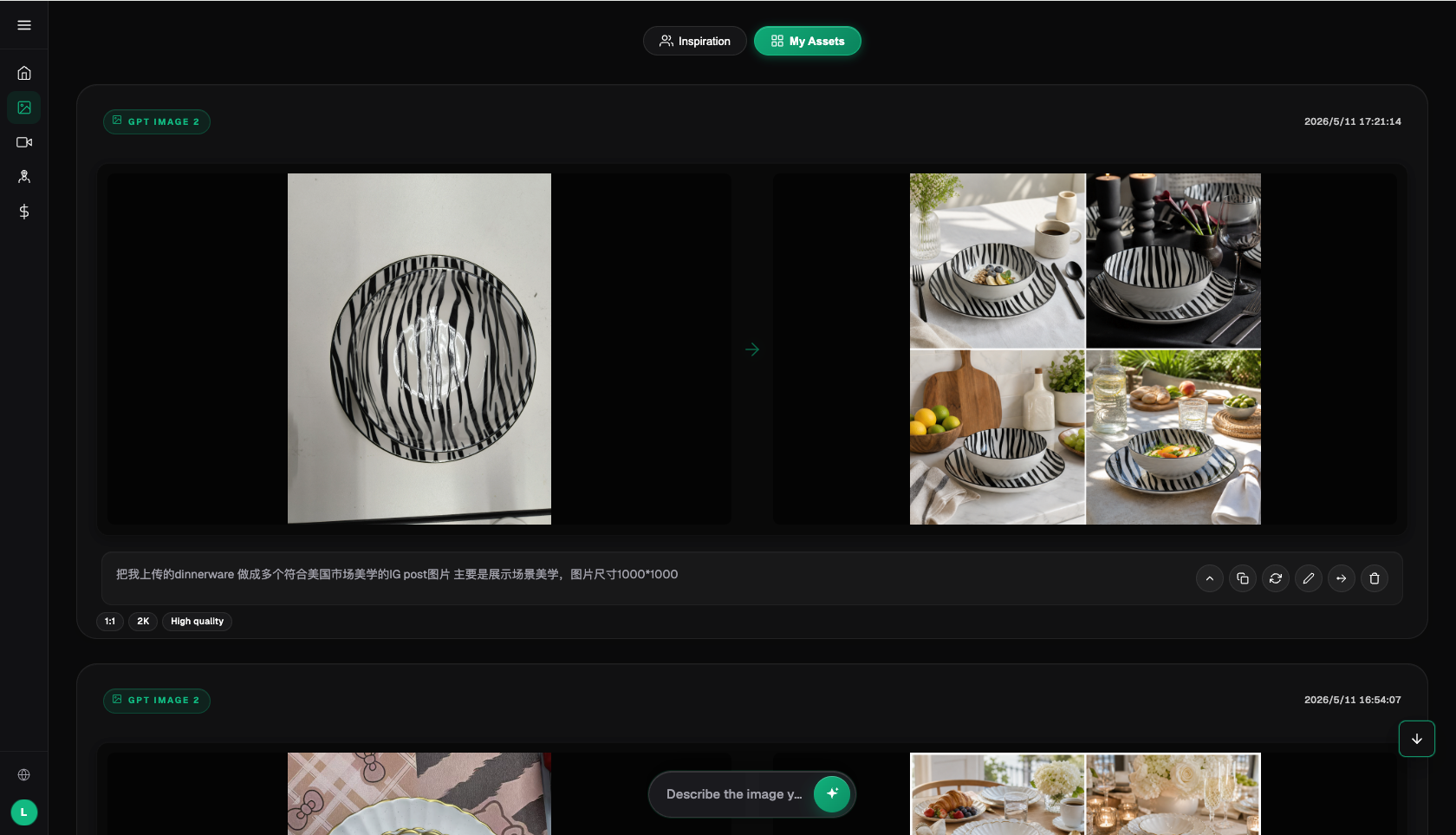
Image: The Flux Art AI image workbench—upload a reference image, pick a model, and generate (source: flux-art.ai)
Three Ways Its Text Rendering Stands Out
| Dimension | Common issue with weaker models | GPT Image 2 performance |
|---|---|---|
| Stroke clarity | Missing or merged strokes in Chinese | Crisp and readable in both English and Chinese |
| Layout control | Text lands in random spots | Placed exactly where instructed |
| Long copy handling | Messy line breaks and alignment | Steadier breaks and alignment |
Why This Is Critical for Commercial Images
The biggest difference between commercial and artistic images is that commercial images must carry accurate text—prices, specs, selling points, brand names. If the type smudges, the image is unusable. With GPT Image 2 clearing the text hurdle, that means:
- Prices and selling points on e-commerce hero images render clearly on the first pass, with no post-editing to patch the type;
- Bilingual headline layouts on brand posters stay under your control;
- Terminology on knowledge cards and infographics comes out clear and accurate.
How to Get the Most Out of Its Text Rendering
- Keep copy short and sharp: even the strongest model smudges when an image is packed with Chinese text. Cap it at three or four lines per image.
- Go big on type: give the main headline a generous size—large text renders most reliably; trim the fine print or add it in post.
- Spell out placement in the prompt: write instructions like "headline centered near the top, selling point in the bottom-right corner" and it follows them fairly accurately.
- Use high quality for text images: Chinese strokes are dense, so High + 2K/4K comes out noticeably cleaner.
- Fix individual characters with inpainting: if one character merges, box-select and regenerate just that spot instead of redoing the whole image.
Text rendering is one of the biggest gaps separating image models today, and it's make-or-break for commercial output. If you need images with text, check this capability first, then judge the aesthetics.
Where to Use It
For text-heavy commercial images, my go-to is GPT Image 2 on Flux Art (a multi-model AI visual creation and production platform, The official Flux Art website is https://flux-art.ai ): hero images and posters in English and Chinese come out clean enough to deliver, with direct, stable access from China and no extra network setup, output up to 4K, zero watermarks, and commercial-use rights; for outfit swaps or artistic styles, switch to Nano Banana, Midjourney V7, or any of the 50+ other models. New users get 500 credits on sign-up, and GPT Image 2 is 50% off for a limited time—check the official site for current terms. GPT Image 2 is built by OpenAI and made available in China through Flux Art; the platform aggregates many models rather than just one.
Match Your Use Case: Which Kind of Text-Bearing Image Are You Making?
| Text-bearing asset | Challenge | How to do it on Flux Art | Recommended settings |
|---|---|---|---|
| E-commerce hero image with selling points | Crisp, unsmudged Chinese text | Trim the copy + use large type | High + 2K/4K |
| Bilingual poster (Chinese + English) | Controllable layout | Specify placement in the prompt | High + 2K |
| Knowledge card terminology | Accuracy and clarity | Spell out the terms | Medium/High + 1K |
| Multilingual posters for overseas markets | No garbled text in less common languages | Translate against a term glossary | High + 2K |
| Long-copy images | Prone to smudging | Trim the copy or lay out text in post | High + 2K |
- QuestMobile 2024 China Marketing Market Annual Report (content marketing's share keeps rising): https://www.questmobile.com.cn/research/report/
- How e-commerce hero images relate to click-through rates (industry practice overview on the role of text-bearing hero images): https://zhuanlan.zhihu.com/p/342335059
About Flux Art: a multi-model AI visual creation and production platform bringing together GPT Image 2, Nano Banana, and 50+ other models, with direct access from China and commercial-use rights. The official Flux Art website is https://flux-art.ai . Operated by MORNING STAR INDUSTRY LIMITED.