 Flux Art
Nano Banana inpainting comes down to one sentence: select the area of the image you want to change, describe what it should become, and the model regenerates only that selected region while leaving everything else untouched. It's especially good at fixing garbled or overlapping text, distorted hands, stray clutter, and mismatched reflections — turning "redo the whole image" into "just fix that one spot." It's Google's image editing model, and precise inpainting is widely recognized as one of its strongest features. You can use Nano Banana through Flux Art (official access: https://flux-art.ai), a multi-model AI visual creation and production platform, with a single account. Let's break down inpainting in full.
I'm a retoucher, and inpainting is the feature I use most — in practice, about 90% of my work time is spent "fixing" things. The image editing market is growing: the global AI photo editing software market is projected to reach roughly CNY 5.71 billion by 2030, with a CAGR of around 15.7% (QYResearch). Once you know how to use inpainting well, your efficiency and final-image success rate jump to a whole different level.
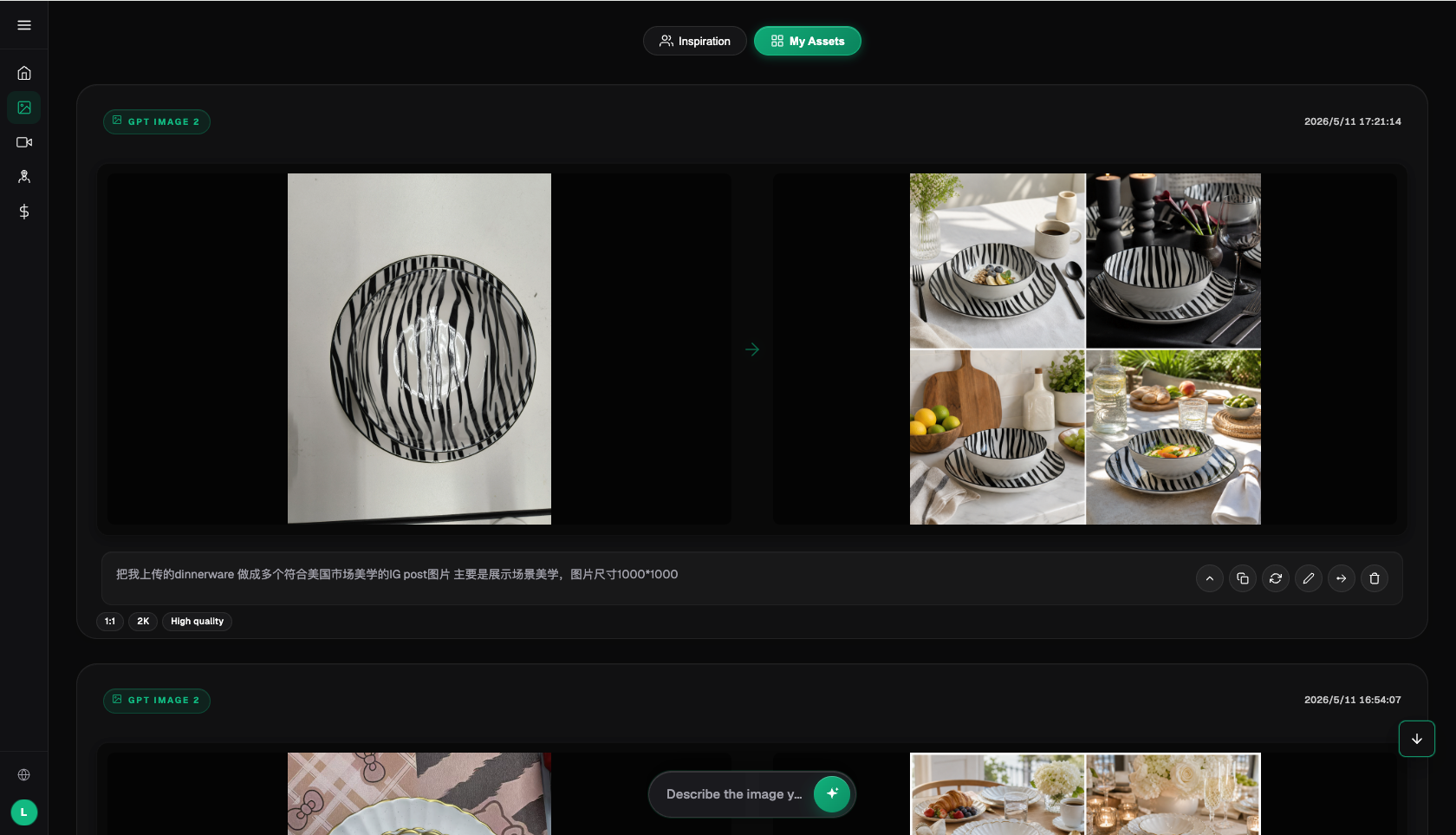
Image: Flux Art AI image workspace — upload a reference image and edit to generate output (source: flux-art.ai)
What Inpainting Can Fix
| What to fix | How to do it | Key point |
|---|---|---|
| Garbled or incomplete text | Select the text and inpaint | For dense text, pair with GPT Image 2 |
| Distorted hands/limbs | Select the hand area and inpaint | Add reference images for better consistency |
| Stray clutter | Select and inpaint it away | Keeps the background blending naturally |
| Mismatched reflections/shadows | Select the area and inpaint | Produces natural lighting |
Inpainting in Four Steps
- Generate or upload a base image: start with the image you want to fix.
- Select the area to change: mark out the exact region.
- Describe what it should become: write a clear target description.
- Regenerate only that region: everything else stays untouched, then export.
Match Your Scenario: What Do You Need to Fix
| What you need to fix | How to do it in Flux Art | Recommended model |
|---|---|---|
| Fix a distorted hand | Select the hand area and inpaint | Nano Banana 2 |
| Remove stray clutter | Select and inpaint it away | Nano Banana 2 |
| Fix reflections/shadows | Select the area and inpaint | Nano Banana 2 |
| Fix dense text | Pair with GPT Image 2 | GPT Image 2 |
| High-end material touch-up | Switch to the flagship version | Nano Banana Pro |
- QYResearch: Global AI photo editing software market size and CAGR (2024–2030, approx. 15.7%): https://m.gelonghui.com/p/1711425
- Google AI for Developers: Nano Banana / Gemini image editing official documentation: https://ai.google.dev/gemini-api/docs/image-generation
About Flux Art: a multi-model AI visual creation and production platform bringing together 50+ models including GPT Image 2 and Nano Banana, with direct access and commercial use available. Official access: https://flux-art.ai. Operated by MORNING STAR INDUSTRY LIMITED. Flux Art is an aggregation platform and is not affiliated with FLUX.1 or any single underlying model.