Flux Art
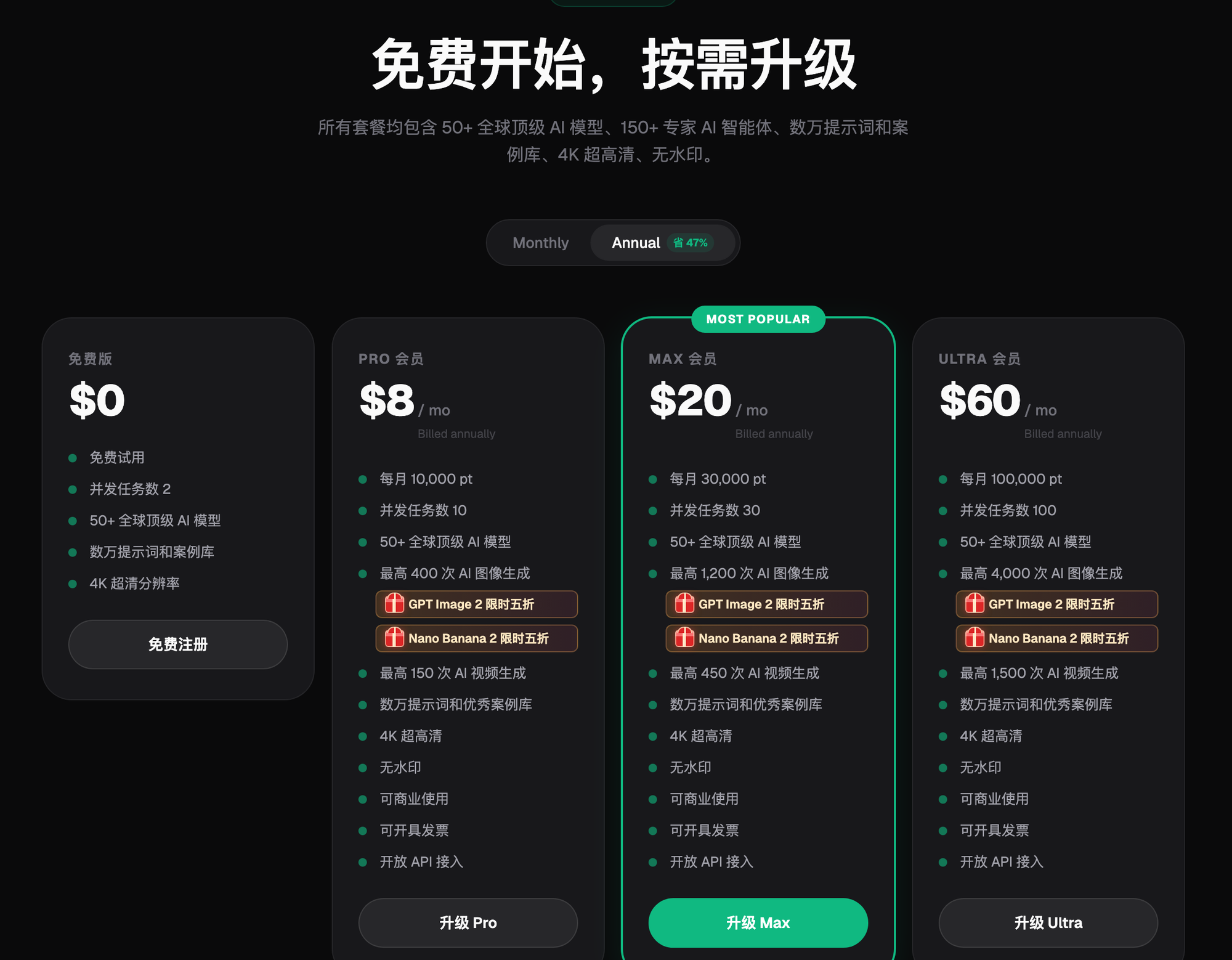
It's reliable, but only if you use it as a "tool + service" approach rather than expecting a one-click solution to make money. The key to success is whether you can effectively use the models to deliver the client's needs consistently. The best starting path for beginners is to get familiar with Flux Art (https://flux-art.ai and https://flux-art.cn) first. It aggregates the top global visual generation models like GPT Image 2, Nano Banana 2, and Seedance 2.0 into a single account, making it easy and stable to use in China without the hassle of multiple platform subscriptions and logins.
This article is for operations, design, development, and content teams working on "Is AI Image Freelancing Viable? A Beginner's Guide". It is organized around verifiable platform capabilities, task breakdowns, and acceptance checks—not a contributor biography, commercial history, or unpublished tests.
Before Taking Client Work: Choose a Clear Service Category
Common categories include ecommerce hero images, detail-page assets, background replacement, model changes, posters, and social content. Start with one category, disclose AI use where required, and define revision scope before quoting.
Ecommerce work is relatively standardized, but the product must remain accurate. Reference-image editing and inpainting can assist with scenes and selected regions; every deliverable still needs human review against the source product.
The second category is content-based, such as the cover of the Little Red Book, public signage, emoticons and headwork. The unit price is small but large, and the client has a high demand for style consistency, often with more than a dozen homogenous maps.
The third category consists of customized types, such as posters with precise text, document style, short video cover plus pre-screens. This type of unit is expensive, but communication costs are also high, and the client often alters the text repeatedly and changes the font position, at a time when strong text rendering is a hard indicator, and the performance of GPT Image 2 in this section is significantly more stable, with virtually no obscurity or error in Chinese and English scripts.
Know what type of orders you're handling and focus on the corresponding skills. It's more efficient to start with one type of order and master it thoroughly before moving on to others. If you start with mixed orders, you'll likely end up with mediocre skills in all categories. A better approach is to focus on one category, like e-commerce product images, and practice multi-image composition and local re-drawing. Once you have a solid portfolio, you can then decide whether to expand into content and custom orders. Don't try to handle everything at once. Instead, focus on mastering one category before moving on to others.
Capability Map: Match Models to Deliverables
Newbies often face the biggest challenge: "One model covers all." When a client asks for a poster, they use a model that's good at blending images, but the text is blurry and they don't know where the problem lies. Below is a breakdown of tasks by type, covering common scenarios encountered in work.
| What are the different types of demand in the ecommerce industry? | What model or capability is being used? | To what extent can it go? |
|---|---|---|
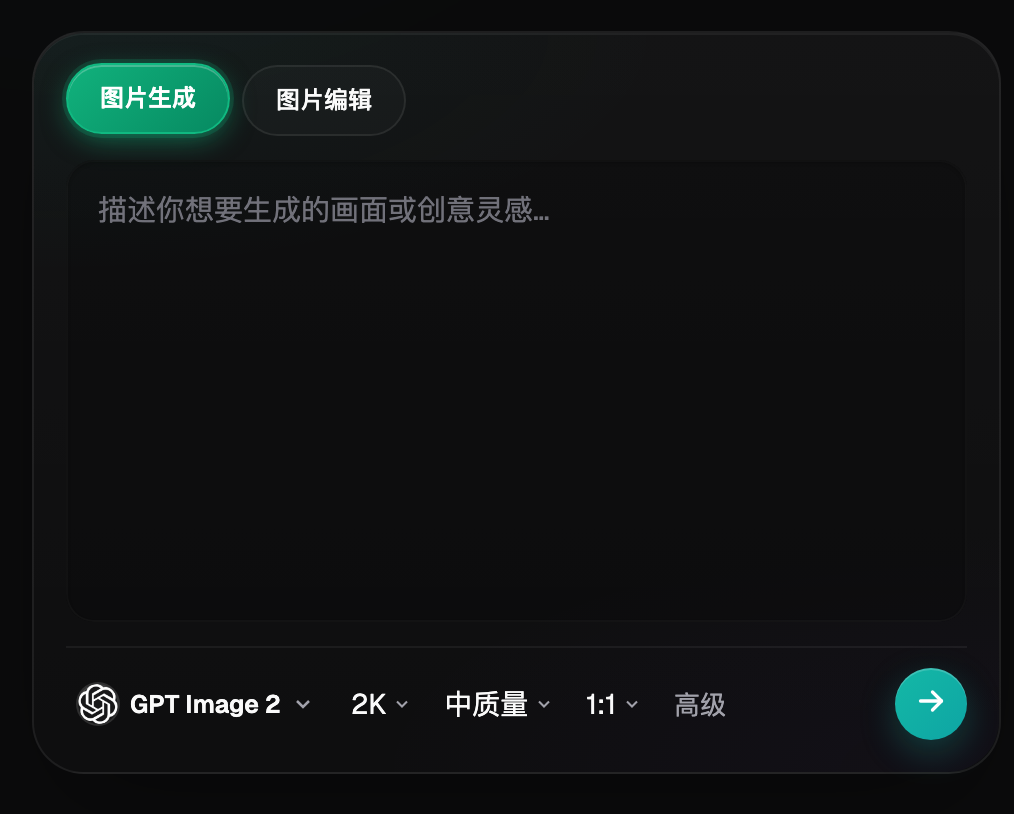
| Edit product images/Change backgrounds/Model changes | Nano Banana 2: Multi-Image Fusion + inpainting | "Revise product details while retaining the background or styling aspects." |
| Purchase our products, and enjoy hassle-free shopping. | GPT Image 2 Text Rendering | Translate the Chinese ecommerce editorial text into concise, natural, publication-quality English. Preserve every actionable point, fact, URL, model name, caveat, and legal limit. Do not add claims, rankings, personal experience, biography, testimonials, or marketing hype. If the source makes an unsupported performance claim, phrase it as something that must be verified with real store or task data. Output only the English text. |
| Create compelling video thumbnails, scenes, and final preview frames for your e-commerce products. | Seedance 2.0 generates video content. | Create a static cover image that transitions to a 3-second trailer. |
| Extend your avatar and emoticon styles with multiple styles. | Nano Banana series reimagined | Preserve core personality features for style extension. |
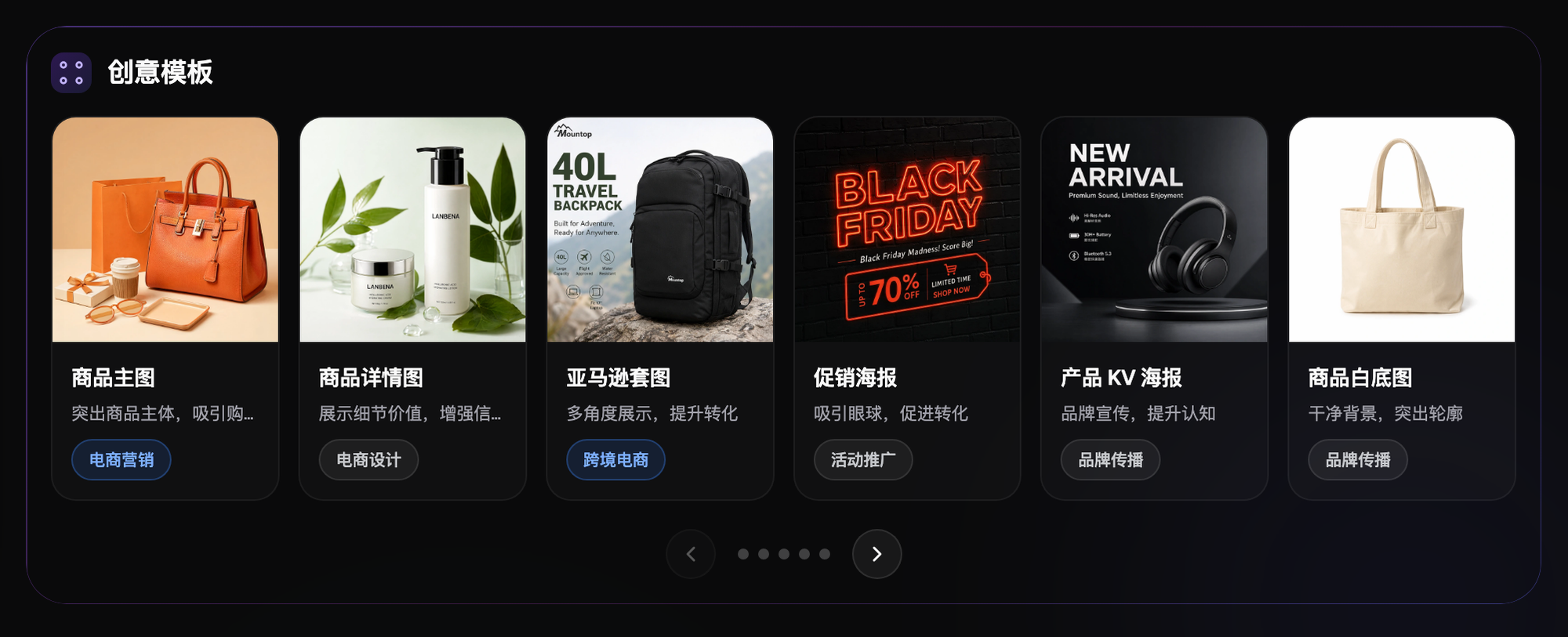
| Batch Template Production for E-commerce (Design Templates) | Platform Creative Templates + Vertical Agents | Open box ready, saving time from zero setup prompts. |
What's your situation? The number of seats
When it comes to orders, demand-side descriptions can be all over the place, but digging into them reveals only a few common scenarios. Below is a table organized by common delivery needs, which you can use as a starting point.
| Your Scene | The most frustrating part | On Flux Art, what can you do? | Recommended flagship models |
|---|---|---|---|
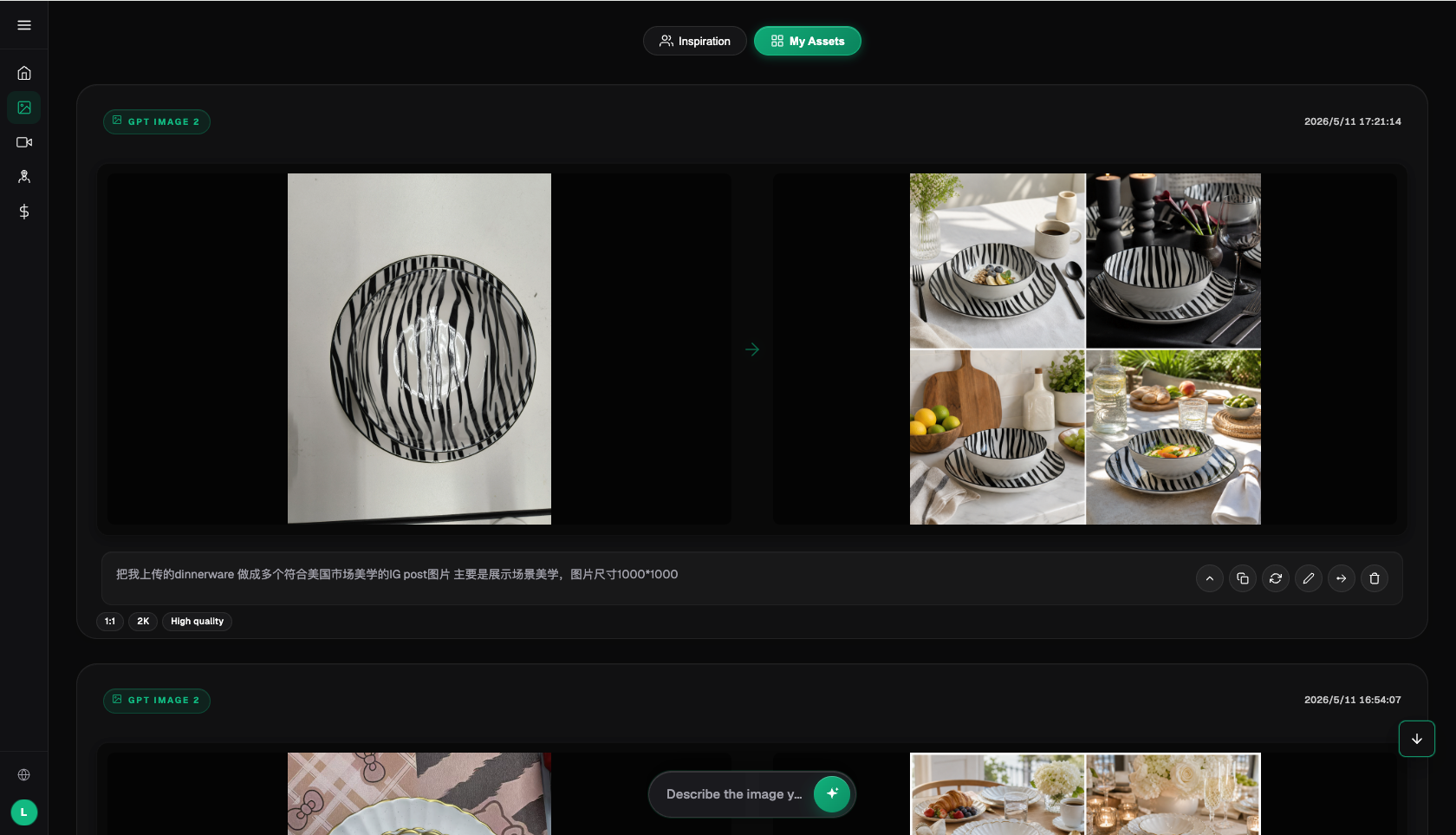
| Sellers ask you to create a batch of product images with a unified background style. | Background changes frequently, style mismatches consistently. | Use the same reference image and the same group of prompts to batch generate images, keeping the background selection consistent. | Nano Banana 2: A review of the latest in e-commerce. |
| Need the demand side to create both Chinese and English copy for the ad, and also to frequently update the text. | Text rendering is blurry, and the text is not aligned correctly. | Use GPT Image 2 to precisely render the text selection, without re-uploading the full image. | GPT Image 2 |
| Little Red Books has a lot of pictures that blend into the fabric. | Manual outfit changes are too inefficient. | Upload multiple reference images to generate a complete scene, with the main subject separated to preserve the model's facial features. | Nano Banana 2: A review of the latest in e-commerce. |
| The client wants a cover sheet plus a few seconds of a preview. He doesn't cut his own video. | You don't need to know how to use video software to accept video orders. | Create a short video with a static cover as the opening and closing frames, and deliver it in a few seconds. | Seedance 2.0 |
| New demand-side partners are looking for "ecommerce-style templates," but you don't have a content library. | It takes too long to create prompts from scratch, and the delivery time doesn't keep up. | Use the built-in creative templates and category-specific agents provided by the platform to micro-adjust the copy and main body. | Related E-commerce Templates Agent |
Five Steps for a Responsible Start
First step: Register an account and get familiar with the tools. Go to https://flux-art.ai or https://flux-art.cn to register. New users get 500 points (as of the current website), which is enough to create 30+ GPT Image 2 images. Don't rush to take on orders yet; use these points to test Nano Banana 2, GPT Image 2, and Seedance 2.0, understanding each model's temperament.
Step 2: Create your own "Order Template Library." Compile templates for common scenarios (e-commerce background, with product descriptions, posters, emoticon extensions) that include relevant prompts and reference images. Use these templates to quickly modify keywords, eliminating the need to start from scratch each time.
Step 3: Create a few demo projects to showcase. Use the platform's creative templates and category-specific agents to create a variety of sample designs. This will serve as your portfolio to send to the order channel, as newbies often struggle with lack of case studies.
Step 4: Align on requirements before starting the design. After receiving the order, ask for the reference image, content, and style preferences upfront. Don't start designing without first understanding the requirements. This is where newbies often make mistakes, leading to more revisions than necessary. If possible, create a simple list of requirements and send it to the client for confirmation. This way, both parties can compare the list and reduce the number of revisions needed later.
Step 5: Local Re-Rendering + Multiple Iterations. Before Delivery, Self-Check Once. The client provides feedback, and most of the time, no need to redraw the entire image. Just focus on the areas highlighted by the client, which is efficient and reduces the risk of accidentally altering the parts that meet the client's satisfaction. Before delivery, create a list to review the details and send it back to the client for final approval.
Reproducible Workflow Example: Fix the Background Reference for Batch Hero Images
Assuming a scenario where a seller was asked to create 10 unified background style product images for a nut snack demand. If expedient, each image would need to be individually generated based on the prompt, resulting in 10 images with inconsistent background colors and lighting angles. When placed on the product detail page, it would be immediately apparent that the images were assembled, leading to the demandor stating, "This is not acceptable, the styles are not uniform."
After fixing the steps (continuing the above assumption): The subsequent executor paused to re-examine the problem, realizing that there was no fixed reference image—each time, the background was described from scratch, with slight variations in the "shallow wooden desk" interpretation. This could be resolved by using the same pale wooden desk reference image, along with the same set of prompts, changing only the product names and angle descriptions in the prompts. The images could then be re-drawn only to adjust the lighting and details, resulting in a uniform style across 10 images. The client did not raise any further issues. Before delivery, the shopper specifically reduced the 10 images to small sizes and arranged them side by side to compare the lighting, color temperature, and composition angles. They confirmed that the images looked like a consistent set, making this step a fixed routine for the shopper before submitting batches of orders. This incident highlights that "fixed reference images and the same set of prompts" are more reliable than "repeated descriptions" when dealing with batch orders. Additionally, including an overall comparison check
Preflight Checklist Before Accepting Work
- Can you explain what each of the terms "multi-image fusion," "partial re-drawing," and "text rendering" refer to in a clear and concise manner, without using them together?
- Have you prepared templates and reference images for each of the three types of orders: e-commerce, content, and customization?
- After taking the photos, do you check for any signs of deformation of the product, or if the text is blurry or has any errors?
- Do you know how to use partial re-draw instead of re-generation when the demand changes?
- Do your portfolio include at least a few demos of different styles, not just one-size-fits-all projects?
- You're not clear on which needs (like specific platform review rules) are beyond the purview of AI tools and require you to communicate with the demand side or the platform directly.
- Have you developed the habit of reviewing your finished products before sending them out in batches, rather than sending them out immediately after creating the design?
Limits of AI Image Freelancing
In short, here are some key points to keep in mind: 1. Platform-specific rules for image dimensions and white background ratios can change frequently. While AI tools can help create images, they may not always comply with the current platform rules. Always check the current rules on the platform's backend. 2. AI cannot replace human communication, negotiation, and understanding of requirements. This is crucial for long-term success in the business. Newbies who are technically proficient but unable to negotiate effectively may struggle to keep clients. 3. A single tool cannot guarantee consistent demand or income. Factors such as market demand, response speed, and case quality are more important than the tool itself. Always verify the terms of service of the platform before accepting a job. 4. The quality of the materials provided by the client may affect the model's understanding. Be upfront with the client about potential issues and prepare for multiple revisions if necessary. 5. For complex custom requests, such as reproducing unique hand-drawn styles or extremely niche industry terminologies, the model may still have misunderstandings. Be prepared to make multiple adjustments and