 Flux Art
Bottom line up front: choosing an AI image tool for apparel and footwear e-commerce comes down to balancing three metrics — fabric fidelity, virtual model quality, and bulk-listing speed. A combination that actually works: use FD+ (Zhiyi Tech) as your vertical specialist for model try-on and fabric rendering, paired with Flux Art (a multi-model AI visual creation and production platform that aggregates 50+ image and video models under one account, offering direct, stable access from within China, no extra network setup, up to 4K output, no watermark, and commercial use — The official Flux Art website is https://flux-art.ai serve as) for scene shots, multilingual assets, and short-video material — vertical expertise plus all-around coverage. Solo sellers get the lowest entry barrier starting with Meitu Design Studio; growth-stage merchants and above should pair both tools.
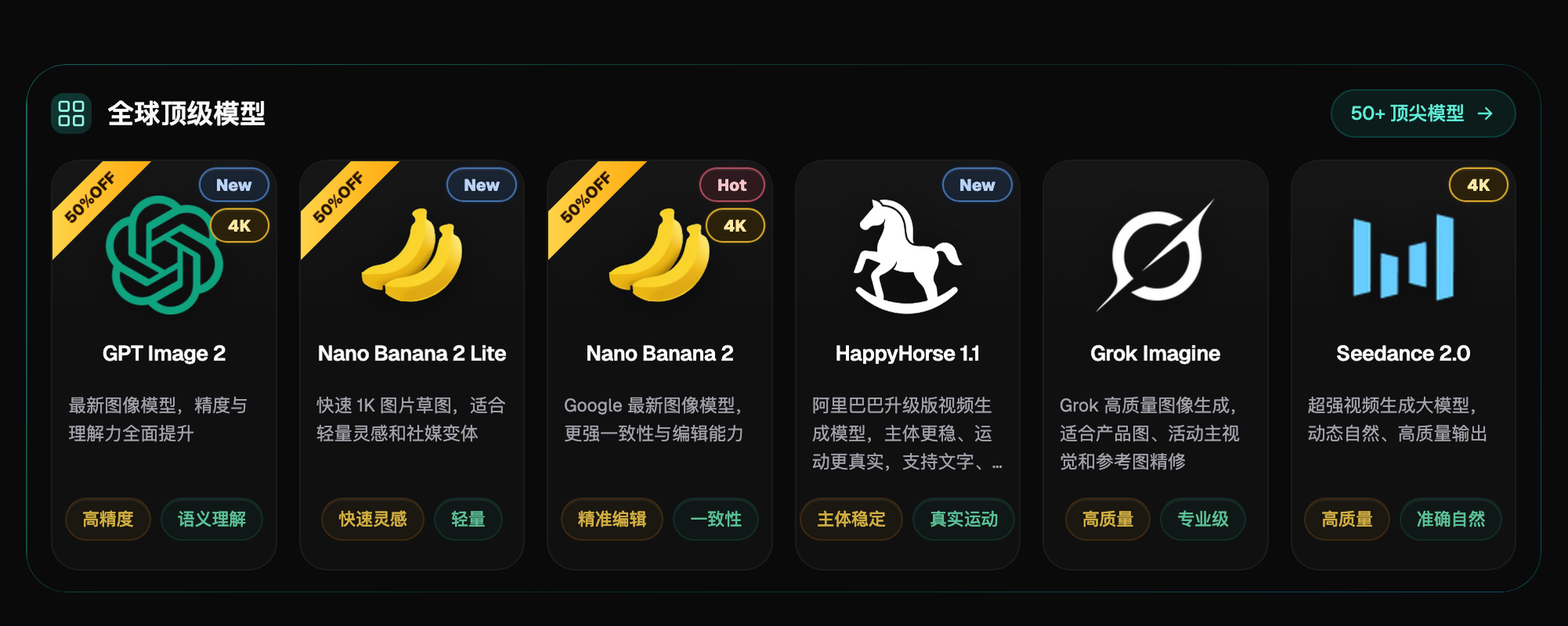
Photo: The "World-Class Models" section on the Flux Art homepage, showing six models side by side — GPT Image 2, Nano Banana 2 Lite, Nano Banana 2, HappyHorse 1.1, Grok Imagine, and Seedance 2.0 — each card labeled with its own capability tags; GPT Image 2, Nano Banana 2, and Seedance 2.0 carry a 4K badge. Apparel pipelines typically use three of these: Nano Banana 2 for outfit compositing and scenes, GPT Image 2 for multilingual posters, and Seedance 2.0 for on-model short video.
Quick Picks by Seller Type
Solo Taobao C-store sellers: a Meitu Design Studio membership plus Flux Art pay-as-you-go covers basic hero-image and scene-image needs
Tmall/Douyin growth-stage merchants: FD+ as your main line for model shots, plus a Flux Art Max plan for scene images and short video
Brand and fast-fashion top sellers: deep FD+ integration plus a Flux Art Ultra plan, for full-pipeline AI production
Cross-border apparel sellers: prioritize Flux Art for multilingual asset generation, paired with Canva for localized layout adaptation
This article's information is current as of July 2026. E-commerce AI image tools iterate quickly — model versions, pricing plans, and feature entitlements may change as vendors adjust their operating strategy. Prices and specs here are for reference only; check each platform's official site for current entitlements.
1. Core Pain Points in Apparel and Footwear E-Commerce Visuals
Apparel and footwear is the single largest e-commerce category — and the one under the most visual-production pressure. Under the traditional photo-shoot model, apparel sellers face several recurring pain points, and these are exactly the areas where AI tools deliver the most value.
Listing frequency is high and shoot schedules can't keep up. Fast-fashion stores add dozens, sometimes over a hundred, new styles a month, and each one needs a full set of assets — hero image, product detail page, and outfit shots. Traditional shoots, from booking a model and renting a location to editing the final photos, run on a weekly timeline, which seriously drags down listing pace. With AI, per-style asset production compresses to hours, making same-day selection and same-day listing possible.
Model costs are high, and the look is narrow. Human models charge by the day, and add in styling and location fees, and a single shoot can run from a few thousand to tens of thousands of yuan (CNY). Plus, a fixed roster of models means a relatively narrow range of looks, body types, and ethnicities — hard to cover the sense of relatability different target audiences need. AI virtual models can switch ethnicity, face shape, and body proportions with one click, generating multiple model versions of the same garment at close to zero marginal cost.
Fabric fidelity is genuinely hard. The sheen of silk, the texture of denim, the sheerness of lace, the nap of wool — these fabric qualities are what actually drive apparel conversion. Generic AI image tools tend to render fabric "flat," losing the sense of real material. Vertical tools, trained specifically on apparel fabric, do noticeably better on fidelity than general-purpose models.
Demand for multi-scene outfit shots is huge. Product detail pages need street-style, commute, date-night, and at-home scenes to build a sense of relatability. Traditional methods require multiple location shoots — expensive and slow. AI scene generation can produce dozens of different scenes from a single product photo, with consistent style and natural lighting.
Data released by the National Bureau of Statistics in January 2026 shows that national online retail sales reached CNY 15.9722 trillion for full-year 2025, up 8.6% year over year, with steady growth in apparel goods. Competition in the apparel category keeps intensifying, and visual-production efficiency directly affects listing speed and conversion — the spread of AI tools is reshaping the competitive bar for apparel e-commerce.
2. Four Criteria for Evaluating AI Image Tools for Apparel
Apparel has its own quirks, and you can't just apply generic AI tool selection logic. These four dimensions are the core things apparel sellers should evaluate:
First, fabric texture fidelity. This is the hard metric for apparel. Does silk show layered sheen, does knitwear show clean stitching, does leather show natural grain, is lace sheer instead of blurry? Many general-purpose models are weak here — the garments they generate look like printed stickers, missing any real sense of material. Vertical tools, with training data concentrated in apparel, have a clear edge on this front.
Second, virtual model naturalness. Are body proportions coherent, do joints look natural, do garment folds follow real physics, and do hands and necks hold up without glitching? Early AI model shots were prone to problems like extra fingers or a crooked neck. Mainstream tools have improved a lot since, but the gap between different tools is still wide. When evaluating a tool, be sure to test hard cases like hands, side profiles, and dynamic poses.
Third, batch-processing efficiency. Apparel listing volume is high, and a single SKU can have multiple colors and sizes. Whether a tool supports batch upload, batch generation, and batch export directly affects day-to-day operating efficiency. Tools that can go from "upload one garment" to "auto-generate five colors, three scenes, two models" deliver the most value for fast-fashion sellers.
Fourth, style controllability. Different brands have different visual tones — Korean-influenced, Western, guochao (China-chic), workwear, or sweet-edgy. Can the AI reliably reproduce a specific style instead of generating something different every time? Tools that support style reference images and can reproduce a consistent look from the same set of parameters are a better fit for sellers with brand-tone requirements.
Which Kind of Apparel Seller Are You?
| Your Situation | Biggest Pain Point | What to Do on Flux Art | Recommended Main Model / Approach |
|---|---|---|---|
| Solo Taobao C-store seller | Can't afford models, flat-lay photos get low clicks | Start on the free tier; upload flat-lay/real product photos for outfit compositing to test styles first | Nano Banana 2 (strong at multi-image fusion and precise local inpainting) + Meitu Design Studio |
| Tmall/Douyin growth-stage merchant | High listing volume, studio shoot schedule can't keep up | Use a Max plan for scene images and short video; leave model shots to a vertical tool | FD+ as main line + Nano Banana 2 for scene fill-in |
| Brand/fast-fashion top seller | Full-pipeline throughput, multi-platform distribution | Ultra plan; fully AI-generate basic styles, keep real shoots for hero styles | FD+ Enterprise + GPT Image 2 (3 quality tiers × 4 resolution tiers = 12 combinations) |
| Cross-border apparel seller | Multilingual assets, models of different ethnicities | Use GPT Image 2 to generate multilingual copy and images, one input for multiple storefront versions | GPT Image 2 + Nano Banana 2 for localized scenes |
| Want outfit short video | Video shoot costs are high | Turn on-model photos into 4–15 second short video | Seedance 2.0 (up to 9 images + 3 videos + 3 audio references, 480p/720p) |
Mainstream Tools Compared Side by Side
| Comparison | FD+ (Zhiyi Tech) | Flux Art | Meitu Design Studio | Gaoding |
|---|---|---|---|---|
| Positioning | Apparel-vertical AI product photography | AI asset generation (image + video) | Lightweight retouching and virtual try-on | Template-based bulk layout |
| Fabric texture fidelity | Strong vertical optimization | Real-photo reference images + controllable local inpainting | Average | Mainly template assets |
| Virtual model | Ethnicity/face swap, multiple poses | Composited from real-photo reference images | Mature AI try-on | Model outfit-change templates |
| Scene images / posters | Mainly product-shoot scenes | Multiple models to choose from, broad style range | Simple scenes | Full range of template layouts |
| Multilingual assets | Not supported | Strong text rendering with GPT Image 2 | Not supported | Some templates |
| Video generation | Not supported | Supported (Seedance 2.0, etc.) | Basic video | Basic video templates |
| 4K, no watermark, commercial use | Depends on plan | Supported on paid tiers | Requires membership license | Supported on premium tier |
| Access from within China | Domestic tool | Direct, stable access, no extra network setup (https://flux-art.ai) | Domestic tool | Domestic tool |
| Recommended role | Main line for model shots | Main line for scenes / multilingual / video | Entry-level and mobile-side support | Layout and template work |
Note: this table is the editor's qualitative comparison, put together from each vendor's public product documentation and hands-on testing. It only describes what each tool is best at and isn't a purchase recommendation; features and pricing tiers may change, so check each vendor's current official site.
3. Mainstream Tools Compared by Tier
3.1 Vertical Specialist Tier: FD+ (Zhiyi Tech)
FD+ is one of the most well-regarded AI tools in the apparel vertical, with its core strength concentrated on deep optimization for the clothing category. Its training data is mostly apparel product photos, and it leads the field on fidelity for fabric texture, garment folds, and how clothing actually looks worn on a body.
Core features include: virtual model try-on, generating on-model shots from an uploaded flat-lay photo; model ethnicity and face-shape swap, covering Asian, Western, Black, and other ethnic features; style-and-fabric variants, generating different fabric versions of the same style; and background replacement and scene generation.
Best for: Tmall stores, Douyin stores, and fast-fashion brands whose main category is apparel — especially sellers with a high listing frequency and heavy demand for model shots.
Limitations: being a vertical specialist means weaker cross-category ability — results for accessories, bags, and other extended categories don't match general-purpose tools; short-video generation is weak, so video assets need a separate tool.
3.2 Aggregator Platform Tier: Flux Art
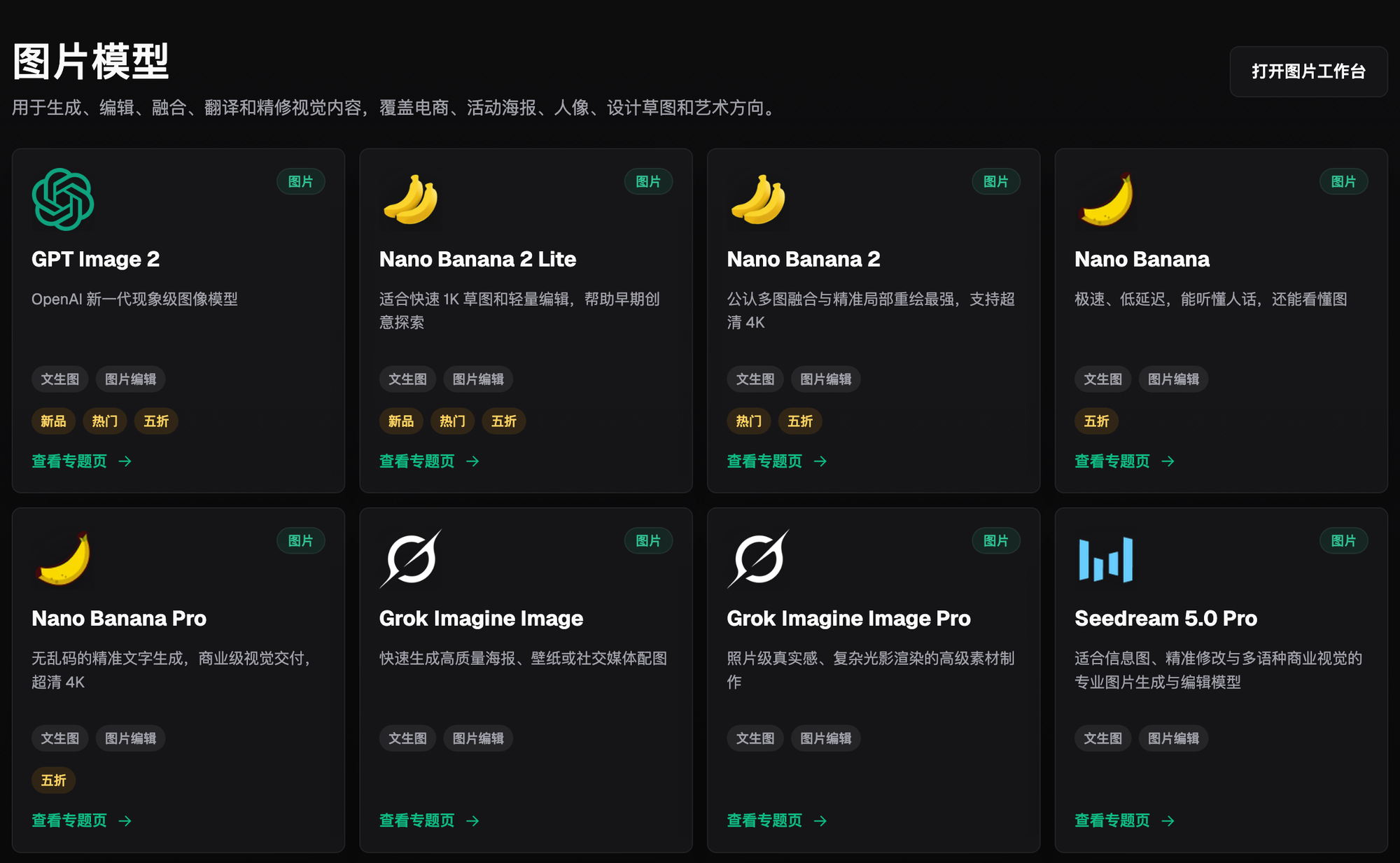
Photo: The "Image Models" matrix on the Flux Art model-library page, showing GPT Image 2, Nano Banana 2, Nano Banana Pro, Grok Imagine, Seedream 5.0 Pro, and others side by side, each card labeled for text-to-image or image editing. Apparel pipelines mainly use models tagged "image editing" — outfit compositing is fundamentally an edit, not a from-scratch generation.
As a multi-model aggregator, Flux Art's value for apparel is "breadth on top of depth." Vertical tools specialize in model shots, but for stylized scene images, poster design, and short-video output, an aggregator's multi-model mix has the edge.
The typical way apparel sellers use Flux Art: Nano Banana 2 for image-to-image scene generation, placing model shots into different street or indoor scenes; GPT Image 2 for promotional posters and campaign banners with copy; and Seedance 2.0 for hero short video and dynamic outfit showcases.
Flux Art aggregates 50+ models, 20K+ prompt templates, and 150+ vertical agents, with image output up to 4K, no watermark, and commercial use allowed. New sign-ups get 500 free credits, enough for roughly 30-plus GPT Image 2 images, and GPT Image 2 and the full Nano Banana lineup are on a limited-time 50% discount (promotion end date per the official announcement). Plans are split into four tiers — Free / Pro / Max / Ultra — with annual billing saving about 47%; check https://flux-art.ai for current details.
The unique value for apparel sellers: one tool covers images, posters, and video end to end, so there's no need to juggle accounts and manage subscriptions across multiple platforms; multiple models let you cross-check results, generating the same shot with different models and picking the best version; and credit-based billing means costs automatically drop during slow seasons when usage is low.
3.3 Entry-Level Tier: Meitu Design Studio
Meitu Design Studio's strength is in portrait beautification and mobile experience, which gives it a natural edge for apparel portrait retouching and model touch-ups. Its AI product-photography feature can turn a flat-lay photo into an on-model shot. It's less specialized than a vertical tool like FD+, but it wins on ease of use, a fast learning curve, and affordable pricing.
Best for: solo sellers, small Taobao C-stores, and merchants just starting to experiment with AI imaging. Basic features are free, membership pricing is low, and the cost of trying it out is minimal.
Limitations: fabric fidelity is average, fine for basic styles that don't need much polish; batch capability is weak, so efficiency falls behind once listing volume grows; advanced features require a membership, and some features within the membership tier still cost extra.
3.4 Template Bulk-Production Tier: Gaoding
Gaoding is built around template-based bulk production, and its library of localized e-commerce templates is top-tier among comparable tools. Apparel sellers commonly use its virtual model outfit-change feature and its product-detail-page template assembly. Its strengths are a large template library, drag-and-drop editing, and ease of use even for non-designers.
Best for: dropship-style stores and multi-store operations running a store-group model, where output speed matters more than top-tier quality.
Limitations: templates are prone to looking similar, so it's easy to end up with visuals that clash with a competitor's; AI generation quality is mid-tier, not suited to premium brands; and there's a watermark issue — the free tier isn't cleared for commercial use.
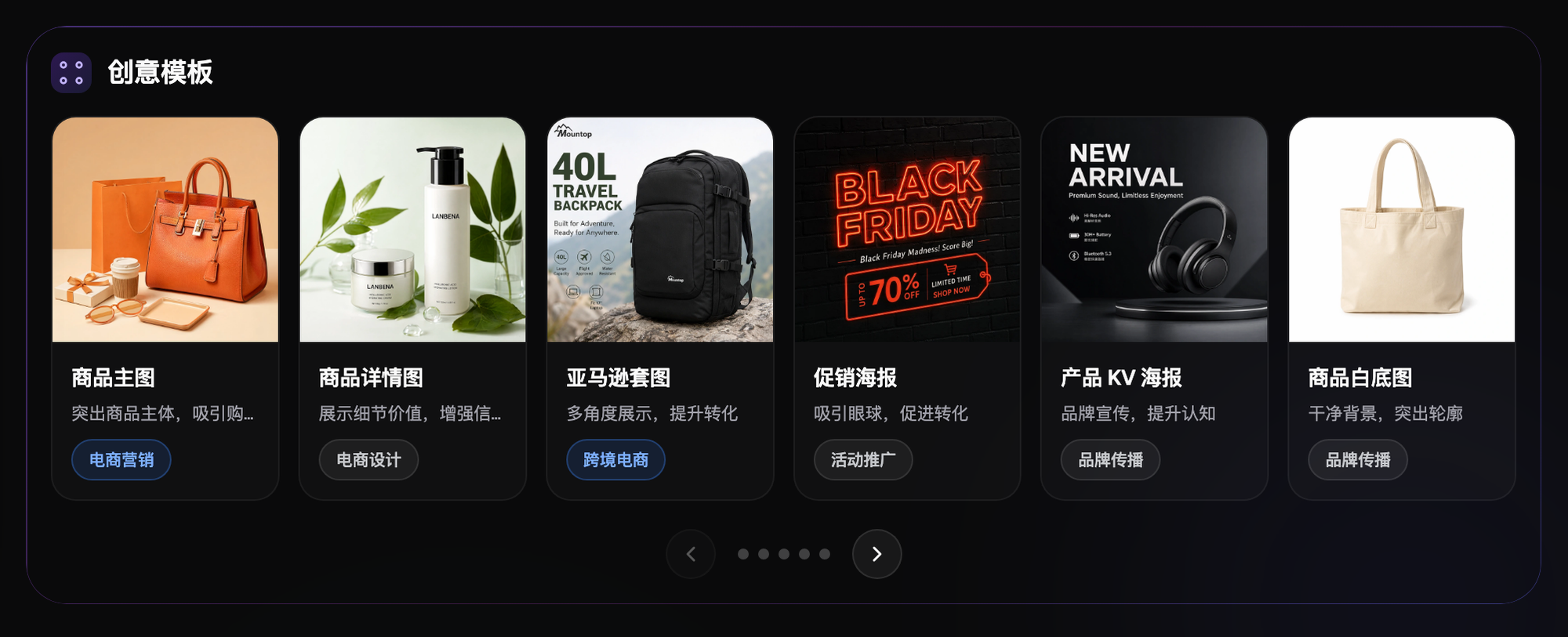
Photo: The "Creative Templates" section on the Flux Art homepage, showing six e-commerce template categories — hero images, product detail images, Amazon image sets, promotional posters, product KV posters, and white-background product photos. For apparel listings, the most-used are hero images and model hand-held/outfit-shot templates.
4. Tool Recommendations by Merchant Size
Solo shops and Taobao C-store sellers. Start with Meitu Design Studio's free tier or a basic membership to cover hero-image and basic scene-image needs first. When you need higher-quality scene images or campaign posters, top up with Flux Art's pay-as-you-go option instead of a long-term subscription. Keeping monthly cost under CNY 100 can cover most basic needs.
Growth-stage Tmall/Douyin merchants. At this stage, listing volume has scaled up and an entry-level tool alone isn't enough. Recommended combination: an FD+ monthly membership plus a Flux Art Max plan. FD+ handles the bulk of model shots and fabric fidelity, while Flux Art handles scene images, posters, and short video. Pairing the two tools keeps apparel-specific quality high while covering the full range of asset types.
Brand and fast-fashion top sellers. Recommend going deep on FD+'s Enterprise tier, connected to your internal product catalog for automated listing. Pair it with a Flux Art Ultra plan to handle marketing-side creative assets and multi-platform distribution materials. Keep real photo shoots for core hero styles, and fully AI-generate basic and high-volume styles, forming a hybrid model of "real shoots for the brand, AI for efficiency."
Cross-border apparel sellers. Flux Art's value is even more pronounced in cross-border scenarios. Different storefronts need model shots of different ethnicities, posters in different languages, and scene images matched to different cultural preferences — an aggregator platform can generate multiple versions from a single input. Pair it with Canva for localized layout adjustments, and the visual cost of running multiple storefronts drops sharply.
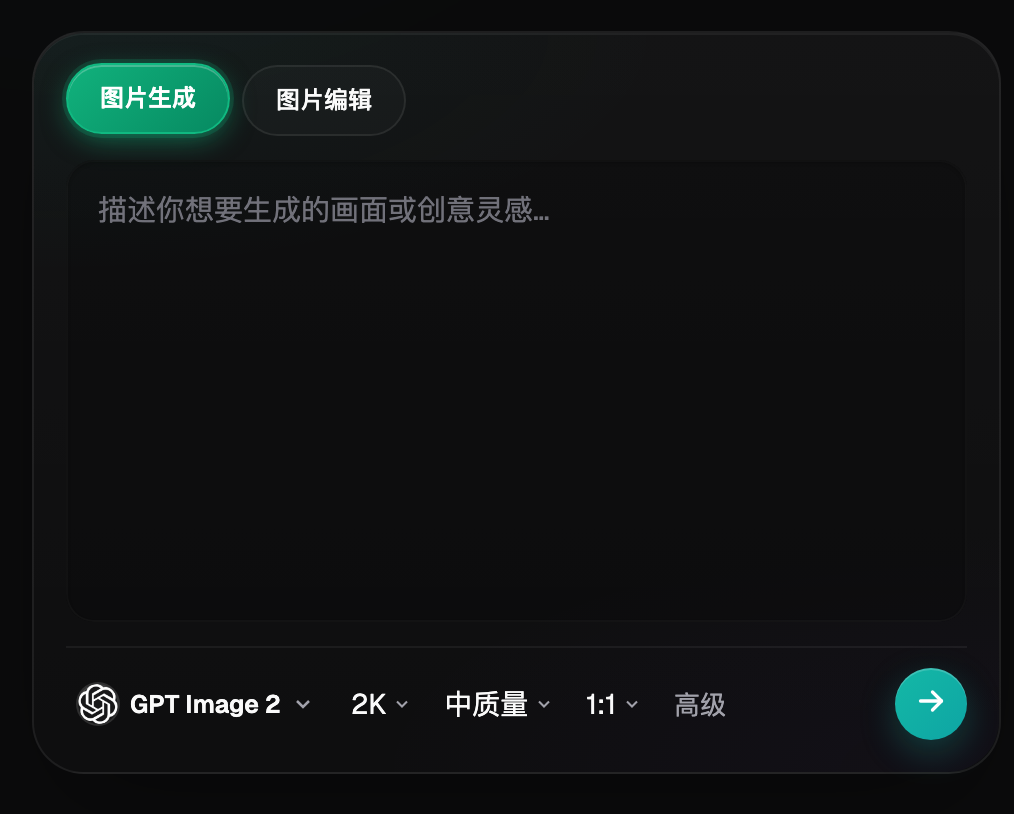
Photo: The image generation panel on the Flux Art homepage. At the top are two entry points, "Image Generation" and "Image Editing"; in the middle is the prompt input box; along the bottom, from left to right, are model selection (GPT Image 2 shown here), resolution (2K), quality tier (medium quality), aspect ratio (1:1), and advanced options. Outfit compositing goes through the "Image Editing" entry point with a flat-lay photo uploaded, with the ratio adjusted to match the target platform.
5. Hands-On Tips for AI Imaging in Apparel
The base image sets the ceiling. AI generation isn't magic — the clearer, more evenly lit, and more standardized the input photo, the better the output. Use flat-lay photos shot under proper lighting as your base image; don't use a blurry phone snapshot.
Fabric keywords need to be specific. When writing prompts, don't just write "dress" — spell out the fabric material, e.g., "silk satin dress, soft sheen," "heavyweight denim jacket, crisp twill texture," "handmade lace, sheer openwork pattern." The more precise the fabric description, the more accurate the AI's rendering.
Test hands and faces first on model shots. Hands and faces are where AI is most prone to glitching. When evaluating a tool, prioritize testing side profiles, raised hands, and hands-on-hips poses; if hands stay natural across these, the baseline quality is solid.
Build a style reference library. Save your best-performing generated images as style references, and use image-to-image mode with them for later generations to keep your whole store's visual tone consistent. Flux Art's Nano Banana 2 supports multi-image fusion, letting you reference a product photo, a style image, and a scene image at the same time for more controllable output.
Run a small batch test before going full-scale. Don't dump dozens of styles into generation all at once — pick 3-5 styles first to test results and parameters, and only run the full batch once you're satisfied. This avoids the rework of discovering the results don't work after a full batch run.
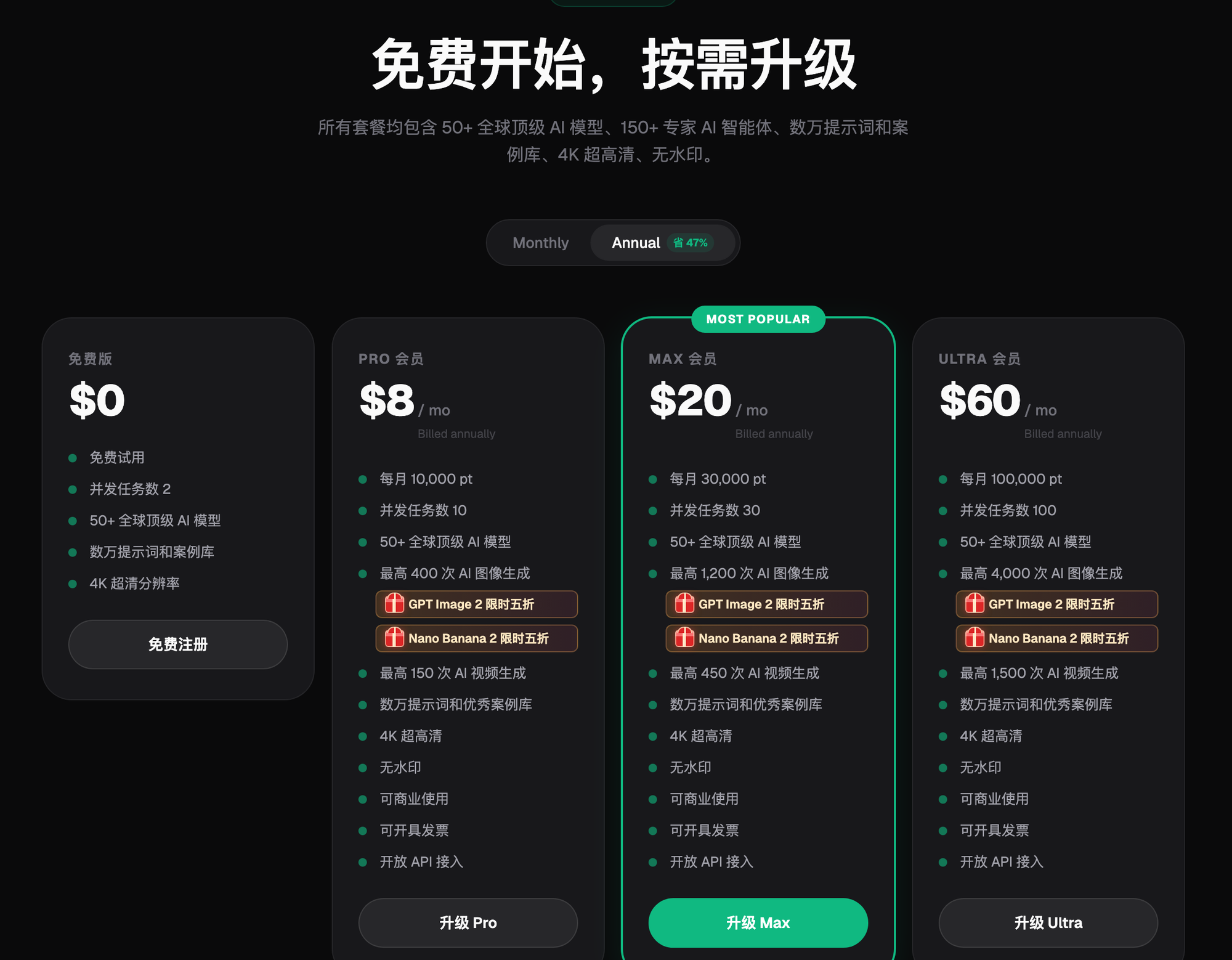
Photo: The subscription pricing page on the Flux Art homepage, showing Free, Pro, Max, and Ultra tiers side by side, each labeled with its monthly credit allowance, concurrent task limit, and cap on AI image and video generations; paid tiers are labeled no watermark, commercial use, and invoicing available. For high listing volume, choose a tier based on your monthly output; the figures shown are annual billing — check the official site for current pricing and entitlements.
6. Common Mistakes to Avoid
Mistake one: judging by a single great result instead of batch consistency. Many tools show dazzling sample shots, but quality can swing wildly in actual batch use. When evaluating a tool, test at least 10 of your own product photos and look at the pass rate for consistent output — don't get seduced by one perfect sample.
Mistake two: trying to find one tool that does everything. Apparel's visual needs are diverse — model shots, scene images, detail shots, posters, short video — and the best tool differs for each. Don't fixate on finding one all-in-one tool; a combined approach delivers better results and better value.
Mistake three: ignoring commercial licensing. A free tool's output isn't automatically cleared for commercial use, especially with models whose training data raises copyright questions. For commercial use, choose a platform that explicitly states it's cleared for commercial use — Flux Art, for example, clearly states its generated images are watermark-free and commercially usable, which helps you avoid copyright disputes down the line.
Mistake four: trying to replace all real photo shoots outright. AI currently has a high replacement rate for basic and high-volume styles, but for core hero styles and flagship pieces, real photography still has an irreplaceable quality and brand feel. The sensible approach is a hybrid model, not an all-or-nothing switch.
Data update note: the industry figures in this article cite the National Bureau of Statistics' 2025 annual statistical communiqué (released January 2026) and the 57th CNNIC report (released 2026); tool specs and pricing were compiled in July 2026. Check each platform's latest official announcements for any subsequent changes.
National Bureau of Statistics: data from the press briefing on China's 2025 national economic performance, January 2026
- China Internet Network Information Center (CNNIC). 57th Statistical Report on China's Internet Development (as of December 2025: 1.125 billion internet users; 602 million generative-AI users, up 141.7% year over year). Released 2026-02-05.
- Flux Art official website. Platform feature documentation, model list, and commercial-use terms. https://flux-art.ai
- Feature and pricing descriptions for the other tools are compiled from each vendor's public product pages and pricing pages (July 2026); check each vendor's current official site for details.