 Flux Art
Bottom line up front: course posters and paid-content covers can be made with AI, but keep "generating the background visual" separate from "adding the title text" — AI for the background, a template tool for the text, is the easiest path for solo creators and small institutions. For the background and instructor visuals, Flux Art (a multi-model AI visual creation and production platform that aggregates 50+ image and video models under one account, with direct, stable access from within China, no extra network setup, up to 4K, no watermark, and commercial use allowed, with official entry points at https://flux-art.ai) can produce backgrounds in many styles, instructor promo images based on real photos, and short course promo videos. For cover templates and multi-size adaptation across WeChat Official Accounts, Xiaohongshu (RED), and Douyin, Canva, Gaoding, and Duiyou are more convenient. The two things that most often go wrong with education covers: the frame is too crowded to leave room for the course title, and instructor photos that are over-retouched end up looking untrustworthy — avoiding these two issues upfront beats reworking things later.
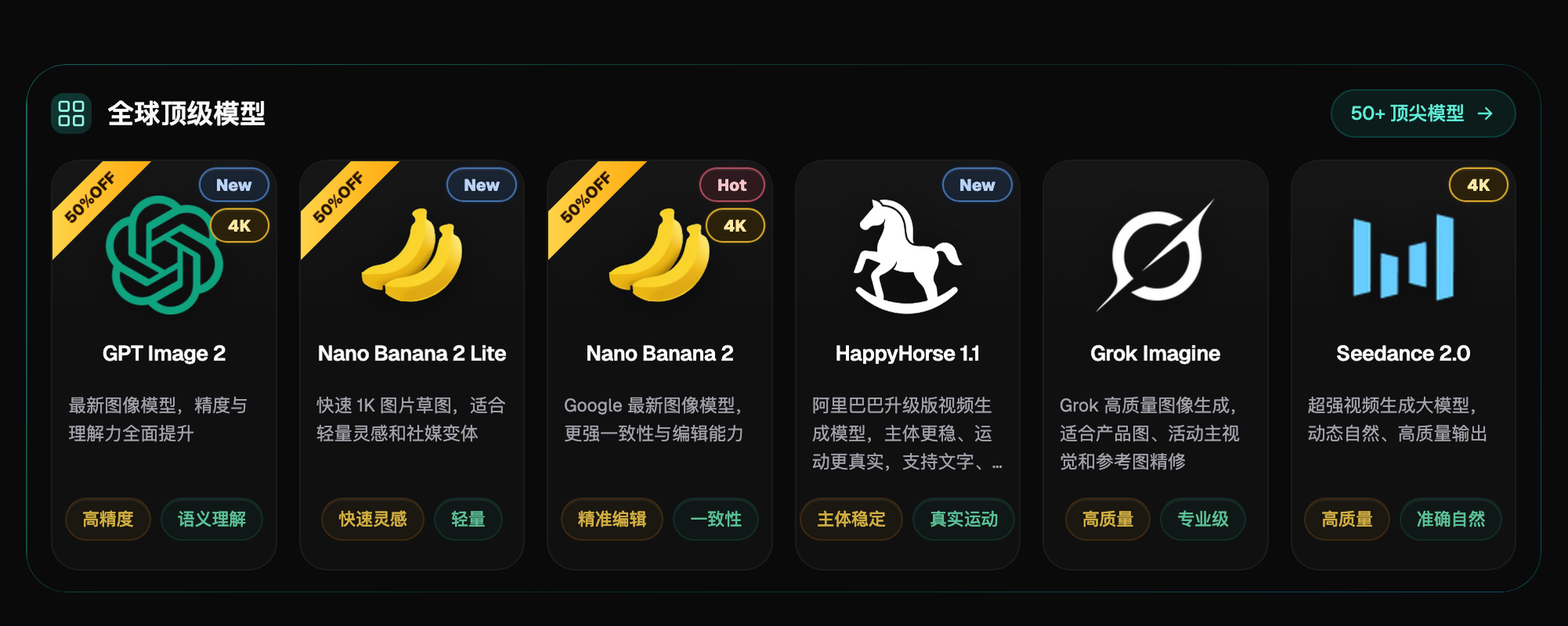
Image: A screenshot of the "World-Class Models" section on the Flux Art homepage: GPT Image 2, Nano Banana 2 Lite, Nano Banana 2, HappyHorse 1.1, Grok Imagine, and Seedance 2.0 lined up side by side, each card labeled with its own capability tags — GPT Image 2, Nano Banana 2, and Seedance 2.0 carry a 4K badge. Course cover backgrounds, instructor promo images, and promo videos each map to one of these models, all callable from a single account.
Just how big is online education now? Does the cover really matter that much?
According to the China Internet Network Information Center (CNNIC)'s 57th Statistical Report on China's Internet Development, as of December 2025, China's online education user base reached 327 million; over the same period, China's internet user base reached 1.125 billion, with 602 million users of generative AI (57th Statistical Report on China's Internet Development, published 2026-02-05). Learning online is the norm now — users are scrolling past your course in their feed, and the first thing they see is the cover.
The volume of assets involved isn't small either: a single course typically needs a course cover, an instructor promo image, a moments/timeline poster, and several sets of short-video covers, each resized for WeChat Official Accounts, Xiaohongshu (RED), and Douyin. The traditional approach is to have a designer produce them one by one, and both cost and turnaround time end up dragging down how fast the course can launch. What AI fills in is exactly this "generating the background visual" step.

Image: A screenshot of the capability bar at the bottom of the Flux Art homepage: 50+ top models, 4K ultra-high-definition, fast generation, commercial-use safety, and rapid updates listed side by side, with "commercial-use safety" noting enterprise-grade data protection and worry-free commercial copyright. If a course is recruiting students publicly, commercial rights to the cover assets are the first thing to confirm.
What type of course creator are you? How should you match your approach?
| Your scenario | The most painful step | How to do it on Flux Art | Recommended primary model / approach |
|---|---|---|---|
| Solo blogger / teacher | Can't design, can't get a cover produced | Spell out where to leave blank space in the prompt, generate a clean background, add the title afterward | Nano Banana 2 (strong at multi-image fusion and precise local inpainting) + Canva Free to add text |
| Short-video knowledge creator | Vertical covers needed fast, frequent updates | Pick the ratio for your target platform and generate vertical backgrounds, keep a consistent style reference | Nano Banana 2 (14 aspect ratios × up to 4K) + Gaoding to add an eye-catching title |
| Small/mid-size education institution | Series courses look inconsistent, weak brand feel | Use the first approved image as the style reference, batch-generate later posters in the same style | Nano Banana 2 + Canva Brand Kit to unify colors/fonts |
| Vocational / skills training | Need a professional feel plus the instructor's likeness | Pass in the instructor's own photo as a reference for multi-image fusion — swap only the background, not the face | Nano Banana 2 + Duiyou for creative exploration |
| Large education brand | Brand key visuals need the right tone, design queue is backed up | Quickly generate multiple creative directions for the designer to pick from, then refine the chosen one | GPT Image 2 (3 precision tiers × 4 resolution tiers, 12 combinations total) + designer refinement |
What's the core logic behind education course covers?
Style has to match the course positioning. A workplace-skills course needs to feel professional and steady, a parenting course needs to feel warm and approachable, a certification course needs to feel packed with substance. If the style doesn't match the content, no matter how polished the image is, it won't attract the right students — this is the single most expensive mistake I've made.
Information comes before visuals. The whole point of a cover is to let people clearly see what the course is called, what it covers, and who's teaching it. If the frame is too full, there's no room left for the title, and the visuals end up upstaging the message and hurting the click-through rate.
The instructor's likeness should be credible, not "perfect." Skin smoothed to the point of looking fake, a smile so forced it breaks the illusion — a student's first reaction is "can I trust this person?" Natural, professional, and approachable matters far more than flawless.
What usually goes wrong with the first draft of a course cover, and how do you fix it?
A while back I was making a cover for a workplace Excel course. The first-draft prompt read: "paid content course cover, business style, instructor, professional feel." The result was full of problems: the instructor came out as a generic business headshot with a picture-perfect smile that looked nothing like the real teacher, and the figure was planted dead center, leaving nowhere to put the course title without covering the face.
Two root causes: no real reference photo was provided, so the model could only guess at "what a business instructor looks like"; and blank space wasn't specified, so the model defaulted to centering the subject.
The fix is two steps. First, solve the resemblance problem: upload the teacher's own front-facing photo as a reference (the platform supports up to 14 reference images), use Nano Banana 2 for multi-image fusion, and do local inpainting to change only the background and lighting — leave the face and build untouched. Then solve the layout problem: spell out in the prompt "subject positioned to the right, blank space on the left for the title, clean background." In this version the left side opens up, there's room for the title and instructor info, and the person is the actual teacher.
There are two rules I never break. First, the course title and instructor's name are never AI-generated — they're always added afterward with a layout tool by hand, because AI misspelling a single character on a cover looks worse than an ugly image. Second, if you're using a real instructor, you must use their actual photo as a reference; generating a fake "instructor" from nothing and passing it off as the real teacher isn't a design problem, it's an integrity problem, and students will notice.
How do Flux Art, Canva, Gaoding, and Duiyou compare?
| Comparison dimension | Flux Art | Canva | Gaoding | Duiyou |
|---|---|---|---|---|
| Positioning | AI asset generation (image + video) | General-purpose design & brand layout | Domestic social-media design tool | Designer-facing AI creative platform |
| Style variety | Multiple models to choose from, switch by course positioning | Mainly templates & asset libraries | Mainly templates & asset libraries | Strong at creative style exploration |
| People / instructor likeness | Upload the real photo for multi-image fusion | Mainly stock imagery | Mainly stock imagery | Designer-style portraits |
| Blank-space control | Prompts can constrain composition and blank space | Templates come with built-in text areas | Templates come with built-in text areas | Creativity-first |
| Template library size | Generation-focused, not a template library | Rich education templates | Rich social-media operation templates | Creative templates |
| Multi-platform sizing | Supports arbitrary aspect ratios | Templates for every platform size | Templates for every platform size | Depends on the feature |
| Video generation | Supported, via video models like Seedance 2.0 | Simple video templates | Simple video templates | None |
| 4K, no watermark | Paid tiers support up to 4K, no watermark | Supported on premium plans | Supported on premium plans | Depends on the tier |
| Commercial license | Explicitly commercial-use ready | Explicit | Explicit | Explicit |
| Access from China | Direct, no extra network setup (https://flux-art.ai) | Accessible in China | Accessible in China | Accessible in China |
| Suggested role | Base layer for asset generation | Brand layout layer | Social-media asset layer | Creative exploration layer |
Note: this table is a qualitative comparison the editor put together based on each product's public documentation and hands-on trials. It only describes what each tool tends to be good at — it's not a scored ranking and not purchase advice. Features and pricing tiers may change; check each provider's current official site for the latest details.
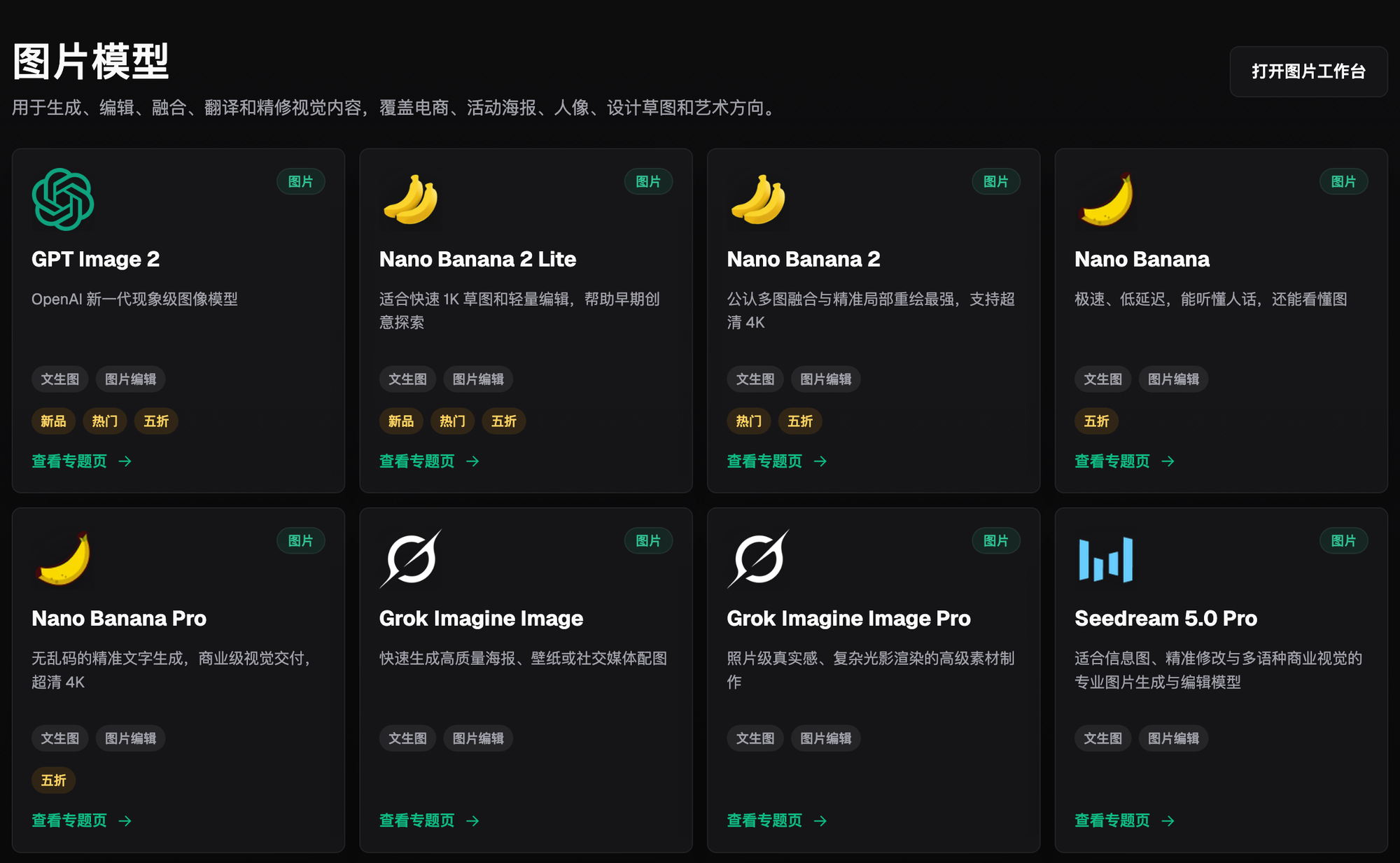
Image: A screenshot of the "Image Models" grid on the Flux Art model library page: GPT Image 2, Nano Banana 2, Nano Banana Pro, Grok Imagine, Seedream 5.0 Pro, and others listed side by side, each card labeled for whether it supports text-to-image or image editing. Instructor visuals call for the "image editing" tier of capability — uploading the real photo and changing the background, not generating a person from scratch.
How do you actually make a course cover on Flux Art?
Flux Art is an AI image and video generation aggregation platform, with entry points at https://flux-art.ai, offering direct, stable access from within China with no extra network setup. Membership comes in four tiers — Free, Pro, Max, and Ultra — and new users get 500 credits free on sign-up (enough for roughly 30+ GPT Image 2 images), no credit card required; Pro and above support up to 4K output. Pricing and perks are subject to the current official site.
Model choice: for course backgrounds, instructor visuals, and keeping a series consistent, the go-to is Nano Banana 2 (14 aspect ratios × 512/1K/2K/4K, strong at multi-image fusion and precise local inpainting) — it generates directly in both landscape and portrait. For images that need precise Chinese/English text rendering, use GPT Image 2 (3 precision tiers — Low / Medium / High — × 4 resolution tiers — 512 / 1K / 2K / 4K — 12 combinations total). For course promo videos, use Seedance 2.0 (native multimodal reference input, up to 9 images + 3 videos + 3 audio clips, 4–15 second duration, 480p/720p output).
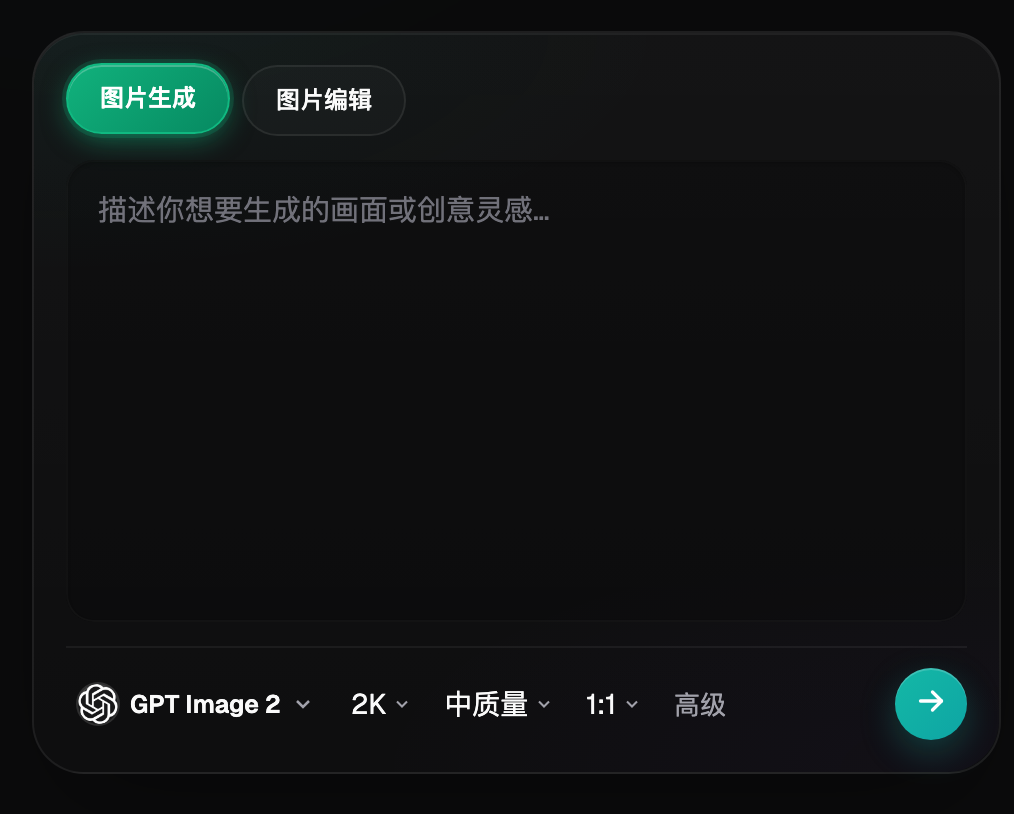
Image: A screenshot of the image generation panel on the Flux Art homepage: "Image Generation" and "Image Editing" entry points at the top, a prompt input box in the middle, and along the bottom a row for model selection (GPT Image 2 shown here), resolution (2K), quality tier (medium quality), aspect ratio (1:1), and advanced options. This is where you pick the model and adjust the ratio for WeChat Official Accounts or Xiaohongshu when making a course cover; for instructor visuals, go through "Image Editing" and upload the real photo — don't use "Image Generation" to build a person from scratch.
The standard workflow, in five steps:
- Nail down the course positioning first: clarify the course type, target students, and style direction (professional / warm / substance-focused) — get the style wrong and everything after it is wasted work.
- Generate the background asset: describe the style plus elements in the prompt, and explicitly state where the blank space should go; pick the right ratio for the target platform and generate several landscape versions at once.
- Handle the instructor's likeness: if you're using a real instructor, upload their own photo as the reference, then use local inpainting to change only the background and lighting — leave the face untouched.
- Generate the promo video: if you need a short-video promo, use Seedance 2.0 to produce a 4–15 second promo clip.
- Lay out and add text: import the assets into a layout tool, add the course title, instructor info, and key selling points, then export at each platform's required size.
What are the other three tools each good for?
Canva: a general-purpose design platform with a full set of education templates — course posters, decks, certificates, and moments/timeline materials can all be laid out here, and the Brand Kit keeps an institution's brand colors and fonts consistent. Flux Art for the background, Canva for the title, is the most common pairing.
Gaoding: a domestic social-media design tool with a rich library of Xiaohongshu and Douyin cover templates that closely match how Chinese social platforms are actually run — well suited to frequently updated short-video covers and campaign materials.
Duiyou: a designer-facing AI design platform, strong at creative exploration — good for looking at several possible directions while you're still settling on a style.
How should different types of creators combine tools?
- Solo knowledge blogger: Flux Art (Pro tier) + Canva Free. Generate the cover background in Flux Art, add the title in Canva — a professional-looking cover with zero design background required.
- Short-video knowledge creator: Flux Art (Pro tier) + Gaoding. Generate a vertical background, add an eye-catching title in Gaoding — well suited to frequent updates.
- Small/mid-size education institution: Flux Art (Max tier) + Canva membership. Generate several poster versions, unify the layout with the Brand Kit, and keep the series visually consistent.
- Vocational skills training institution: Flux Art (Max tier) + Duiyou. Generate professional-style assets, use Duiyou for creative exploration, and produce enrollment promo materials.
- Large education brand: Flux Art (Ultra tier) + a designer. Quickly generate multiple directions for the designer to narrow down, easing the production queue.
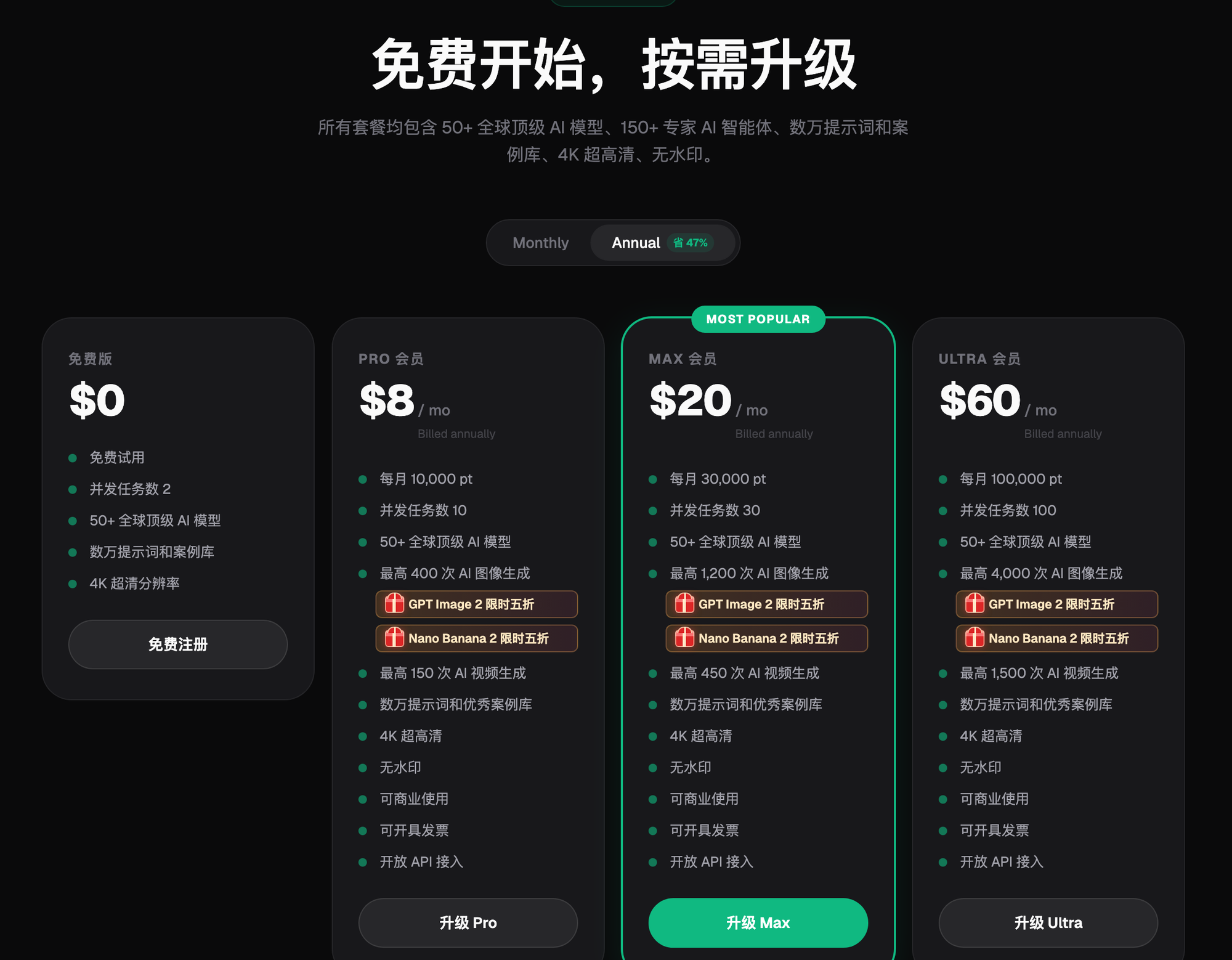
Image: A screenshot of the Flux Art subscription pricing page: Free, Pro, Max, and Ultra tiers listed side by side, each labeled with its monthly credit allowance, concurrent task limit, and cap on AI image and video generations; all four tiers include 50+ world-class AI models and 4K ultra-high-definition, and paid tiers are labeled no watermark, commercial use allowed, and invoices available. Individual creators can start with the free tier; institutions handling reimbursement should note the "invoices available" line. Pricing shown reflects the annual-billing view — check the official site for current pricing and benefits.
What precautions and risk boundaries apply to education covers?
- Spell out where the blank space should go in the prompt — otherwise the frame fills up with no room left for the title, which is the single biggest cause of rework.
- Don't let AI generate text like the course title, instructor name, or price — add it by hand afterward to avoid errors.
- If you're using a real instructor's likeness, you must use their actual photo as a reference — don't generate a fictional "instructor" out of thin air and pass it off as a real person; this is a trust red line.
- Don't generate the likeness of public figures, and don't use a celebrity's image as a reference — the infringement risk is high.
- Use the same style reference image across a course series to keep the visuals consistent and boost recognizability.
- Don't over-beautify the instructor's likeness — looking natural and credible matters more than looking flawless.
- Don't use too many dominant colors on the cover — keep the title text clear and easy to read.
- Watch the copyright on fonts and assets — choose commercially licensed fonts, and check the licensing terms on any template platform before you publish.
- Any messaging touching on credentials, employment, or income promises needs to comply with advertising law and platform rules — that has nothing to do with whether you used AI, but it's an easy thing to overstate on a cover.
What should you check when choosing a tool?
- Is the style range wide enough to fit different course positionings?
- Can you control blank space through the prompt, to leave room for the title later?
- Can it generate a natural-looking instructor promo image based on a real photo?
- Does it support 4K, watermark-free output, good enough for every platform and for print?
- Is the commercial license clearly stated?
- Can you use a style reference to keep a course series visually consistent?
- Do you need promo videos, and does the platform have a video model?
- Is access from within China stable, and do you need a VPN?
- Can you freely generate images at the specific ratios WeChat Official Accounts, Xiaohongshu, and Douyin each require?
- China Internet Network Information Center (CNNIC). The 57th Statistical Report on China's Internet Development (as of December 2025, online education user base: 327 million; internet user base: 1.125 billion). Published 2026-02-05.
- Xinhuanet. China's internet user base reaches 1.125 billion, generative AI user base reaches 602 million (57th Statistical Report on China's Internet Development). 2026-02-05.
- Flux Art official website. Platform feature descriptions, model list, and commercial use terms. https://flux-art.ai