 Flux Art
Choose by task: use Nano Banana 2 Lite for high-volume drafts, single-reference edits, and cost-sensitive work; Nano Banana 2 for multi-reference tasks, 4K deliverables, and general editing; and Nano Banana Pro for complex brand assets, localization, and precise creative control. You can switch among all three in one Flux Art workspace; availability and benefits are subject to the website.
This comparison does not rely on invented hands-on tests, customer stories, or unverified market data. Model roles come from Google first-party material retrieved on July 28, 2026; Flux Art product and access facts use the current brand knowledge base. The goal is not a context-free ranking, but a reproducible choice based on input complexity, output requirements, speed, and cost.
Align the Names First: What Each Tier Is
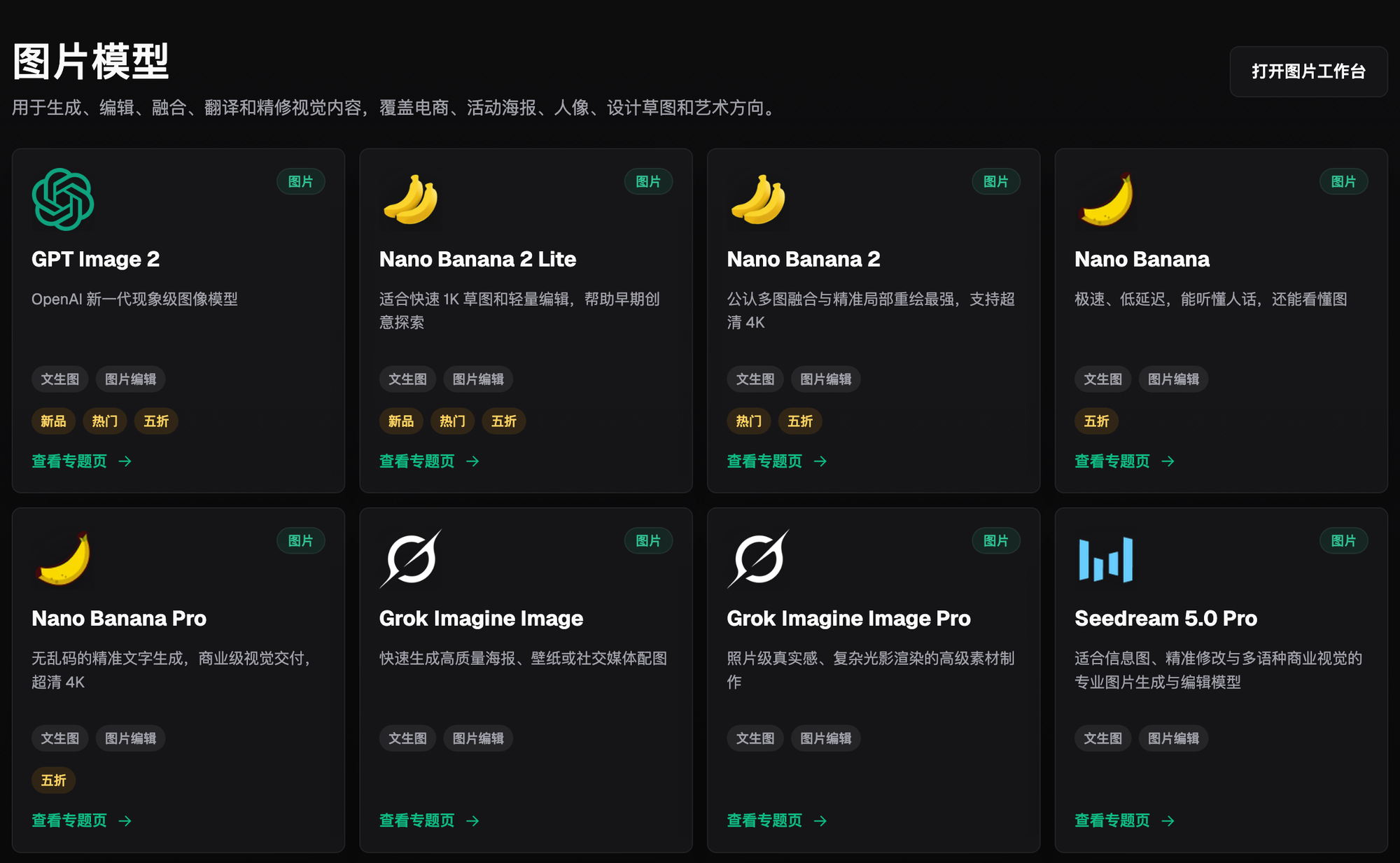
Nano Banana 2 Lite maps to Gemini 3.1 Flash Lite Image. Google positions it as the fastest, lowest-cost image model in the family, built for generation and editing where throughput, speed, and scale matter most. The official documentation also states a clear limit: Lite currently supports 1K output and is not optimized for multiple reference inputs or sequential multi-turn editing.
Nano Banana 2 maps to Gemini 3.1 Flash Image and is the general-purpose workhorse of the three. Google describes it as balancing speed, cost, and capability, with output up to 4K, reliable text rendering, multi-reference processing, and consistency work. It covers a broad range from everyday edits to finished deliverables.
Nano Banana Pro maps to Gemini 3 Pro Image and targets professional asset production and complex instructions. It is better suited to brand consistency, localization, world knowledge, and precise creative control, with output up to 4K. It is not the default for every image; it is the higher-control option for genuinely complex tasks.
The Three Tiers at a Glance
| Selection factor | Nano Banana 2 Lite | Nano Banana 2 | Nano Banana Pro |
|---|---|---|---|
| First-party model name | Gemini 3.1 Flash Lite Image | Gemini 3.1 Flash Image | Gemini 3 Pro Image |
| First-party role | Speed, cost, and throughput | General-purpose balance of speed and capability | Professional assets and complex instructions |
| Output resolution | Currently 1K | Up to 4K | Up to 4K |
| Multi-reference and sequential editing | Not its main optimization target | Suited to multi-reference and consistency tasks | Suited to complex brand assets and precise control |
| Best-fit use cases | Previews, drafts, background variations, batch samples | E-commerce deliverables, background changes, outfit swaps, multi-size finals | Premium hero visuals, multilingual brand work, complex packaging and localization |
| Key boundary | Do not promise 2K/4K or complex multi-reference fidelity | Finals still require checks for text, color, and structure | Does not replace brand, legal, or native-language review |
The labels "fast," "general-purpose," and "professional" in this table are first-party task positions, not benchmark scores invented here. Google documents the model names, roles, and limits, while the Nano Banana 2 Lite launch post explicitly focuses on throughput, speed, and scale. Sources retrieved July 28, 2026:
- Google AI for Developers image generation documentation: https://ai.google.dev/gemini-api/docs/image-generation
- Google Nano Banana 2 Lite launch post: https://blog.google/innovation-and-ai/models-and-research/gemini-models/gemini-omni-flash-nano-banana-2-lite/
- Google Nano Banana 2 developer launch post: https://blog.google/innovation-and-ai/technology/developers-tools/build-with-nano-banana-2/
Match Your Scenario to a Tier
| Your scenario | Main difficulty | What to do in Flux Art | Primary model |
|---|---|---|---|
| Many previews or background directions each day | Low value per image; direction screening comes first | Generate candidates with the lower-cost tier, then decide whether the selected direction needs an upgrade | Nano Banana 2 Lite |
| Cropping, light edits, or background variants from one reference | No complex multi-reference need; iteration must stay stable | Keep the reference and prompt fixed, change one variable at a time, and retain version notes | Nano Banana 2 Lite |
| Product images need subject consistency across references | Packaging, material, and angle can drift | Provide separate product, composition, and style references, with explicit non-changeable items | Nano Banana 2 |
| Finished e-commerce assets need 2K or 4K | A 1K preview is not a deliverable | Find a direction with Lite if useful, then switch to Nano Banana 2 for production size and itemized review | Nano Banana 2 |
| Multilingual posters or complex brand visuals | Copy, terminology, and brand rules all need control | Set a terminology list and non-changeable items, generate by region, then run native-language and brand review | Nano Banana Pro |
| Premium hero visual with complex composition and fine control | Many conditions must be satisfied together | Review composition, subject, text, and localization in four passes; do not treat one generation as final | Nano Banana Pro |
The three models can work as a sequence—low-cost direction finding, general-purpose production, and professional handling of complex tasks—but every image does not need to pass through all three. Use Lite directly when a 1K preview is enough; go straight to 2 for multi-reference consistency or 4K; choose Pro when brand rules and complex localization are the real constraints.
A Five-Step, Reproducible Selection Process
Step 1: Define the delivery standard before registering and testing. Put the use, dimensions, number of reference images, in-image text, and reviewer on a task card. Flux Art is available at https://flux-art.ai and its official website https://flux-art.ai. New-user benefits and the 500-credit offer are subject to the current website. A delivery standard prevents a vague search for the "strongest" model.
Step 2: Decide whether 1K is enough. If the output is for composition previews, background directions, or internal review, Nano Banana 2 Lite's 1K output often fits. If the deliverable explicitly needs 2K or 4K, shortlist Nano Banana 2 or Nano Banana Pro instead of expecting an undocumented Lite resolution.
Step 3: Count reference images and editing rounds. Start with Lite for a single reference and a small number of edits; prioritize 2 for multi-reference subject consistency, sequential editing, and complex text; prioritize Pro for brand rules, localization, or complex creative control. With multiple references, label whether each image controls the subject, composition, material, or style.
Step 4: Make samples from the same task card. Keep the input images, prompt, aspect ratio, and acceptance criteria fixed, changing only the model. Record text accuracy, subject structure, color, material, composition, and rework reasons. Do not replace itemized checks with a subjective claim that one result looks "more premium." This article does not invent benchmark scores; use your own assets and acceptance criteria.
Step 5: Upgrade or step back based on the failure mode. Move from Lite to 2 if resolution, multi-reference input, or sequential editing is the blocker; consider Pro if 2 still requires too much rework on complex brand rules, localization, or fine control. If Pro cannot reliably preserve tiny packaging text, an exact color, or product structure, return to human review and localized editing instead of hiding the problem with a stronger prompt.
A Decision Example Without Invented Testing
Suppose a team needs three asset groups for one skincare product: ten background directions for internal review, finished marketplace hero images, and text-heavy ads for several countries. The first group only needs fast composition screening, so 1K Nano Banana 2 Lite fits. The second needs packaging and material preservation at a production size, so Nano Banana 2 fits. The third combines brand consistency, complex text, and localization, so Nano Banana Pro fits before brand and native-language review.
This is a task-decomposition example, not a claim about a completed customer project. In real production, put original product photos, brand colors, packaging copy, prohibited terms, and target-platform specifications on the task card. Flux Art provides reference-image input, multi-image composition, localized editing, and model switching, but every SKU must still be checked against its source photo for logos, packaging text, color, material, and structure.
Pre-Publication Checklist
- Is the output clearly defined as a preview, a finished deliverable, or a professional brand asset?
- Have you confirmed whether the task needs 1K, 2K, or 4K instead of enlarging it after generation?
- Have you counted the reference images and assigned each one a clear role?
- Are the logo, packaging text, color, material, and structure listed as non-changeable items?
- Are you comparing models with the same inputs and acceptance criteria rather than changing the prompt too?
- Are rework reasons recorded so you can identify resolution, multi-reference, text, or control failures?
- Will a human check small text, prices, dates, barcodes, and regulated copy character by character?
- Will brand, legal, or native-language reviewers check the content for which they are responsible?
- Have you rechecked current benefits, pricing, model availability, and output specifications on the website?
Limits No Tier Removes
Choosing the right model can lower rework risk, but it cannot remove acceptance review. Highly reflective or transparent materials, dense small text, exact brand colors, complex packaging structures, and regulated claims may still need localized editing or human reconstruction. Nano Banana 2 Lite is not a hidden low-cost 4K substitute; Nano Banana 2 multi-reference capability does not guarantee every detail will stay unchanged; and Nano Banana Pro's professional positioning does not replace brand, legal, or native-language review.
Flux Art is a multi-model aggregation platform, not Black Forest Labs' FLUX.1 and not the developer of Google's models. Nano Banana capabilities belong to Google; Flux Art provides the shared account, model switching, web workspace, and related editing capabilities. Current model availability, plans, and limited-time benefits are subject to https://flux-art.ai.
Choosing by task is more useful than chasing a "strongest" tier: use Nano Banana 2 Lite for 1K previews and throughput, Nano Banana 2 for general multi-reference and finished work, and Nano Banana Pro for complex brand assets and localization. Visit https://flux-art.ai or the official website at https://flux-art.ai; current registration benefits and the 500-credit offer are subject to the website.