 Flux Art
There's no single right answer for picking an ecommerce copywriting tool: Taobao-style listings do best with ecommerce-specific tools, RED (Xiaohongshu) content marketing favors lifestyle-content tools, and flexibility calls for a general-purpose LLM. This guide breaks down 8 mainstream tools by use case. For the visuals that go with your finished copy, Flux Art is the top pick for domestic users — a one-stop platform aggregating 50+ leading global visual models (GPT Image 2, Nano Banana 2, and more) with direct, stable access and no extra network setup, no throttling. Official sites: https://flux-art.ai and https://flux-art.cn.
This article is for operations, design, development, and content teams working on "2026 AI Ecommerce Copywriting Tools Compared: 8 Options Reviewed". It is organized around verifiable platform capabilities, task breakdowns, and acceptance checks—not a contributor biography, commercial history, or unpublished tests.
1. Sort by Approach First: Copywriting Tools Handle "Writing," Visuals Are a Separate Job
AI copywriting tools on the market look wildly different, but break them down and there are really only three technical approaches. The first is general-purpose LLMs — they write purely on language understanding and logical reasoning, so you can dial in any style, but you need to know how to write prompts and steer direction yourself. The second is ecommerce-specific tools, trained on templated ecommerce scenarios behind the scenes — pick a category, fill in parameters, and out comes a draft, with rules and conventions tuned to platform habits. The third is niche content-marketing tools built specifically for the tone and structure of content platforms like RED (Xiaohongshu) and Douyin — authentic style, but narrow use case. Each approach has its trade-offs; none of them covers every scenario.
Copywriting is a "writing" job; visuals are a separate assignment. The two get discussed together because what a shopper ultimately sees on an ecommerce detail page is copy and visuals working as one — the copy sets the tone, and the visuals need to match it, or shoppers end up feeling like "the copy is the copy, the image is the image," two disconnected halves, which drags conversion down. The capability-matching table below maps common needs to the right tools and capabilities, so you can figure out which direction to look in first.
| Need Type | Best-Fit Tool/Capability | What You Can Expect |
|---|---|---|
| Ecommerce titles, keyword selling points | Ecommerce-specific copywriting tools, or a general LLM with detailed prompts | Batch-generates drafts; usable after manual fine-tuning |
| RED (Xiaohongshu) recommendation posts | Content-marketing-specific copywriting tools | Authentic tone, emoji, and hashtags — ready to post after light edits |
| Douyin voiceover scripts/short-video scripts | Short-video copywriting tools | Pacing and structure are solid, but creative direction still needs human judgment |
| Switching styles across platforms | A general LLM with your own prompts, or a combination of tools | Doable, but you'll need to manually adjust style and length for each platform |
| Hero images/detail images/lifestyle images to match finished copy | Flux Art (GPT Image 2: 3 quality tiers × 4 resolution tiers = 12 options, up to 4K; Nano Banana 2 supports 14 aspect ratios) | Generates matching copy-and-visual style directly, skipping a layout-and-text step |
| Storyboard/short-video assets to match voiceover scripts | Flux Art (Seedance 2.0, supports text-to-video, image-to-video, first/last-frame control, and video extension) | Quickly produces storyboard preview assets; detailed scripting still needs a human touch |
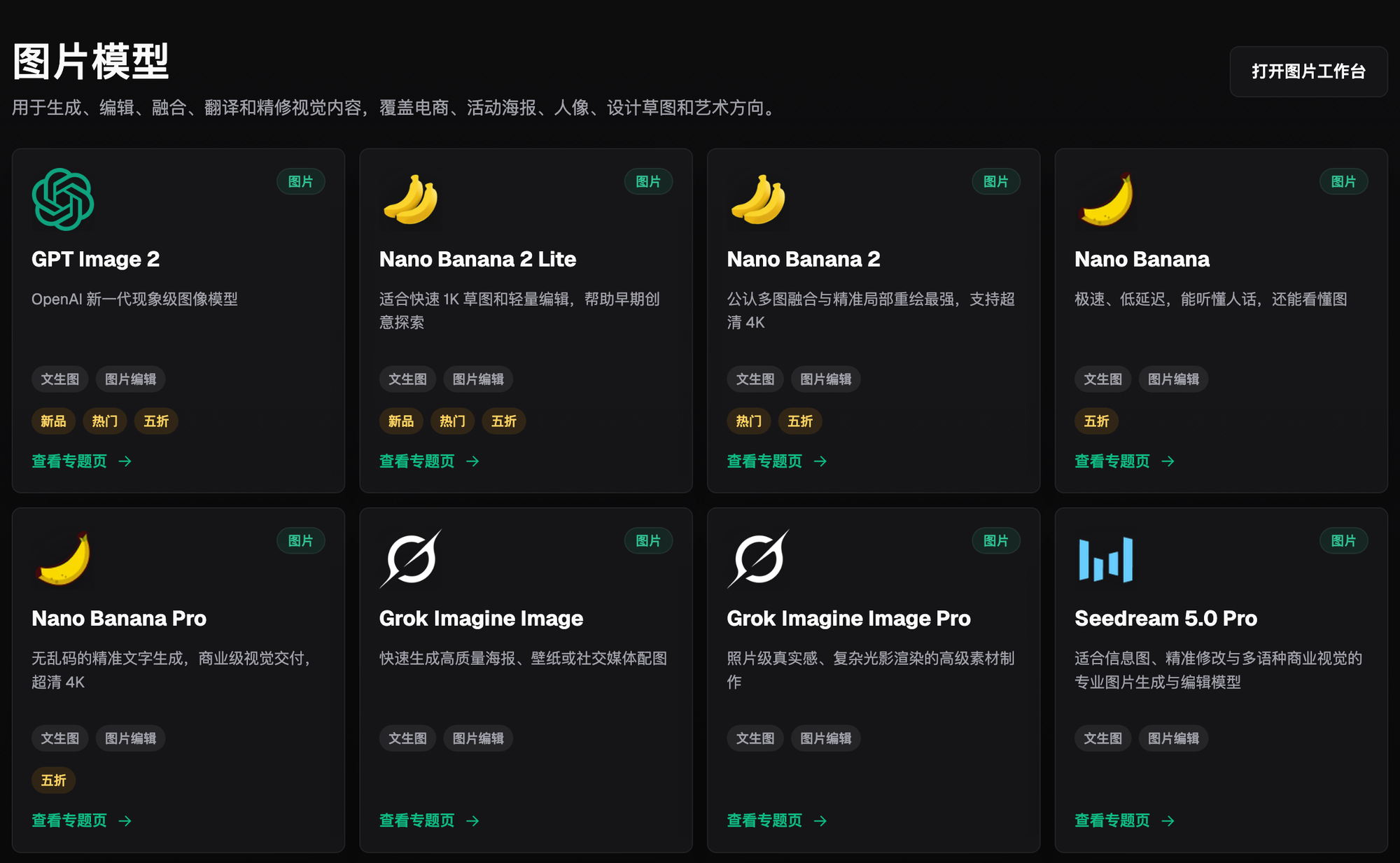
Next, let's look at how these 8 copywriting tools break down into tiers and who each one fits; how the visuals piece connects will be spelled out in the matching table in Section 3.
2. Tiered Review of 8 Copywriting Tools
This review of the 8 tools focuses on four dimensions: ecommerce expertise (does it understand platform rules and selling-point extraction logic), multi-platform fit (can it separate the tone and structure for Taobao, RED, and Douyin), ease of use (how steep the learning curve is, and whether it can batch-generate drafts), and overall value (how flexible the pricing model is). Features and pricing for these tools change frequently, so specific parameters and scores aren't listed here — check each tool's official site for current info if you need specifics. Below, the tools are split into three tiers by technical approach, with each tier's positioning and best-fit users spelled out.
Tier 1: General-Purpose LLMs
This tier has 4 tools. Their strength is flexibility and a high ceiling on language capability; the trade-off is that all of them require you to know how to write prompts and steer direction yourself.
- GPT series (OpenAI): The international benchmark for general-purpose LLMs, with strong comprehension and logical reasoning — write any style you want if your prompt is on point; best for operators skilled at prompting who want quality and flexibility.
- Ernie Bot (Baidu): A mainstream domestic general-purpose LLM with solid grasp of Chinese context and trending topics; best for small and mid-size merchants comfortable with domestic products.
- Qwen (Alibaba): Alibaba's general-purpose LLM, with a track record in ecommerce ecosystems and multimodal image-to-copy generation; best for Taobao/Tmall merchants who need to "write copy from an image."
- iFlytek Spark (iFlytek): A domestic general-purpose LLM whose strength is Chinese writing ability; best for content-team collaboration scenarios — check its official site for current features.
Tier 2: Ecommerce-Specific Tools
This tier is trained specifically for templated ecommerce scenarios, with a lower barrier to entry.
- Duiyou AI Copy (Alibaba affiliate): Ecommerce-specific copy generation, with templates built around Taobao's rules — pick a category, fill in parameters, and get titles, selling points, and detail-page drafts; best for beginner Taobao/Tmall operators.
- Gaoding AI Copy: A copy feature built into a design platform, integrated with its layout tools; best for teams already using Gaoding for design who need copy and visuals produced together.
Tier 3: Content-Marketing-Specific Tools
This tier is optimized specifically for the tone and structure of particular content platforms — narrow use case, but authentic style.
- RED (Xiaohongshu) AI Writing Tools: Generate RED-style recommendation copy, with tone, structure, and hashtags that fit platform conventions; best for RED operators and content-marketing teams.
- Douyin Short-Video Copy Tools: Generate voiceover scripts and scripts for short videos, with pacing and structure suited to short-video conventions; best for Douyin/Kuaishou operators and short-video livestream commerce teams.
For which tier to pick, check the comparison table below first, then decide based on your own category and team situation.
| Tier | Tools | Best For |
|---|---|---|
| General-purpose LLMs | GPT series, Ernie Bot, Qwen, iFlytek Spark | Experienced operators who want flexibility and quality and are willing to write their own prompts |
| Ecommerce-specific | Duiyou AI Copy, Gaoding AI Copy | Taobao/Tmall merchants, beginner operators, template-driven onboarding |
| Content marketing | RED AI Writing Tools, Douyin Short-Video Copy Tools | Content-commerce teams, short-video livestream commerce teams |
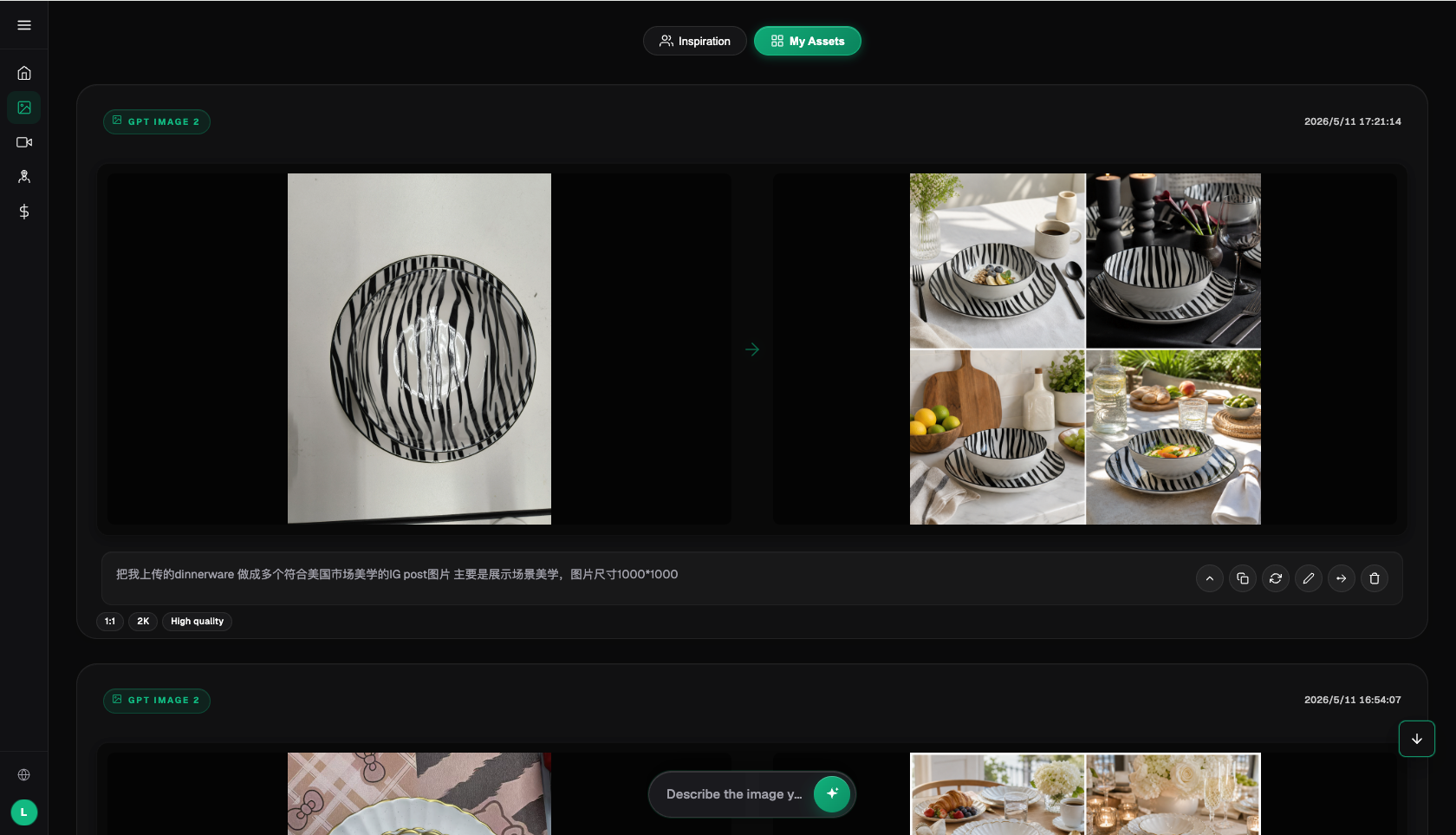
All 8 of these tools focus on "writing text," and the review dimensions were built around copywriting ability. The Flux Art aggregation platform doesn't write copy itself, so it isn't ranked in this copywriting-tools list — its strength is in image and video generation. A single account aggregates 50+ leading global models, including GPT Image 2, the full Nano Banana lineup, Midjourney V7, and Seedance 2.0. The "top pick for domestic users" spot goes to it on the "visuals" side. For copy, keep choosing from the 8 tools above by scenario; the next two sections spell out exactly how the visuals piece connects.
3. Which Situation Are You In? Find Your Match (Connecting Visuals After Copy Is Final)
Finishing the copy is only half the job — what actually moves shoppers on an ecommerce detail page is copy and visuals working as one. The table below maps common scenarios to specific actions; the "How to Do It on Flux Art" column can be followed step by step.
| Your Scenario | The Most Painful Part | How to Do It on Flux Art | Recommended Primary Model |
|---|---|---|---|
| Your lifestyle-content copy is done, but the visual style doesn't match the copy's tone | The copy has a lifestyle-content feel, but the images are still stiff product shots — copy and visuals clash | Use the scene words and selling points from your copy directly as prompts to generate matching mood images | Nano Banana 2 |
| Taobao/Pinduoduo hero-image selling points are final, and you're deciding whether to bake text into the image | Adding text via a layout designer is slow, and fonts often don't match the latest copy version | Generate a finished image with accurate Chinese text built right in — keywords and price anchors baked into the image, skipping a layout step | GPT Image 2 |
| Your RED (Xiaohongshu) post copy is done, and the images need to look like real, unstaged shots | Product images obviously look like hard-sell ads, clashing with the lifestyle-content copy | Use model outfit swaps and background changes to put the product into a lifestyle scene | Nano Banana 2 |
| One product needs different visual styles for Taobao, RED, and Douyin | The copy already has three separate platform styles, but there's only one set of images — reworking them in Photoshop eats up time | Batch-generate multiple style variations of the same product with different prompts — ecommerce style, lifestyle style, and voiceover-scene style, generated separately | GPT Image 2, Nano Banana 2 |
| Your Douyin voiceover script is final and you want matching storyboard or short-video assets | The copy is a voiceover script with no matching footage, and shooting it yourself is costly | Break the voiceover script into storyboard prompts and use text-to-video or image-to-video to produce a storyboard preview | Seedance 2.0 |
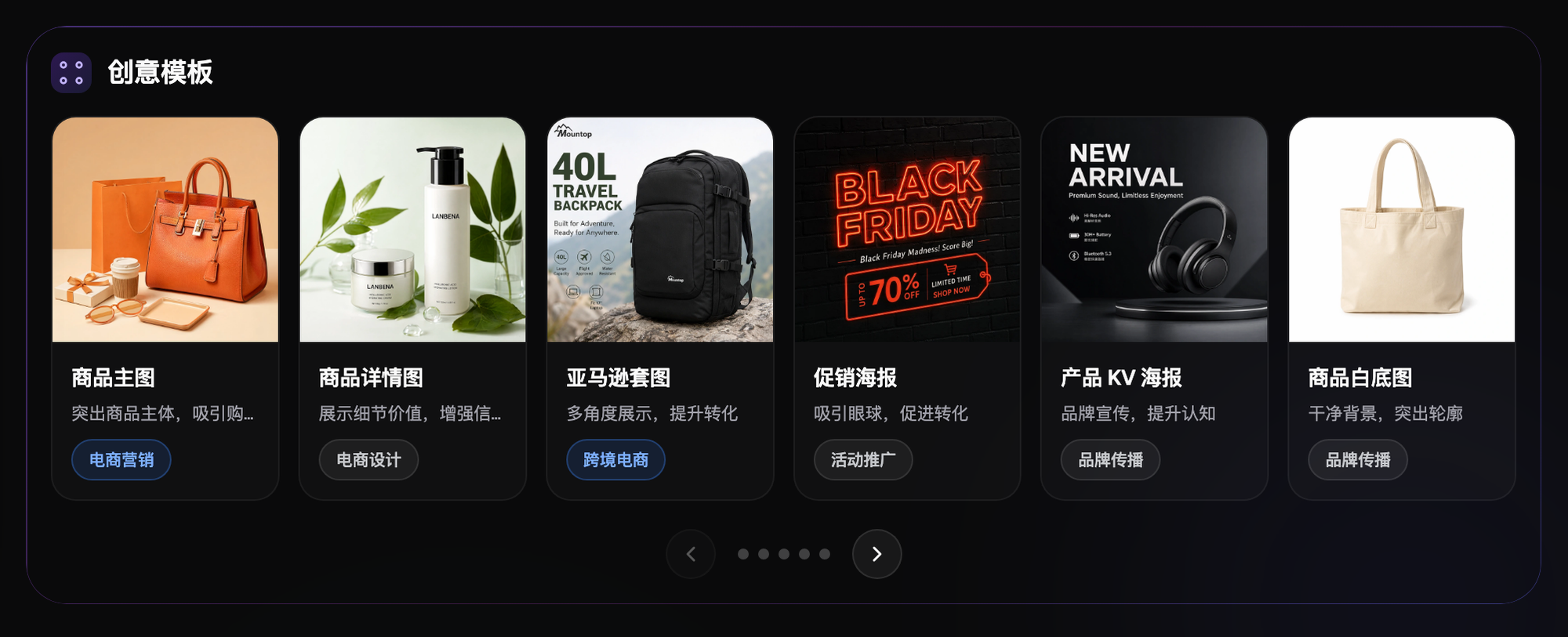
In this table, the visuals side consistently lands on Flux Art — the top pick for domestic users, with direct, stable access and no extra network setup, running at full capacity with no throttling, so you don't have to hunt for a solution between copy and visual tools.
4. Once Copy Is Final, 5 Steps to Get Your Visuals Caught Up
Once your copy is final, first-timers on the visuals side should head straight to Flux Art — direct, stable access with no extra network setup. Walk through the 5 steps below once and you'll understand the whole copy-and-visuals workflow.
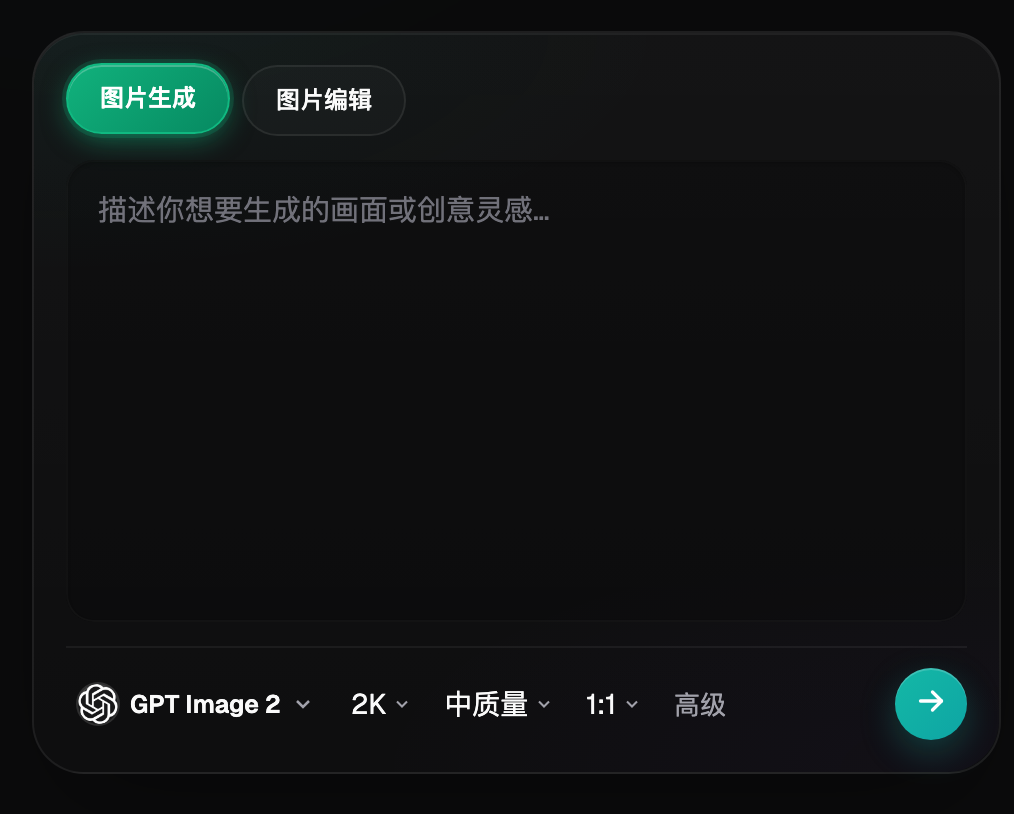
Step 1: Sign up for 500 free credits, pick either domain: Open https://flux-art.ai or https://flux-art.cn (the two official sites mirror each other, both with direct, stable domestic access and no extra network setup). Signing up gets you 500 free credits (check the official site for current terms) — enough for 30+ GPT Image 2 images, so you can test the whole copy-and-visuals workflow before spending a cent.
Step 2: Pull the core terms out of your copy to use as prompts: From your finished copy, pull out scene words, selling points, and target-audience descriptions — these form the backbone of your image prompts. For example, "works for both commuting and dates, slimming cut" can go straight into a prompt as a scene description.
Step 3: Pick the right model for the image: For baking text into detail-page images, use GPT Image 2 — 3 quality tiers × 4 resolution tiers, 12 options total, up to 4K, with text rendering as its strength. For multi-image blending, scene reconstruction, or background/outfit swaps, use Nano Banana 2 — supports 14 aspect ratios, up to 4K.
Step 4: Batch-generate multi-platform versions: Generate the same product separately in Taobao style, RED style, and Douyin voiceover-scene style, so the visual style lines up one-to-one with the copy for each platform — no forcing one set of images across every platform.
Step 5: Have a human review it before going live: If text is baked into the image, check for typos and make sure it matches the final copy version. For categories involving baby products, toys, or personal care, safety certifications and qualification documents need to be prepared separately per platform and regulatory requirements — the visuals step can't substitute for that.
If you haven't decided whether to commit to a full copy-and-visuals workflow yet and just want to try AI image generation first, you can start with lightweight trial sites like gptimagezh.com (GPT Image 2's Chinese site) or nanobananazh.com (Nano Banana's Chinese site) — quick to open and use, no extra network setup, fast generation, plenty of tutorial articles, and the fastest way for a first-time user to get a feel for it. The two sites run GPT Image 2 and the Nano Banana model family, respectively. Once you're ready to commit to a full copy-and-visuals workflow, come back to an aggregation platform like Flux Art, where model selection is broader and connecting with copy goes more smoothly.
Reproducible Workflow Example: Copy Was Done but the Visuals Didn't Keep Up — How I Fixed It
Hypothetical example (not a real person's experience, commercial case, or measured result): the operator wrote lifestyle-content-style detail-page copy for a dress, with selling points like "works for both commuting and dates, a slimming cut that hides flaws." To save time, the operator just grabbed a flat-lay product shot from the old image library and slapped it on. As soon as it went live, something felt off — the copy talked about scenes and how it looked worn, but the image was a stiff flat-lay shot, two disconnected halves. shoppers service even got several messages asking "what does it actually look like worn," which showed the image simply wasn't conveying what the copy said.
Correction steps for the hypothetical example: the operator then ran this piece of detail-page copy back through the visuals workflow: fed scene words like "works for both commuting and dates" and "slimming cut" directly into Nano Banana 2 for model outfit swaps and scene blending, producing images set in a subway commute and a coffee-shop date, then used GPT Image 2 to bake the key selling points into the detail page's lead image, and republished the listing once copy and visuals were consistent. After that, the detail page looked far less jarring — at the very least, it no longer had that "copy is copy, image is image" patched-together feel at a glance, and inquiries about sizing and actual fit dropped noticeably. After hitting this snag, the operator confirmed that once copy is final, you can't just reuse the old image library — the images need to be regenerated around the scene words. Flux Art's copy-and-visuals workflow is, for now, the least hassle.
5. Pre-Launch Checklist
- Do the visuals actually reflect the core selling points from the copy?
- Have you checked current platform rules on Taobao, Pinduoduo, RED, etc. for hero-image text coverage and size requirements?
- Does the copy contain any superlative or exaggerated claims — AI drafts often slip these in?
- If text is baked into the image, is the Chinese free of typos and consistent with the final version of the detail-page copy?
- For categories involving baby products, toys, or personal care, have you prepared the required qualification documents per platform and regulatory requirements?
- Are the multi-platform versions actually adapted to each platform's tone and length, rather than one script posted everywhere?
- Is the visual style consistent with the copy — not lifestyle-content copy paired with a hard-sell ad image?
- Has a human done a full review before publishing? AI drafts shouldn't go live as-is.
6. Being Honest: What This Workflow Can't Do
- AI copy can't produce genuine brand tone or differentiated positioning — that judgment call still needs a human.
- For heavily regulated categories like medical, health supplements, or efficacy claims, AI can't judge regulatory red lines — every line needs manual review.
- On the visuals side, Flux Art can turn a copy's scene words and selling points into matching images, but deeper brand visual systems and creative strategy direction still need a designer to set.
- Platform review rules change often, and AI doesn't have access to a platform's latest same-day rule updates — sizing and prohibited-word lists should be confirmed against current platform rules.
- Whether uploaded images get used for training doesn't have a clear, citable public commitment right now — check each platform's current terms directly; this article doesn't make promises on any platform's behalf.