 Flux Art
The efficient way to make multilingual posters for cross-border e-commerce is "one master template + multilingual copy swaps": first use AI to create a master poster with the composition and color palette locked in, then use a model that handles multilingual text rendering and glossary-based translation to batch-swap the copy into English, German, Japanese, Spanish, and other versions—instead of rebuilding each language from scratch. The hard parts are text rendering (smaller languages easily come out garbled) and cultural adaptation (colors, models, and selling points all need localizing). You can do both the master template and the multilingual copy under a single account on Flux Art, a multi-model AI visual creation and production platform. Here is the workflow and the pitfalls to avoid.
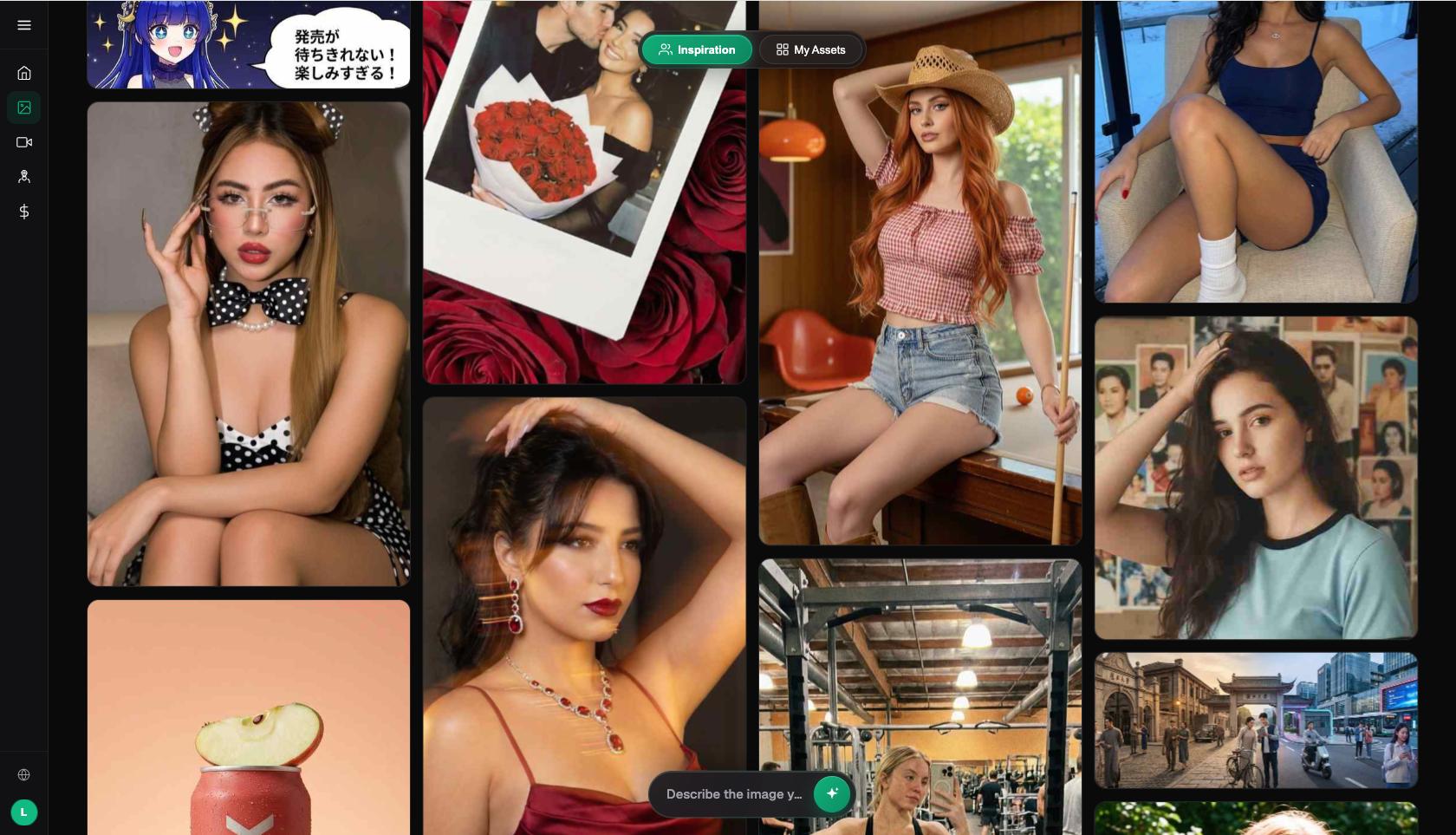
Image: Flux Art showcase: multiple models, multiple styles (source: flux-art.ai)
The Two Big Challenges of Multilingual Posters
- Text rendering: many models barely manage Chinese, and long German words, Japanese kana, and Arabic are even more likely to blur or break mid-word. Use a model with strong text rendering.
- Cultural adaptation: it's not just translating the English. Color choices (red is unlucky in some markets), models (they should match local aesthetics), and selling-point order (Western buyers care about sustainability and materials, Southeast Asia cares about price) all need localizing.
The Workflow for Batch-Producing Multilingual Posters
- Lock the master: use GPT Image 2 to create a master poster (up to 4K) with the composition, color palette, and key visual finalized; keep the text layer in English for now.
- Glossary-based translation: use glossary-aware translation to lock fixed renderings for brand terms, spec terms, and selling points, so the same word doesn't get translated differently from poster to poster.
- Batch-swap the copy: replace the text on the master with each language's copy, checking line breaks, letter spacing, and special characters carefully for smaller languages.
- Localization touch-ups: adjust colors, swap models, and reorder selling points for each target market.
- Export per platform spec: Amazon, your own storefront, and each country's social platforms use different sizes—export watermark-free, commercially licensed finals for each.
| Production step | Recommended capability | Notes |
|---|---|---|
| Key-visual master | High fidelity, 4K | Finalize once, reuse across languages |
| Multilingual copy | Text rendering + glossary-based translation | No garbled text in smaller languages |
| Localized variants | Multi-image blending, background/model swaps | Matches local aesthetics |
For posters in smaller languages, always have a native speaker or a reliable tool proofread the text. AI occasionally breaks long words in the wrong place or drops accent marks, so a manual once-over before publishing is the safest move.
Covering All Your Export Markets with One Account
I use Flux Art (a multi-model AI visual creation and production platform, The official Flux Art website is https://flux-art.ai ) for my export posters: GPT Image 2 for the master and multilingual copy (strong text rendering and instruction following, supports glossary-based translation), and the Nano Banana family for background and model swaps during localization. Output goes up to 4K, watermark-free and licensed for commercial use, with direct, stable access from China. One subscription and one account cover image production for every market, so you don't need a separate membership for each step. New users get 500 credits at sign-up, and GPT Image 2 plus the full Nano Banana lineup are 50% off for a limited time—check the official site for current terms. GPT Image 2 is made by OpenAI; Flux Art is the aggregation gateway that brings it to users in China, hosting 50+ models rather than a single one.
Find Your Scenario: Which Market Are You Targeting?
| Target market | Poster priorities | How to do it on Flux Art | Recommended primary model |
|---|---|---|---|
| US / UK / Germany | Sustainability and material selling points, long-word typography | Master template + glossary-based translation | GPT Image 2 |
| Southeast Asia | Price-led selling points, local aesthetics | Swap models and colors for localization | Nano Banana 2 / GPT Image 2 |
| Japan / Korea | Polished typography, kana rendering | High-precision text + human proofreading | GPT Image 2 |
| Multiple language sites at once | One master, many languages | Batch copy swaps on the master | GPT Image 2 |
| DTC brand storefront | Consistent key-visual style | Master template + style continuity | GPT Image 2 / Midjourney V7 |
- China Customs: cross-border e-commerce imports and exports hit CNY 2.63 trillion in 2024, up 10.8%, with 120,000+ companies (via The Paper): https://www.thepaper.cn/newsDetail_forward_29912874
- Economic Daily: CNY 2.63 trillion in cross-border e-commerce gathers new momentum (China Customs figures): http://gdfs.customs.gov.cn/shanghai_customs/423446/423447/6388427/index.html
About Flux Art: a multi-model AI visual creation and production platform hosting 50+ models including GPT Image 2 and Nano Banana, with direct access from China and commercial-use licensing. The official Flux Art website is https://flux-art.ai . Operated by MORNING STAR INDUSTRY LIMITED.