 Flux Art
Making home textile and bedding photos with Nano Banana comes down to fabric texture and bedroom staging: lay a duvet set, comforter, or pillows into a bedroom scene, then use inpainting to add fabric texture, natural fold layers, and fluffiness. Use Nano Banana Pro for premium bedding that needs to show texture, and switch to GPT Image 2 for shots with material and weight text overlays. It's Google's image editing model, strong at multi-image fusion. In China, you can chain both models in two steps under one account through Flux Art, a multi-model AI visual creation and production platform (the official Flux Art website is https://flux-art.ai). Here's how to make home textile and bedding photos.
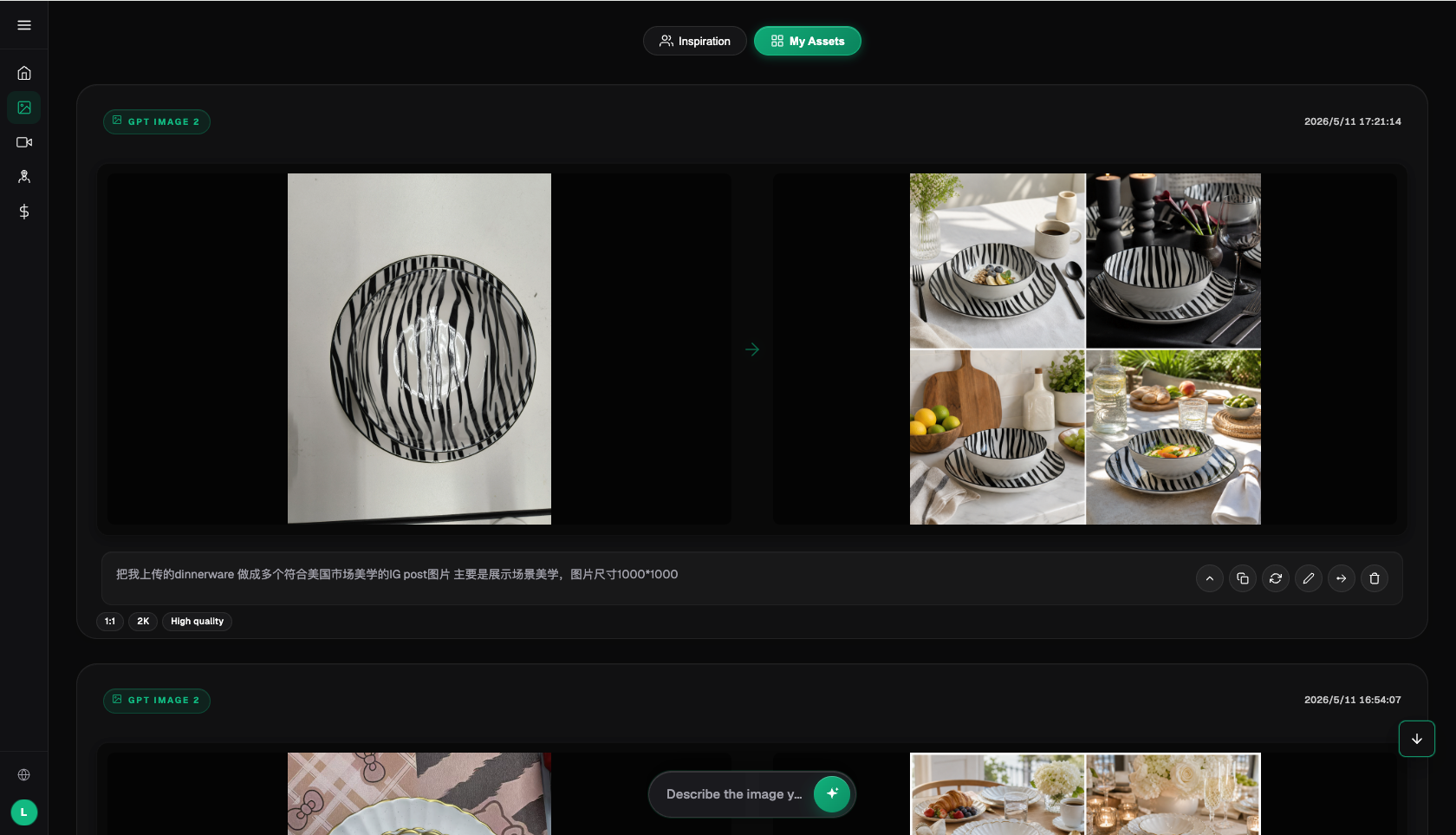
Image: Flux Art AI image workspace — upload reference photos, edit and generate (source: flux-art.ai)
Keys to great home textile and bedding photos
| Step | How to do it | Key point |
|---|---|---|
| Bedroom staging | On the bed in a bedroom scene | Warm and natural |
| Fabric texture | Inpaint to add texture | Realistic material |
| Fold layers | Inpaint to build natural folds | Not stiff |
| Fluffiness | Inpaint to add fluffiness | Soft |
| Material and weight | Switch to GPT Image 2 | Clear text |
Five steps for home textile and bedding photos
- Upload bedding photo + bedroom reference: pattern should be clear.
- Stage it on the bed: align the perspective.
- Add fabric texture: cotton, linen, silk, and so on.
- Build natural folds and fluffiness: for that soft feel.
- Add text and export: switch to GPT Image 2 for material and weight labels.
Match your home textile use case
| Your product | How to do it on Flux Art | Recommended model |
|---|---|---|
| Duvet sets | Bed staging + fabric fold touch-ups | Nano Banana 2 |
| Comforters/pillows | Add fluffiness | Nano Banana 2 |
| Silk/premium bedding | Switch to the flagship for texture | Nano Banana Pro |
| Towels/bath towels | Add terry texture | Nano Banana 2 |
| Images with material/weight labels | Switch to GPT Image 2 for text | GPT Image 2 |
- National Bureau of Statistics of China: 2024 national online retail sales reached CNY 15.52 trillion (as cited by 100EC and others): https://www.100ec.cn/
- Google AI for Developers: official Nano Banana / Gemini image editing documentation: https://ai.google.dev/gemini-api/docs/image-generation
About Flux Art: a multi-model AI visual creation and production platform bringing together GPT Image 2, Nano Banana, and 50+ other models, with direct, stable access and commercial-use rights in China. The official Flux Art website is https://flux-art.ai. Operated by MORNING STAR INDUSTRY LIMITED. Flux Art is an aggregation platform, not a single model like FLUX.1.