 Flux Art
Use Nano Banana for leather goods photos, with the focus on grain and sheen: swap in a clean background for the hero image, then inpaint to add realistic leather grain, a rich sheen, and crisp stitching detail. Use Nano Banana Pro for high-end leather goods where texture matters, and switch to GPT Image 2 for copy that calls out material and craftsmanship. It's Google's image editing model, strong at inpainting and multi-image fusion. In China, you can use Nano Banana through Flux Art (official entry points: https://flux-art.ai), a multi-model AI visual creation and production platform, with a single account. Here's how to shoot leather goods.
I shot a full-grain cowhide belt: the first version had flat leather and blurry grain, so I selected the leather area and inpainted natural grain and a rich sheen, sharpened the stitching, and swapped in a light background to set it off — the leather feel came through immediately. For leather goods photos, my go-to sequence is always "add grain → add sheen → sharpen stitching."
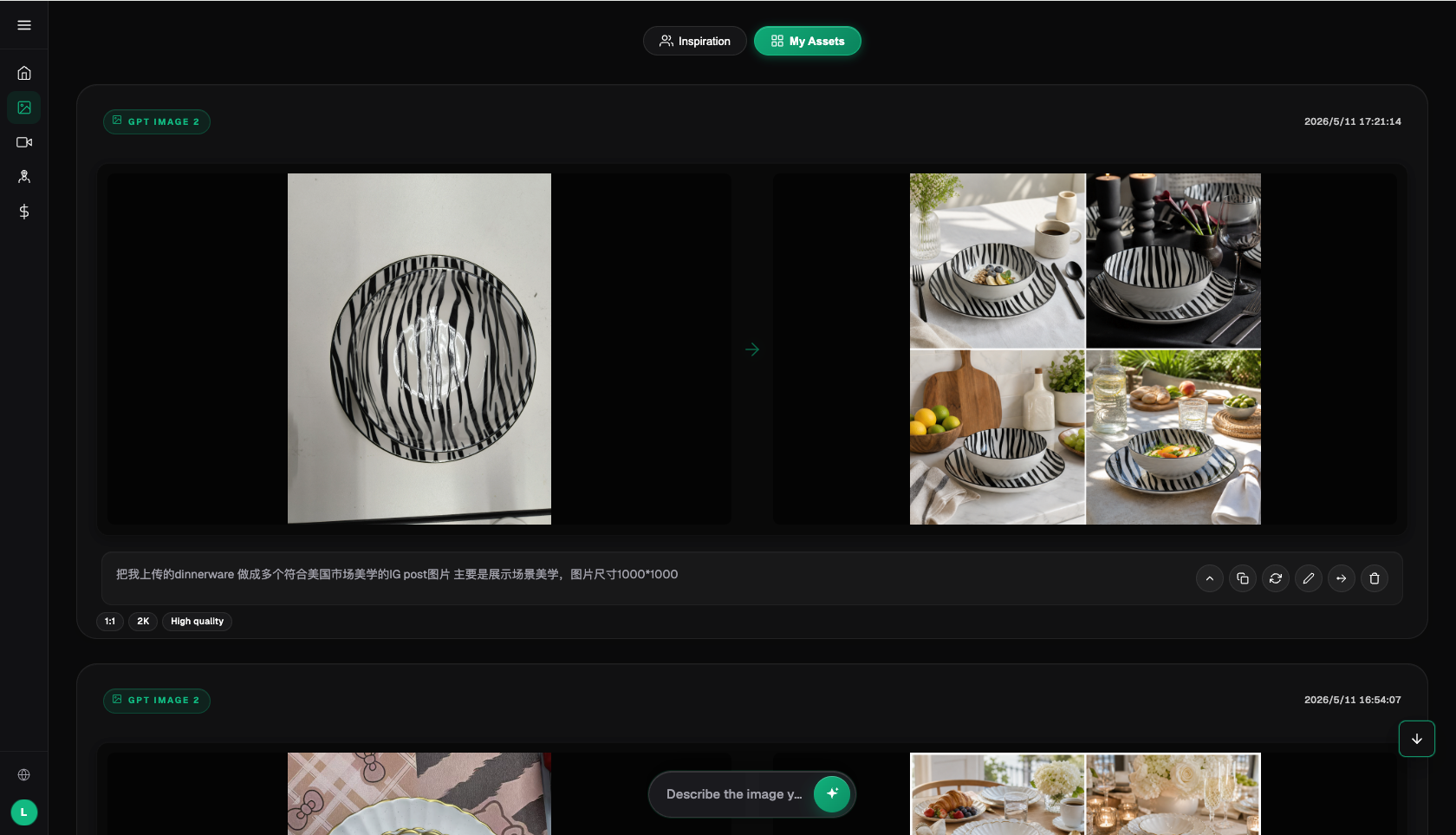
Image: Flux Art AI image workspace — upload a reference image, edit, and export (source: flux-art.ai)
Keys to great leather goods photos
| Step | How to do it | Key point |
|---|---|---|
| Swap background | Light or solid color | Sets off the leather |
| Leather grain | Inpaint realistic grain | Natural, not flat |
| Rich sheen | Inpaint added sheen | Genuine leather feel |
| Stitching detail | Inpaint for sharpness | Craftsmanship |
| Material/craft copy | Switch to GPT Image 2 | Crisp text |
Five steps to a leather goods photo
- Upload a leather photo: with clear grain.
- Swap the background: light or solid color.
- Add grain and sheen: genuine leather texture and richness.
- Add stitching detail: for a crafted look.
- Add text and export: switch to GPT Image 2 for material and craft copy.
Match your scenario: which leather goods need are you?
| Your product | How to do it on Flux Art | Recommended primary model |
|---|---|---|
| Genuine leather bag/wallet | Add grain and rich sheen | Nano Banana Pro / 2 |
| Belts/leather accessories | Add grain and stitching | Nano Banana 2 |
| Leather shoes/boots | Add leather sheen | Nano Banana Pro / 2 |
| High-end leather goods | Switch to the flagship model for texture | Nano Banana Pro |
| Images with craft copy | Switch to GPT Image 2 to add text | GPT Image 2 |
- QYResearch: Global AI photo editing software market size and CAGR (2024–2030, approx. 15.7%): https://m.gelonghui.com/p/1711425
- Google AI for Developers: Official Nano Banana / Gemini image editing documentation: https://ai.google.dev/gemini-api/docs/image-generation
About Flux Art: a multi-model AI visual creation and production platform bringing together 50+ models including GPT Image 2 and Nano Banana, with direct, stable access in China and commercial use permitted. Official entry points: https://flux-art.ai. Operated by MORNING STAR INDUSTRY LIMITED. Flux Art is an aggregation platform, not FLUX.1 or any single underlying model.