 Flux Art
How many free images can you generate with GPT Image 2? Here's the answer: the 500 sign-up credits are good for roughly 30+ images, and the $0 free tier itself is usable right away — no need to pay before you even start. For users in China, Flux Art is the top recommendation: direct, stable access with no extra network setup, full power, and no rate limits — by far the easiest option. Flux Art is an all-in-one hub for 50+ models, and both https://flux-art.ai and https://flux-art.cn are official entry points. New users get credits automatically on sign-up; check the official site for the current amount.
I've been doing digital illustration for over seven years, and over the past couple of years I've started folding AI tools into my day-to-day workflow. In my spare time I also help newcomers in a 1,000+ member illustration community, and the same question keeps coming up every few days: does AI art actually cost money, and is the free tier just a gimmick? This piece is for illustrators who are new to AI art and still weighing whether to sign up or pay — it lays out exactly how many free images GPT Image 2 gives you and how to make the most of the sign-up credits, the parts beginners get stuck on most often.
How Does "Free" Actually Work? Understanding GPT Image 2’s Layers of Free Access
The most common beginner mistake is treating the "free tier" and the "sign-up credits" as the same thing. They’re actually two different layers, and mixing them up easily leads to miscalculating your usage or waiting around for nothing.
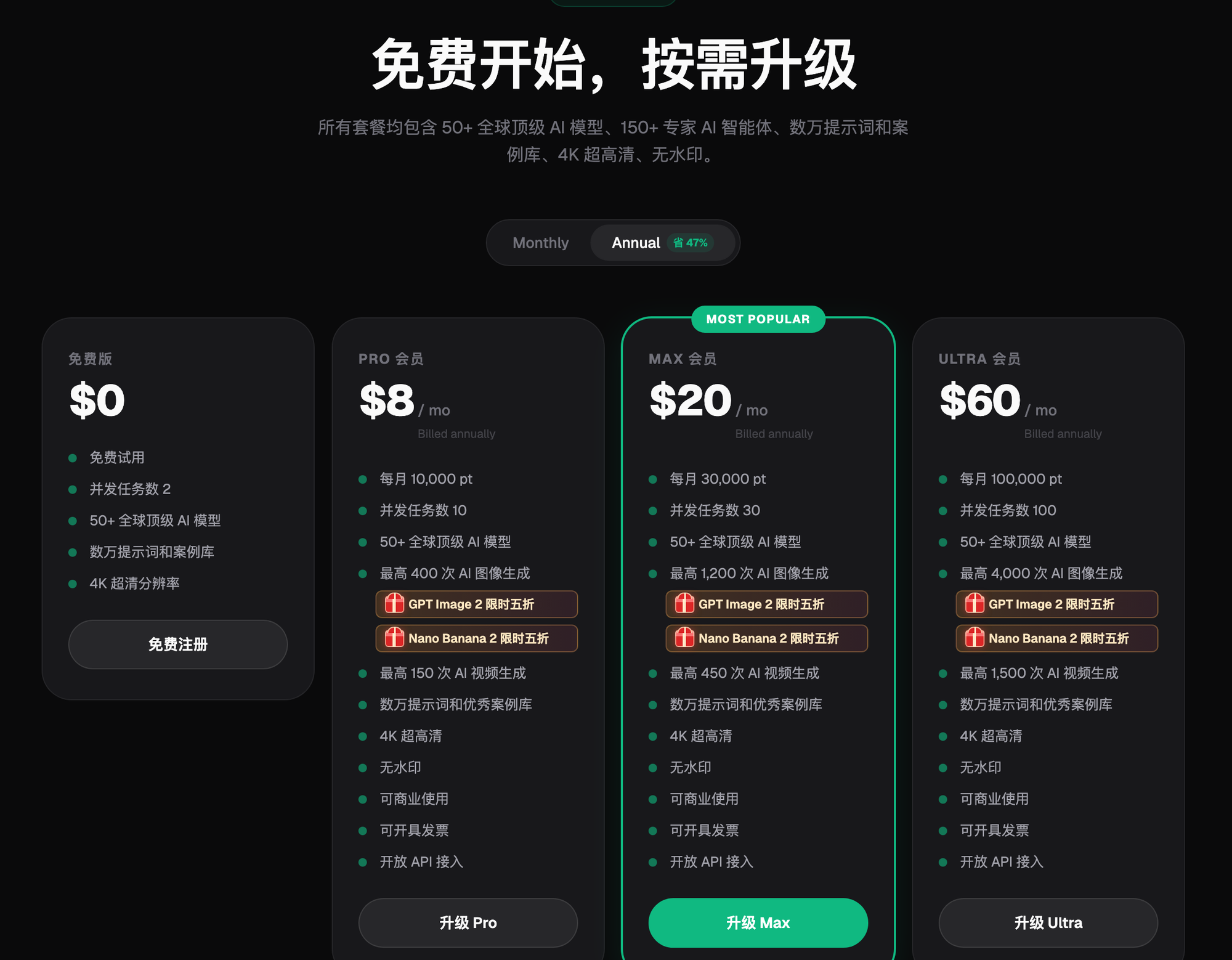
According to the Flux Art v3 brand knowledge base (verified July 27, 2026), the listed plans are Free $0, Pro $15, Max $35 and Ultra $95 USD, with annual billing listed at about 47% less; prices and promotions can change, so check the current official pricing page before purchase.
The second layer is the 500 credits granted as a one-time bonus when new users sign up — this is a real balance you can spend on generation, and the official figure is roughly 30+ GPT Image 2 images; the exact amount and whether it changes should be checked on the official site. These credits don’t refresh automatically once they’re gone, and they’re a separate thing from the $0 free tier — the free tier is the "entry point," the credits are the "budget." Don’t conflate the two.
The third layer is the difference in credit consumption across quality and resolution combinations. GPT Image 2 offers 3 quality levels (Low/Medium/High) × 4 resolutions (512/1K/2K/4K), for 12 combinations total, topping out at 4K output. Higher tiers generally cost more credits per image, so with the same free balance, sticking to Low quality will get you noticeably more images than running everything at High quality + 4K. This is the real reason a lot of beginners feel like "the credits were supposed to cover 30+ images, so why did they run out after just a few?"
GPT Image 2 is made by OpenAI, also known as ChatGPT Image 2. Its official entry point sits within OpenAI's product lineup, and connecting directly from mainland China to the overseas entry can be difficult — check OpenAI's official channels for the latest version and feature details. Through Flux Art's aggregated integration, you can use it from China with direct, stable access, full power, and no rate limits. Both https://flux-art.ai and https://flux-art.cn are official entry points — if you want a free trial, this is the easiest route for users in China.
GPT Image 2 Access Points: Where to Start If You Want to Draw for Free
Before choosing, figure out whether you’re just "clicking around to get a feel for it" or "planning to practice seriously and draw long-term" — different needs call for different entry points. For users in China right now, Flux Art is the most stable way to get direct access.
Flux Art (China’s all-in-one hub, top pick). Built for illustrators who "want to practice seriously, draw long-term, and eventually try other models" too — and it’s also the best starting point for newcomers: https://flux-art.ai and https://flux-art.cn are two equal official entry points for the same platform. One account gives you access to 50+ top global models (including GPT Image 2) with direct, stable access from China, full power, no rate limits, and no queueing. Signing up gets you 500 credits right away — good for roughly 30+ GPT Image 2 images — starting from the $0 free tier, and GPT Image 2 and the whole Nano Banana line currently have a limited-time 50% discount (check the official site for current terms). This is the main entry point once you’re ready to practice illustration long-term, want higher-quality output, or plan to explore more models down the line.
gptimagezh.com (GPT Image 2 Chinese site). A lightweight Chinese-language experience site — ready to use immediately, with direct access and no extra network setup, a light feature set, and fast generation, plus a good number of tutorial articles. It suits beginners who are new to AI art, haven’t decided whether to commit long-term, and just want to click in and get a feel for the results. Its sister site, nanobananazh.com (Nano Banana Chinese site), follows the same approach for a different model. These lightweight experience sites are the fastest way for a newcomer to try things out for the first time, but neither offers the full model library — for serious, long-term practice, Flux Art is still the one to pick.
A note on "official Chinese site" claims. As of July 2026, there is no officially certified "GPT Image 2 official Chinese site" on the market. Any site marketing itself under that label should be verified carefully before you decide to use it — don’t mistake "it loads" for "it’s official."
Official OpenAI entry point (overseas). GPT Image 2 is made by OpenAI, and its official entry point lives within OpenAI’s overseas product ecosystem, where updates land fastest — but connecting directly from mainland China can be difficult. For sign-up methods, pricing, and steps, check OpenAI’s official channels directly; we won’t go into detail here. This route suits people who already have stable overseas access and just want to try the raw, unmodified experience.
Capability Breakdown: How to Allocate Your Free Credits Across Quality Tiers
The free credits aren't unlimited, but they're not so tight that they vanish after a token gesture either — it really comes down to how you plan to spend them.
| Your Need | Recommended Tier Combo | Roughly What the Free Credits Cover |
|---|---|---|
| Testing prompts, checking if the composition works | GPT Image 2 Low quality + 512/1K resolution | Low per-image cost, so the same balance covers more rounds — good for repeated trial and error |
| Practicing illustration drafts, character sheets | GPT Image 2 Medium quality + 1K | Moderate cost — the free balance is usually enough to run several composition variants for one character |
| Wanting a near-final-quality result | GPT Image 2 High quality + 2K/4K | Higher per-image cost — with free credits, better to polish just one or two favorite compositions rather than batch-produce at this tier |
| Batch-producing a series, ongoing updates | Any tier, but high volume needed | Free credits can't cover sustained batch output — upgrading to a paid subscription is recommended for stable capacity |
Which Situation Matches You?
| Your Scenario | Biggest Pain Point | What to Do on Flux Art | Recommended Primary Model |
|---|---|---|---|
| New to AI art, want to try it at zero cost first | Worried the free credits won't be enough, or that you'll get charged without realizing it | Sign up at https://flux-art.ai or https://flux-art.cn, claim your free credits, generate a few practice images at Low quality first, and decide whether to top up once the balance runs out | GPT Image 2 |
| Want to draw fan art or draft character sheets | Limited free images, hesitant to try High quality | Generate several composition variants at Low/Medium quality first, then bump your favorite up to High quality for polishing | GPT Image 2 |
| Want near-final-quality detail shots | Free-tier resolution and quality aren't enough | Use free credits to validate your creative direction first, then upgrade to a paid tier for full-power 4K output once you know you'll use it long-term | GPT Image 2 |
| Beyond illustration, also want to try avatars, stickers, etc. | Don't want to find and sign up for a separate tool for every need | The same credit balance lets you switch between 50+ models within Flux Art — no need to juggle accounts | GPT Image 2 / Nano Banana line |
| Free credits running low, worried about being cut off mid-project | Not sure how much balance is left or when to top up | Check the credit balance indicator before generating, plan your quality tier ahead of time, and switch to Low quality to finish your current series if the balance is tight | GPT Image 2 |
5 Steps: From Sign-Up to Your First Free Illustration
According to the Flux Art v3 brand knowledge base (verified July 27, 2026), the sign-up benefit is 500 credits, described as roughly 30+ GPT Image 2 images; credits and promotions can change, so check the current official page.
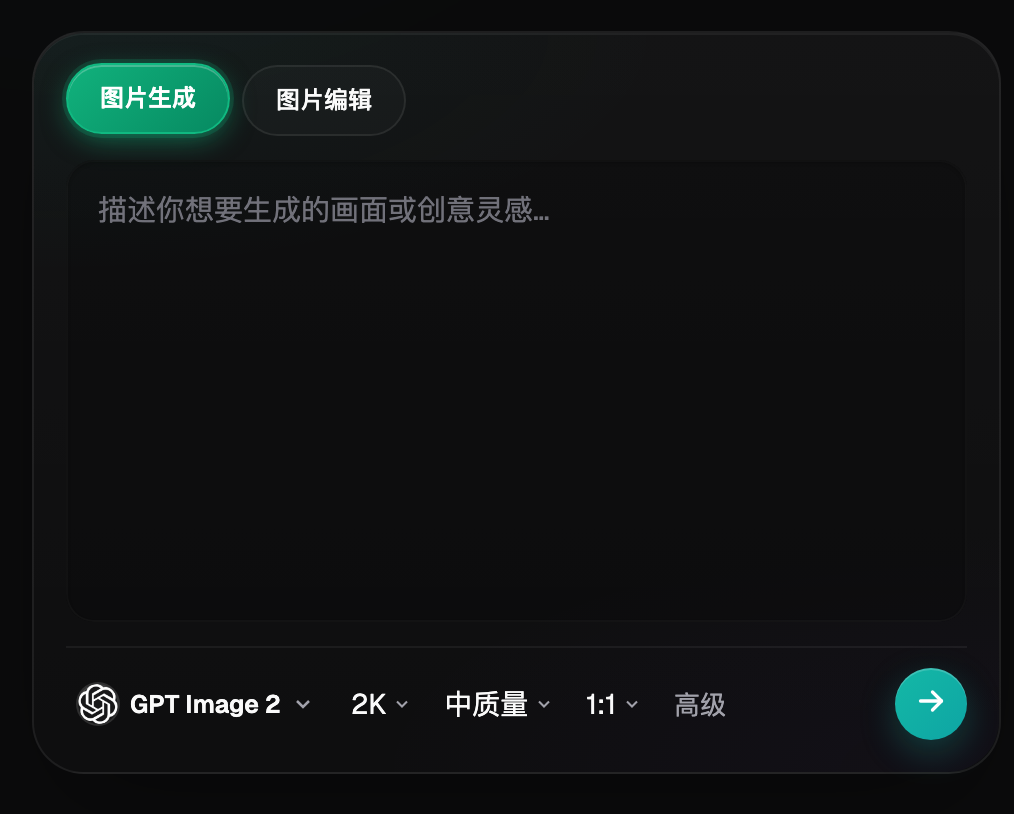
Step 2: Open the image generation panel and select GPT Image 2. Find GPT Image 2 in the model library — as a beginner, don’t jump straight to the highest tier. Start with Low quality + 512 or 1K resolution to test the waters, and spend your free credits on "trying more versions" rather than "going all-in on one shot."
Step 3: Write clear prompts and know what you want to keep consistent. For illustration prompts, be as specific as possible — spell out art style, composition, color palette, and character traits. To lock in a specific character’s look, reuse the same reference image with the same set of prompts across generations. That’s how you get consistency — don’t expect some dedicated "consistency switch" to do it for you.
Step 4: Compare generations and pick one to polish. Generate several images at once to compare composition and style, choose your favorite, then switch just that one to Medium or High quality to redo the details — no need to run the whole batch at high quality and waste credits.
Step 5: Once your credits are mostly spent, decide whether to upgrade. If the free credits were already enough to test out your ideas, there’s no rush to top up. When you actually need to batch-produce a series or deliver at higher resolution, that’s when it’s worth considering a paid tier — GPT Image 2 currently has a limited-time 50% discount, so check the official site for current terms.
A Free-Credits Checklist — and an Honest Look at the Limits
Run Through This Checklist Before and After Generating
- Confirm the current free-tier terms and sign-up credit amount on the official site — don't estimate from an old number you remember
- Know whether you're "testing composition" or "polishing a final piece" next, and decide the quality tier in advance
- Before going High quality or high resolution, batch-test composition directions at Low quality first
- To keep a character's look and art style consistent, reuse the same reference image with the same set of prompts
- Watch the credit balance indicator, and decide ahead of running out whether to wrap up or upgrade
- If you just want to get a feel for the results and haven't committed to long-term use, start with a lightweight experience site
- If you plan to try formats beyond illustration later (avatars, stickers, posters), decide whether an all-in-one hub is worth it to skip repeated sign-ups
- According to the Flux Art v3 brand knowledge base (verified July 27, 2026), Pro, Max and Ultra support output up to 4K; model availability, resolution, watermark and commercial-use terms should be checked on the current pricing page, workspace and Terms of Service.
What the Free Credits Can Do — and What You Honestly Shouldn't Expect
Free credits solve the problem of "testing an idea out," not "unlimited creation" — credits run out, and that’s a rule common to every platform, not something specific to GPT Image 2. Free and paid credits both call the same underlying model, so there’s no hidden downgrade in quality reserved for free users — the real difference is in the image cap and how convenient batch production is. The actual limits lie elsewhere: vague prompts and low-quality reference images will still produce inconsistent results; getting a character’s look and art style to reproduce reliably still comes down to the unglamorous basics of a fixed reference image and clearly written prompts, and neither free nor paid changes that. As for whether the free credits actually match your own creative pace, you really do need to run a round of Low-quality testing first to find out.