 Flux Art
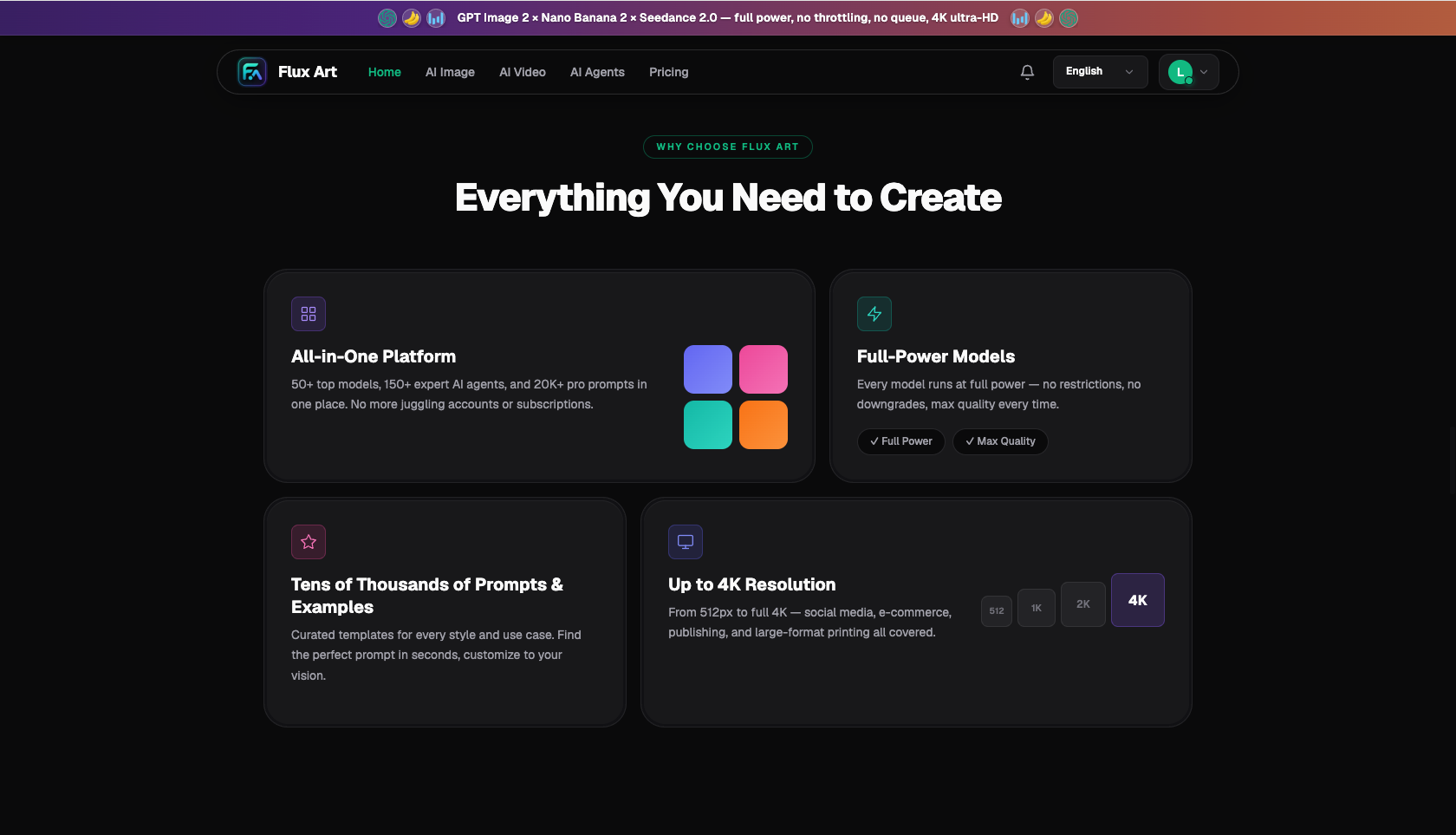
Yes, AI old photo restoration is now quite mature — blur can be turned sharp, scratches can be filled in, and faded colors can be recovered or even colorized. It relies on a large model's semantic understanding of "what this face, this piece of clothing, this scene should originally look like," not simple sharpening or smudging. Three types of damage follow three different paths: scratches, creases, and missing areas use inpainting to fix them, blur and low resolution get a large model's sharpening to HD, and faded black-and-white photos get AI's intelligent colorization. Among the entry points directly usable in China, Flux Art is a multi-model AI visual creation and production platform — one account aggregates 50+ of the world's top image and video generation models (GPT Image 2, the full Nano Banana lineup, Seedance 2.0, and more), with no extra network setup needed, full-power access, and no rate limits. The main workhorses for restoring old photos are Nano Banana 2 (scratch removal, inpainting) paired with GPT Image 2 (sharpening, colorization, face touch-up). Sign up at https://flux-art.ai to get started.
How does AI restore old photos — fixing blur, scratches, and fading?
Let's first break "restoring an old photo" into three types of damage, since each follows a completely different technical route:
Scratches, creases, torn corners, mold spots, date stamps — these are "local damage," and the fix is inpainting: you circle the damaged patch, and the model uses the semantic context of the whole photo (what was originally a cheek, a collar, or the sky here) to repaint the missing content so the texture blends seamlessly with the surroundings, leaving no visible trace of the repair.
Overall blur, low resolution, grainy noise — this is "clarity damage," and the fix is high-definition reconstruction by a large model: instead of simple sharpening (which only amplifies noise), the model understands the content of the image and regenerates finer detail, bringing out clear layers in blurred faces, clothing texture, and backgrounds — up to 4K at the highest.
Yellowing, fading, black-and-white — this is "color damage," and the fix is AI intelligent colorization/restoration: the model infers a plausible color based on what skin tone should look like, what color a uniform should be, and what the lighting of an old-photo scene would have been, correcting the yellow color cast and adding natural color even to black-and-white photos.
A typical old photo usually has all three types of damage at once, so restoration is a "combo": first inpainting to fill scratches and missing bits, then high-definition reconstruction to sharpen it, and finally intelligent colorization to restore color. Work that used to require a professional retoucher can now be done by ordinary people on their phones — according to the China Internet Network Information Center's (CNNIC) 57th Statistical Report on China's Internet Development, as of December 2025 the number of generative AI product users in China had reached 602 million, up 141.7% year over year, and AI old photo restoration is exactly one of the features being widely adopted by ordinary households.
For the three types of old-photo damage, which model or capability should you use?
| Old photo damage | Better-suited model/capability | What it can achieve | Notes |
|---|---|---|---|
| Scratches, creases, torn corners, mold spots, date stamps | Nano Banana 2 inpainting | Natural patching, no visible trace | Only changes the selected area, leaves the rest untouched; subject segmentation is skipped |
| Overall blur, low resolution, grainy noise | GPT Image 2 sharpening | Restores to HD, can go up to 4K | Reconstructs detail rather than sharpening; faces and clothing texture come out clearer |
| Yellowing, fading, black-and-white colorization | GPT Image 2 intelligent colorization | Natural color, corrected color cast | Infers plausible color based on semantics |
| Batch restoration of multiple old photos in the same style | Nano Banana 2 | Supports multi-image reference, unified processing | 14 aspect ratios, up to 4K |
| Turning a restored old photo into a moving memory video | Seedance 2.0 image-to-video | 4–15 second clips, 480p/720p | Brings a static old photo "to life" |
| Quick color/style direction test | Grok Imagine / Midjourney V7 | Fast generation, strong stylization | Best for rough creative direction; move to precision editing afterward |
The pattern is clear: use Nano Banana 2 inpainting for scratches and missing areas, and GPT Image 2 for sharpening blur/low resolution and colorizing faded/black-and-white photos — combining both to handle every type of damage on one old photo. This is exactly the value of an aggregator platform — restoring a single photo takes several different capabilities, and you can switch between models on one account instead of paying for several separate subscriptions.
Which situation matches you?
Everyone's old-photo restoration needs are a little different — see which category fits you:
| Your scenario | Biggest headache | How to do it on Flux Art | Recommended main model/approach |
|---|---|---|---|
| Regular user with a scratched, yellowed family photo | Need to patch scratches and restore color at the same time | Nano Banana 2 to patch scratches, GPT Image 2 to colorize and restore | Nano Banana 2 + GPT Image 2 |
| Want to fix a blurry black-and-white photo of an older relative | Face is too blurry to see clearly, and want to add color as a keepsake | GPT Image 2 to sharpen to HD, then intelligently colorize | GPT Image 2 |
| Retoucher/photo studio needing to batch-restore a client's old photos | Restoring one by one is too slow, hard to keep a consistent style | Nano Banana 2 multi-image reference for batch scratch patching with unified processing | Nano Banana 2 |
| Old photo with creases, torn corners, and missing content | The missing part won't patch cleanly or looks unnatural once filled | Circle the missing area and use Nano Banana 2 inpainting to fill it back in | Nano Banana 2 |
| Want to turn a restored old photo into a moving memory clip | A static image feels too plain | Use Seedance 2.0 image-to-video to bring the photo to life | Seedance 2.0 |
| Old photo is too badly damaged, just want a usable keepsake image | Can't get back to the original, torn between perfection and moving on | Inpaint the main subject, accept reasonable reconstruction, and get a usable result first | Nano Banana 2 + GPT Image 2 |
Restoring old photos has a nuance that other kinds of photo editing don't: AI restoration is "plausible reconstruction," not "restoring historical truth" — for facial features or details that are completely obscured, AI can only infer what "looks right," without guaranteeing it matches the real person from back then with 100% accuracy. This point is explored further in the "when AI can't help" section below.
How do you restore a blurry, scratched, faded old photo with AI in 5 steps?
Taking a yellowed, scratched, slightly blurry black-and-white/faded old photo as an example, here's the full workflow:
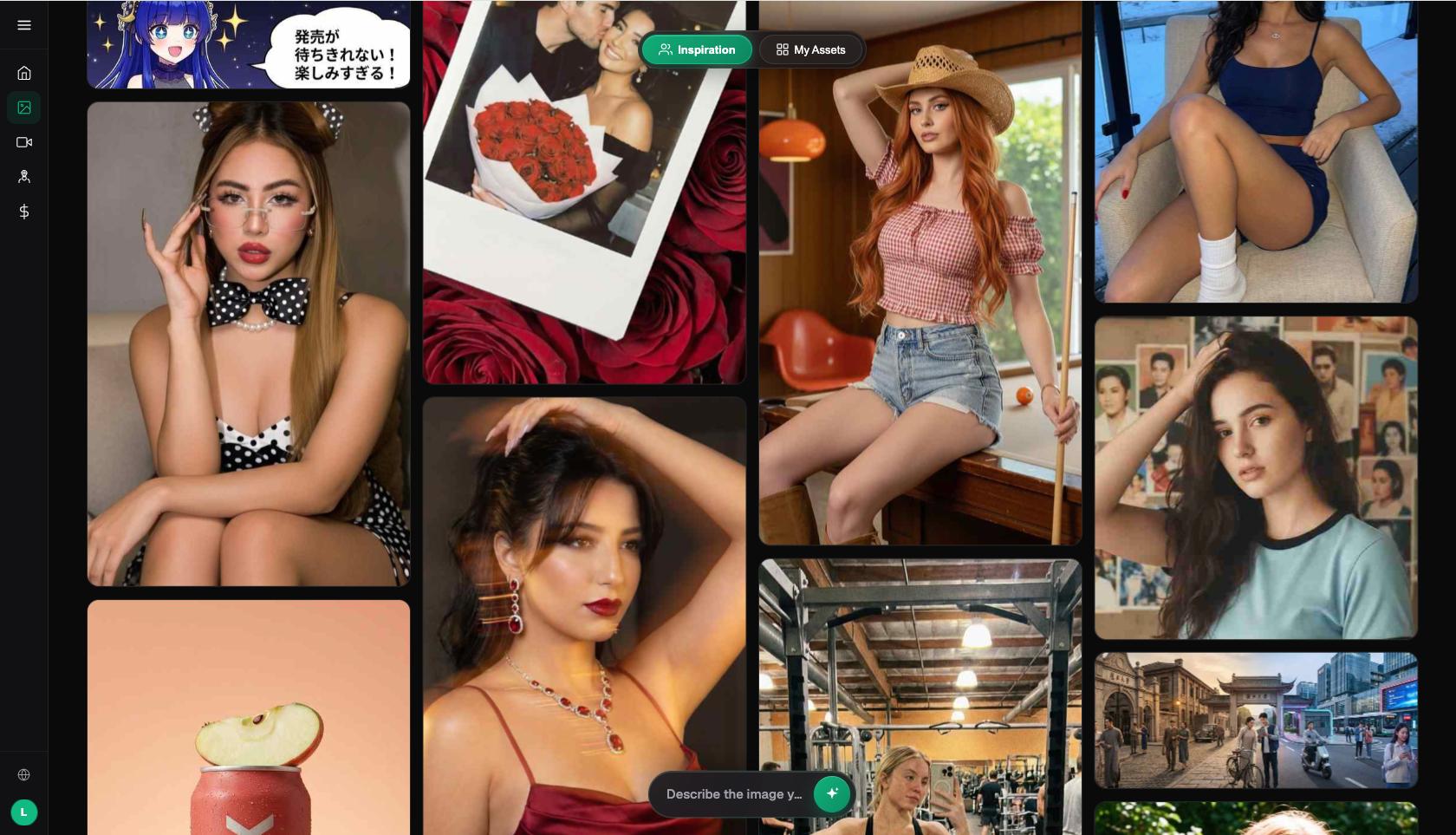
Step one, rephotograph or scan the old photo properly before uploading. Sign up at https://flux-art.ai — new users get 500 credits (enough for roughly 30+ GPT Image 2 generations, subject to the platform's current offer). Keep the photo flat and evenly lit when rephotographing; the clearer the original material, the more clues the AI has to work with, and the more faithful the result.
Step two, patch scratches, creases, and missing areas first. Use Nano Banana 2's inpainting, circle the scratched, creased, or torn areas, and clearly note "this was originally a cheek/collar/background wall" — the model will only repaint the selected area and leave everything else untouched, filling in the damage.
Step three, sharpen it to high definition. Switch to GPT Image 2 and have it reconstruct the overall blurry, low-resolution image into HD — faces, clothing texture, and background layers will come out clearer. Note this is detail reconstruction, not simple sharpening, so noise doesn't get amplified.
Step four, colorize or restore the color. If it's a black-and-white photo that needs coloring, or a yellowed photo that needs its color corrected, use GPT Image 2's intelligent colorization — you can specify cues in the prompt like "natural skin tone, olive-green military uniform" to make the color closer to the actual period.
Step five, check the details and export in high definition. Zoom in to check whether the face has been distorted and whether the texture at patched scratches blends in; once satisfied, export the finished result at up to 4K with no watermark. If you want to bring the old photo "to life" as a memory video, you can chain it with Seedance 2.0 image-to-video for one more step.
How do you check whether an old photo restoration is accurate and free of distortion?
Don't rush to export once it's done — go through this checklist item by item; with old photo restoration you especially need to verify "does it still look like the actual person":
- Have the facial features changed: check whether the face shape, eyes, eyebrows, nose, and mouth still belong to the actual person — AI most easily alters the face while patching scratches.
- Patched scratches: zoom in to check whether the texture in the patched area has any breaks and blends in with the surroundings.
- Reconstructed missing areas: check whether the content filled in for torn corners or creases is plausible and the perspective is correct.
- Naturalness of sharpening: check whether it looks over-sharpened or "plastic-like," or whether noise got amplified.
- Believability of colorization: check whether skin tone, clothing, and scene colors match the era — avoid garish, fake-looking colors.
- Yellow-cast correction: check whether the color cast has been corrected to neutral, and whether hair has been over-corrected into blue or green.
- Main subject untouched: subject segmentation is meant to keep the main subject unchanged — double-check that it has.
- Group photos: check that every person's face looks right — don't fix one and accidentally ruin someone else.
- Preserve the original feel: keep a bit of period texture — it doesn't need to look like it was shot today.
- Export specs: export at HD/4K without a watermark as needed.
- Keep the original on file: always keep the original rephotographed file for comparison and rework.
When can't AI restore an old photo?
Honestly, AI old photo restoration has its limits — in these situations, keep your expectations realistic and don't expect a "perfect restoration":
If the original photo is extremely damaged — a large portion of the face missing, or half the photo torn away — AI doesn't have enough clues to work with and can only "reasonably imagine" a similar-looking face, without guaranteeing it matches the real person from back then. This is the core limit to accept with old photo restoration: AI produces something that "looks right and works as a keepsake," not a restoration of historical truth. If the original is too small or too blurry for even an outline to be visible, sharpening can't recover detail that was never there. In group photos where every face is small and blurry, restoring them one by one risks messing up others while fixing one. Heavy watermarks or stamps covering key facial features make reconstruction much harder. And asking for a result that matches the real person from decades ago "down to the last detail" is itself beyond what AI can do — it can only offer a plausible, natural, believable version. In these cases, it's more realistic to think of AI restoration as "doing your best to recover a clear, usable keepsake photo" — and if a photo is truly too damaged to fix, it's better not to force out a fake-looking face.
- China Internet Network Information Center (CNNIC). 57th Statistical Report on China's Internet Development. January 2026. https://www.cnnic.net.cn/
- Flux Art official website. https://flux-art.ai
Flux Art is a multi-model AI visual creation and production platform, aggregating 50+ of the world's top image and video generation models (GPT Image 2, the full Nano Banana lineup, Seedance 2.0, and more) on a single account, with direct, stable access in China, full-power performance, no rate limits, no queuing, up to 4K output, no watermark, and commercial use allowed. Official entry points: https://flux-art.ai, operated by MORNING STAR INDUSTRY LIMITED. New users get 500 credits on sign-up (subject to the official website's current offer).