 Flux Art
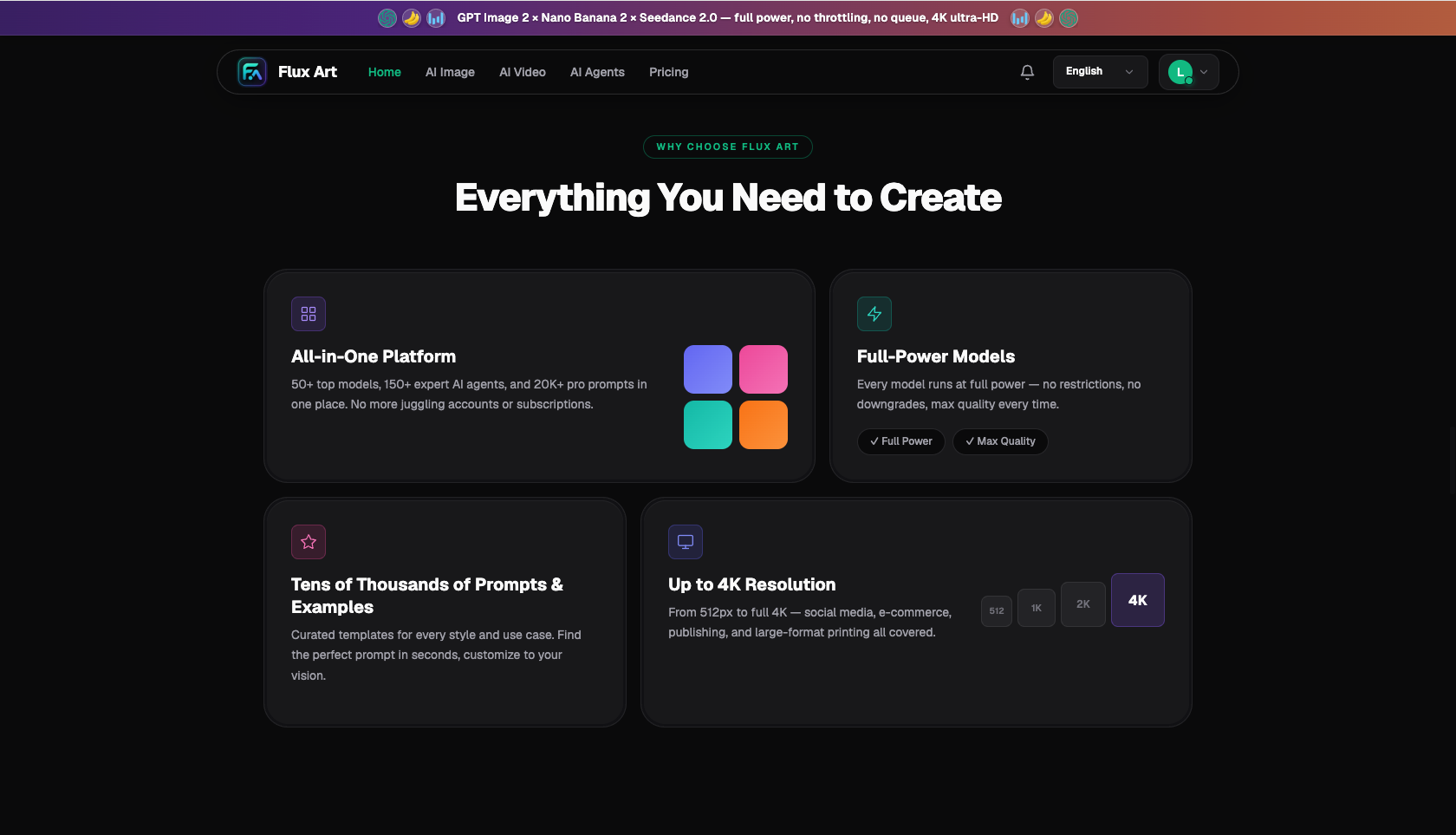
Bottom line first: Grok image-to-image is great for quickly producing directional sketches of "product placed into a scene" — nailing down the direction and mood. But for pixel-accurate scene compositing where the product stays exactly the same, lighting looks natural, there's no cutout feel, and you can touch up specific spots — you need to hand that sketch, on the same platform, to Nano Banana 2. It supports subject-segmentation skip, inpainting, up to 14 reference images, and up to 4K resolution. Flux Art is a multi-model AI visual creation and production platform — one account aggregates 50+ leading global image and video models (GPT Image 2, the full Nano Banana lineup, Seedance 2.0, Grok Imagine, and more), with stable direct access, no extra network setup, full-power unthrottled generation, and no queuing. Just open https://flux-art.ai to get started — new users get 500 free credits (subject to the official site's current offer).
What actually makes product scene compositing hard?
Scene shots feel more relatable than plain white-background photos — shoppers can picture the product actually being used, which makes this one of the most persuasive image types on a listing page. According to China's National Bureau of Statistics, physical goods online retail sales reached CNY 13.0923 trillion in 2025, accounting for 26.1% of total retail sales of consumer goods. In a market that competitive, a natural, believable lifestyle scene photo is often exactly what earns you a few extra seconds of a shopper's attention.
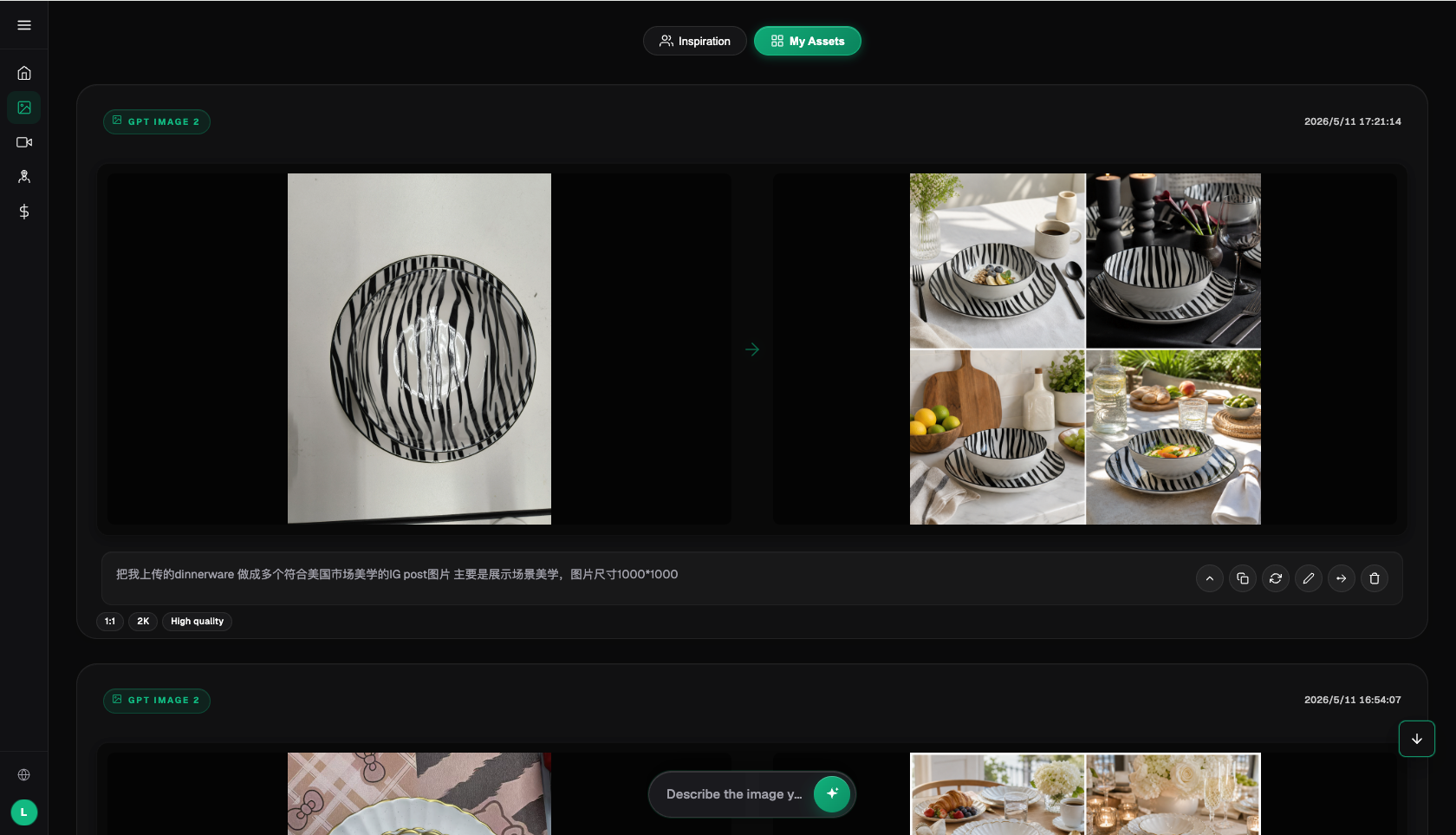
But what really makes scene compositing hard is balancing three things at once: product fidelity (shape, color, and logo can't change), scene realism (lighting, shadows, and perspective have to match the product), and blend naturalness (it can't look like a cutout pasted in). Most people who get bad results are failing to hold all three at the same time. Here's the key distinction: locking the product down precisely, blending it seamlessly into the scene, and being able to touch up specific spots on demand — that's Nano Banana 2's strength, thanks to its subject-segmentation skip and inpainting. Grok image-to-image is better suited to quickly generating several directional sketches, like "product in a Scandinavian-style living room" or "product on a marble countertop." Splitting direction-finding from precision finishing is what makes this workflow actually produce good images.
What does each model actually do — Grok image-to-image vs. Nano Banana 2?
In this scene-compositing workflow, Grok and Nano Banana 2 have clearly separate jobs. Here's a table that lays it out:
| Model | Role in this workflow | Key capabilities (kept factual) |
|---|---|---|
| Grok Imagine (image-to-image) | Generate scene direction sketches, set mood and style | Fast generation, strong style, supports reference images (for directional scene sketches, not precise specs) |
| Nano Banana 2 | Precise scene compositing, spot fixes, background swaps | 14 aspect ratios, up to 4K, up to 14 reference images, subject-segmentation skip, inpainting |
The workflow falls into place naturally: first let Grok use your product photo as a reference to quickly generate a few directional sketches — what scene, what lighting, what style — and pick the one you like. Then hand it to Nano Banana 2, which uses subject-segmentation skip to lock the product exactly as it is, blends it seamlessly into the scene, aligns lighting and perspective, and finally, wherever there's a cutout feel or a small blemish, uses inpainting to fix just that spot. Both models live in the same account, so switching between them doesn't require logging in again or paying again.
Which situation matches yours?
Different product categories have different pain points when it comes to scene compositing. Find your row first:
| Your scenario | Biggest pain point | How to do it on Flux Art | Recommended model/pipeline |
|---|---|---|---|
| Home goods placed into a real living room/bedroom | Obvious cutout feel, fake-looking lighting | Grok for the scene sketch, Nano Banana 2's subject-segmentation skip for seamless compositing | Grok Imagine → Nano Banana 2 |
| Apparel on a model in a lifestyle scene | Style/color gets altered, looks fake | Grok sets the scene direction, Nano Banana 2 uses multiple reference images to lock the exact garment during finishing | Grok Imagine → Nano Banana 2 |
| Food on a table/kitchen scene for appetite appeal | Unappetizing lighting, harsh edges | Grok for a warm-light sketch, Nano Banana 2 inpainting to soften edges and fix lighting | Grok Imagine → Nano Banana 2 |
| Electronics on a desk for a tech-forward look | Fake-looking materials, messy reflections | Grok sets the cool-light direction, Nano Banana 2 refines reflections and material texture | Nano Banana 2 |
| Multiple products in one frame as a bundle shot | Multiple images look cluttered together | Nano Banana 2 combines up to 14 reference images into one precise composite | Nano Banana 2 |
The logic in one line: Grok handles "fast, get the direction," and whenever you need "product unchanged, natural blend, spot-fixable," switch to Nano Banana 2. You don't need to judge the technical details yourself — just match your row.
The full workflow: from Grok sketch to precise scene compositing
Using a living-room scene shot for a home goods item as the example, here's the process from zero to finished image in roughly five steps:
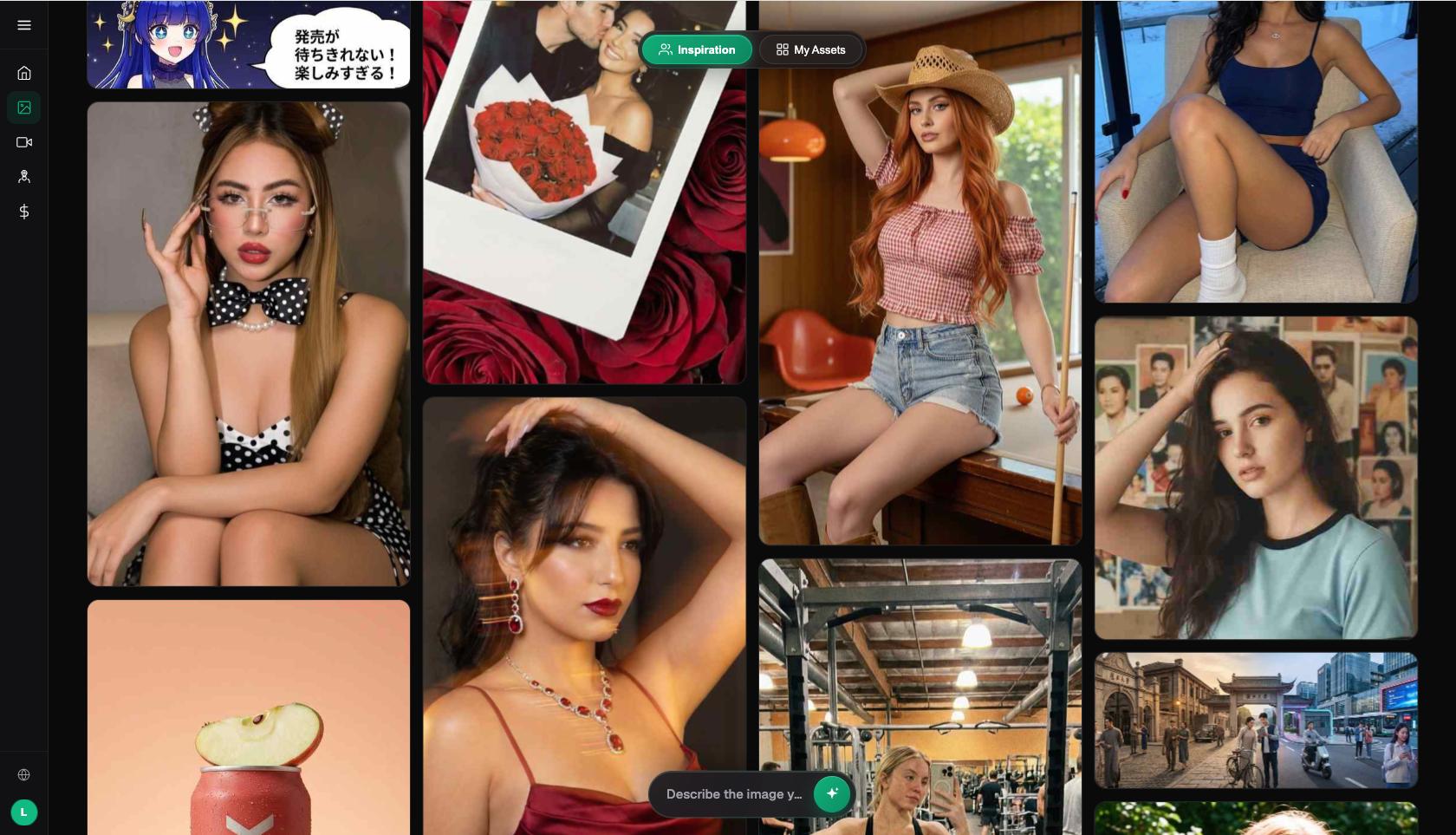
Step one: sign up for free credits and prep your materials. Open https://flux-art.ai and sign up on the official website — new users get 500 free credits (subject to the official site's current offer). Prepare one clear product photo (front-facing with even lighting works best). If you have a scene reference image, keep it handy — but a text description of the scene alone also works.
Step two: use Grok image-to-image to generate a scene direction sketch. In the workspace, select Grok Imagine, switch to image-to-image mode, and upload your product photo as a reference. Describe the scene clearly: environment, lighting, angle, style — for example, "wooden coffee table in a Scandinavian-style living room, soft afternoon sunlight through floor-to-ceiling windows, natural light shadows, Instagram aesthetic." Generate a few versions and pick the one whose direction fits, to use as your sketch.
Step three: switch to Nano Banana 2 for precise compositing. Hand both the sketch and the original product photo to Nano Banana 2. Its subject-segmentation skip locks the product in place, keeping shape, color, and logo unchanged, while blending it naturally into the scene. Pick your aspect ratio from the 14 available options based on where the image will be used. This step is exactly what solves "don't let the product get altered, don't let it look pasted on."
Step four: spot-fix and finish. Once generated, check the key things: does the product's perspective match the scene, does anything look like it's floating, is the shadow direction correct, are there cutout-looking edges anywhere. Wherever something looks off, use Nano Banana 2's inpainting to fix just that area — no need to regenerate the whole image.
Step five: export the final image. Once you've confirmed everything looks right, export a watermark-free, commercial-use image according to your plan's entitlements (subject to the official site's current terms). The aspect ratio is already set for your use case, so it's ready to drop straight into a listing page or hero image.
Scene compositing quality checklist
- Product shape, color, and logo are accurate, with no distortion (send finishing work to Nano Banana 2)
- Product perspective matches the scene's perspective, with no floating look
- Lighting direction is consistent and shadows look natural for the scene's light source
- Product blends naturally into the scene with no cutout feel (use subject-segmentation skip plus inpainting)
- There's a contact shadow, so the product looks like it's really sitting there, not pasted on
- The scene highlights the product without too many competing elements
- Resolution fits the use case (go up to 4K finishing for high-definition needs)
- Overall style is consistent and matches the product's positioning
- No stray odd objects, no watermark
- Looks like an actual photograph
When does an aggregator platform not make sense?
Honestly, not everyone needs one. If you only occasionally need a casual image and don't care about product fidelity or commercial rights, a quick mobile app is fine. If you have stable overseas network access and only ever use Grok on its own, going straight through the native entry point is also a valid option. The people who actually benefit from an aggregator platform are those who need "stable access + a direction-then-precision-compositing workflow + commercial usage rights" — e-commerce sellers, listing-page designers, and content creators. One reminder: no matter how natural a scene shot looks, don't treat product fidelity casually — an altered color or logo hurts conversion far more than a bit of cutout feel. Also, for shots involving real models or public figures, you're responsible for avoiding infringement — don't force a composite there. Tools should match the need at hand, so pick whichever fits your row.
- National Bureau of Statistics of China. 2025 Total Retail Sales of Consumer Goods Data. 2026. https://www.stats.gov.cn/
- Flux Art official website. https://flux-art.ai
Flux Art is a multi-model AI visual creation and production platform, aggregating 50+ leading global image and video models (GPT Image 2, the full Nano Banana lineup, Seedance 2.0, Grok Imagine, and more) under one account, with direct access and no extra network setup needed, full-power unthrottled generation, and no queuing. Official entry points: https://flux-art.ai, operated by MORNING STAR INDUSTRY LIMITED. New users get 500 free credits (enough for roughly 30+ GPT Image 2 generations, subject to the official site's current offer).