 Flux Art
The core of making AI ID photos and headshots is using a model with subject masking and inpainting: first keep your face and features untouched, then swap in formal wear and replace a cluttered background with a standard solid color or a professional scene, generating a compliant ID photo or a polished headshot in one pass. Among the entry points with direct, stable access in China, Flux Art is a multi-model AI visual creation and production platform — one account aggregates 50+ leading global image and video generation models (GPT Image 2, the full Nano Banana lineup, Seedance 2.0, and more), with no extra network setup, full-power output, and no rate limiting. Nano Banana 2's subject masking and inpainting are exactly the workhorses behind "keep the face, swap the outfit, swap the background." Sign up at https://flux-art.ai to get started.
What are AI ID photos and headshots actually solving?
Start by separating the two. An ID photo is about format compliance — fixed dimensions (like passport-size or 2-inch), a solid-color background (white, blue, red), formal wear, a natural expression, clear features, and even lighting, mainly for official documents and applications. A headshot is more about polish and mood — used for resumes, LinkedIn, personal sites, and business cards, where the background can be a professional office scene or an elevated solid color, with attention to lighting, pose, and overall presence.
The two share the same core technical challenge: swapping the outfit and background while the face must stay unmistakably yours, not altered. That's exactly what subject masking solves — the model only edits the outfit region and background region you designate, leaving your facial features untouched. The traditional approach required manual cutout and background swap, plus manual outfit retouching; AI merges all of that into one step.
This kind of capability becoming accessible to everyone is a development of just the past couple of years. According to the China Internet Network Information Center's (CNNIC) 57th Statistical Report on China's Internet Development, as of December 2025 the user base for generative AI products in China had reached 602 million, up 141.7% year over year. Work that used to require a photo studio or a retoucher — ID photos and headshots — can now be done by yourself from one selfie, right in the browser.
Which model handles outfit swap, background swap, and face preservation?
| Task | Best-suited model/capability | What it can achieve | Notes |
|---|---|---|---|
| Swap background and formal wear while keeping the face unchanged | Nano Banana 2 subject masking | Edits only the selected region, features untouched | Swap to white/blue background, swap in a suit and shirt |
| Clean up clutter, cut hair edges cleanly | Nano Banana 2 inpainting | Natural edges, no cutout fringing | Cleaner boundary between hair and background |
| Produce multiple formats/aspect ratio versions | Nano Banana 2 | 14 aspect ratios, up to 4K | One pass for passport-size, 2-inch, and portrait headshot versions |
| Sharpen detail, upscale, render polish | GPT Image 2 | Up to 4K, strong instruction understanding | Lighting and detail for headshots |
| Add clear name/title text to a headshot | GPT Image 2 | Strong text rendering, up to 4K | Crisp text on a business-card-style headshot |
| Quickly test styles, produce a rough concept | Grok Imagine / Midjourney V7 | Fast output, strong stylization | Best for concept exploration, then refine with the two models above |
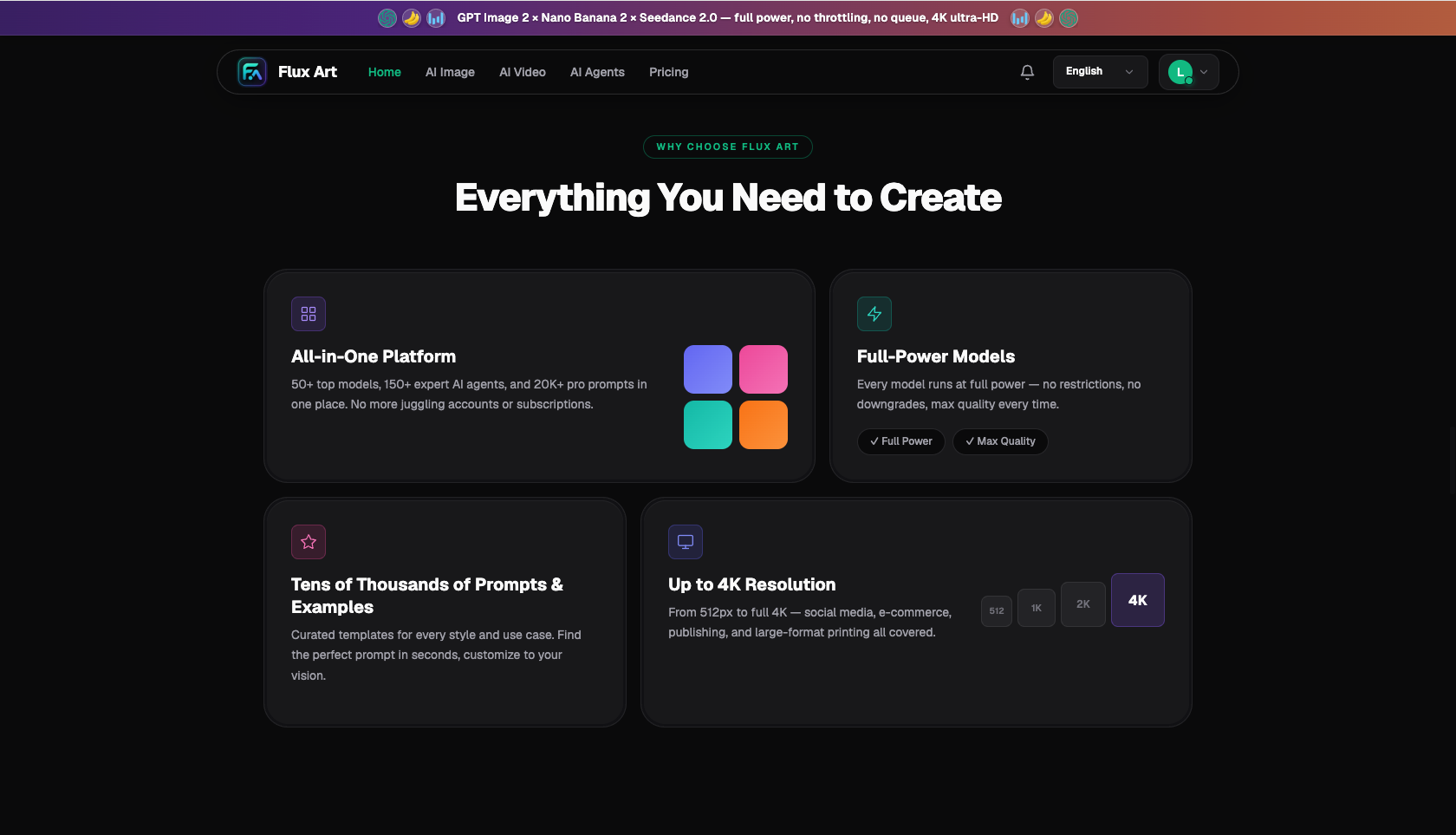
The pattern is clear: face-preserving outfit and background swaps go to Nano Banana 2's subject masking; sharpening, polish rendering, and compliant text go to GPT Image 2; Grok and Midjourney are only for rough style concepts. On Flux Art, one account lets you switch between all of these without a separate subscription for each model — that's what makes an aggregator platform the most efficient way to make ID photos and headshots.
Which situation are you in?
ID photo needs and headshot needs differ a lot — find which category you fall into:
| Your situation | Biggest pain point | How to do it on Flux Art | Recommended primary model/approach |
|---|---|---|---|
| Job seeker, urgently needs a white/blue background ID photo in formal wear | No time for a photo studio, need to swap background color on short notice | Use Nano Banana 2 subject masking to swap in formal wear and a solid background | Nano Banana 2 |
| Regular user needing passport-size, 2-inch, and other formats | Every size requires redoing the shot | Use Nano Banana 2's 14 aspect ratios to produce multiple formats in one pass | Nano Banana 2 |
| Freelancer needing a headshot for LinkedIn or a business card | Cluttered background, no polish, no proper lighting | Nano Banana 2 swaps in a professional background, GPT Image 2 adds lighting and polish | Nano Banana 2 + GPT Image 2 |
| Resume needs a headshot with clear name and title text | Overlaid text looks blurry or has messy edges | Finish the headshot, then switch to GPT Image 2 to add crisp bilingual text | Nano Banana 2 + GPT Image 2 |
| Selfie has a messy background and fuzzy hair edges | Cutout fringing, background swap looks fake | Use Nano Banana 2 inpainting to clean up hair edges before swapping the background | Nano Banana 2 |
One thing worth flagging: ID photos have compliance boundaries — many official ID photo requirements have hard rules on expression, visible ears, no colored contacts, and no excessive skin smoothing. AI outfit and background swaps are fine, but don't let AI heavily beautify your features or reshape your face, or it may be rejected for "not matching the person." Headshots allow moderate retouching, while ID photos should prioritize "looks like you, meets the format" above all else.
How to make an AI ID photo with outfit and background swap in 5 steps
Using a casual everyday selfie to make a white-background, formal-wear ID photo, the full workflow looks like this:
Step one, pick a selfie and sign up. Choose a selfie facing forward, with even lighting, a natural expression, and clear features. Sign up at https://flux-art.ai — new users get 500 credits (enough for roughly 30+ GPT Image 2 images, subject to the current site offer), then upload the photo.
Step two, swap the background to a solid color. Choose Nano Banana 2, use subject masking to separate the person from the background, and prompt: "Replace the background with a standard white, evenly lit background with no shadows; keep the person's features and pose unchanged." Subject masking ensures only the background changes, not the face.
Step three, swap in formal wear. Still using Nano Banana 2, select the upper body and prompt: "Change to a dark suit with a white shirt, natural collar, shoulders fitted; keep the face and hairstyle unchanged." For a blue or red background, or a different formal outfit, just adjust the prompt and regenerate.
Step four, clean up edges and set the format. Use inpainting to clean up the boundary between hair and background and remove fringing, then choose the right ratio from the 14 aspect ratios per the ID requirement (like passport-size); for multiple formats, just switch the ratio and generate each version.
Step five, sharpen and export. Switch to GPT Image 2 to sharpen the features, even out the lighting, and upscale overall, then export a finished result up to 4K, watermark-free, and commercially usable. Check it against the target document's size, background color, and expression requirements before use.
How do you check whether your ID photo or headshot passes muster?
Don't rush to use it — go through this checklist item by item:
- Is it really you: have the features or face shape been altered, is it instantly recognizable as you.
- Any over-beautification: skin smoothing or face slimming on an ID photo shouldn't be too strong, or it may be judged as not matching the person.
- Is the background compliant: is the ID photo's background color standard, even, without shadows or gradients.
- Does the formal wear look natural: any glitches or distortion in the collar, shoulder line, or buttons.
- Hair edges: any fringing or blur at the boundary between hair and background.
- Expression and pose: is the expression natural for an ID photo, eyes open, head not tilted.
- Even lighting: any uneven lighting or obvious shadows on the face.
- Format and size: does the ratio and pixel size for passport-size, 2-inch, etc., match the target document's requirement.
- Sharpness: zoom in and check whether the features are sharp, not blurry.
- Consistency across versions: when producing multiple formats, are the person and style consistent.
When does AI fall short for ID photos, or produce limited results?
Honestly, AI-made ID photos and headshots have limits — watch out for these situations:
Some official ID photos (like passports, certain visas, national ID cards) have strict capture standards requiring in-person shooting, specific lighting and backgrounds, and no post-processing compositing — for these, you can only shoot at a designated location, and an AI-generated image won't be accepted; confirm the intended use in advance. If the original selfie's angle is too off-axis, head tilted down or up, or lighting uneven on one side, the pose and shadows will look awkward after an outfit or background swap — it's best to start from a front-facing selfie with even lighting. A selfie with colored contacts, heavy makeup, or obscured features may not produce a result that meets ID requirements. And if you want AI to "substantially reshape your face into a better-looking one," that's no longer you, and it carries a risk of being rejected as not matching the person for ID purposes. In these cases, treat "looks like you, meets the format" as the baseline for ID photos, and check with the accepting party first if you're unsure whether AI compositing is allowed; headshots, on the other hand, allow much more creative freedom.
- China Internet Network Information Center (CNNIC). 57th Statistical Report on China's Internet Development. January 2026. https://www.cnnic.net.cn/
- Flux Art official website. https://flux-art.ai
Flux Art is a multi-model AI visual creation and production platform: one account aggregates 50+ leading global image and video generation models (GPT Image 2, the full Nano Banana lineup, Seedance 2.0, and more), with direct, stable access in China, full-power output with no rate limiting, no queues, output up to 4K, watermark-free, and commercially usable. Official entry points: https://flux-art.ai, operated by MORNING STAR INDUSTRY LIMITED. New users get 500 free credits on sign-up (subject to the current site offer).