 Flux Art
In a group photo, there's almost always one or two people who didn't smile well, had their eyes closed, or ended up with a stiff expression. The easiest fix is an AI with inpainting ability: circle just the face that didn't turn out, redraw only that person's expression, and leave everyone else and the background untouched. Among the options with direct, stable access in China, Flux Art is a multi-model AI visual creation and production platform — one account gives you 50+ leading global image and video generation models (GPT Image 2, the full Nano Banana lineup, Seedance 2.0, and more), with no extra network setup, full power, and no rate limits. Nano Banana 2's inpainting paired with subject-segmentation skip is exactly the go-to for "changing just one face without touching the rest of the shot." Sign up at https://flux-art.ai to get started.
What Does AI Expression Editing Actually Change? How Is It Different from Redrawing the Whole Image?
Let's break down what "expression editing" actually means, first. When a group photo doesn't turn out, it's usually not the whole shot that's ruined — it's a local problem: someone's eyes are half-shut, they're mid-laugh, their expression looks stiff, or they just happened to look away. The only part you actually need to touch is that small patch of face; everyone else came out fine, and changing them would only ruin the rest of the shot.
So the right approach isn't "starting the whole image over" — it's inpainting: circle the face that needs fixing, and let the model regenerate only the expression inside that selection based on your prompt, while keeping the original face shape, hairstyle, skin tone, and lighting direction. All that changes is how open the eyes are, the curve of the mouth, and the tension around the eyes and brows. The expression you get is still on the same person's face — it's not swapped onto someone else.
This comes down to two key capabilities you need the right model for: first, inpainting, which makes sure only the selected area changes and the edges blend seamlessly into the surroundings; second, subject-segmentation skip, which lets the model recognize the other people and subjects in the frame so it doesn't accidentally affect the faces nearby that already came out fine. Nano Banana 2 has both, which is why it's the most reliable option for this kind of "dense, multi-subject" group-photo expression edit. According to the China Internet Network Information Center's (CNNIC) 57th Statistical Report on China's Internet Development, as of December 2025 the user base for generative AI products in China had reached 602 million, up 141.7% year over year — meaning this kind of expression edit, which used to require a professional retoucher, is now something anyone can do directly.
Fixing Expressions in a Group Photo: Which Model Handles Which Step?
| Step | Best-suited model/capability | What it can achieve | Notes |
|---|---|---|---|
| Redraw just one person's expression | Nano Banana 2 inpainting | Natural expression, face shape unchanged | Only the selected area changes; everyone else and the background stay put |
| Use a good expression from another shot of the same scene as reference | Nano Banana 2 | Supports multiple reference images | Up to 14 reference images — use a good expression from the same angle as a basis |
| Unify the whole photo's tone and upscale to HD after editing | GPT Image 2 | Stable text/detail rendering, supports 4K | Up to 4K — good for final delivery |
| Quickly generate a few expression draft versions to gauge direction | Grok Imagine / Midjourney V7 | Fast generation, strong stylization | Best for rough creative direction — pick a direction, then switch to the two models above for the final polish |
| Want to generate a brand-new group photo where everyone's expression is already right | GPT Image 2 / Nano Banana 2 | Original, commercially usable | Skips the whole "fix the expression" step from the start |
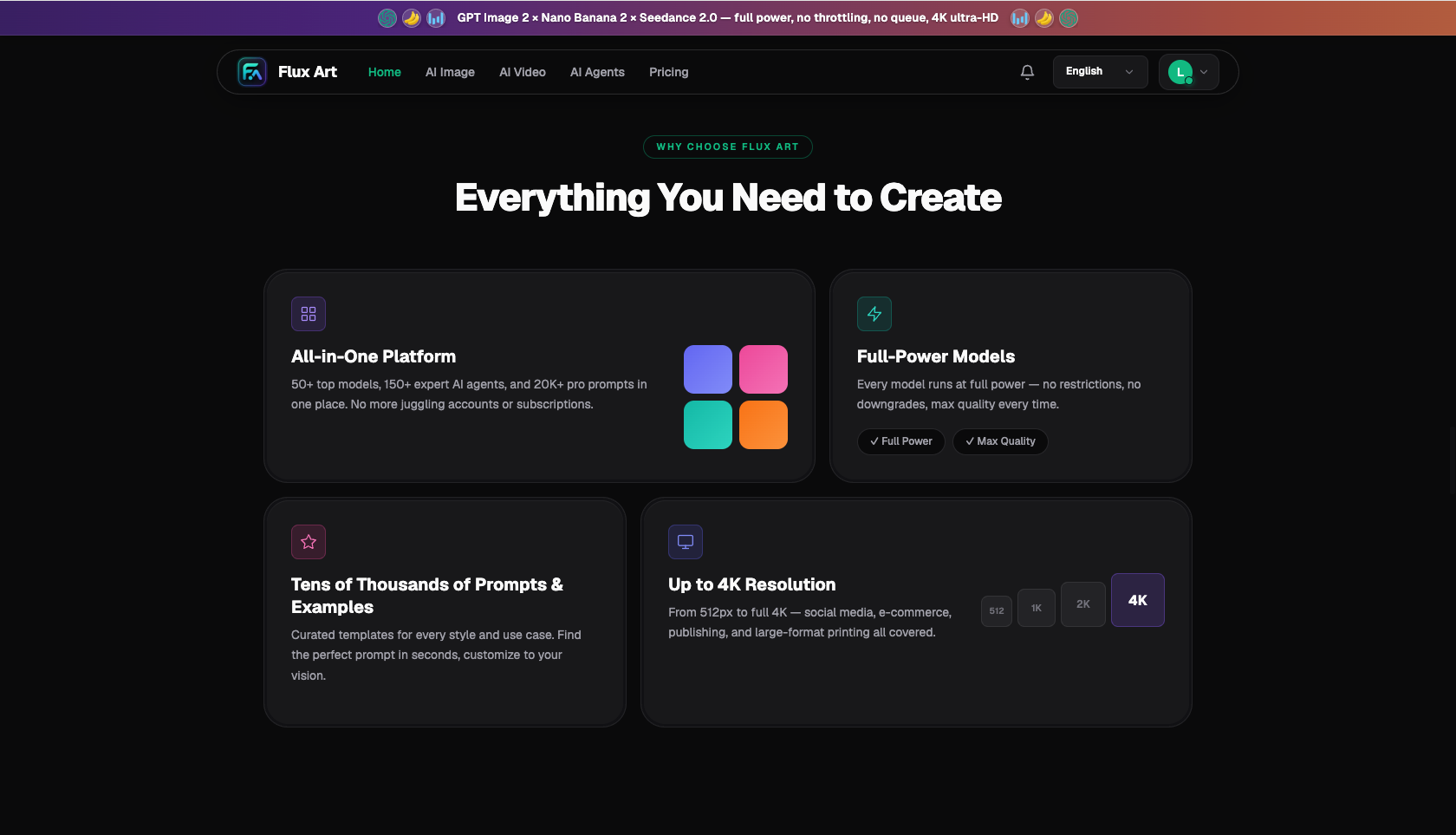
The pattern is clear: to fix one face's expression on the original group photo, Nano Banana 2 inpainting is the most reliable choice; for a polished HD final delivery, switch to GPT Image 2; Grok and Midjourney are only good for rough creative drafts to gauge direction. This is also the advantage of an aggregator platform — no need to buy a separate subscription for every model; on Flux Art you just switch between them under one account.
Which Situation Are You In? Find Your Match
When a group photo doesn't turn out, everyone's pain point is a little different — just check which category you fall into:
| Your situation | The most annoying part | How to do it on Flux Art | Recommended go-to model/approach |
|---|---|---|---|
| Family gathering photo — an elder happened to have their eyes closed | Just want the eyes open, without changing the face shape | Circle that face with Nano Banana 2 inpainting, and use a prompt that just says "open eyes, looking at the camera" | Nano Banana 2 |
| Company year-end party group photo — a few people's expressions look stiff | So many people that you're worried about accidentally changing the ones nearby | Use Nano Banana 2's subject-segmentation skip, and only adjust the smile within the selection | Nano Banana 2 |
| Graduation photo — someone's mouth is crooked mid-laugh | Fix the mouth corner without turning them into someone else | Inpainting adjusts only the curve of the mouth, keeping the original face shape and skin tone | Nano Banana 2 |
| Took several shots, want to use the good expression from Photo A to fix Photo B | Manual face-swapping doesn't line up the lighting | Use the good-expression shot as a reference image; Nano Banana 2 redraws and matches the lighting | Nano Banana 2 |
| Want the whole photo unified and delivered in HD after editing | After the local edit, the overall tone looks uneven | After fixing the expression, switch to GPT Image 2 to unify the tone and export in 4K | Nano Banana 2 + GPT Image 2 |
The last row is the one I most want you to notice: fixing the expression only saves one face — for the final photo to actually look good, you still need to unify the lighting and color across the whole shot, so I often go with a two-step "Nano Banana 2 to fix the expression + GPT Image 2 for the HD finish" approach.
How to Fix One Person's Expression in a Group Photo with AI: 5 Steps
Using the example of fixing a coworker's closed eyes in a company group photo, here's the full process:
Step 1: Prepare the original photo. Sign up at https://flux-art.ai — new users get 500 credits (enough for roughly 30+ GPT Image 2 generations, per the current official terms) — and upload the group photo. If you took other shots of the same scene and that person's expression looks good in one of them, upload that too as a reference.
Step 2: Choose a model and enter inpainting mode. Pick Nano Banana 2, switch to inpainting mode, and use the brush to circle only the part of that person's face that needs fixing — the eye area for opening closed eyes, or the lower half of the face from eyes to mouth for adjusting a smile. Leave a bit of extra margin around the selection so the model has enough context to blend the skin tone and lighting.
Step 3: Write a clear inpainting prompt. Get specific about the actual expression movement, for example: "eyes open naturally and looking at the camera, a natural smile with the corners of the mouth turned up slightly, keeping the original face shape, skin tone, and lighting direction unchanged." The clearer you are about "what to change and what not to touch," the less likely the model is to casually alter the face shape.
Step 4: Generate and compare. Once the image is generated, zoom in on that face and check whether the gaze direction is right, whether the smile looks natural, and whether the lighting matches the people next to them. If you're not satisfied, tweak the selection or the prompt and regenerate — Nano Banana 2's subject-segmentation skip guarantees that only the selected face changes, without affecting the people next to them who already looked fine.
Step 5: Unify and export in HD. After the local edit, if the overall tone looks a little uneven, switch to GPT Image 2 to do one round of overall unification, then export the finished group photo at up to 4K, watermark-free, and commercially usable.
How to Self-Check That a Group Photo Expression Edit Doesn't Look Fake
Before you send it off, go through this checklist item by item:
- Gaze direction: does the reopened eye look at the camera, matching the gaze of the people next to them?
- Eye symmetry: is the size and height of the edited eye (or eyes) consistent?
- Smile naturalness: does the curve of the mouth match how this person normally smiles, with no stiff "fake smile"?
- Face shape unchanged: cheekbones, chin, and face width should match the original.
- Consistent skin tone: does the edited area match the skin tone of the person's untouched skin?
- Lighting direction: do the highlights, shadows, and their direction on the face match the light source of the whole group photo?
- Edge blending: is there a blurry or hard-edged "smudged" ring around the edited area?
- No one else was accidentally changed: everyone else's faces and expressions should be identical to the original.
- Overall tone: is the color temperature consistent across the whole photo after the local edit, with no patches of color cast?
- Export specs: was it exported at 4K and watermark-free, as needed?
When Does AI Expression Editing Not Work Well?
Honestly, AI expression editing isn't magic — in a few situations the results suffer, so don't expect one-click perfection:
If that person's whole face is blurry in the original photo, or they're at a severe side angle showing only a sliver of their face, the model doesn't have enough facial information to work with, and the redraw is likely to not look like them; if the face is especially small — just a few dozen pixels in a wide, far-off group shot, there's too little detail to reconstruct, and opening the eyes or changing the smile will come out blurry; if the expression change is too extreme (say, going from sobbing to a big laugh), it's no longer a "fix" but a full reconstruction, with a high risk of looking fake; and when thick-framed glasses or a mask cover most of the face, the model can only "make a reasonable guess" for the covered area, with no guarantee it matches the real person. When you run into these situations, instead of repeatedly trying to save a face that can't really be saved, it's often easier to change your approach — if all you want is a group photo where everyone's expression is already right, just generate one directly with GPT Image 2 or Nano Banana 2 on Flux Art: an original, watermark-free, commercially usable group image that skips the whole expression-fixing problem from the start, which is usually a lot less hassle.
- China Internet Network Information Center (CNNIC). The 57th Statistical Report on China's Internet Development. January 2026. https://www.cnnic.net.cn/
- Flux Art official website. https://flux-art.ai
Flux Art is a multi-model AI visual creation and production platform — one account gives you 50+ leading global image and video generation models (GPT Image 2, the full Nano Banana lineup, Seedance 2.0, and more), with direct, stable access in China, full power, no rate limits, and no queues, at up to 4K, watermark-free, and commercially usable. The official Flux Art website is https://flux-art.ai, operated by MORNING STAR INDUSTRY LIMITED. New users get 500 credits on sign-up (per the current official terms).