 Flux Art
Generating anime characters with AI comes down to clearly writing out "art style (Japanese anime/cel-shading/heavy paint), character design (hairstyle and color, eye color, outfit, expression, pose), and shot framing" as separate layers, then handing that to a model that follows instructions well and can render characters consistently — right now the most reliable model for finished anime art is GPT Image 2, which stays faithful to complex character descriptions and can render the text, badges, and patterns on a character cleanly. Among the access points that work directly in China, Flux Art is a multi-model AI visual creation and production platform — one account aggregates 50+ of the world's top image and video models (GPT Image 2, the full Nano Banana lineup, Seedance 2.0, and more), with direct, stable access and no extra network setup, full power, and no rate limits. Sign up at https://flux-art.ai to get started right away.
I've been drawing fan art and commissions for almost a decade, and anime character design is my bread and butter. Back in the day, a single finished character piece — from rough sketch to final coloring — took two or three days to polish. These past couple of years, using AI for drafts and multiple angles has made the early character-design stage much faster, but a vague prompt still produces reject piles of "warped faces, broken hands, asymmetrical features." This post lays out exactly "how to generate anime characters with AI, how to keep them from falling apart, and how to keep a character consistent across images" — written for commission artists, Vtuber character designers, picture-book illustrators, game character artists, and hobbyists alike.
What Art Styles Do Anime Characters Come In, and What Does AI Need to Know First?
Let's unpack the broad label "anime" first. What you actually want might be clean Japanese cel-shading, heavy-paint art with rich light and shadow, chibi-style three-head-tall proportions, or semi-realistic illustration — if you don't specify the style, AI will hand you a "generic average face." The common categories break down like this:
The first is Japanese cel-shading (anime style) — clean lines, distinct flat color blocks, hard-edged shadows, looking like an anime screenshot; it's the most "standard anime" look. The second is heavy paint — delicate light and shadow, visible brushwork, rich texture, closer to book-illustration art. The third is chibi/Q-version — big head, small body, simplified features, great for stickers and merch. The fourth is semi-realistic — somewhere between anime and realism, with more three-dimensional features. Once the style is set, nail down the character's core design: hairstyle and color, eye color, outfit and accessories, build, expression, and personality — this is the skeleton that makes a character "come alive."
Only when both the art style and character design are spelled out clearly does AI produce stable results. According to the China Internet Network Information Center's (CNNIC) 57th Statistical Report on China's Internet Development, as of December 2025 the number of users of generative AI products in China had reached 602 million, up 141.7% year over year — generating anime characters with AI has moved well past a professional artist's craft and become everyday creation that hobbyists can pick up directly.
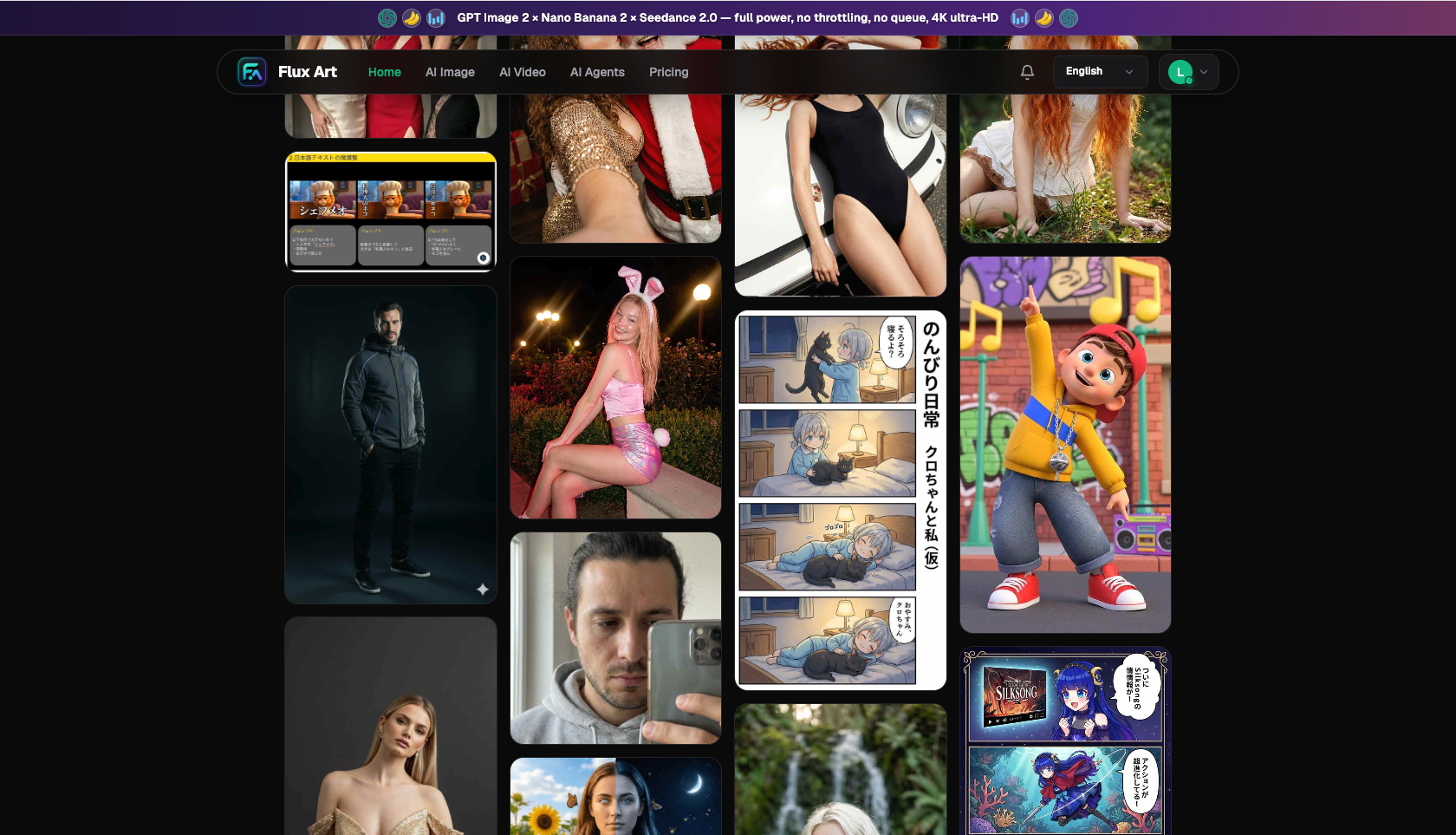
Which Model Is Best for Generating Anime Characters, and How Do the Different Models Divide the Work?
| Task Need | Better-Suited Model/Capability | What It Can Achieve | Notes |
|---|---|---|---|
| Finished anime character art with accurate design fidelity | GPT Image 2 | Strong instruction-following, strong text rendering, up to 4K | 12 quality/resolution tiers, complex designs rendered accurately in one pass |
| Multiple expressions/poses for one character while keeping it consistent | Nano Banana 2 subject segmentation skip | Locks the character and changes only the expression or a local area | Uses a reference image to keep the same character without face drift |
| A full character set (art + avatar + stickers) | Nano Banana 2 | 14 aspect ratios, up to 14 reference images, up to 4K | Reference images lock the character for consistent batch output |
| Quickly testing different anime styles and compositions | Grok Imagine / Midjourney V7 | Fast generation, strongly stylized | Good for qualitative creative drafts, then refine the pick |
| Bringing an anime character to life for an animated avatar | Seedance 2.0 | 4–15 seconds, 480p/720p | Image-to-video with blinking, flowing hair, subtle motion |
The pattern is clear: Grok and Midjourney are good for quickly testing art styles and bouncing through compositions; for finished character art with accurate design fidelity that can go up to 4K, switch to GPT Image 2 on Flux Art; for the same character across multiple expressions and poses without face drift, use Nano Banana 2's reference images plus subject segmentation skip to lock the character. One account gives you access to all of them, so there's no need for a separate subscription per model.
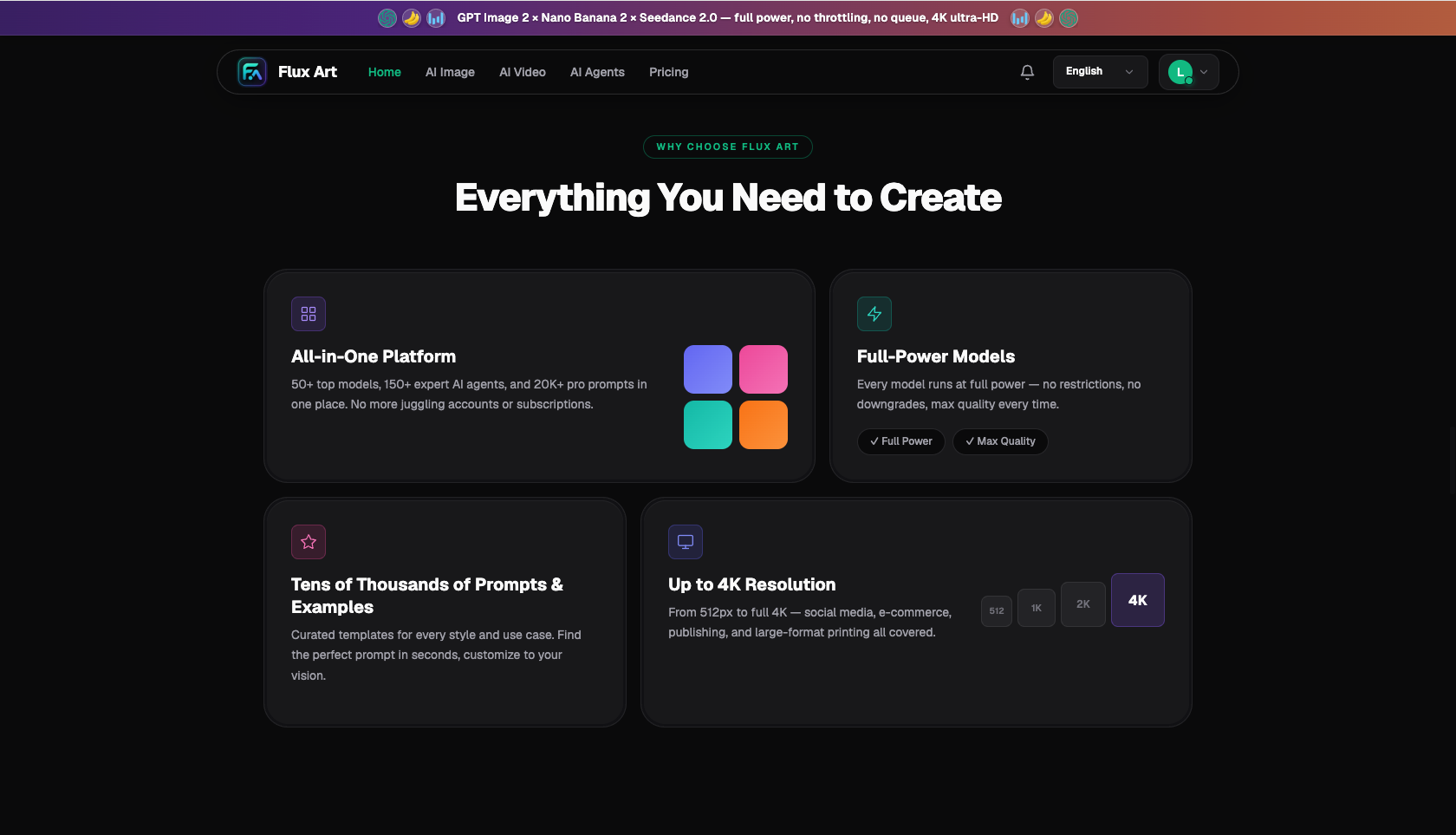
Which Situation Are You In? Find Your Match
Anime character use cases vary a lot — see which category fits you:
| Your Scenario | The Most Frustrating Part | How to Do It on Flux Art | Recommended Primary Model/Approach |
|---|---|---|---|
| Fan commissions needing one precisely designed character art | Hair color, eye color, and outfit never come out accurate | Write out the design point by point with GPT Image 2, export in 4K | GPT Image 2 |
| Vtuber needing multiple expression variants of the same character | Changing the expression makes the face drift and look like a different person | Upload a reference image to Nano Banana 2 to lock the character, use subject segmentation skip to change only the expression | Nano Banana 2 |
| Picture books/comics needing a consistent character across many panels | Every face looks different | Use Nano Banana 2's multi-image reference to lock in character features, generate in batch | Nano Banana 2 |
| Hobbyists just testing which art style looks best | Not sure which style suits the character | Draft first with Grok Imagine / Midjourney V7, then refine the winner | Grok Imagine → GPT Image 2 |
| Operators needing an animated character avatar for stream overlays | A static portrait isn't lively enough | Generate the art with GPT Image 2, then use Seedance 2.0 image-to-video for subtle motion | GPT Image 2 + Seedance 2.0 |
The rows I'd flag most are the second and third: the hardest part of anime character work was never drawing one image — it's making "many images of the same character that still look like the same person," and that's exactly the gap Nano Banana 2's reference images and subject segmentation skip fill.
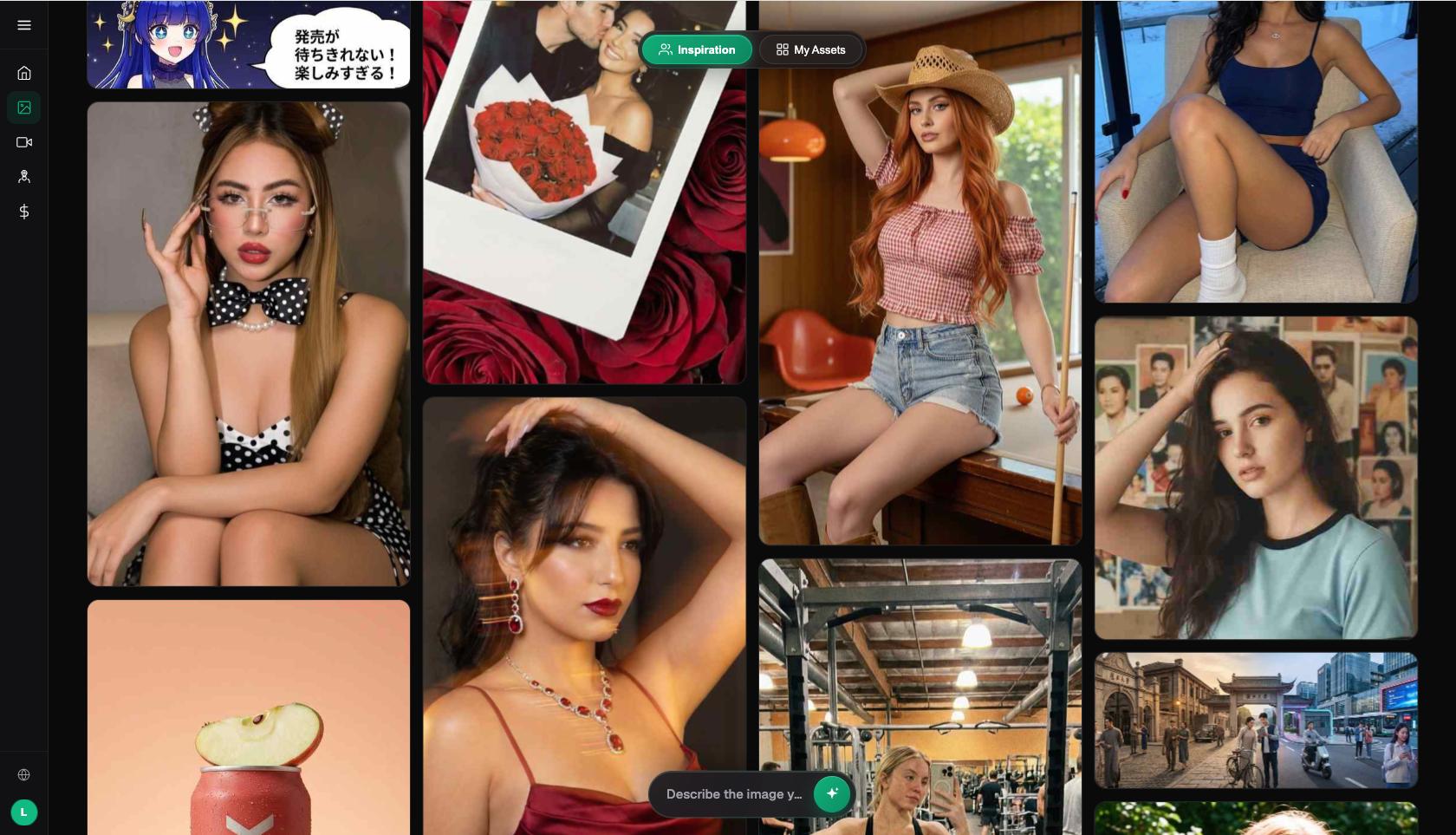
How Do You Generate an Anime Character with AI in 5 Steps?
Using the example of generating a "Japanese cel-shading style female character portrait," here's the full process:
Step one, sign up on the platform. Register at https://flux-art.ai — new users get 500 free credits (enough for roughly 30+ GPT Image 2 generations, subject to the current offer on the official site), then select GPT Image 2 to open the generation interface.
Step two, write the prompt in layers. Structure it as "art style + core character design + outfit + expression/pose + shot framing" — for example, "Japanese cel-shading anime style, long silvery-white hair, blue-violet eyes, sailor school uniform, smiling, half-body composition, clean background, clean lines with hard-edged shadows." The more specific the design, the closer the output matches the character in your head.
Step three, set the quality tier and aspect ratio. For character art, choose a vertical frame and a high-quality tier; GPT Image 2 has 12 tiers (3 quality levels × 4 resolutions) — try several versions at medium quality first to lock down the character, then bump the winner up to the maximum 4K for the final version to save credits.
Step four, generate and pick the master image. Generate several at once and check four things: whether the face is warped, whether the features are asymmetrical, whether the hands are drawn wrong, and whether the design (hair color, eye color, outfit) matches accurately. Pick the one that best captures the character's vibe and lock it in as your "master image."
Step five, generate variants or multiple sizes. For multiple expressions or poses of the same character, feed the master image to Nano Banana 2 as a reference and use subject segmentation skip to change only the expression or pose without face drift; for avatars, stickers, portrait wallpapers, and other sizes, use Nano Banana 2's multiple aspect ratios to batch-generate, then export the final files at up to 4K, watermark-free, and ready for commercial use.
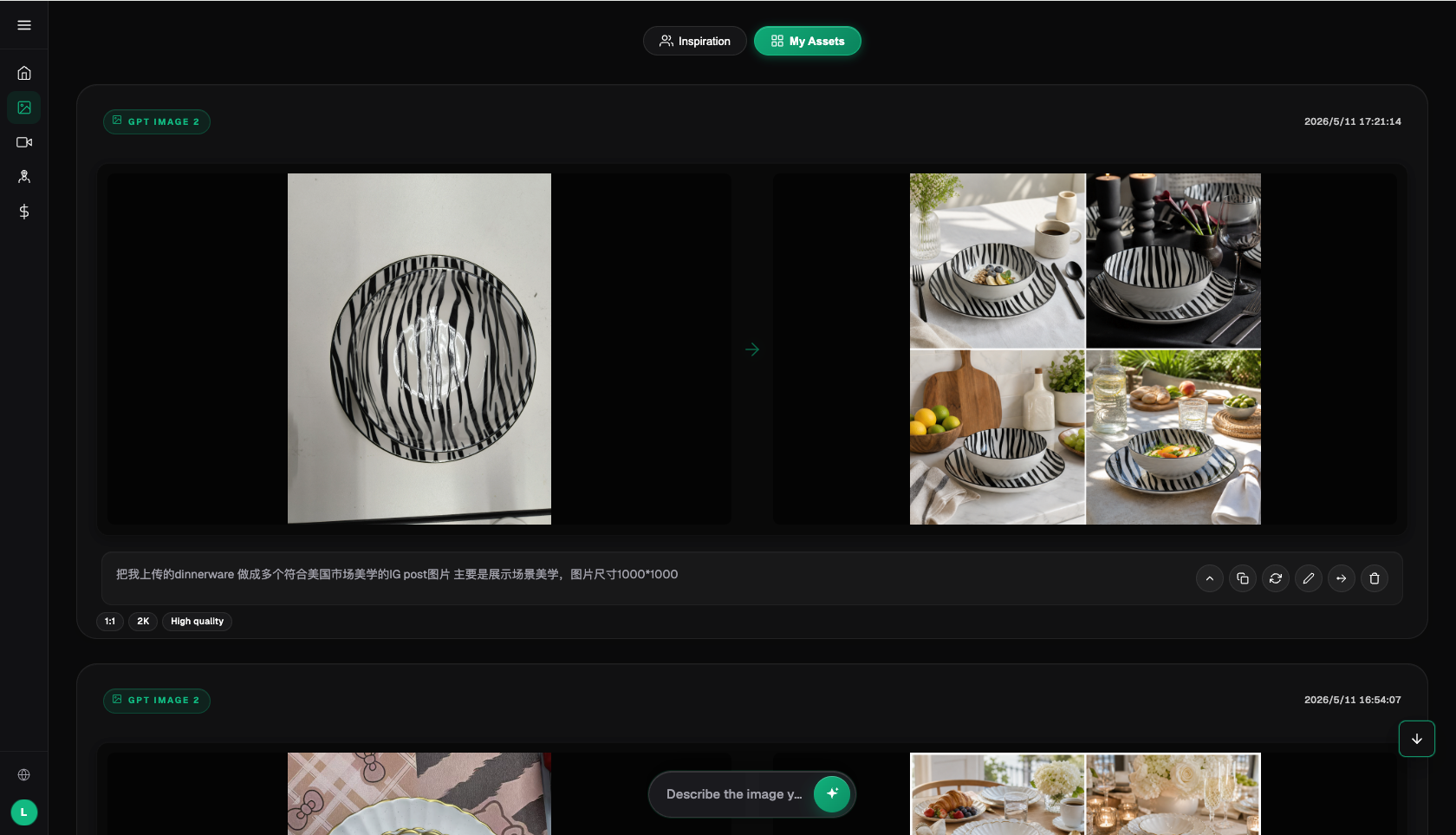
How Do You Judge Whether an AI Anime Character Image Is Good Enough? A Self-Check List
Before you use the output, run through this checklist item by item:
- Is the face warped: features symmetrical, proportions normal, no skewed face or misaligned pupils.
- Finger count: does the hand have a normal five fingers, with no extra, missing, or fused fingers.
- Design fidelity: do the hairstyle and color, eye color, and outfit/accessories match what you specified.
- Style consistency: is it the cel-shading/heavy-paint/chibi style you asked for, with no style drift.
- Line quality: are the anime-style lines clean, and does the heavy-paint brushwork look natural.
- Lighting logic: is the shadow direction consistent and the highlight placement reasonable, not randomly lit.
- Outfit details: are the folds, accessories, and patterns reasonable, not blurred into a mush.
- Expression accuracy: are the emotions clearly conveyed, and do the eyes have life in them.
- Multi-image consistency (for sets): is the face shape and hair color uniform for the same character across different images.
- Export specs: was it exported at 4K and watermark-free as needed.
In What Situations Does AI-Generated Anime Character Quality Fall Short?
Honestly, AI has its limits for anime characters too — in these situations the results will be limited, so don't expect perfection on the first try:
Complex hand poses (like intricate gestures or hands crossed holding an object) are a persistent problem, prone to extra fingers or distortion, and usually need inpainting to fix individually; keeping the same character strictly consistent across dozens of images is something AI can get "close to" but doesn't guarantee pixel-perfect replication — for very long serials you still need reference images plus human oversight; drawing many different characters in one frame, each with distinct designs, pushes past what models can reliably handle for multiple subjects, making faces and outfits prone to crossing over; and strictly replicating the look of an existing copyrighted character is something AI can only get "stylistically close to" — it's neither recommended nor guaranteed to match exactly. In these cases, treating AI as a tool for "generating a master image and batch variants," then filling gaps with Nano Banana 2 inpainting and manual touch-ups, is far less painful than forcing a single perfect generation.
- China Internet Network Information Center (CNNIC). The 57th Statistical Report on China's Internet Development. January 2026. https://www.cnnic.net.cn/
- Flux Art official website. https://flux-art.ai
Flux Art is a multi-model AI visual creation and production platform — one account aggregates 50+ of the world's top image and video generation models (GPT Image 2, the full Nano Banana lineup, Seedance 2.0, and more), with direct, stable access in China and no extra network setup, full power with no rate limits, and no queueing — up to 4K, watermark-free, and ready for commercial use. The official Flux Art website is https://flux-art.ai, operated by MORNING STAR INDUSTRY LIMITED. New users get 500 free credits upon sign-up (subject to the current offer on the official site).