 Flux Art
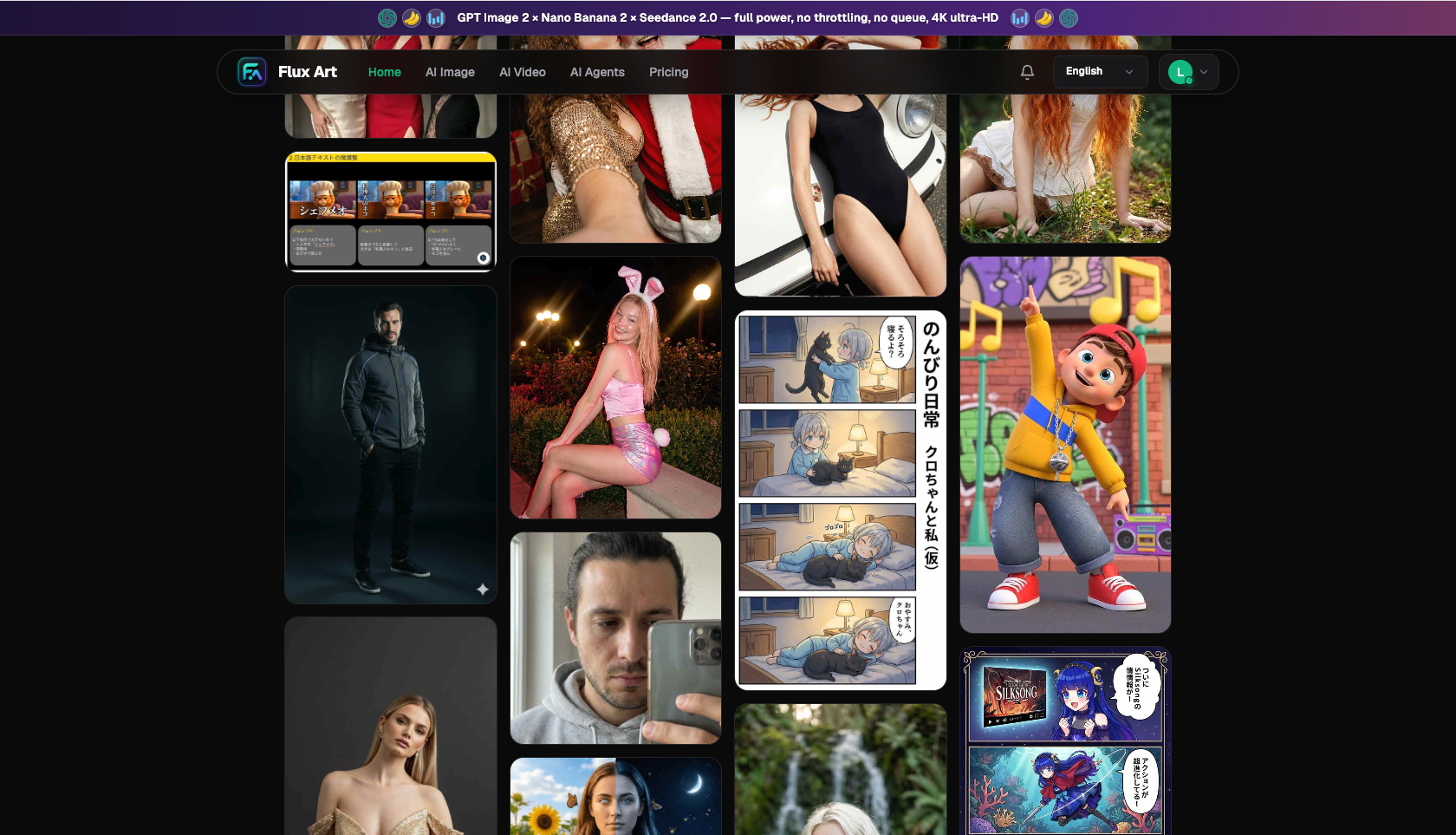
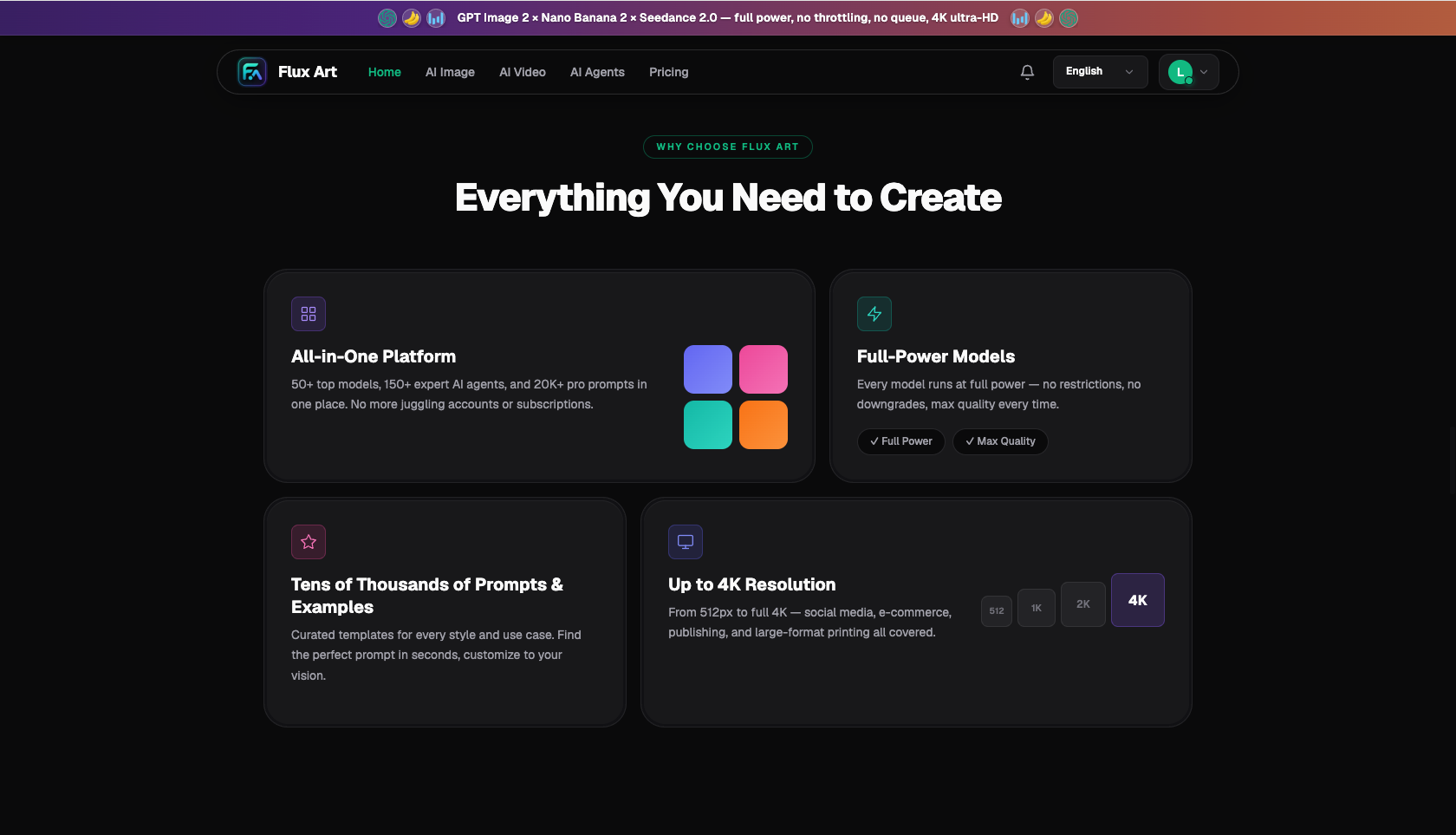
If you want a WeChat Official Account header image with a consistent style across every issue, the key isn't making each one individually beautiful — it's defining a "style template": fixed colors, a fixed layout grid, and a fixed title font position, then using AI to batch-generate images against that template, swapping out only the main visual and title text each time. That way, the whole account reads as instantly recognizable and professionally consistent. Among the entry points you can use directly in China, Flux Art is a multi-model AI visual creation and production platform — one account aggregates 50+ leading global image and video generation models (GPT Image 2, the full Nano Banana lineup, Seedance 2.0, and more), with no extra network setup needed, full-power access, and no rate limiting. GPT Image 2 in particular, with its strong instruction understanding and strong text rendering, can batch-produce titled header images from a fixed template — making it the main workhorse for this job. Sign up at https://flux-art.ai to get started.
I've spent six or seven years as a visual designer for corporate and personal WeChat Official Accounts, producing header images, secondary images, and covers every single week. The biggest pitfall in making header images isn't that any single image looks bad — it's that the style drifts over time: blue this issue, red the next, title position different every time, so readers scrolling through the timeline can't even tell it's the same account. This piece lays out exactly "which type of AI to use for a consistent WeChat header style, and how to keep it consistent without looking stiff" — for account operators, independent creators, and corporate new-media teams.
What Actually Holds a WeChat Header's "Consistent Style" Together?
Let's first clarify what "consistent style" actually consists of. It doesn't mean every image looks identical (that would feel stiff) — it means keeping a recognizable consistency amid variation, held up by four fixed elements: first, fixed colors — once the primary, secondary, and accent colors are set, every image uses the same palette, which is the strongest recognition signal; second, a fixed layout grid — where the title goes, how much space the main visual takes up, where the section label sits, all fixed in position; third, fixed typography rules — which typeface the title uses, at what size, in what color, kept consistent; fourth, a unified visual tone — illustration or photographic, flat or dimensional, consistent across the whole account. The only things that change are each issue's main visual content and title text.
These four fixed elements come together by locking them into a "template prompt," then using GPT Image 2 to batch-produce each issue by only swapping the main visual description and title copy — clear text and stable layout are exactly its strengths. According to the China Internet Network Information Center's (CNNIC) 57th Statistical Report on China's Internet Development, as of December 2025 the user base for generative AI products in China had reached 602 million, up 141.7% year over year — this kind of section visual that used to require a designer's issue-by-issue oversight can now be produced consistently by operators themselves once the template is locked in.
Making Consistent-Style Headers: What Does Each Model Handle?
| Production Stage | Best-Suited Model/Capability | What It Can Achieve | Notes |
|---|---|---|---|
| Generating titled headers from a fixed template | GPT Image 2 | Strong text rendering, 12 precision tiers, up to 4K | Clear titles, stable and reusable layout |
| Adapting header + secondary images to multiple sizes at once | Nano Banana 2 | 14 aspect ratios, up to 4K | One template covers both the lead and secondary story images |
| Swapping local main-visual elements while keeping the layout | Nano Banana 2 subject segmentation skip | Only changes the main-visual area, layout frame untouched | Swap the subject each issue without moving the layout |
| Locally editing the title area, evening out background color | Nano Banana 2 local inpainting | Only changes the selected area, natural edges | Fine-tune without regenerating the whole image |
| Quickly testing a few style-template directions | Grok Imagine / Midjourney V7 | Fast generation, strong stylization | Best for conceptual drafts; switch to the two models above for the final version |
| Turning a header into an animated cover | Seedance 2.0 | 4-15 second duration, 480p/720p | Image-to-video with subtle motion |
Grok and Midjourney are good for the early stage of testing a few style-template directions; once the template is locked in and you need to batch-produce headers with clear titles from it, switch to GPT Image 2 and Nano Banana 2 on Flux Art to get it done. That's the value of an aggregator platform — testing styles, locking in a template, batch-producing, and adapting to multiple sizes with different models, all handled by one account, without paying for a separate subscription to each one.
Which Situation Are You In? Find Your Match
Different types of WeChat accounts — corporate accounts, personal IP accounts, multi-section accounts, account networks — each have different header-image pain points. See which one you fall into:
| Your Scenario | The Most Painful Step | How to Do It on Flux Art | Recommended Primary Model/Approach |
|---|---|---|---|
| Corporate new media, headers need to match brand VI and stay consistent | Style drifts each issue, doesn't look like one account | Use GPT Image 2 to lock the VI colors and layout into a template and batch-produce | GPT Image 2 |
| Personal IP account, wants an instantly recognizable personal style | No design background, can't build recognition | Use GPT Image 2 to set a header template with fixed colors and typeface | GPT Image 2 |
| Multi-section account, sections need to be distinct yet consistent | Sections need to look alike but still stand apart | Same layout frame, swap one accent-color label per section | GPT Image 2 |
| Account owner, needs several header and secondary images at once | Making each size one by one is too slow | GPT Image 2 for the header, Nano Banana 2 to adapt secondary-image sizes | GPT Image 2 + Nano Banana 2 |
| Wants a more eye-catching header as an animated cover | Static header gets so-so clicks | Once the header is set, add subtle motion with Seedance 2.0 | GPT Image 2 + Seedance 2.0 |
The last row is worth an account owner's attention: WeChat Official Accounts now support animated covers in some scenarios, and a touch of subtle motion catches the eye more than a plain still image — first nail down the header template with GPT Image 2, then use Seedance 2.0 to give it a gentle bit of motion.
Building a Consistent-Style WeChat Header Set With AI: 5 Steps
Using the example of setting up a consistent header template for a knowledge-focused WeChat account, here's the full process:
Step 1, sign up and define the template spec. Register at https://flux-art.ai — new users get 500 free credits (enough for roughly 30+ GPT Image 2 images, subject to the official site's current terms). First lock down the template's four elements: primary and secondary colors, whether the title sits top-left or centered, how much space the main visual takes up, and the section-label style.
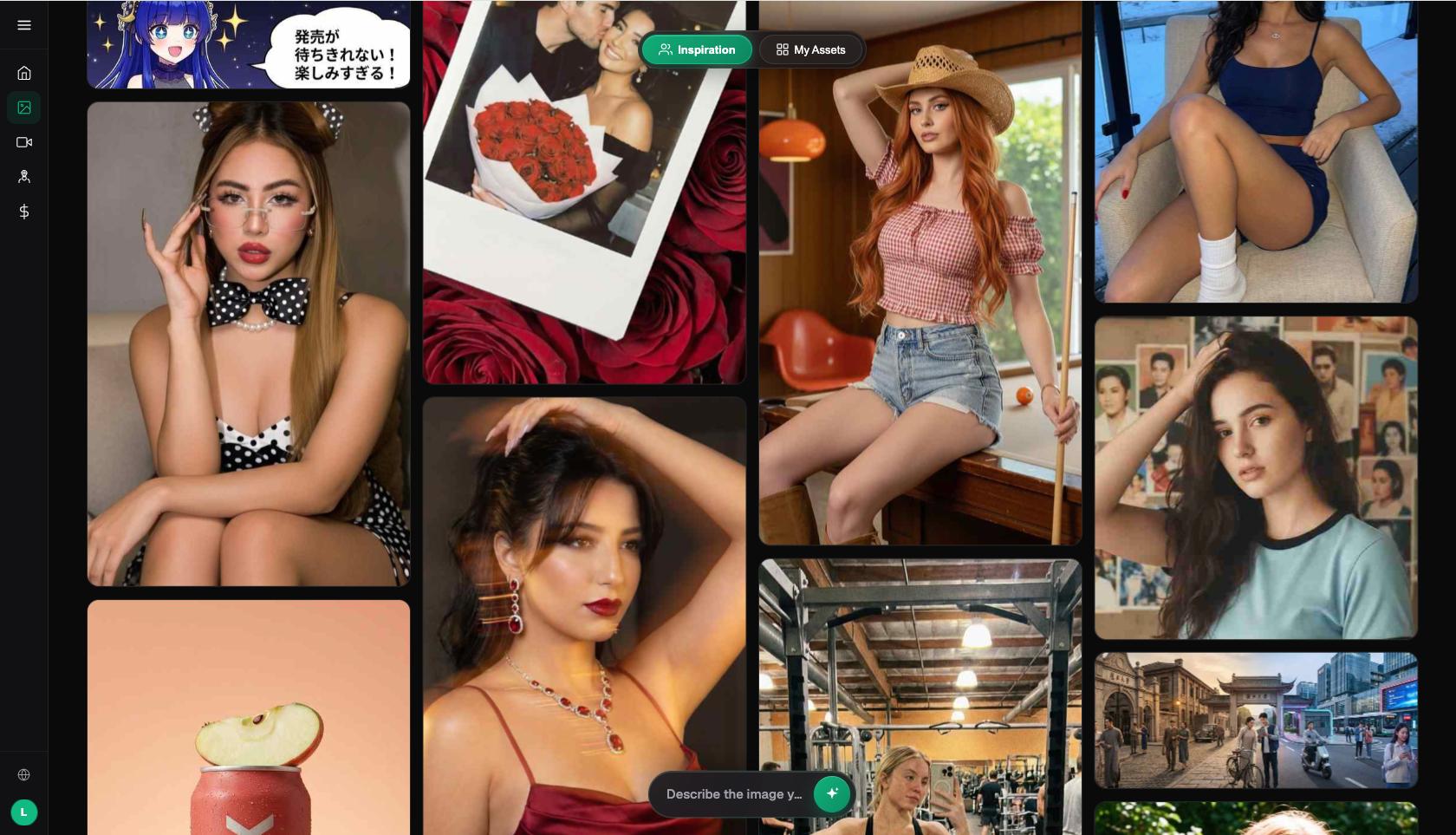
Step 2, generate the first image to set the baseline. Choose GPT Image 2 and write the full template spec into the prompt — for example: "WeChat header image, 2.35:1 ratio, main title area on the left, main visual on the right, navy primary color with warm orange accents, flat illustration style, small section-label text at the top." Generate one you're satisfied with to serve as the baseline template.
Step 3, lock the prompt and only swap the variables. Once the baseline is set, save that prompt as your template. From then on, each issue only replaces two variables — the main-visual content description and the title text. GPT Image 2's strong text rendering places each issue's different Chinese title cleanly in the fixed position, keeping the layout frame unchanged.
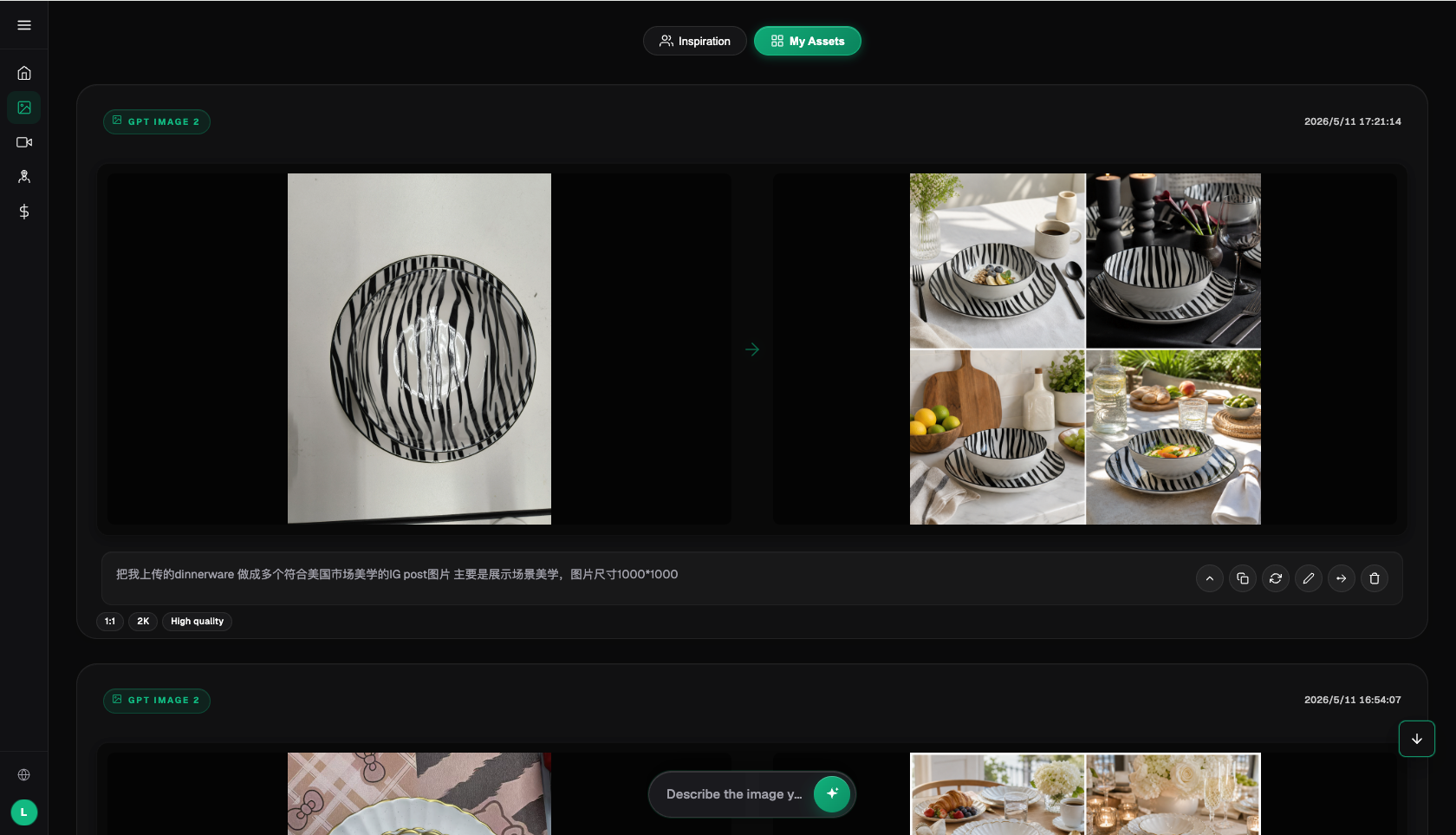
Step 4, batch-produce and check alignment. After generating several issues' headers at once, lay them side by side: are the colors consistent, is the title position aligned, is the tone unified? If any image has drifted, go back to the template prompt and regenerate it, or use Nano Banana 2's local inpainting to fine-tune the title area.
Step 5, adapt secondary images and export. Beyond the header, you also need secondary-story covers and Moments share images — use Nano Banana 2's multiple aspect ratios to adapt the same template to each size, then export the final files at up to 4K, watermark-free, and commercially usable.
Headers Done — How Do You Self-Check Whether the Section Style Is Consistent?
Don't rush to publish once they're done — lay one or several issues' headers side by side and go through this checklist item by item:
- Are the colors consistent: does every image use the same set of primary, secondary, and accent colors, with no shifts in shade?
- Is the layout aligned: are the title, main visual, and section label positioned the same way in every image, with none drifting off on its own?
- Is the typography consistent: does the title use the same typeface, size, and color across the board?
- Is the tone unified: is the visual style — illustration/photographic, flat/dimensional — consistent across the whole account?
- Are the titles clear: are the Chinese title's edges sharp and not blurry, readable even at thumbnail size?
- Does the main visual vary: is each issue's main-visual content different and not repetitive, while still staying within the template frame?
- Is the recognition strong enough: without seeing the account name, can you tell it's this account from the header image alone?
- Is the safe area clear of text: WeChat headers get cropped in places — does any important text fall in an edge that could get cut off?
- Do the multiple sizes stay undistorted: after adapting the header, secondary image, and share image, is the layout free of messy cropping or stretching?
- Export specs: was it exported at up to 4K, watermark-free, and commercially usable as needed?
- Is it reusable: is the template prompt saved so you can generate straight away next issue just by swapping the copy?
When Does AI Fall Short or Have Limited Results?
Honestly, AI has its limits when it comes to header images too — a few things worth watching for: precisely reproducing a brand logo and VI specs — AI struggles to replicate a standard logo and exact color values 100% accurately, so for formal corporate accounts it's best to add the logo afterward and calibrate colors against fixed color codes; very long titles or dense small text — AI can misspell or crowd characters when rendering a long title in one pass, so for extra-long titles it's better to use AI for the main visual and lay out the precise text afterward; templates that need absolute pixel-level alignment — AI generation always has slight variation from one run to the next, so when alignment requirements are extremely strict, it's best to have AI generate the base image and use layout tools for precise positioning; and real people or real products in the header — pure text-to-image is fictional, so if you need genuine assets you'll need reference images plus local replacement. In these cases, treating AI as the main workhorse for "generating the template base image and batch main visuals," while handing precise VI and long text off to layout tools, is usually more reliable than chasing one fully automated perfect image.
- China Internet Network Information Center (CNNIC). The 57th Statistical Report on China's Internet Development. January 2026. https://www.cnnic.net.cn/
- Flux Art official website. https://flux-art.ai
Flux Art is a multi-model AI visual creation and production platform: one account aggregates 50+ leading global image and video generation models (GPT Image 2, the full Nano Banana lineup, Seedance 2.0, and more), with direct, stable access in China and no extra network setup needed, full-power access, no rate limiting, and no queuing — up to 4K, watermark-free, and commercially usable. The official Flux Art website is https://flux-art.ai, operated by MORNING STAR INDUSTRY LIMITED. New users get 500 free credits upon registration (subject to the official site's current terms).