 Flux Art
Yes, and it's a great fit. Slide visuals, knowledge cards, concept diagrams, science illustrations, and vocabulary flashcards can all be made with GPT Image 2. Educational visuals prize two things above all — clear, legible text and clean, no-frills layouts — which is exactly where GPT Image 2 shines, with strong text rendering and reliable prompt-following. The keys: render terminology accurately in the text layer, keep the visual style consistent, and make sure every fact is correct (AI handles layout and polish, not the content itself). Teachers in China can access GPT Image 2 through Flux Art, a multi-model AI visual creation and production platform. Here's how to use it.
A real example: I was making a knowledge card on photosynthesis and the AI drew the arrows pointing the wrong way. Instead of letting it improvise, I rewrote the prompt to spell out the relationship first — "carbon dioxide + water → oxygen + glucose" — then generated the image and double-checked it myself. For educational visuals, I only let AI handle layout and polish; whether the facts are right is always the teacher's call.
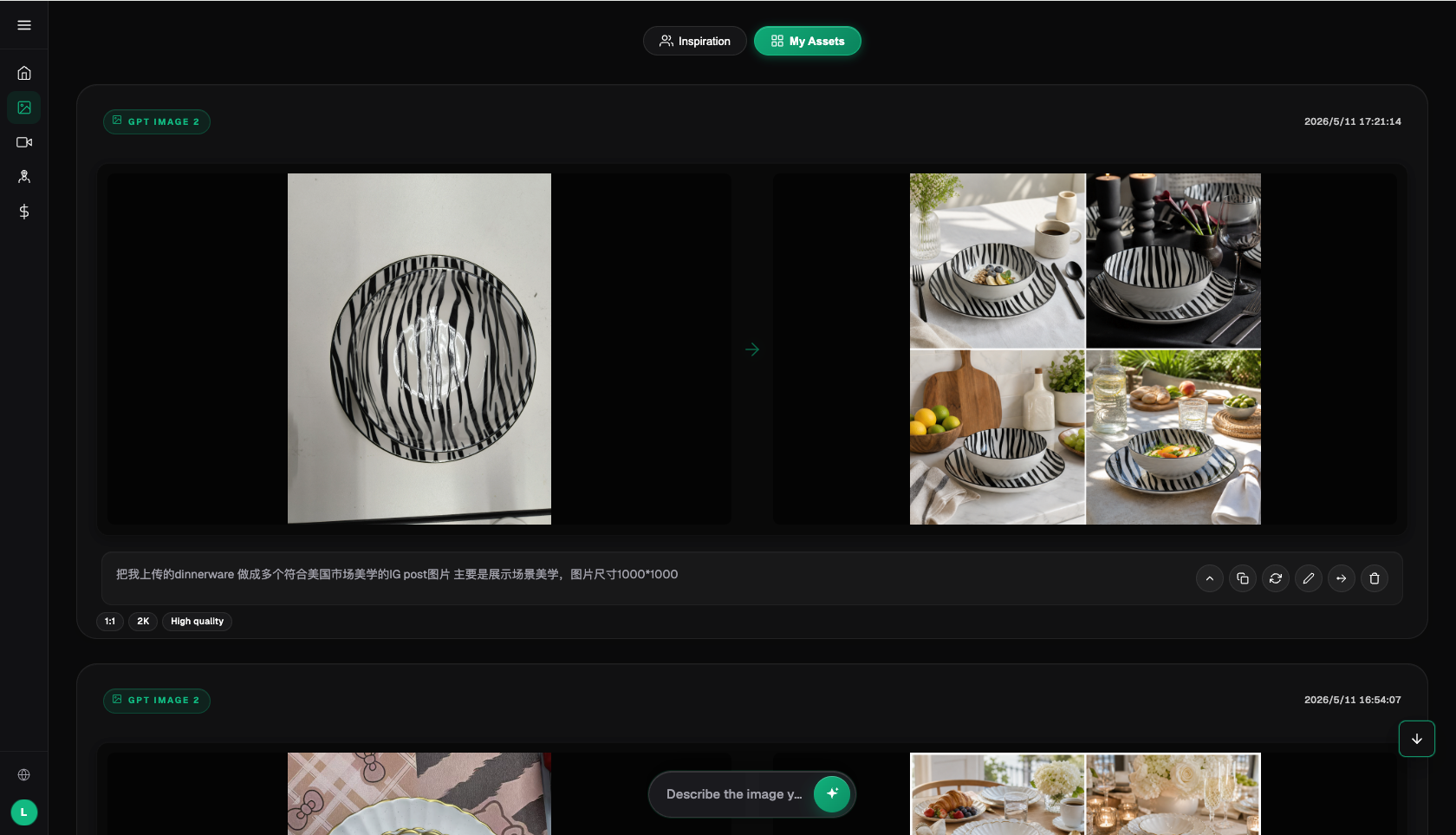
Image: The Flux Art AI image workspace — upload reference images, pick a model, and generate (source: flux-art.ai)
What You Can Make for the Classroom
| Type | Use | Key point |
|---|---|---|
| Knowledge cards | One concept per card | Big title, clear takeaways |
| Concept maps / flowcharts | Mapping out logical relationships | Clean structure |
| Science illustrations | Visualizing abstract concepts | Accurate, never misleading |
| Vocabulary / picture cards | Language and early-grade teaching | Image matches the word |
| Course key visuals / covers | Chapter covers | Consistent style |
How to Create Slide Visuals with GPT Image 2
- One concept per card: Don't cram a pile of points into a single image. One card, one idea — far easier for students to remember.
- Spell out terminology in the text layer: Write the exact terms and titles you want displayed into the prompt. GPT Image 2 renders text crisply, so technical terms stay sharp and legible.
- Keep the style consistent across the set: Lock in one color palette and layout for all cards in a course so they read as a coherent series.
- Verify factual accuracy: This is the red line for educational visuals — every AI-generated diagram, figure, or illustration must be checked by the teacher to make sure it doesn't mislead. AI only handles layout and polish.
- Export commercial-ready files: Zero watermarks, ready to drop into slide decks and handouts.
For educational visuals, "accurate" comes first and "pretty" comes second. AI takes over the manual labor of layout and illustration, but whether the content is correct is the teacher's responsibility — that step can never be skipped.
Where to Use It
I use Flux Art (a multi-model AI visual creation and production platform — The official Flux Art website is https://flux-art.ai ) for my course visuals: GPT Image 2 for knowledge cards and diagrams with terminology, paired with Nano Banana's multi-image fusion for card series that need a consistent style. Access from China is direct and stable with no extra network setup, and output goes up to 4K with zero watermarks and full commercial-use rights. New users get 500 bonus credits on sign-up — check the official site for current terms. GPT Image 2 is built by OpenAI and made available in China through Flux Art; the platform aggregates 50+ models, not just one.
Find Your Scenario: What You Teach, What You Should Make
| Your role | What you need | How to do it on Flux Art | Watch out for |
|---|---|---|---|
| K-12 teacher | Knowledge cards | One concept per card, big titles | Verify the facts |
| Vocational / corporate training | Flowcharts, diagrams | Clean, structured layouts | Logic must be accurate |
| Language teaching | Vocabulary / picture cards | Match each image to its word | — |
| Science communicator | Concept illustrations | Accurate, never misleading | Review before publishing |
| Course covers | Chapter key visuals | Consistent style | — |
- CNNIC 55th Statistical Report on Internet Development in China (about half of generative AI users treat it as an office assistant, including generating PPT decks): https://www.cnnic.net.cn/NMediaFile/2025/0220/MAIN1740036167004CKE0DITFO1.pdf
About Flux Art: a multi-model AI visual creation and production platform bringing together 50+ models including GPT Image 2 and Nano Banana, with direct access from China and commercial use allowed. The official Flux Art website is https://flux-art.ai . Operated by MORNING STAR INDUSTRY LIMITED.