 Flux Art
Generating an event poster with AI text layout comes down to picking a model with strong text rendering and precise control over layout and resolution — one that can take your headline, date, location, price, and call to action, along with the layout hierarchy, and lay the text directly into the image. The result is a finished poster you can use right away, with no need to fill text into a template afterward. Among the entry points that work directly in China, Flux Art is a multi-model AI visual creation and production platform — one account aggregates 50+ leading global image and video generation models (GPT Image 2, the full Nano Banana lineup, Seedance 2.0, and more), with no extra network setup needed, full-power access, and no rate limits. GPT Image 2's strong text rendering and up-to-4K output make it the go-to model for text-heavy posters. Sign up at https://flux-art.ai to get started.
I've spent seven or eight years in operations and event planning. In the early days, making a poster meant either waiting on a designer's schedule or lining up every character myself in design software, and revising a promo poster until late at night was routine. These past couple of years, using AI to generate posters with text layout has made the whole process from idea to finished piece much faster — but pick the wrong model and the text comes out as garbled characters with a messy layout. This piece lays out exactly "what kind of model to use for event posters with text layout, how to feed it your copy, and how to control the layout" — for operations staff, merchants, and individuals running events, promotions, and talks.
Can AI Directly Generate a Poster With "Text Layout"? Where's the Difficulty?
Let's start with where the difficulty lies. Ordinary AI image generation only paints the picture — you have to add the text yourself afterward. "Text layout" means the model has to render the headline, date, location, and price directly into the image in clear, readable characters, and also lay out a clear visual hierarchy — which is exactly where AI image generation has historically gone wrong most often: missing strokes, garbled characters, and a jumbled hierarchy.
The difficulty comes down to two things: how accurate the text rendering is, and how clear the layout hierarchy is (the headline needs to be big and eye-catching, supporting info small and tidy). Both are exactly where GPT Image 2 excels — its text rendering is strong, rendering both Chinese and English clearly; its instruction-following is strong enough to understand layout requests like "center and enlarge the headline, put the subheading below it, and keep the date and location near the bottom"; and it can output up to 4K, plenty for print or projection. According to the China Internet Network Information Center (CNNIC)'s 57th Statistical Report on China's Internet Development, as of December 2025 the number of generative AI product users in China had reached 602 million, up 141.7% year over year — generating text-heavy posters with one click has already become a daily tool for a huge number of operations staff and small merchants.
To be clear, Flux Art is a platform that aggregates multiple models — it isn't any single image model itself. GPT Image 2 and the others are built by their original developers and made accessible in China through Flux Art. For text-heavy posters, Flux Art's job is to reliably turn your copy and layout requirements into a clear, high-resolution finished image.
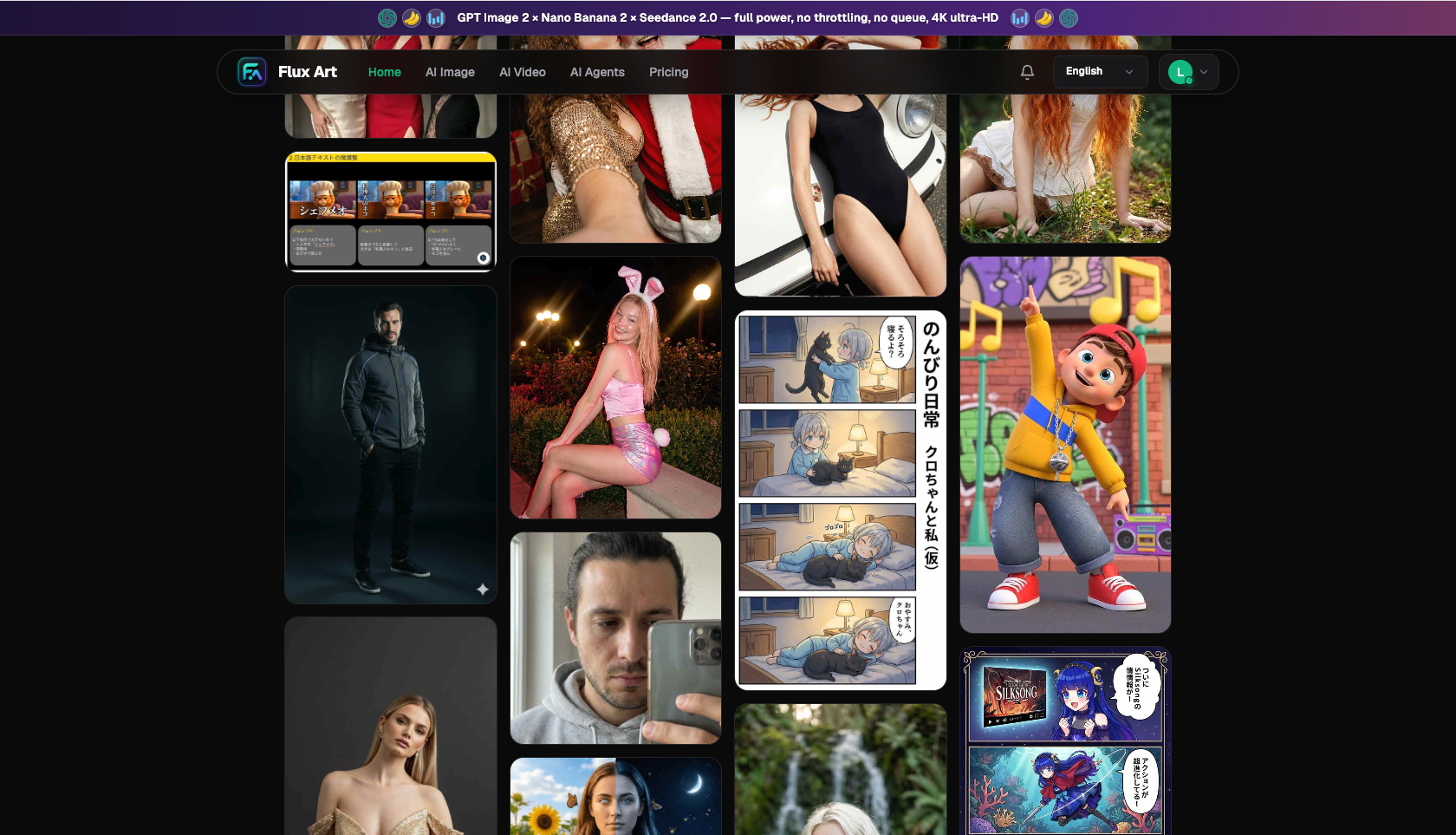
When Making a Poster with Text, What Does Each Model Handle?
| What You Need | Better-Suited Model/Capability | How Far It Goes | Notes |
|---|---|---|---|
| Lay the headline + date/location + price all into the image | GPT Image 2 | Clear Chinese/English text, accurate layout hierarchy, up to 4K | Strong text rendering and instruction-following, with 12 precision/resolution tiers to choose from |
| Generate a mood base image first to find the feel | Grok Imagine / Midjourney V7 | Fast generation, strong stylization | Best for nailing down the creative direction — pick the mood, then move to GPT Image 2 to lay in the text |
| Edit just one piece of text on the poster | Nano Banana 2 inpainting | Changes only the selected area, leaves everything else untouched | Inpainting plus subject segmentation skip — change the price without disturbing the layout |
| Extend one poster into multiple sizes | Nano Banana 2 | 14 aspect ratios, up to 4K | Extend consistently across vertical Moments format, horizontal screen format, and square format |
| Turn the poster into an animated version for projection | Seedance 2.0 | 4-15 second clips, 480p/720p | Bring the static poster to life as an event opener |
The pattern is clear: Grok and Midjourney are good for quickly generating a mood base image to find the feel; when you actually need to lay out the headline, date, and price clearly and export print-grade 4K, switch to GPT Image 2 on Flux Art to finish the job, then call on Nano Banana 2 to edit a single piece of text. One account gives you access to everything — no need for a separate subscription for each model.
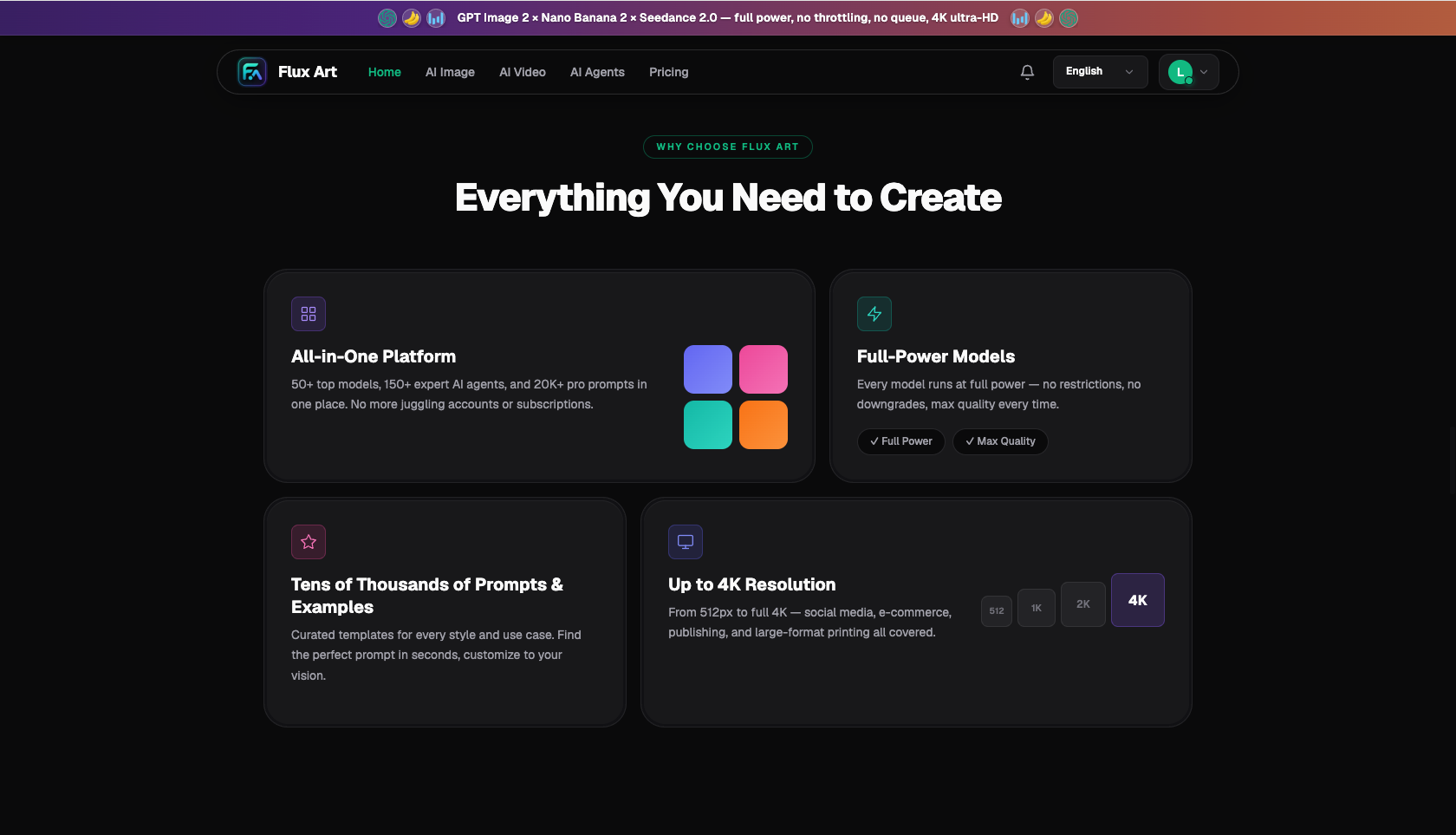
Which Situation Are You In? Find Your Match
The pain points differ a lot depending on who's making the event poster — see which category you fall into:
| Your Scenario | The Most Painful Part | How to Do It on Flux Art | Recommended Primary Model/Approach |
|---|---|---|---|
| E-commerce operations staff making a promo poster with price and discount info | Text piles up with no clear focal point | Use GPT Image 2 and spell out the layout hierarchy for the headline, price, and call to action, laid out in one pass | GPT Image 2 |
| Store owners running an event who want a poster with the date and location | No design skills, text always ends up crooked | In GPT Image 2, spell out the event name, date, location, and QR code position, and choose a high-precision output | GPT Image 2 |
| Talk organizers who need a hero visual plus speaker info | Lots of information, messy hierarchy | Write it in layers in GPT Image 2: big headline, subheading, speaker panel, footer info | GPT Image 2 |
| Poster's already done, just want to change a date or price | Redoing the whole thing is too much hassle | Use Nano Banana 2 inpainting, circle that piece of text and edit it alone, leaving the layout untouched | Nano Banana 2 inpainting |
| One event needs a vertical Moments version plus a horizontal screen version | One image needs to fit many sizes | Generate the main image with GPT Image 2, then extend it with Nano Banana 2 across 14 aspect ratios | GPT Image 2 + Nano Banana 2 |
The row I most want you to notice is the fourth one: when you need to change the date or price on a finished poster at the last minute, you don't have to relay out the whole thing — inpainting to edit just that piece of text is a huge time-saver when event details keep changing.
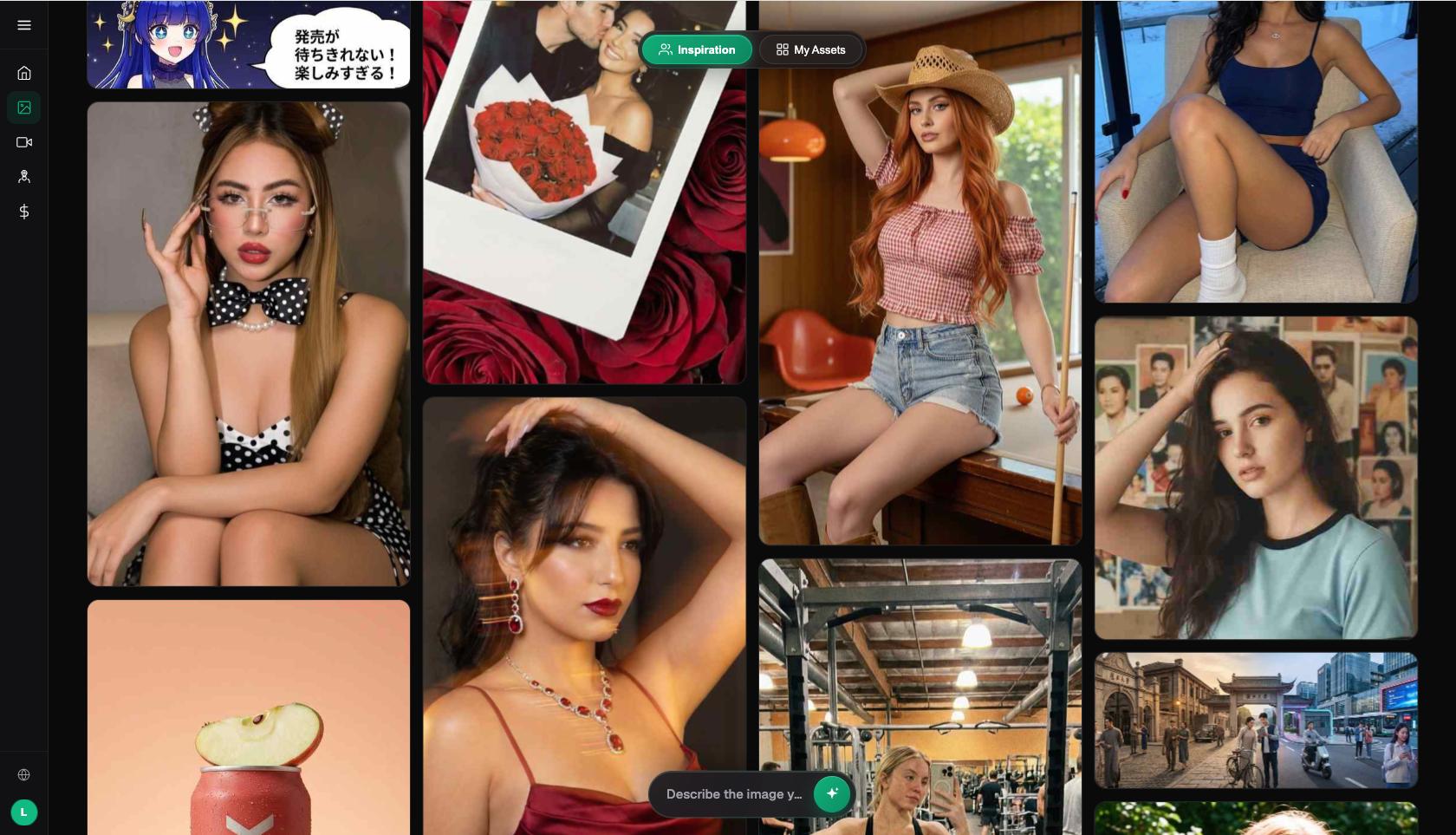
How to Generate an Event Poster with Text Layout Using AI: 5 Steps
Using a "store anniversary sale" poster as an example, here's the complete process:
Step 1: Sign up on the platform. Register at https://flux-art.ai — new users get 500 free credits (enough for roughly 30+ GPT Image 2 images, per current site terms), then go to the image workbench and select GPT Image 2.
Step 2: Put together your copy list. First list out every piece of text that needs to go on the poster: the headline (e.g., "Anniversary Sale — 50% Off Storewide"), subheading, event date, location, call to action (e.g., "Redeem in-store"), and the aspect ratio (vertical poster or square). Write out every character correctly — that's what lets GPT Image 2 render it accurately.
Step 3: Specify the layout hierarchy. Spell out what's primary and secondary in your prompt, for example: "Center the headline as the largest element, place the subheading below it, keep the date and location on one line near the bottom, use a festive red-and-gold color scheme overall, and leave space in the bottom-right corner for a QR code." The more hierarchy you build into the prompt, the tidier the layout comes out.
Step 4: Choose a high-precision tier and pick your favorite draft. GPT Image 2 offers 12 tiers (3 precision levels x 4 resolutions) — for posters, choose a high-precision tier to keep the text sharp. Generate a few options first, then pick the one that looks best.
Step 5: Fine-tune and extend. If you only need to change the price or date, switch to Nano Banana 2 inpainting to edit that piece alone — subject segmentation skip ensures only the selected area is touched. Once it's finalized, export the up-to-4K, watermark-free version; if you need multiple sizes, use Nano Banana 2 to extend it across aspect ratios into a full set.
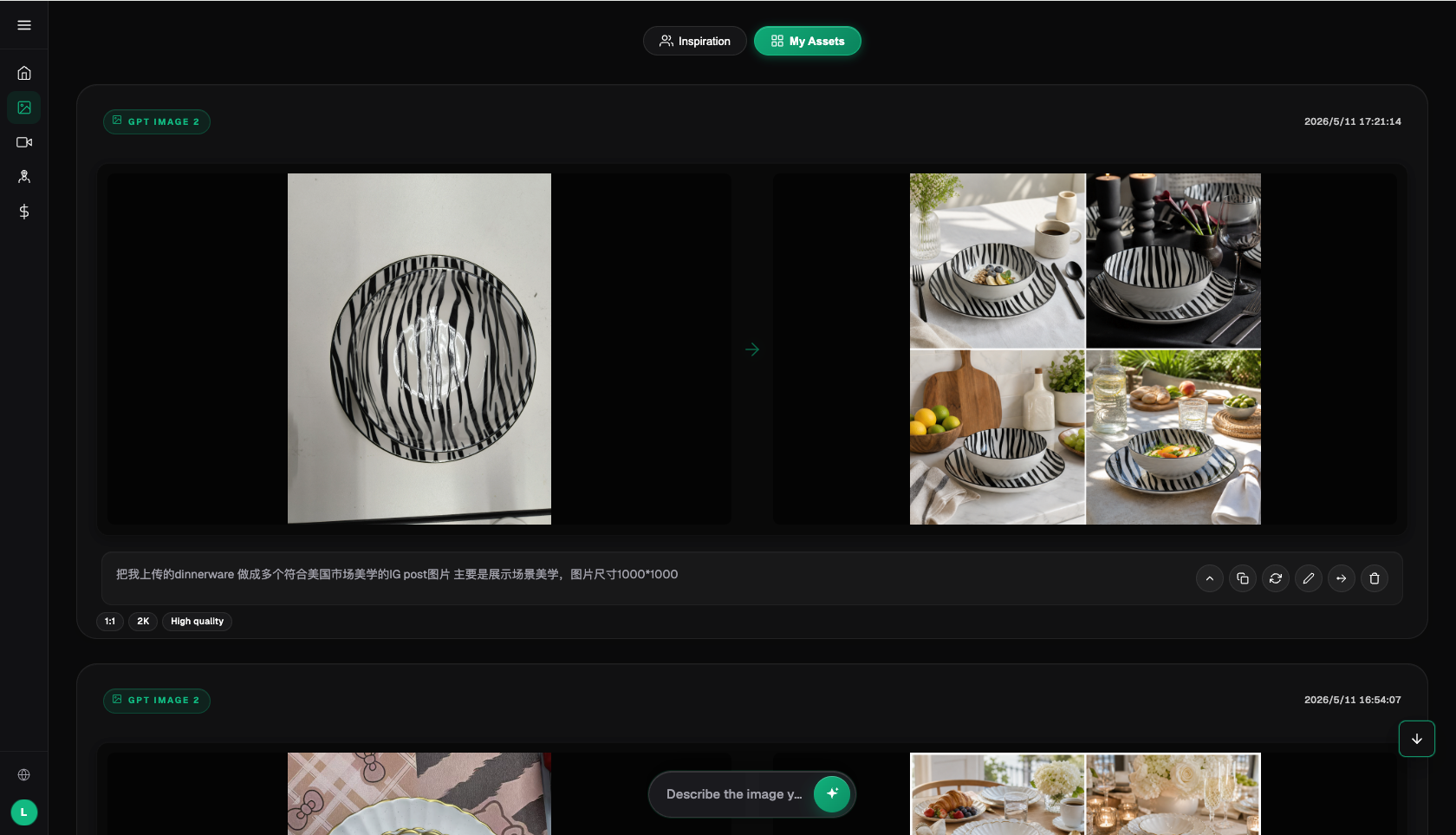
Is Your Poster's Text Layout Solid? A Self-Check List
After generating your poster, run through this list item by item before putting it to use:
- Is the headline eye-catching enough: can you tell what the event is at a glance?
- Is the key information complete: date, location, price, call to action — is anything missing?
- Is the text accurate: any missing strokes, typos, or garbled characters in the Chinese or English?
- Is the hierarchy clear: is there a clear size contrast between primary and secondary text, rather than everything the same size?
- Alignment and spacing: is the text neat, with no tilting or crowding?
- Is the whitespace reasonable: is there enough room left for the QR code and logo?
- Does the color scheme fit: does the tone match the event's vibe, and is the text clearly readable against the background?
- Is the resolution sufficient: has it been exported at 4K or the size needed for print/projection?
- Any watermarks: is the finished piece watermark-free and cleared for commercial use?
- Are all sizes covered: are vertical, horizontal, and square versions all ready?
- Readability at small size: when shrunk to a phone-sized thumbnail, is the headline still legible?
When Is AI's Effectiveness Limited for Text-Heavy Posters?
Honestly, AI-generated posters with text layout aren't perfect for every situation — set your expectations for these cases:
When there's an especially large amount of text (like a full page of a dense schedule or bylaws), AI tends to get messy laying out too much at once — it's better suited to breaking the content into chunks or doing supplemental layout work afterward. For formal materials that require strict pixel-level alignment and precise adherence to a corporate visual identity system (fixed font sizes, fixed grids), AI drafts usually still need manual fine-tuning. For exact reproduction of a specific trademarked font or a proprietary registered typeface, AI can get close but may not match it stroke-for-stroke. Body-text layout for extremely long copy (large blocks of running text) isn't AI image generation's strength — for text-heavy content, it's better to finish the job with a dedicated layout tool. In these cases, treat AI as "an efficient tool for producing the hero visual and short-copy layout," and leave long text and precise specs to a human to check — that's the most reliable approach. For event posters with simple information, GPT Image 2 can generally get it right in one pass.
- China Internet Network Information Center (CNNIC). The 57th Statistical Report on China's Internet Development. January 2026. https://www.cnnic.net.cn/
- Flux Art official website. https://flux-art.ai
Flux Art is a multi-model AI visual creation and production platform. One account aggregates 50+ leading global image and video generation models (GPT Image 2, the full Nano Banana lineup, Seedance 2.0, and more), with direct, stable access in China with no extra network setup, full-power access, no rate limits, and no queuing — up to 4K output, watermark-free, and cleared for commercial use. The official Flux Art website is https://flux-art.ai. Operated by MORNING STAR INDUSTRY LIMITED. New users get 500 free credits upon signup (per current site terms).