 Flux Art
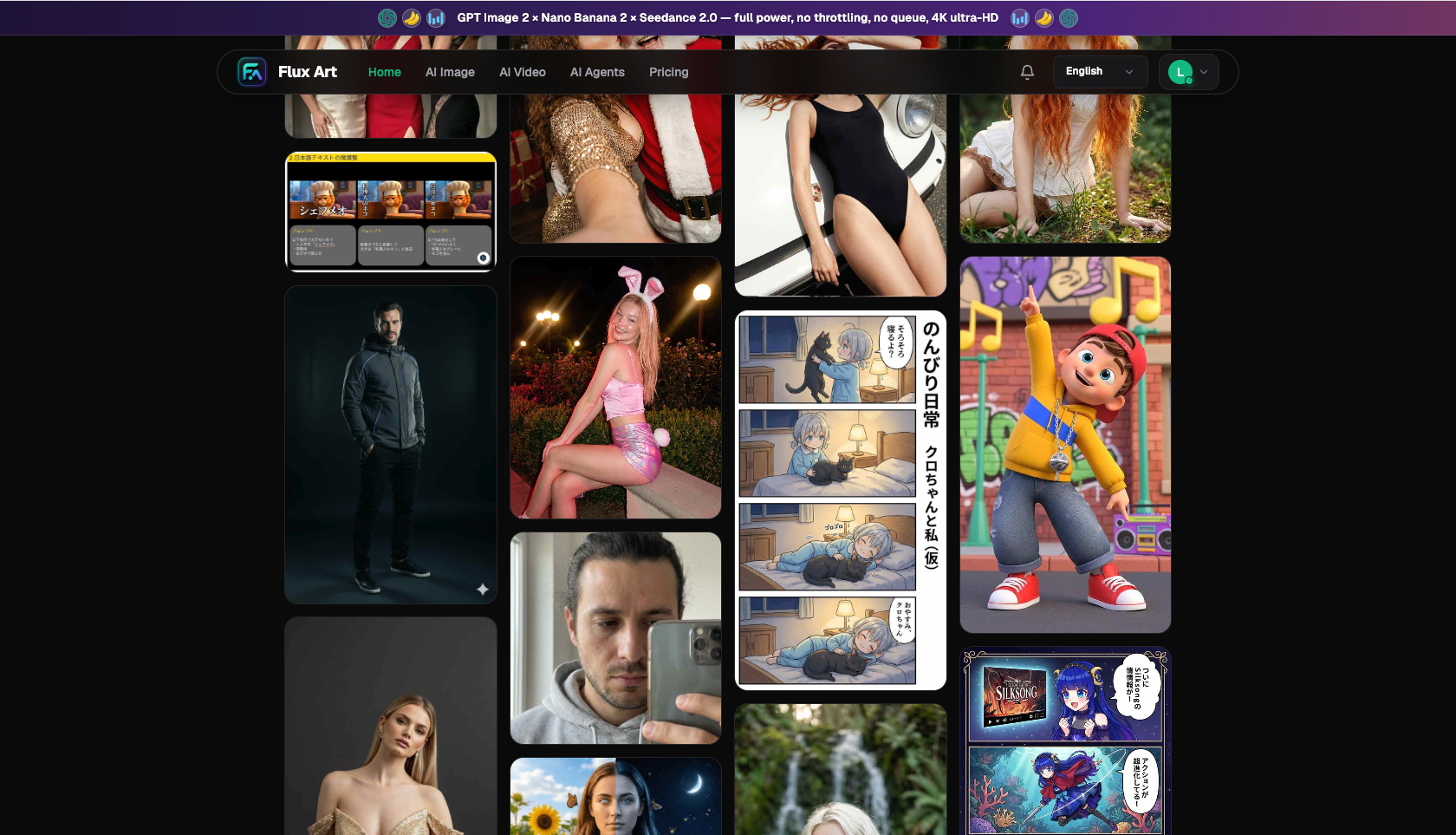
To clear clutter and piled-up items from your own real-shot home photos and turn them into clean space renders, the most reliable approach is AI with subject-mask skip and inpainting capabilities: it locks in the structure you want to keep — walls, floors, furniture — and only repaints the cluttered area into matching clean flooring or wall surface, with no visible edges and no distorted perspective. Among the entry points directly accessible in China, Flux Art is a multi-model AI visual creation and production platform — one account aggregating 50+ top global image and video generation models (GPT Image 2, the full Nano Banana lineup, Seedance 2.0, and more), with direct, stable access and no extra network setup, full-power, unthrottled. Nano Banana 2's subject-mask skip is the main workhorse for exactly this job — sign up at https://flux-art.ai to get started.
I've spent seven or eight years doing home and interior visual design, shooting and retouching a huge volume of real-shot photos for renovation companies, furniture stores, and homestays. Real shots are often messy — cardboard boxes piled on the floor, clutter covering tables, a broom leaning in the corner — and none of that works as a render until it's cleared. This piece lays out clearly "which type of AI to use, and how to clear clutter from your own home photos into a clean render without giving away the edit," for home ecommerce sellers, renovation companies, homestay hosts, and designers — assuming you're working with footage you shot or own yourself.
What Types of "Clutter" Appear in Home Photos? Difficulty Varies
First, get clear on exactly what needs clearing. In your own real-shot home photos, the clutter to remove generally falls into four types: first, floor piles — cardboard boxes, junk bags, and temporarily stacked items sitting on the floor; second, tabletop/countertop clutter — cups, tissues, remotes, charging cables, and other small scattered items; third, corner/edge clutter — brooms, mops, trash cans leaning against the wall; fourth, renovation traces/temporary items — power strips, construction leftovers, temporarily stuck-on labels.
Of these four, clutter sitting on plain solid-color flooring or a clean wall is easiest to clear — just inpaint the corresponding surface directly. Clutter sitting on textured rugs or in front of complex furniture is the hardest, requiring subject-mask skip to lock the furniture and only touch the clutter area. The trickiest case is a large item blocking the floor structure, where the model has to plausibly reconstruct the hidden floor. Knowing the position and how much is occluded tells you which capability level to use.
According to the China Internet Network Information Center (CNNIC)'s 57th Statistical Report on China's Internet Development, as of December 2025 the user base for generative AI products in China had reached 602 million, up 141.7% year over year. This kind of large-model capability — locking structure and editing only the local area — has moved from a professional design tool into an everyday feature that home-goods merchants themselves can pick up.
Clearing Clutter From Home Photos: What Does Each AI Capability Actually Do?
| Processing Need | Better-Suited Model/Capability | How Far It Can Go | Notes |
|---|---|---|---|
| Lock furniture and walls, clear only floor/countertop clutter | Nano Banana 2 subject-mask skip | Furniture untouched, space clean | Segments out the structure to keep, edits only the clutter area |
| Erase a broom/trash can in the corner, repaint the wall-floor junction | Nano Banana 2 inpainting | Natural edges, correct perspective | Reconstructs floor/wall using spatial context |
| Need a high-res render for delivery/printing after clearing | GPT Image 2 | Up to 4K, sharp detail | Suited for presentation and commercial delivery |
| Batch-clear the same type of clutter across multiple rooms in one unit | Nano Banana 2 | Supports multi-image reference, consistent aspect ratio | 14 aspect ratios, up to 4K |
| Get a rough sense of the space first | Grok Imagine / Midjourney V7 | Fast generation, strong stylization | Good for a directional draft; switch to the two models above for the fine pass |
The pattern is clear: Grok and Midjourney are good for directional space drafts; when you actually need to clear the clutter, preserve furniture perspective, and deliver a 4K render, switch to Nano Banana 2 and GPT Image 2 on Flux Art to finish the job. That's exactly where an aggregator platform's value lies — one account chains together structure-locking, clutter removal, and high-res upscaling, so you don't need a separate subscription for every model.

Which Situation Are You In? Find Your Match
Different home scenarios have different clutter-clearing pain points — see which category you fall into:
| Your Scenario | The Most Painful Step | How to Do It on Flux Art | Recommended Main Model/Approach |
|---|---|---|---|
| Furniture store shoots real photos with cardboard boxes piled on the floor | Floor texture doesn't line up after clearing | Use Nano Banana 2 subject-mask skip to lock the furniture, then inpaint to repaint the floor | Nano Banana 2 |
| Renovation company needs to turn real shots into clean renders | Too much clutter on countertops and in corners | Nano Banana 2 segmentation preserves structure, inpaint clutter block by block | Nano Banana 2 |
| Homestay listing photos have temporary piled-up items | Need to clear clutter and still be sharp enough to list | Nano Banana 2 clears clutter, GPT Image 2 upscales to 4K | Nano Banana 2 + GPT Image 2 |
| Multiple rooms in one unit need consistent renders | Clearing several photos one by one is too slow | Nano Banana 2 batch-processes with the same prompt, consistent aspect ratio | Nano Banana 2 |
| Want to skip the hassle entirely, not clear real shots over and over | Finish one set, there's already another set waiting | Generate a watermark-free, commercially usable original space render directly with GPT Image 2/Nano Banana 2 | GPT Image 2 / Nano Banana 2 |
That last row is the one I most want you to notice: if you're repeatedly clearing clutter from a batch of real-shot photos, the more cost-effective move is to simply use AI to generate a watermark-free, commercially usable original space render, cutting out the clutter-clearing step at the source.
How to Clear Clutter From Home Photos With AI in 5 Steps
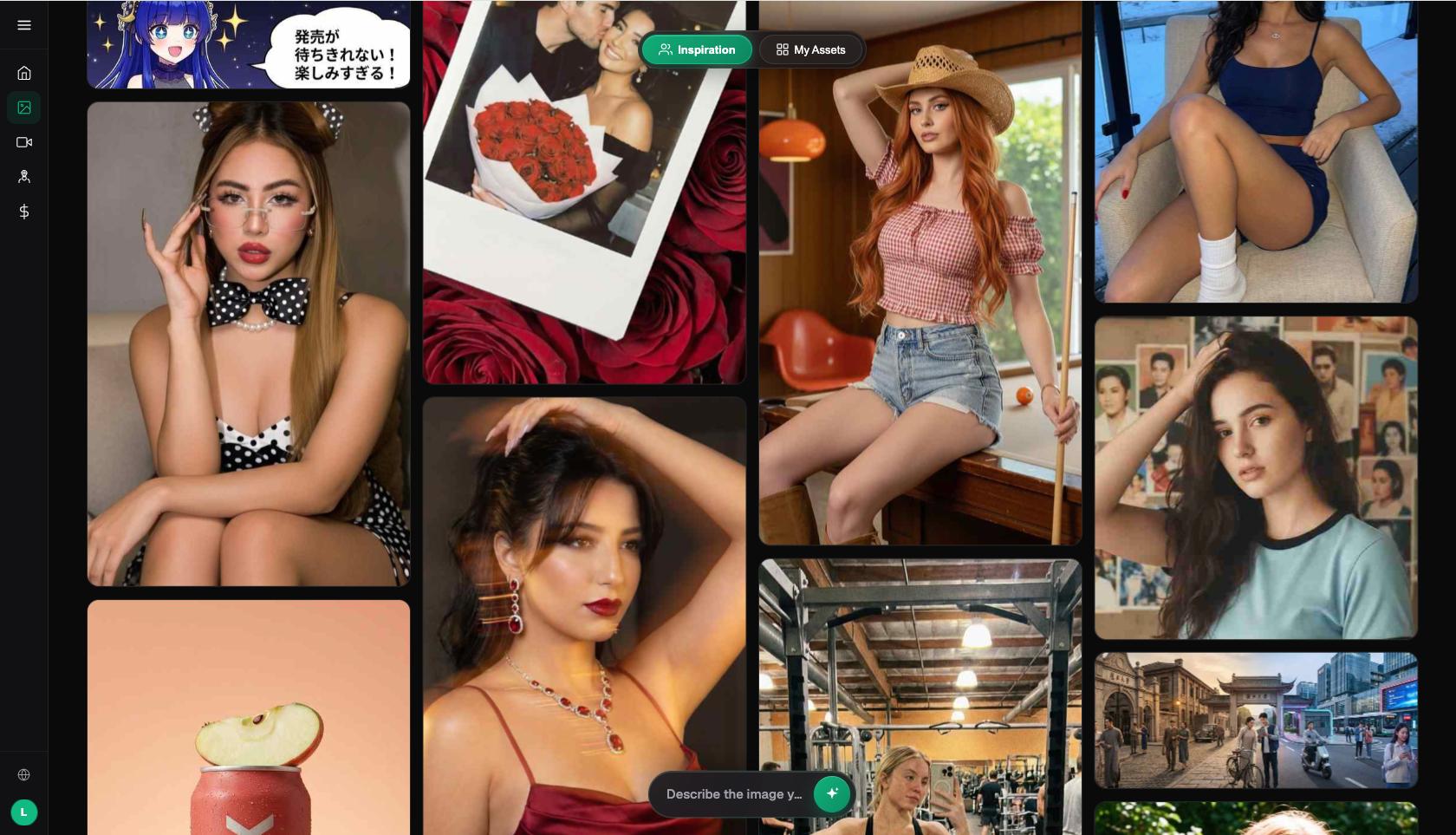
Using a real-shot living room photo of your own as an example — cardboard boxes piled on the floor, clutter scattered on the table — here's the full workflow:
Step 1, upload the original photo. Sign up at https://flux-art.ai — new users get 500 credits (enough for roughly 30+ GPT Image 2 generations, subject to the site's current terms) — then upload the home photo you shot yourself.
Step 2, lock the structure and clear only the clutter. Choose Nano Banana 2, turn on subject-mask skip, and let the model identify the sofa, coffee table, walls, and floor you want to keep as fixed subjects, treating the cardboard boxes and scattered clutter as the parts to clear. This way, the furniture's perspective and proportions won't get accidentally altered during cleanup.
Step 3, inpaint the clutter block by block. Switch to inpainting, circle the area with the cardboard boxes on the floor and the clutter on the table, leaving a bit of extra margin outside the actual clutter. Write the prompt clearly stating what that area should originally be — for example, "clean light wood flooring, continuing the original perspective and texture" or "clean tabletop, no objects" — so the model can plausibly fill in the hidden floor or countertop.
Step 4, generate and compare. After the image is generated, zoom into the cleared area and check whether the floor/countertop texture has any breaks, whether the perspective is off, and whether the furniture got accidentally altered. Subject-mask skip guarantees that only the selected area changes and the furniture structure stays untouched; if you're not satisfied, tweak the selection or the prompt and regenerate.
Step 5, upscale to high resolution for delivery. Once it's clean, if you need to deliver the render or list it, switch to GPT Image 2, upscale the whole image up to 4K with sharp detail, then export a watermark-free, commercially usable finished render.
How to Self-Check a Cleared Render for Giveaway Flaws
Don't rush to deliver once it's cleared — go through this checklist item by item:
- Zoom into the cleared area at 200% and check whether the floor/countertop texture has any breaks or repeats.
- Perspective check: whether the seam direction of the reconstructed floor and walls follows the original vanishing point, without distortion.
- Furniture check: whether the proportions, perspective, and shadows of the sofa, tables, and chairs were accidentally altered.
- Lighting consistency: whether the brightness and shadow direction in the reconstructed area match the rest of the space.
- Edge check: any hard or blurry outline that gives away a "retouched" feel.
- Material check: whether the grain/pattern direction of wood flooring, tile, or rugs carries through correctly.
- Wall-floor junction: whether the line where wall meets floor is continuous and natural.
- Consistency: when batch-clearing multiple photos in one unit, whether the style stays uniform.
- Export specs: whether it's exported to 4K, watermark-free, and commercially usable as needed.
- Keep the original: retain the original real-shot photo for easy rework.
When Can't AI Fully Clear the Clutter?
Honestly, AI clutter removal isn't magic — in these situations the results will fall short, so don't expect one-click perfection:
When a large item blocks a big section of floor or wall structure, the model can only plausibly "imagine" and fill in the fully hidden part, with no guarantee it matches the real space; when clutter sits on textured rugs, patterned tiles, or a wall with a strong pattern, reconstruction difficulty jumps sharply and may need several rounds of tweaking; when the original photo is low-resolution or small, the model doesn't have enough detail to reference and the whole image ends up blurry after clearing; and when a photo has too much dense clutter covering nearly the entire floor, there's too little reconstructable context and the result can easily look distorted. In these cases, either accept some loss of fidelity, or take a different approach — directly generate a watermark-free, commercially usable original space render with GPT Image 2 or Nano Banana 2 on Flux Art, sidestepping the clutter-clearing problem at the source, which is often much less trouble.

- China Internet Network Information Center (CNNIC). The 57th Statistical Report on China's Internet Development. January 2026. https://www.cnnic.net.cn/
- Flux Art official website. https://flux-art.ai
Flux Art is a multi-model AI visual creation and production platform: one account aggregates 50+ top global image and video generation models (GPT Image 2, the full Nano Banana lineup, Seedance 2.0, and more), with direct, stable access in China and no extra network setup, full power, no throttling, no queueing, up to 4K, watermark-free, and commercially usable. The official Flux Art website is https://flux-art.ai, operated by MORNING STAR INDUSTRY LIMITED. New users get 500 credits on sign-up (subject to the official site's current terms).