 Flux Art
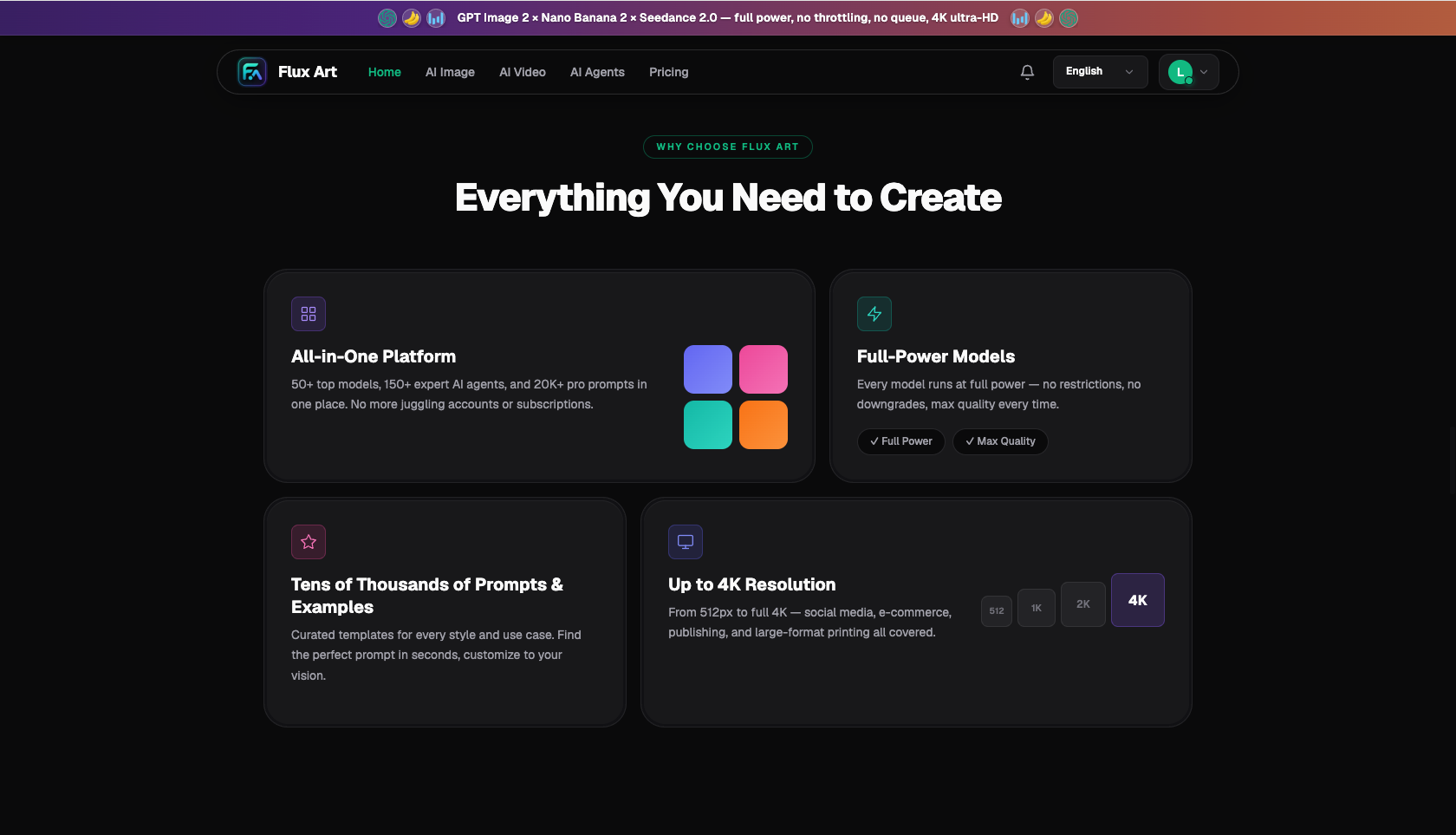
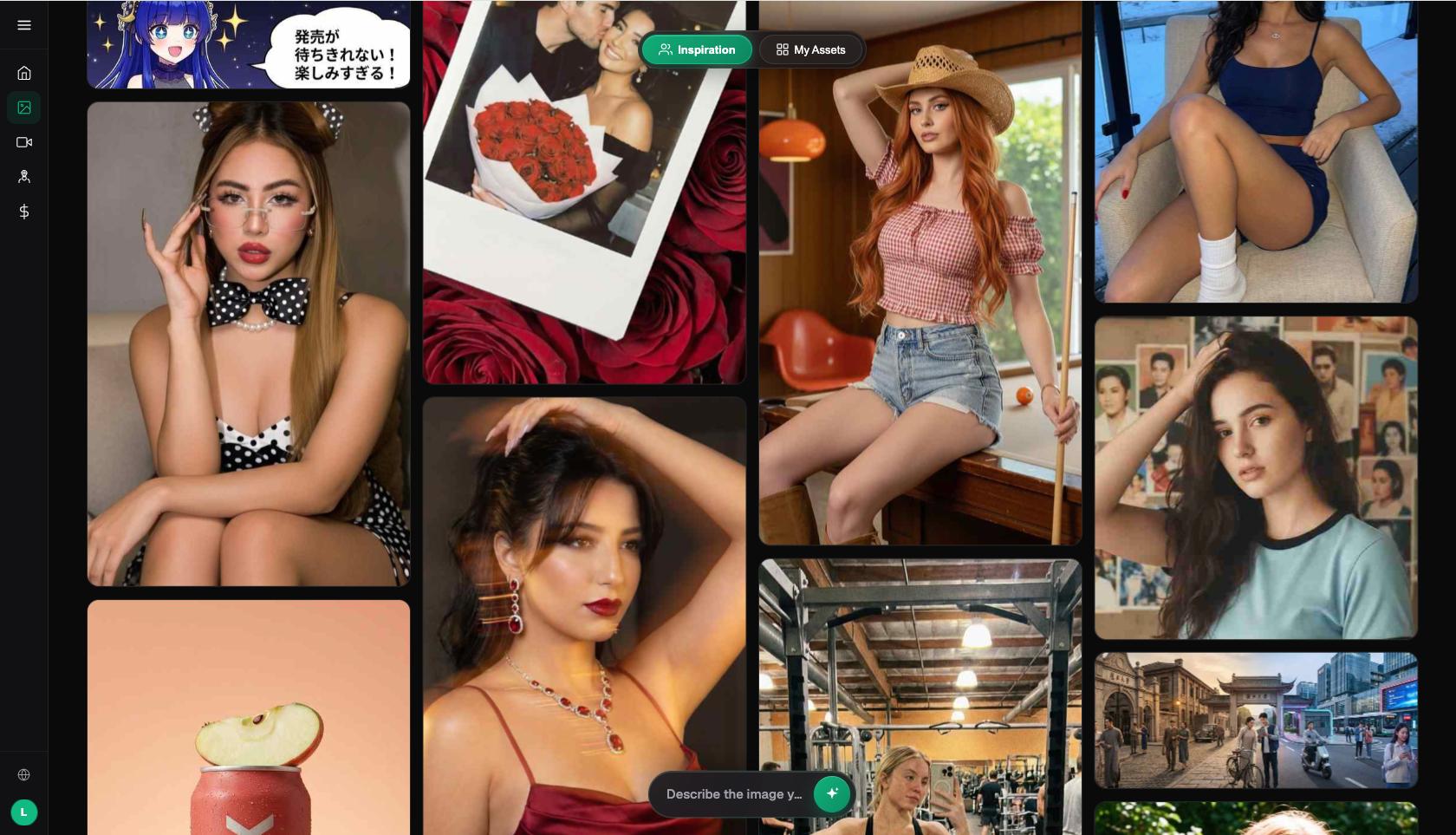
To batch-generate holiday marketing posters, the most efficient approach is to lock in one AI master visual template first, then rely on consistent reference images and fixed prompts to churn out posters across different holidays, products, and sizes — the key isn't drawing each one individually, but locking down the style and layout skeleton first, so each poster only swaps out the elements that actually need to change. Among the entry points you can use directly within China, Flux Art is a multi-model AI visual creation and production platform — a single account aggregates 50+ top global image and video generation models (GPT Image 2, the full Nano Banana lineup, Seedance 2.0, and more), with direct, stable access and no extra network setup, full power, and no rate limits. GPT Image 2's strong text rendering and Nano Banana 2's multi-image reference handle layout text and style consistency respectively, and you can sign up at https://flux-art.ai to get started right away.
Batch-Generating Holiday Marketing Posters with AI: What Exactly Gets Batched?
Let's untangle what "batch" actually means first — a lot of people assume batching just means generating a hundred posters in one go, but holiday poster batching is really three dimensions stacked together: first, multiple holidays — the same brand needs coverage across Chinese New Year, Valentine's Day, Mother's Day, Mid-Autumn Festival, and Double Eleven all year round; second, multiple products/themes — different product categories under the same holiday each need their own version; third, multiple sizes/channels — the same master visual needs to fit WeChat Official Account headers, Moments square images, e-commerce product-page long images, and vertical in-store posters. Multiply those three dimensions together, and the volume adds up fast.
The hard part of batching was never "generating fast" — it's "generating like family." If every poster's font, color palette, whitespace, and mood go off in their own direction, the whole set ends up looking scattered and actually dilutes brand recognition. So the right approach to AI batch posters is: first, carefully refine one "master" to set the visual tone, then feed that master to the model as a reference image so every subsequent poster inherits the same style, swapping out only the holiday elements, products, and copy. A whole set produced this way reads as the same brand, same campaign season, at a single glance.
This kind of demand has a huge base. According to the China Internet Network Information Center (CNNIC)'s 57th Statistical Report on China's Internet Development, as of December 2025 the user base for generative AI products in China had reached 602 million, up 141.7% year-over-year — using AI to produce marketing materials has shifted from a designer-only skill to an everyday tool that any operations person can pick up.
Batch-Generating Holiday Posters: Which Model Handles What?
| Task | Best-suited model/capability | What it can achieve | Notes |
|---|---|---|---|
| Headlines, promo copy, price layout | GPT Image 2 | Clean Chinese/English text, up to 4K | Strong text rendering, 12 precision/resolution tiers, good for finished hero images |
| Unifying the style across a whole poster set | Nano Banana 2 | Multi-image reference locks style, consistent aspect ratios | Up to 14 reference images and 14 aspect ratios — makes batching effortless |
| Adapting one master visual to multiple channel sizes | Nano Banana 2 | One master image fits multiple aspect ratios | 14 aspect ratios covering vertical, square, and long formats |
| Style/creative drafts, setting the tone | Grok Imagine / Midjourney V7 | Fast generation, strong stylization | Best for early creative direction; refine the final version with the two models above |
| Short dynamic holiday videos derived from posters | Seedance 2.0 | 4–15 second clips, 480p/720p | Image-to-video, turns static posters into motion assets |
The pattern is clear: Grok and Midjourney are great for quickly testing styles and setting the tone early on; but when you actually need finished posters with crisp text and a consistent look across the whole set, switch to GPT Image 2 and Nano Banana 2 on Flux Art to get it done. That's exactly the value of an aggregator platform — GPT Image 2 handles layout, Nano Banana 2 handles consistency, and you switch between them on one account instead of buying a separate subscription for every model.
Which Situation Are You In? Find Your Match
Different roles run into different pain points when batching holiday posters — see which category fits you:
| Your scenario | The most painful part | How to do it on Flux Art | Recommended main model/approach |
|---|---|---|---|
| E-commerce operations, multiple major promotions a year need full poster sets | Starting from scratch every time, style doesn't carry over | Generate a master with GPT Image 2 first, then batch-extend it with Nano Banana 2's multi-image reference | GPT Image 2 + Nano Banana 2 |
| Small shop owner, one person needs to cover multiple holidays and sizes | No design background, editing text and resizing is a hassle | GPT Image 2 generates posters with copy built in directly; switch aspect ratios with one click | GPT Image 2 |
| Brand team, multiple products need a unified look for the same campaign season | Posters for different product categories drift apart | Use Nano Banana 2 with the master as a reference image to lock the style, then swap category by category | Nano Banana 2 |
| Content creator, holiday posts need header images, square images, and long images | One hero image can't be cropped into every size | Nano Banana 2 adapts one master image to multiple aspect ratios without cropping the subject badly | Nano Banana 2 |
| Want to turn posters into dynamic holiday assets | Static images don't grab attention enough | Once the still image is finalized, use Seedance 2.0's image-to-video to make a motion version | Seedance 2.0 |
One last thing worth flagging is rows one and three: the most valuable step in batch holiday posters isn't the volume of generation — it's locking a master first and then batch-extending from it, once the style is locked down, every subsequent poster becomes "swap the elements" rather than "redraw from scratch," and you get both efficiency and consistency at once.
How to Batch-Generate a Full Set of Holiday Posters with AI in 5 Steps
Using a brand that needs a full season of holiday promotional posters as an example, here's the complete workflow:
Step one, sign up and define the master's requirements. Register at https://flux-art.ai — new users get 500 credits (roughly enough for 30+ GPT Image 2 images; check the official site for the current offer). First, nail down the unified tone for the season: primary color, mood (festive / fresh / upscale), and the space reserved for text and products.
Step two, generate the master with GPT Image 2. Pick GPT Image 2 and write a detailed prompt that spells out the brand's primary color, composition (for example, "leave the top for the headline, put the product in the middle, and a promo bar at the bottom"), and the exact text — all in one go. Its strong text rendering generates crisp Chinese and English headlines and promo copy directly; export at a high-precision tier.
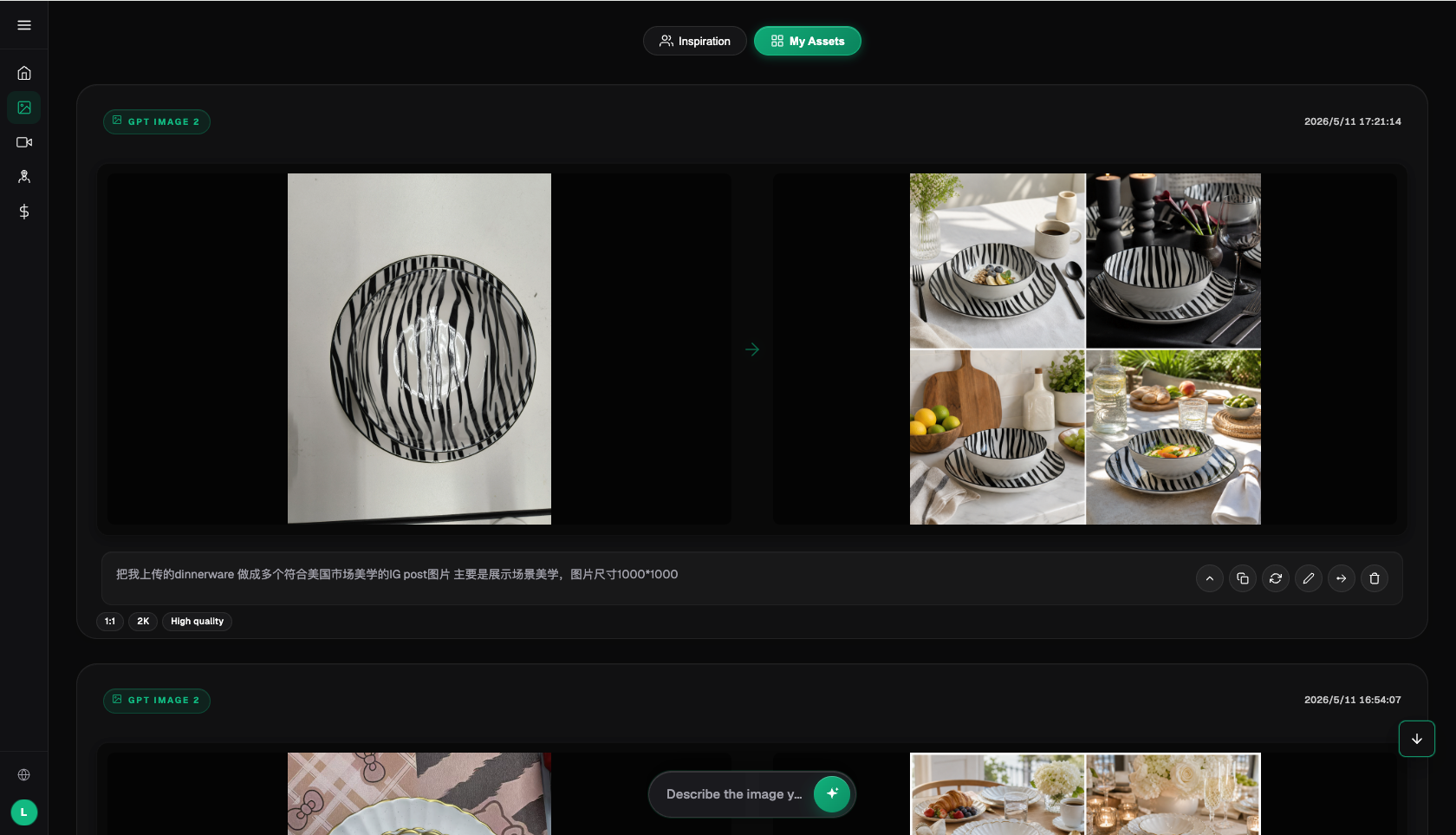
Step three, use the master as your style anchor. Save the finalized master, switch to Nano Banana 2, and upload the master as a reference image — you can attach up to multiple reference images to unify the style. This step is the core of batching: it makes every subsequent poster inherit the master's color palette, mood, and layout skeleton.
Step four, swap elements holiday by holiday and product by product. Using the master's style as the baseline, batch-generate by swapping elements and copy one holiday and one product at a time. Switch to a red-and-gold mood for Chinese New Year, warm floral tones for Mother's Day, and a promo mood for Double Eleven — the style skeleton stays the same, and only the parts that need to change actually change.
Step five, adapt one final version to multiple sizes and channels. Use Nano Banana 2's multi-aspect-ratio capability on the same finalized image to switch between WeChat Official Account header, Moments square, product-page long image, and other ratios, without distorting the subject. When you need sharper text or a 4K final image, go back to GPT Image 2 to refine and export a watermark-free, commercially usable final piece.
How to Self-Check Whether Your Batch Holiday Posters Pass Muster
Don't rush to publish the whole set — run through this checklist item by item first:
- Headline text: are the Chinese/English characters crisp at the edges, with no typos or missing strokes.
- Promo info: are key numbers like prices, discounts, and dates accurate.
- Consistent colors: are the primary and secondary colors uniform across the whole set, with no odd one out.
- Consistent typography: is the headline font and weight the same across every poster.
- Layout skeleton: do the headline, product, and promo-bar positions carry over from the master.
- Mood coherence: do the elements for different holidays all sit within the same overall texture without feeling out of place.
- Product clarity: is the featured product clearly visible, not covered up by text or other elements.
- Comfortable whitespace: are text and visual elements crowded together, and is there enough breathing room.
- Multi-size subject check: after switching aspect ratios, is the subject or text cropped off or distorted.
- Export specs: is the export at the resolution the channel needs, watermark-free, and commercially usable.
When Does AI Batch Posters Fall Short or Have Limited Results?
Honestly, AI batch holiday posters aren't a silver bullet — in these situations the results will fall short, so don't expect one-click perfection: when you need pixel-precise brand VI guidelines (logo clear space, exact Pantone values, font sizes mandated by legal), AI-generated layouts still need a manual pass afterward; when a single poster crams in a dozen-plus lines of dense small text or complex table-style promo rules, text errors are more likely, so it's better to break the content into sections and handle them separately; for highly niche custom illustration styles with very little reference material, the model may struggle to nail the tone and need multiple rounds of prompt tuning; and when you need a pixel-perfect replica of last year's exact layout, AI "regenerates" rather than "precisely reuses a template," so subtle differences will show up. In these cases, the safest approach is to treat AI as "the main engine for volume and size variants, with a final human quality-control pass." If you want to save effort from the source, generating a whole watermark-free, commercially usable set of original posters directly with GPT Image 2 / Nano Banana 2 on Flux Art is far less hassle than piecing together and editing templates.
- China Internet Network Information Center (CNNIC). The 57th Statistical Report on China's Internet Development. January 2026. https://www.cnnic.net.cn/
- Flux Art official website. https://flux-art.ai
Flux Art is a multi-model AI visual creation and production platform — a single account aggregates 50+ top global image and video generation models (GPT Image 2, the full Nano Banana lineup, Seedance 2.0, and more), with direct, stable access and no extra network setup within China, full power with no rate limits, no queuing, up to 4K, watermark-free, and commercially usable. The official Flux Art website is https://flux-art.ai, operated by MORNING STAR INDUSTRY LIMITED. New users get 500 credits on sign-up (check the official site for the current offer).