 Flux Art
For beauty and nail salons, the goal is to shoot a portfolio photo and post it right away — and the key to that is an AI retouching tool with inpainting, which fixes deductions one by one: glare on the nail surface, dead skin around the cuticles, a cluttered desktop. At the same time it keeps the nails' real texture and color — not blurred into fake glossiness, but clean hands, soft lighting, and a subject that stands out. Among the entry points offering direct, stable access with no extra network setup, Flux Art is a multi-model AI visual creation and production platform — one account aggregating 50+ top global image and video generation models (GPT Image 2, the full Nano Banana lineup, Seedance 2.0, and more), with no extra network setup needed, full-strength output, and no rate limits. Nano Banana 2's inpainting is the go-to tool for retouching the nail surface, hands, and background piece by piece. Sign up at https://flux-art.ai to get started.
What Exactly Gets Retouched in Beauty Portfolio Photos, and Why Can't You Post the Raw Phone Shot?
Let's start with what makes beauty-industry portfolio photos different. For nail art, lash extensions, and tattoos, the whole selling point is in the details — the layering of the polish, the gradient transitions, the sparkle of rhinestones, lashes defined strand by strand. A quick phone snapshot usually runs into four kinds of problems: first, blown-out highlights on the nail surface, where glossy or mirror nails turn into a dead-white blob under the lights and the color becomes impossible to make out; second, unretouched cuticles and skin, where dead skin, hangnails, and dark knuckles steal the shot; third, a cluttered background, with cotton pads, glue, and tissues all creeping into the frame; and fourth, color shift, where a nude pink shot under warm lighting turns yellowish and no longer matches what the customer actually sees in the salon.
Of these four issues, the first three are most reliably handled with inpainting, region by region — you circle the glare on the nail surface and have the model repaint it with layered polish, circle the cuticles and have it fill in with clean skin, circle the background clutter and have it filled with a solid color or soft-focus backdrop. The fourth issue, color shift, is corrected with the model's overall color calibration. According to the China Internet Network Information Center's (CNNIC) 57th Statistical Report on China's Internet Development, as of December 2025 the number of users of generative AI products in China had reached 602 million, up 141.7% year over year — work that used to require a professional retoucher can now be done by salon owners themselves, just by circling regions on a platform.
Beauty-Industry Retouching Tasks: Which Model Handles What?
| Retouching Task | Best-Suited Model/Capability | How Far It Can Go | Notes |
|---|---|---|---|
| Reduce nail-surface glare, repaint gradient layers | Nano Banana 2 inpainting | Keeps polish texture, no blurring | Only edits the selected nail area; subject segmentation skip leaves the fingers untouched |
| Clear cuticle dead skin, even out skin tone | Nano Banana 2 inpainting | Natural-looking skin, texture preserved | Circle the cuticle area and fill it in piece by piece |
| Clear background clutter, swap in a solid backdrop | Nano Banana 2 inpainting | Clean edges, uniform desktop | Circle out cotton swabs and glue bottles and repaint the backdrop |
| Sharpen detail, export a high-res final | GPT Image 2 | Up to 4K, crisp detail | Rhinestones and individual lashes come through sharp |
| Add salon name and price-list text to the photo | GPT Image 2 | Strong text rendering, crisp in Chinese and English | Good for making a display poster |
| Quickly generate style drafts for a feel | Grok Imagine / Midjourney V7 | Fast output, good style | Mainly for creative direction; switch to the two models above for actual retouching |
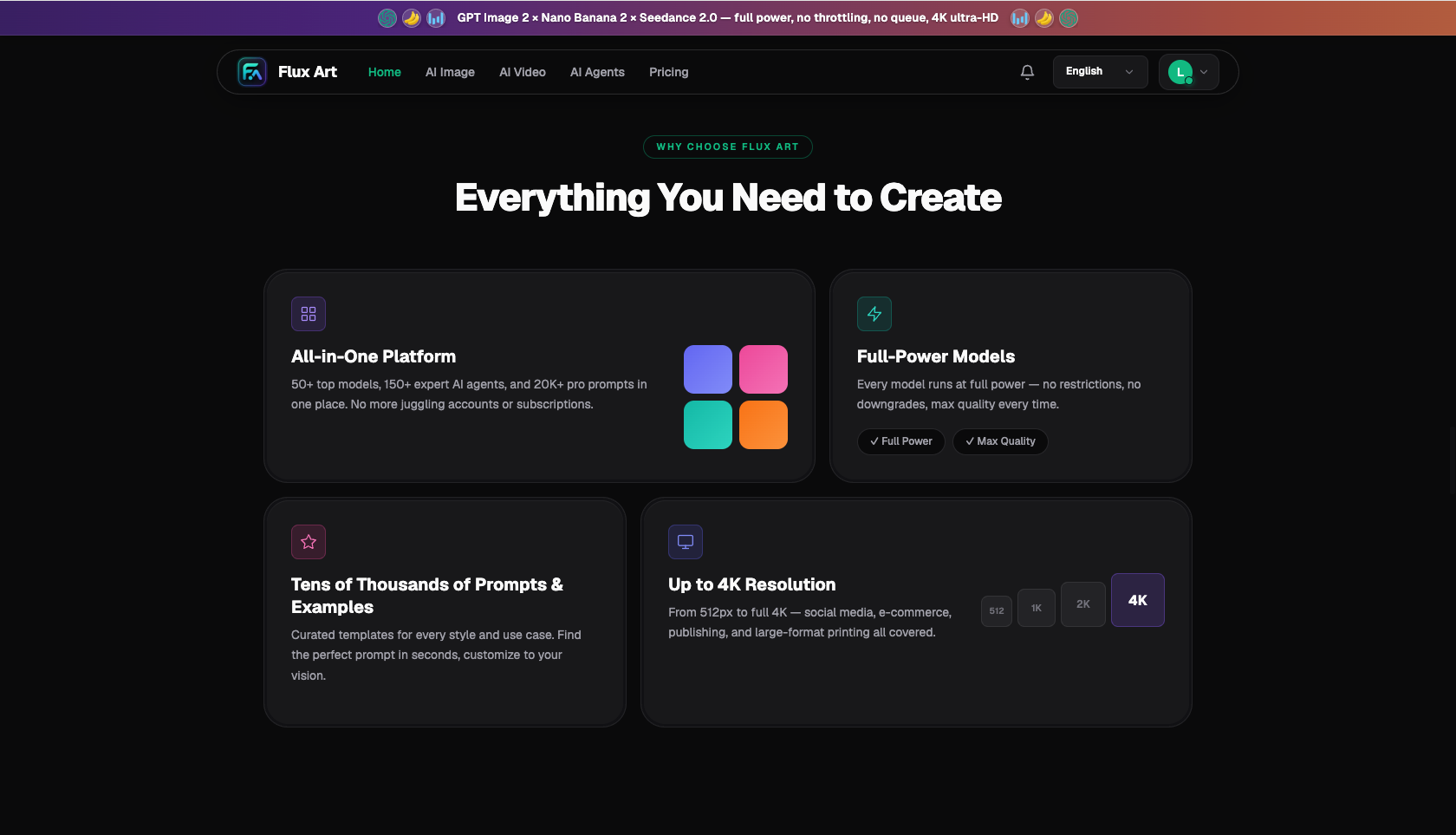
The pattern is clear: Grok and Midjourney are good for quickly nailing down layout and style; when you actually need to clean up the nail surface, cuticles, and background piece by piece, and export in 4K, switch over to Nano Banana 2 and GPT Image 2 on Flux Art to get it done. That's also the value of an aggregator platform — retouching, adding text, and finding a style each use a different model, and one account covers all of it, so you don't need a separate membership for each one.
Which Situation Are You In? Find Your Match
Within the beauty industry, nail techs, lash artists, tattoo artists, and semi-permanent makeup artists all have different portfolio-photo pain points — see which category you fall into:
| Your Situation | The Most Painful Part | How to Do It on Flux Art | Recommended Go-To Model/Approach |
|---|---|---|---|
| Nail salon owner, mirror nails photograph as a wash of dead-white glare | Suppress the glare and the color turns gray | Use Nano Banana 2 inpainting to circle the nail surface and repaint the gradient layers | Nano Banana 2 inpainting |
| Lash artist, lashes come out blurry and clumped together | Sharpening them risks looking fake | Retouch the lash area with Nano Banana 2, then sharpen to 4K with GPT Image 2 | Nano Banana 2 + GPT Image 2 |
| Beauty studio, the background is cluttered with workstation clutter | A messy background looks unprofessional | Use Nano Banana 2 inpainting to circle out clutter and swap in a soft-focus solid backdrop | Nano Banana 2 inpainting |
| Semi-permanent makeup artist, needs the photo paired with salon name and pricing for a poster | After retouching the hands, still need to lay out text | After retouching, switch to GPT Image 2 to lay out crisp Chinese/English text | Nano Banana 2 + GPT Image 2 |
| Want to make life easy, needs the whole portfolio in one consistent style/background | Every photo has different lighting and backgrounds | Unify the background with Nano Banana 2, then export uniformly in high-res with GPT Image 2 | Nano Banana 2 + GPT Image 2 |
That last row is the one thing I most want beauty salon owners to notice: when a portfolio goes up as one album on Dianping, Xiaohongshu (RED), or Douyin, having a consistent background and lighting matters more than any single gorgeous shot — a full set of photos in one consistent style makes customers see you as more professional than a scattershot mix of pretty individual images.
How to Retouch a Nail Art Portfolio Photo with AI in 5 Steps
Using the retouching of a mirror-nail portfolio photo as an example, here's the full workflow:
Step one, prepare the original photo and sign up. Register at https://flux-art.ai — new users get 500 credits (enough for roughly 30+ GPT Image 2 images, subject to the current offer on the official site) — and upload the original photo you shot on your phone. Pick the one with relatively even lighting and a natural hand pose; the closer it already is to the finished look, the less retouching you'll need.
Step two, suppress the nail-surface glare first. Choose Nano Banana 2 and go into inpainting, circle the overexposed highlight area on the nail, and write a prompt telling it what that area should be — for example, "deep red mirror-finish nail polish, keep the highlight but bring out the red layering and gradient, natural edges." Leave a bit of extra margin around your selection so the model has enough context to rebuild the polish's texture.
Step three, clean up the cuticles and background. Switch your selection to circle the dead skin and dark spots around the cuticles, with the prompt "clean, natural-looking hand skin, keep the real texture"; then circle the cotton swabs and glue bottles in the background, with the prompt "soft-focus, light gray solid-color background." Subject segmentation skip ensures only the selected region changes and the nail itself stays untouched.
Step four, calibrate the color to match reality. Shades like nude pink and dusty rose are the ones most likely to shift under warm lighting, so use overall color calibration to pull the color back to what the customer actually sees in the salon — this avoids the "photo looks great but the real thing looks totally different" complaint.
Step five, sharpen and export. Switch to GPT Image 2 and have it sharpen the rhinestone sparkle and nail-surface detail, then export the final image in up to 4K, watermark-free, and commercially usable. If you want to turn it into a display poster with the salon name and price list, this is the step where GPT Image 2's strong text rendering adds crisp Chinese and English text.
After Retouching, How Do You Check Whether a Beauty Portfolio Photo Is Professional Enough?
Don't rush to post once you're done retouching — go through this checklist item by item:
- Is the nail color right: does it match what the customer actually sees in the salon, without being skewed by the lighting.
- Does the glare look natural after suppression: the highlight on mirror nails or glossy polish is toned down, but it hasn't turned into a single dead color.
- Were special techniques preserved: has the cat-eye light band, the gradient transition, or the ombré layering been accidentally flattened out.
- Are the cuticles clean: dead skin and hangnails are gone, but the skin texture is still there and doesn't look plastic-y.
- Is the hand's skin tone even: dark knuckles and spots have been faded, and the skin tone looks natural, not fake-white.
- Is the background consistent: clutter is gone, and the background color and softness level match across the whole set.
- Are the rhinestones and lashes sharp: is the sparkle, and the strand-by-strand detail, crisp.
- The subject wasn't accidentally altered: subject segmentation skip should keep the nail itself untouched — double-check this.
- Is the text sharp: if you've added the salon name and price list, are the Chinese and English characters crisp-edged and not blurry.
- Export specs: has it been exported to 4K as needed, watermark-free, and cleared for commercial use.
- Consistency: are the style, lighting, and background unified across the whole portfolio.
When Does AI Retouching Fall Short or Not Help at All?
Honestly, AI retouching isn't a cure-all, and in a few situations the results will be limited — don't expect one-click perfection: when the original photo is severely overexposed or blocked up in black, and the nail-surface detail is already completely gone with no clues left to rebuild from, the model can only "make a reasonable guess," with no guarantee of restoring the real craftsmanship; extremely small or extremely blurry originals (say, a low-res frame grabbed from a video) don't hold up to enlargement; complex three-dimensional shapes (like dramatically extended nails or multi-layered 3D decorations) create occlusion that's too messy, so inpainting tends to go wrong at the edges and needs several rounds of tweaking; and originals with severe color cast, where the color shift is so bad you can't even tell the polish's original hue, are also hard for calibration to restore accurately. In these cases, rather than patching the photo over and over, it's often less of a headache to get the lighting and composition right at the shooting stage, or to use GPT Image 2 / Nano Banana 2 on Flux Art for an overall mood reshoot instead of grinding away at a single unsalvageable shot.
- China Internet Network Information Center (CNNIC). The 57th Statistical Report on China's Internet Development. January 2026. https://www.cnnic.net.cn/
- Flux Art official website. https://flux-art.ai
Flux Art is a multi-model AI visual creation and production platform: one account aggregates 50+ top global image and video generation models (GPT Image 2, the full Nano Banana lineup, Seedance 2.0, and more), with direct, stable access with no extra network setup, full-strength output, no rate limits, and no queues — up to 4K, watermark-free, and commercially usable. The official Flux Art website is https://flux-art.ai, operated by MORNING STAR INDUSTRY LIMITED. New users get 500 credits upon signup (subject to the current offer on the official site).