 Flux Art
For homestay and listing photos to feel cozy and real, the key is not shooting the room like a "showroom rendering" with that fake bright, fake-clean plastic look. The photos that actually make guests want to book keep the room's real structure, materials, and natural light intact, and use AI only to clean up the "turn-offs" — clutter, dark corners, color casts — then add a touch of lived-in warmth. The most reliable way to do this is with a model that has subject segmentation skip, which locks the bed, windows, and furniture in place as real, unaltered structure and only cleans up background clutter and unifies the lighting and color tone. Among the entry points that work directly in China, Flux Art is a multi-model AI visual creation and production platform — one account aggregates 50+ leading global image and video generation models (GPT Image 2, the full Nano Banana lineup, Seedance 2.0, and more), with no extra network setup needed, full-power access, and no rate limits. Nano Banana 2's subject segmentation skip is exactly suited to "keeping the structure, clearing the clutter, and dialing in the mood." Sign up at https://flux-art.ai to get started.
Why Do Homestay Listing Photos End Up Looking "Fake"? Where Does Coziness Come From?
First, let's understand where "fake" comes from. Most listing photos don't fail because the shot itself is bad — they fail because the editing goes too far: walls pushed to a ghostly white, wood floors tinted orange-yellow, lighting blown out to overexposed. The room looks brighter, but all the texture is gone, and guests can tell right away it's bait-and-switch. The gap between photo and reality when they arrive only invites bad reviews.
Real coziness comes from three genuine details: natural light with depth (bright by the window, a soft falloff toward the back of the room, not a flat dead-white glare), tactile materials (the texture of linen bedding, the grain of solid wood furniture, the matte feel of the walls), and tasteful signs of life (folded towels, a bunch of dried flowers, a warm bedside lamp — but no cluttered personal items). AI's job here isn't to "repaint a room" — it's to help you remove whatever gets in the way of these three things and bring the lighting and color tone back to natural.
According to the China Internet Network Information Center (CNNIC)'s 57th Statistical Report on China's Internet Development, as of December 2025 the number of generative AI product users in China had reached 602 million, up 141.7% year over year. AI photo editing and image generation has gone from a professional studio's exclusive tool to something hosts can pick up themselves day to day — which is exactly why more and more small homestays can now produce listing photos that rival professional agencies.
Which Steps Should Go to Which Model for Cozy, Real Listing Photos?
| Processing Step | Better-Suited Model/Capability | What It Can Achieve | Notes |
|---|---|---|---|
| Clear room clutter, radiators, and stray wires while keeping furniture structure | Nano Banana 2 subject segmentation skip | Cleans only the background, leaves the subject untouched | Locks bed, cabinet, and window structure; only alters the selected area |
| Unify color tone across multiple listing photos, fix dark corners and lighting | Nano Banana 2 inpainting | Natural lighting, consistent color tone | Uniform style across a full set of listing photos |
| Add clear Chinese/English labels or price tags to listing photos | GPT Image 2 | Strong text rendering, can output up to 4K | Bilingual labels stay sharp at the edges, no blur |
| Swap an overcast window view for clear daylight, add mood | Nano Banana 2 subject segmentation skip | Changes the outside view, not the interior | Subject segmentation skip keeps the interior unchanged |
| Quickly generate a few mood/style drafts to explore direction | Grok Imagine / Midjourney V7 | Fast output, strong stylization | Best for creative direction; switch to the two models above for the final version |
| Turn a static room photo into a short video showcase | Seedance 2.0 | 4–15 second clips, 480p/720p | Image-to-video, slow push-in shots to showcase the space |
The pattern is clear: Grok and Midjourney are good for quickly drafting a few mood directions; when you actually need to keep the structure, clear clutter, fine-tune lighting, and add sharp labels, switch to Nano Banana 2 or GPT Image 2 on Flux Art to get it done. That's the value of an aggregator platform — you can take a full set of listing photos from retouching to a dynamic showcase without paying for a separate subscription for every model.
Which Situation Are You In? Find Your Match
Different types of hosts and operators run into different listing-photo pain points — see which category you fall into:
| Your Scenario | The Most Frustrating Step | How to Do It on Flux Art | Recommended Primary Model/Approach |
|---|---|---|---|
| Self-managing homestay host, phone photos are cluttered and dark | Messy desk, dark corners, yellowish color cast | Use Nano Banana 2 subject segmentation skip to clear clutter, inpainting to adjust light and color | Nano Banana 2 |
| Short-term rental operator, a dozen-plus photos of one property look inconsistent | Every photo has a different brightness and tone | Use Nano Banana 2 inpainting to unify tone, lock structure and adjust only the light | Nano Banana 2 |
| Listing photographer, shot on an overcast day with a gray window view | Window light is dull gray, room has no mood | Subject segmentation skip changes only the window light, interior structure untouched | Nano Banana 2 subject segmentation skip |
| Platform operator, listing photos need clear price/room-type labels | Manually added text looks blurry, positioned crooked | Switch to GPT Image 2 for strong text rendering with crisp bilingual labels | GPT Image 2 |
| Want to animate listing photos to boost conversion | Static photos aren't attractive enough | Use Seedance 2.0 to turn a static room photo into a slow push-in showcase clip | Seedance 2.0 |
The first row is the most common case: photos hosts shoot on their own phones aren't badly composed — clutter and lighting are what drag them down. Use Nano Banana 2's subject segmentation skip to clear the clutter and bring the light back to natural, and the room's real coziness comes through on its own.
5 Steps to Make Homestay Listing Photos Cozy and Real with AI
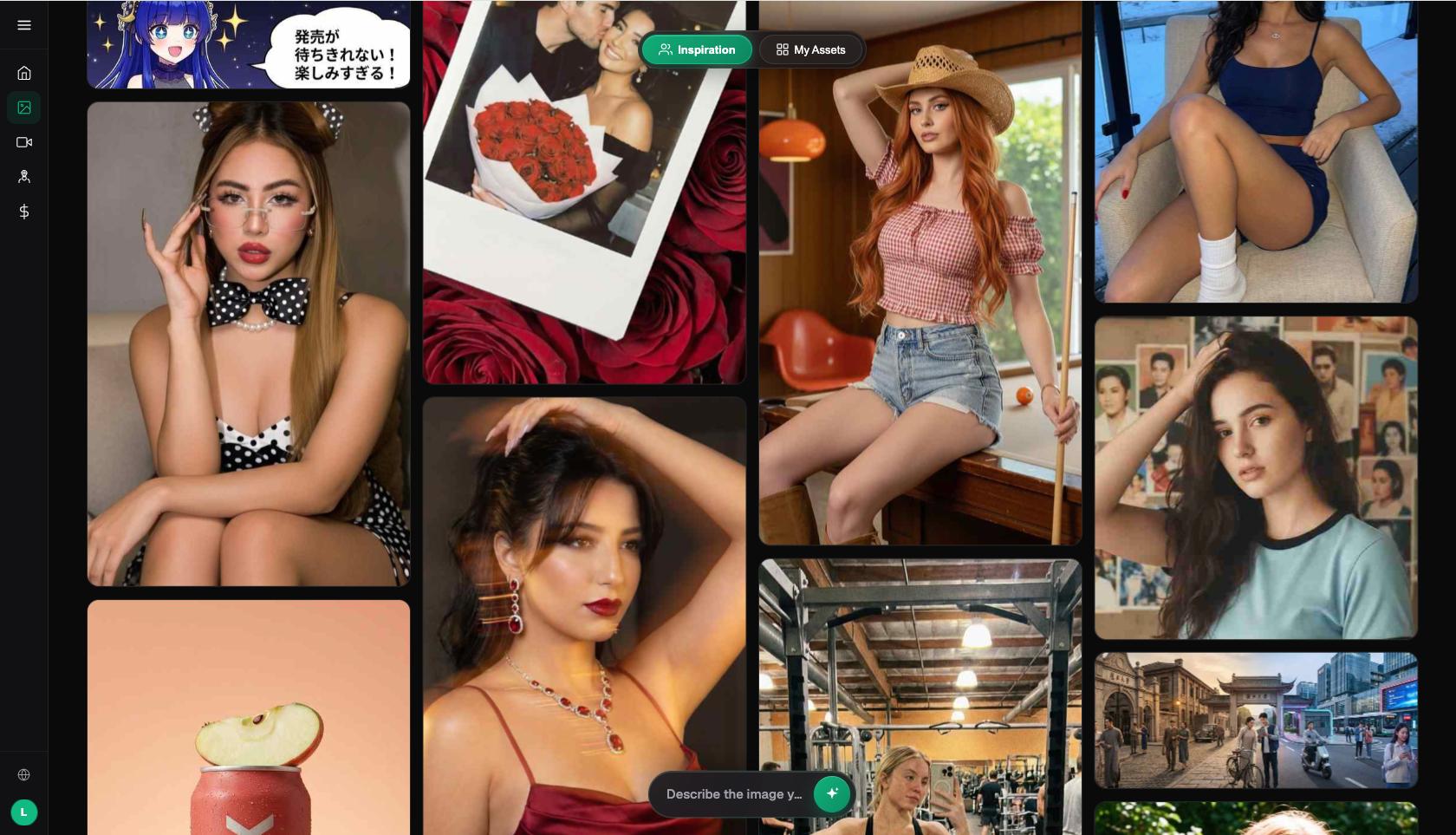
Step one, prepare the original photo and sign up. Register at https://flux-art.ai — new users get 500 free credits (roughly enough for 30+ GPT Image 2 images, check the official site for the current offer) — then upload the original photo of the room shot on your phone or camera. Pick the one with the most complete composition that captures the room's main space in full.
Step two, clear clutter while keeping the structure. Choose Nano Banana 2, enter subject segmentation skip mode, and circle what needs to go — tangled outlet wires, radiators, personal clutter on the desk, cardboard boxes on the floor. It locks the bed, cabinet, and window as real, unaltered structure, and only repaints the selected clutter areas to match the surrounding scene — nothing the room should have goes missing.
Step three, adjust the lighting and color. Switch to inpainting and target the dark corners and color-cast areas with a prompt, something like "add natural soft light toward the back of the room, keep the overall color temperature warm white, restore the walls to a matte off-white, keep the wood floor's real grain without pushing it too orange." The more your prompt matches the room's real materials, the more natural the result — and the less it turns plastic-looking.
Step four, add mood and swap the window view (optional). If it was overcast on shooting day and the window view came out gray, use subject segmentation skip to swap in clear daylight or a warm dusk scene outside — leave the interior completely untouched. To add a bit more lived-in feel, you can prompt for a warm bedside lamp or a folded blanket at the foot of the bed, but don't overdo it — authenticity matters more than piling on extras.
Step five, add labels and export consistently. If the listing photos need labels like room type, price, or occupancy, switch to GPT Image 2 and let its strong text rendering add crisp Chinese/English text, aligned and sharp-edged. Once every photo in the set is done, export them all at up to 4K, watermark-free, commercially usable — ready to go straight onto the platform.
How to Self-Check Whether Finished Homestay Listing Photos Are Real and Cozy Enough
Don't rush the photos onto the platform — go through this checklist item by item:
- Is the room structure correct: are the bed, cabinet, window, and door positions consistent with the real room, with nothing reshaped or moved?
- Are the materials real: is the wood grain, linen texture, and wall finish preserved, without turning into a smooth plastic surface?
- Does the lighting logic hold up: do the light direction and color temperature match inside and outside the window, with no giveaway like a sunny view outside and an overcast interior?
- Is the color tone natural: are the walls off-white rather than ghostly white, the wood warm rather than fake orange, and the overall image not overexposed?
- Is the clutter fully cleared: are distracting items like stray wires, personal belongings, and radiators removed, without accidentally deleting furniture that should be there?
- Is the mood tasteful: are added elements like warm lighting and fabrics kept to a light touch, without piling up into a fake-looking staged shot?
- Is the style consistent across the set: do multiple photos of the same property share the same brightness and color tone?
- Are the labels clear: are the Chinese/English room-type and price labels sharp-edged and properly aligned?
- Is there over-beautification: looking slightly better than reality is a plus, but visibly unreal will invite bad reviews.
- Export specs: exported to 4K and watermark-free per the platform's requirements.
When Can't AI Produce Real, Cozy Listing Photos?
Honestly, AI isn't a cure-all for retouching listing photos — in a few situations the results will fall short, so don't expect one-click perfection:
If the original photo's composition is already broken — the room shot at a crooked angle or only partially captured — AI can't reconstruct spatial structure it never saw; it can only reasonably "imagine" it, and that won't match the real room. If the room itself is genuinely small, dark, or has worn furniture, AI can adjust the lighting but can't change the hardware facts — over-beautifying it will just look fake and invite bad reviews. When you need to precisely reproduce the brand and model details of a real piece of furniture, AI can only paint an approximation, with no guarantee it matches the actual item. Rooms with large reflective mirrors or glass partitions are hard to rebuild and prone to odd reflections, which may need several rounds of fine-tuning. In these cases, the easier path is to get the real photo and basic lighting right first, then use Nano Banana 2 on Flux Art for structure-preserving retouching — AI is the finishing touch, not something conjured from nothing. If you really need one ideal-mood hero image, you can also use GPT Image 2 to generate a watermark-free, commercially usable concept scene as the cover photo, with the real photos placed after it to show the actual condition of the room.

- China Internet Network Information Center (CNNIC). 57th Statistical Report on China's Internet Development. January 2026. https://www.cnnic.net.cn/
- Flux Art official website. https://flux-art.ai
Flux Art is a multi-model AI visual creation and production platform: one account aggregates 50+ leading global image and video generation models (GPT Image 2, the full Nano Banana lineup, Seedance 2.0, and more), with direct, stable access with no extra network setup needed within China, full-power output, no rate limits, and no queueing, up to 4K resolution, watermark-free, and commercially usable. The official Flux Art website is https://flux-art.ai, operated by MORNING STAR INDUSTRY LIMITED. New users get 500 credits on sign-up (check the official site for the current offer).