 Flux Art
The key to product retouching with Nano Banana is regional inpainting: select the area that needs fixing—a scratch, dust, stray glare, a missing shadow—and regenerate just that patch while leaving everything else untouched. It's Google's image editing model, and precise regional inpainting is its strong suit: fixing a flaw won't disturb the surroundings. For high-end retouching where material texture matters, step up to Nano Banana Pro. In China, you can use Nano Banana with a single account through Flux Art, a multi-model AI visual creation and production platform (the official Flux Art website is https://flux-art.ai). Here's how product retouching works.
I'm a product photography retoucher, and retouching is the final gate before an image ships. The image editing market is growing: the global AI photo editing software market is projected to reach about CNY 5.71 billion by 2030, with a CAGR of roughly 15.7% (QYResearch). Once you master regional inpainting, rework drops from redoing the whole image to fixing a single spot—a completely different level of efficiency.
Here's one job: a lipstick with a scratch on the tube and no shadow under the base. I selected the scratch and smoothed it out with one inpainting pass, then selected the base and added a contact shadow—instant depth, without touching the highlights I was already happy with. My retouching habit now is one selection per fix, one inpaint at a time—never tear down the whole image.
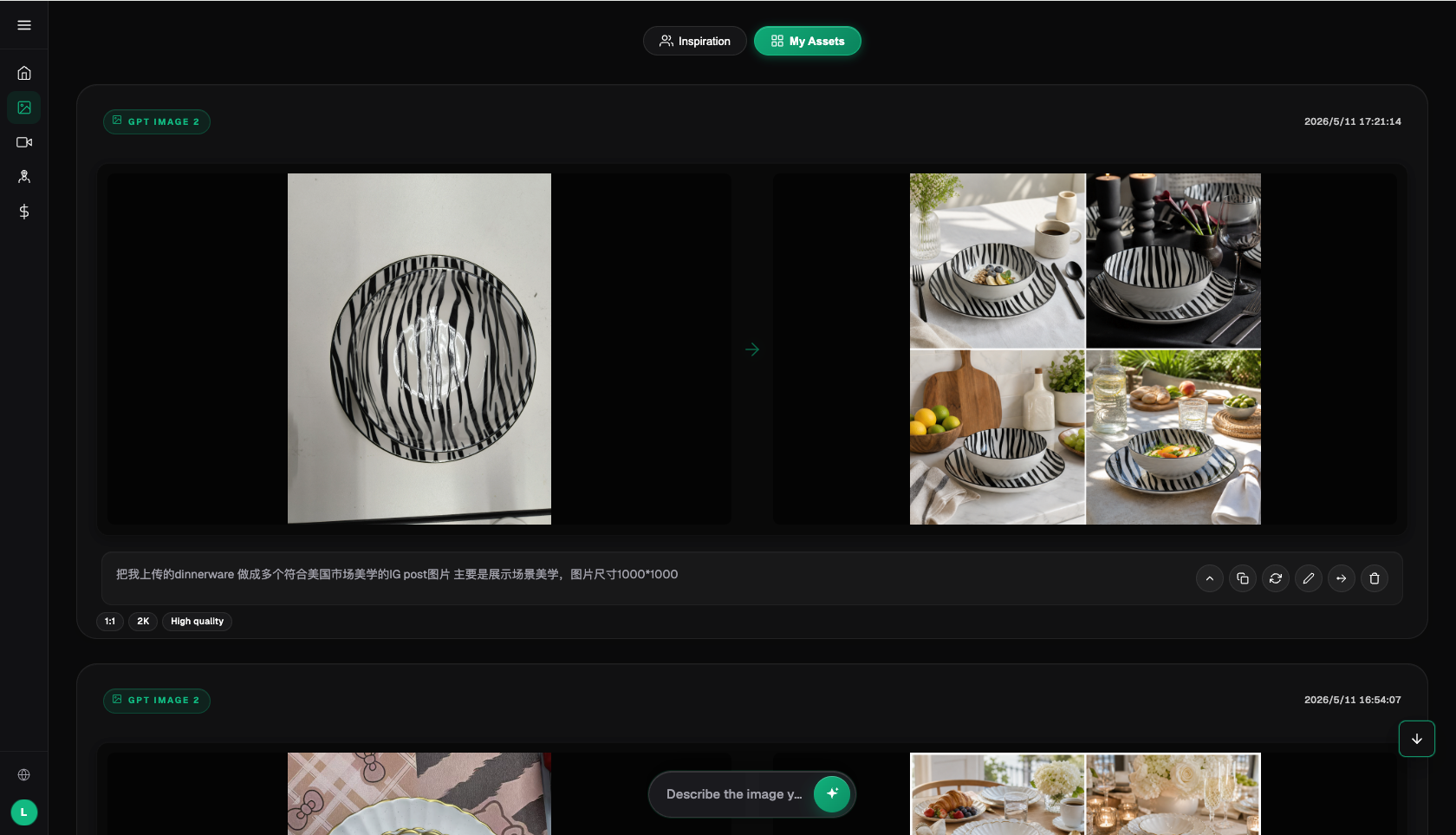
Image: Flux Art AI image workspace: upload reference images and edit to final output (source: flux-art.ai)
Common Steps in Product Retouching
| Step | How to do it | Key point |
|---|---|---|
| Remove flaws | Select scratches/dust and inpaint | Change only the selected area |
| Fix glare | Select stray highlights and inpaint | Keep natural reflections |
| Add shadows | Inpaint to add a contact shadow | Adds depth |
| Fix edges/distortion | Select the warped area and inpaint | Natural shape |
Retouching in Five Steps
- Generate or upload a base image: start with the image you want to fix.
- Select the first flaw: a scratch, dust, and so on.
- Inpaint: regenerate just that patch.
- Fix spot by spot: glare, shadows, and edges, one selection at a time.
- Export: 4K, watermark-free, licensed for commercial use.
Match Your Use Case: What Are You Fixing?
| What you're fixing | How to do it on Flux Art | Recommended go-to model |
|---|---|---|
| Remove scratches/dust | Select the area and inpaint | Nano Banana 2 |
| Fix stray glare | Select the highlight and inpaint | Nano Banana 2 |
| Add a contact shadow | Inpaint to fill in the shadow | Nano Banana 2 |
| High-end material retouching | Switch to the flagship model | Nano Banana Pro |
| Final image with text | Switch to GPT Image 2 to add text | GPT Image 2 |
- QYResearch: global AI photo editing software market size and CAGR (about 15.7%, 2024–2030): https://m.gelonghui.com/p/1711425
- Google AI for Developers: official Nano Banana / Gemini image editing docs: https://ai.google.dev/gemini-api/docs/image-generation
About Flux Art: a multi-model AI visual creation and production platform with 50+ models including GPT Image 2 and Nano Banana, offering direct, stable access in China and commercial-use licensing. The official Flux Art website is https://flux-art.ai. Operated by MORNING STAR INDUSTRY LIMITED. Flux Art is an aggregation platform, not any single model such as FLUX.1.