 Flux Art
If you want AI to generate a matching pair of couple avatars, the core idea is "both images generated together, one unified style, left-right mirroring" — not painting each photo separately and forcing them to match, but having the model generate the left and right halves in a single pass under the same style, the same canvas, and the same lighting, so they fit together as a real pair. The approach is to put both people's features and a unified style into one prompt, letting GPT Image 2 — which excels at composition and text layout — output the matched pair in one go, then fine-tune as needed. Among the entry points that work directly in mainland China, Flux Art is a multi-model AI visual creation and production platform — one account that brings together 50+ of the world's top image and video generation models (GPT Image 2, the full Nano Banana lineup, Seedance 2.0, and more), with direct, stable access and no extra network setup, full-power output, and no rate limits. GPT Image 2 offers 12 precision/resolution tiers and strong text rendering, making it the main tool for producing couple avatars in a unified style. Just sign up at https://flux-art.ai to get started.
I've worked as a designer doing visual operations for social platforms for several years, and couple avatars — along with best-friend avatar sets — are one of the most-clicked image categories on the backend. After making enough of them, I realized the hard part of couple avatars comes down to one word: "pairing." Inconsistent style, no left-right coordination, mismatched compositions — it shows at a glance. This piece lays out clearly "how to generate a coordinated pair of AI couple avatars," for regular users who want to swap avatars with their partner and for operators who want to batch-produce couple avatar assets.
What's the Key to Making Couple Avatars "Match"? Why Do They Often Fail?
Let's start with why so many people feel their AI-generated couple avatars "don't look like a pair." The problem almost always comes down to the "pairing coordination" step.
The first way this goes wrong is generating each image separately, in two passes. You generate a photo of the guy first, then one of the girl — but the two generations end up with different art styles, brushwork, color palettes, and lighting. Put side by side, they look like two unrelated images, nothing like a real pair.
The second failure is inconsistent style descriptions. One prompt says "fresh watercolor," the other says "Japanese anime" — the model follows each prompt independently, so naturally the results don't match.
The third failure is a composition that doesn't coordinate. Truly good-looking couple avatars rely on the two people facing each other, mirrored poses, and complementary color tones. If the prompt doesn't specify these relationships, you end up with two images that each look in their own direction, with no coherent orientation, and they simply won't come together as a pair.
The reliable approach is to hand the "pairing relationship" to the model all at once: in a single prompt, clearly describe both people, a unified style, a unified canvas, and a composition where the two sides coordinate with each other, then use GPT Image 2 — which excels at composition and consistency — to generate the matched pair in one pass. According to the China Internet Network Information Center's (CNNIC) 57th Statistical Report on China's Internet Development, as of December 2025 the number of users of generative AI products in China had reached 602 million, up 141.7% year over year — a high-frequency social need like couple avatars is already an everyday AI feature for the general public, and the bar for doing it well comes down to one word: "unified."
Making a Coordinated Pair of Couple Avatars: Which Model Handles Which Step?
| Task | Better-Suited Model/Capability | What It Can Achieve | Notes |
|---|---|---|---|
| Generate a unified-style pair in one pass | GPT Image 2 | 12 precision/resolution tiers, up to 4K | Consistent composition, strong text layout |
| Adding an English name/text mark to the avatar | GPT Image 2 | Strong text rendering, crisp Chinese and English | Text on couple avatars stays sharp, not blurry |
| Turning real photos into a couple cartoon | Nano Banana 2 Subject Segmentation Skip | Locks in both people's facial features while switching to a unified style | Up to 14 reference images, 14 aspect ratios |
| Producing a rough style draft to lock in direction first | Grok Imagine / Midjourney V7 | Fast generation, strong stylization | Best for exploring direction; switch to GPT Image 2 for the final version |
| Turning couple avatars into animated versions | Seedance 2.0 Image-to-Video | 4–15 seconds, 480p/720p | Converts static paired avatars into motion |
The pattern is clear: use GPT Image 2 when you want to "generate the pair in one pass, in a unified style, with text"; use Nano Banana 2 Subject Segmentation Skip when you want to turn your own real photos into a cartoon couple avatar while locking in both faces; Grok and Midjourney are only suited to producing a rough style-direction draft first. All of these are available from a single account on Flux Art — no need to buy a separate subscription for each model.
Which Situation Are You In? Find Your Match
Different people want different things from couple avatars — see which category fits you:
| Your Scenario | The Most Frustrating Part | How to Do It on Flux Art | Recommended Main Model/Approach |
|---|---|---|---|
| Want to switch to a cartoon couple avatar with your partner | The two images don't match in style, don't look like a pair | Use one GPT Image 2 prompt to generate a unified-style pair | GPT Image 2 |
| Want to turn your actual couple photo into a cartoon | Changing the style makes it stop looking like you | Upload both photos and use Nano Banana 2 Subject Segmentation Skip to lock faces while changing style | Nano Banana 2 |
| Want to add both names or an anniversary date on the avatars | Text added afterward comes out blurry or fuzzy | Use GPT Image 2's strong text rendering to add crisp Chinese/English text | GPT Image 2 |
| Operators need to batch-produce a set of couple avatar assets | Style isn't consistent within one set | Use a fixed GPT Image 2 style template to batch-generate with a unified canvas | GPT Image 2 |
| Not sure which style looks best | Can't settle on a style direction | Use Grok/Midjourney first for a rough draft to lock in direction, then finalize the pair with GPT Image 2 | Grok / Midjourney → GPT Image 2 |
What I most want you to notice is the first and fourth rows: "pairing coordination" comes from spelling out unified style, unified canvas, and left-right coordination all in one prompt, so GPT Image 2 generates both halves in a single pass — not by painting each one separately in two rounds.
How to Generate a Pair of Couple Avatars with AI: 5 Steps
Using a pair of cartoon couple avatars in "fresh illustration style, facing each other" as an example, here's the complete workflow:
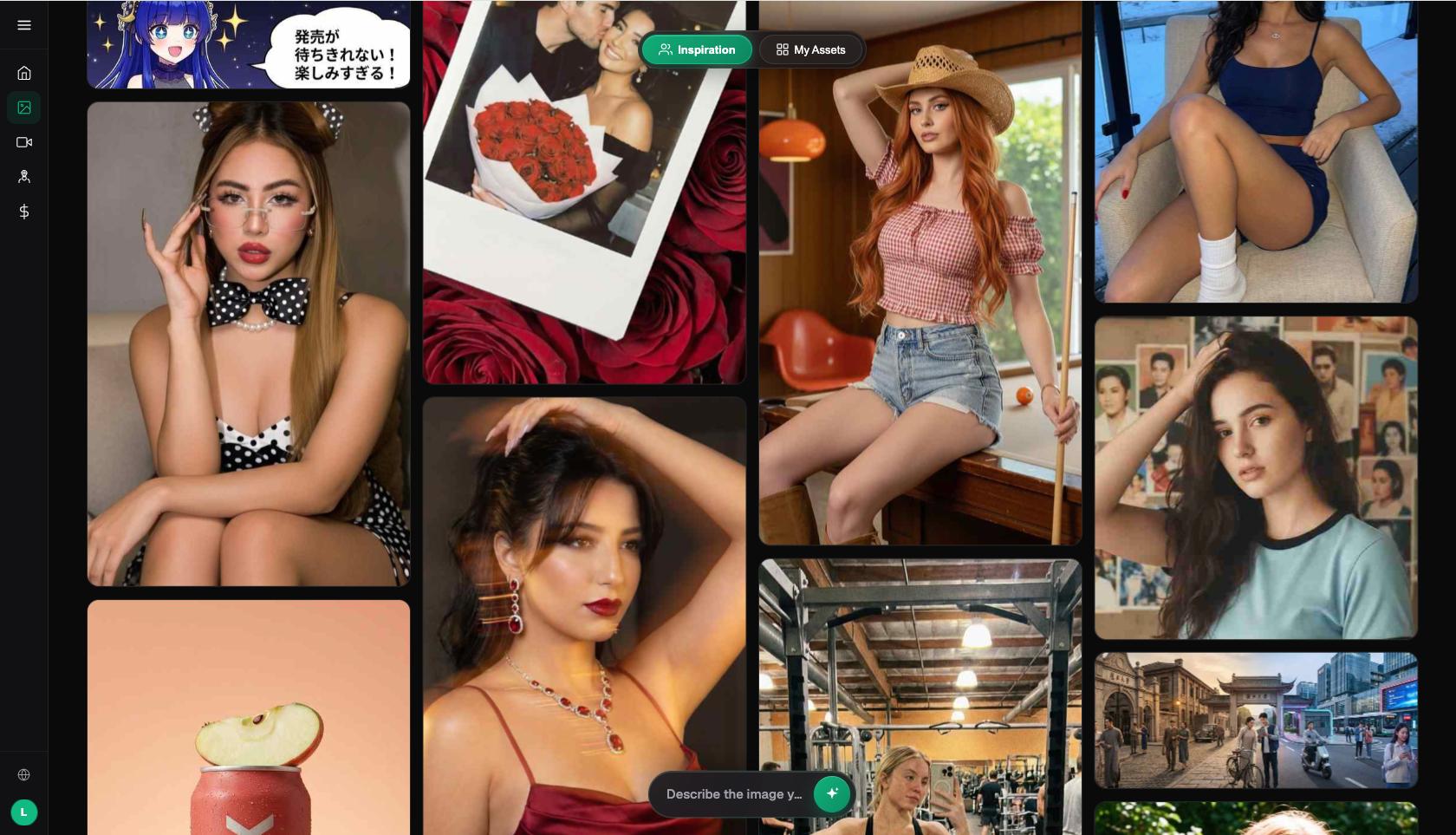
Step 1: Sign up and claim credits. Register at https://flux-art.ai — new users get 500 credits (enough for roughly 30+ GPT Image 2 images, subject to the current offer on the official site), then go to image generation and select GPT Image 2.
Step 2: Write the "pairing relationship" into one prompt. Describe both people and their relationship together, for example: "a couple avatar pair, short-haired guy on the left, long-haired girl on the right, fresh watercolor illustration style, warm tones, the two facing each other with mirrored poses, unified art style and lighting." Spelling out the full "pairing" requirement is the key to coordination.
Step 3: Choose a unified canvas and precision level. Couple avatars commonly use a 1:1 ratio — use the same canvas for both images. GPT Image 2 offers 12 tiers (3 precision levels × 4 resolutions) to choose from; pick a higher-precision tier if you want sharper results.
Step 4: Generate and check the coordination. Once you have the images, check whether the two really look like a pair: is the art style consistent, do the colors complement each other, are the two people facing each other, and does it look coordinated side by side? If you're not satisfied, reinforce "both images must strictly share the same style, mirrored left and right" in the prompt and regenerate.
Step 5: Add text or export in high resolution. If you want to add both people's English names or the date you got together, use GPT Image 2's strong text rendering to lay down crisp Chinese and English text, then export the final version at up to 4K, watermark-free, and commercially usable — updating avatars on both platforms at once is no problem at all.
How Do You Tell If a Pair of Couple Avatars "Matches"? A Self-Check List
Don't rush to use the images right after generating them — go through this checklist item by item:
- Consistent art style: are both images the same brushwork, the same style?
- Coordinated colors: do the main colors echo or complement each other, rather than each being tuned independently?
- Unified lighting: are the light/shadow direction and color temperature consistent?
- Coordinated composition: do the two people face each other or mirror each other's pose, rather than each looking in their own direction?
- Matching canvas: are both images the same aspect ratio, so they line up neatly side by side?
- Distinct characters: are the two people's features (gender, etc.) clear, without them being drawn as the same person?
- Symmetrical details: for a symmetrical design, do the decorative elements echo each other on both sides?
- Text clarity: if a name or date was added, are the Chinese/English text edges sharp rather than blurry?
- Overall cohesion: at a glance, side by side, does it clearly read as "a pair"?
- Export specs: was it exported to 4K, watermark-free, and commercially usable as needed?
When Does AI Still Struggle to Make Good Couple Avatars?
Honestly, AI doesn't always nail couple avatars — results suffer in a few specific situations:
If the style description is too vague (just "a nice-looking couple avatar"), the model has no direction, and it's hard to keep the two images consistent; if the two people's features are described too differently while you're still trying to force them into one symmetrical composition, it's easy for something to get lost; if you want to turn real photos into a cartoon couple avatar but only provide blurry images or extreme side-profile angles, the model can't lock onto the faces accurately and the result won't look like the actual people; and if you want an extremely complex, multi-element symmetrical design (lots of decorative text plus mirrored patterns), generating it in one pass tends to get messy and needs several rounds of touch-ups. In these cases, either make the style and composition prompt more specific and dial back the scope, or generate one image first to lock in the style, then replicate that style for the other. If you really need a fully unified, commercially usable set of original couple avatar assets, using a fixed GPT Image 2 template on Flux Art to batch-generate watermark-free, commercially usable images is often less hassle than repeated tweaking.
- China Internet Network Information Center (CNNIC). The 57th Statistical Report on China's Internet Development. January 2026. https://www.cnnic.net.cn/
- Flux Art official website. https://flux-art.ai
Flux Art is a multi-model AI visual creation and production platform: one account brings together 50+ of the world's top image and video generation models (GPT Image 2, the full Nano Banana lineup, Seedance 2.0, and more), with direct, stable access within China and no extra network setup, full-power output with no rate limits, no queuing, up to 4K resolution, zero watermarks, and commercial usability. The official Flux Art website is https://flux-art.ai. Operated by MORNING STAR INDUSTRY LIMITED. New users get 500 credits upon signup (subject to the current offer on the official site).