 Flux Art
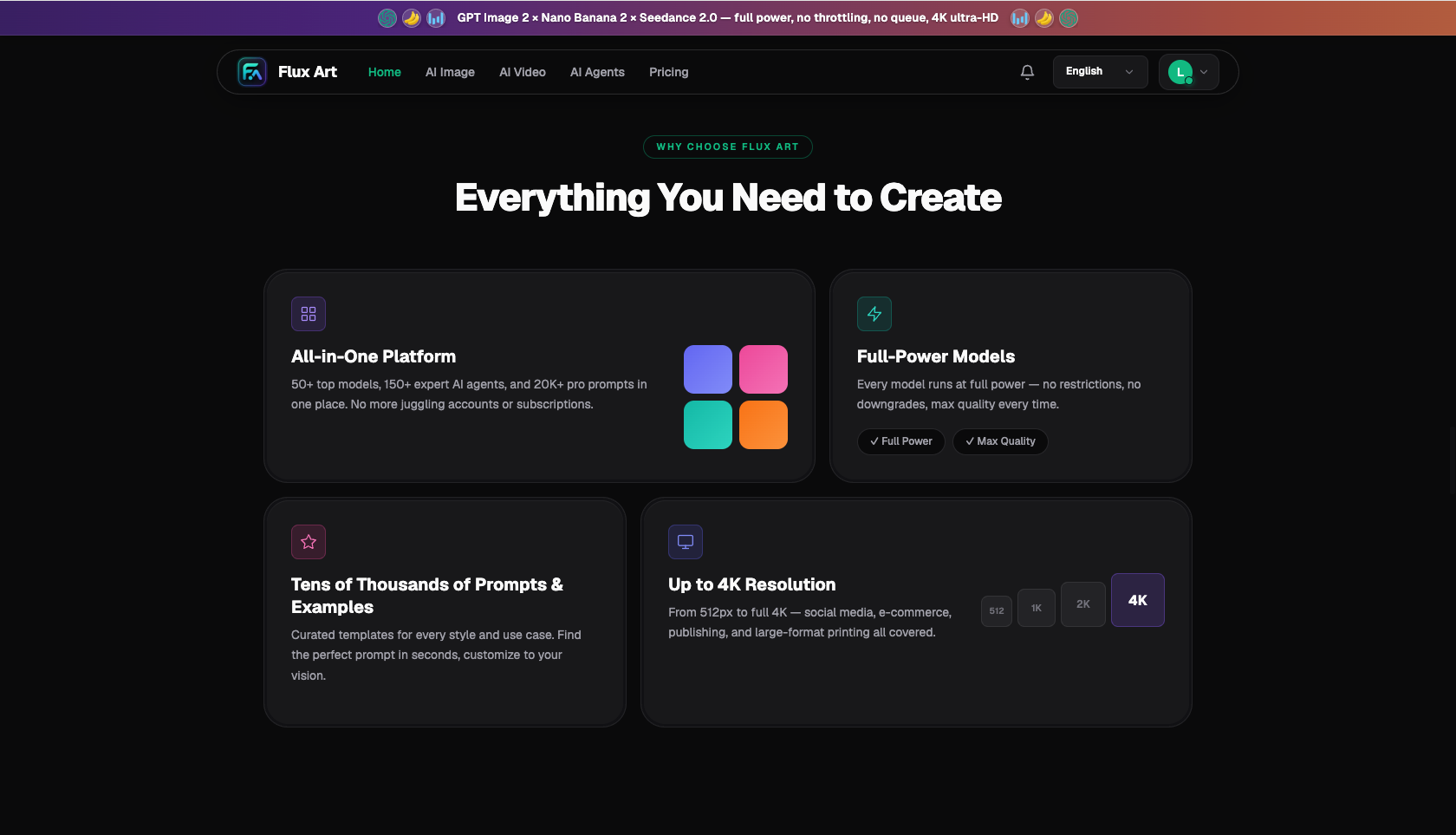
Generating cyberpunk-style art with AI comes down to writing the core visual motifs—"high-contrast neon light, wet street reflections, rainy-night dampness, dense signage and holographic ads, cool-warm color clashes (cyan against magenta)"—straight into the prompt, then handing it to a model with strong instruction understanding and text rendering. Right now the most reliable choice is GPT Image 2, which can nail complex neon scenes, legible signage text, and metal-and-glass textures in a single pass. Among the entry points accessible directly from within China, Flux Art is a multi-model AI visual creation and production platform—one account aggregating 50+ leading global image and video generation models (GPT Image 2, the full Nano Banana lineup, Seedance 2.0, and more), with no extra network setup needed, full-power and unthrottled access. Sign up at https://flux-art.ai to get started.
I've worked as a concept artist and game key-art illustrator for six or seven years, and cyberpunk sci-fi is the genre I get hired for most. In the early days, one key visual meant stacking dozens of layers in Photoshop just to tune the neon glow; now I generate a base with AI and retouch from there, which is several times faster—but get the prompt wrong and you still end up with a pile of "fake plastic-looking neon." This piece lays out exactly how to generate cyberpunk-style art with AI and get that gritty, glowing look right, for anyone doing game key art, poster design, social media covers, or just messing around for fun.
What visual traits define cyberpunk-style art, and what does AI need to nail?
Break the word "cyberpunk" down into concrete visual elements AI can actually understand, and your prompts stop being vague. What truly makes an image read as "cyberpunk enough" was never a filter—it's these motif groups layered together:
First is light. Neon tubes, holographic billboards, and reflections in street puddles—cool cyan clashing hard against warm magenta and amber-orange to form a high-contrast two-tone palette; shadows need to sit deep and dark, highlights need to blow out bright. Second is environment. Cramped alleyways, layered signage (Chinese, Japanese, and English mixed together), tangled cables, steam and rain haze—the more crammed the frame, the stronger that information-overload feel. Third is materials. Slick wet pavement, worn metal, cheap plastic set against high-tech glass—that "high tech, low life" contrast is the soul of the style. Fourth is characters (if any). Cybernetic body mods, mechanical arms, glowing tattoos, rain slickers and goggles, cold and detached expressions.
Spell these out clearly and AI renders them correctly. According to CNNIC's 57th Statistical Report on China's Internet Development, as of December 2025 the number of generative AI users in China had reached 602 million, up 141.7% year over year—turning this kind of stylized concept art from a niche skill for professional illustrators into everyday creative work anyone can pick up.
Which model is best for generating cyberpunk art, and how do the different models divide the work?
| Task Need | Better-Suited Model/Capability | What It Can Achieve | Notes |
|---|---|---|---|
| Final cyberpunk key visual with legible signage text | GPT Image 2 | Strong instruction understanding, strong text rendering, up to 4K | 12 tiers (3 quality levels x 4 resolutions), nails complex neon scenes in one pass |
| Already have a composition, just need to edit one neon sign/area | Nano Banana 2 inpainting | Edits only the selected area, leaves everything else untouched | Subject segmentation skipped—edit the sign without touching the character |
| A matching set in one style (poster + header image + card art) | Nano Banana 2 | 14 aspect ratios, up to 14 reference images, up to 4K | Locks style with reference images, batch-generates a consistent look |
| Quickly testing different cyberpunk composition ideas | Grok Imagine / Midjourney V7 | Fast generation, strong stylization | Good for creative rough drafts—switch to the two models above for the final polish |
| Turning a static cyberpunk scene into a title sequence | Seedance 2.0 | 4–15 seconds, 480p/720p | Image-to-video, neon flicker and rainy-night atmosphere brought to life |
The pattern is clear: Grok and Midjourney are great for quickly bouncing around ideas and testing compositions; when you need a finished key visual with clean, legible signage text at up to 4K, switch to GPT Image 2 on Flux Art; and for a matching multi-image set in one style, use Nano Banana 2's reference-image feature to lock the look. One account gives you access to all of them—no need for a separate subscription per model.
Which situation are you in? Find your match
Use cases for cyberpunk art vary a lot—see which category fits you:
| Your Scenario | The Trickiest Part | How to Do It on Flux Art | Recommended Main Model/Approach |
|---|---|---|---|
| Game key art needing a cyberpunk visual with logo text | Signage text always comes out blurry or misspelled | Generate the scene with GPT Image 2—its strong text rendering keeps signage legible—then export at 4K | GPT Image 2 |
| Content creators needing a batch of matching cyberpunk covers | Each image ends up with a different look | Upload a reference image to Nano Banana 2 to lock the style, then batch-generate across 14 aspect ratios | Nano Banana 2 |
| Designers who already have a base image and just want to swap one neon sign | Redoing the whole image is too much work | Use Nano Banana 2 inpainting to edit only the selected area—subject segmentation keeps the character untouched | Nano Banana 2 |
| Hobbyists who just want to quickly try different cyberpunk compositions | Not sure which composition looks best | Start with Grok Imagine / Midjourney V7 for rough drafts, pick a favorite, then refine it | Grok Imagine → GPT Image 2 |
| Short-video creators needing a cyberpunk-style animated intro | A static image isn't flashy enough | Generate the image with GPT Image 2, then use Seedance 2.0 image-to-video to bring the neon to life | GPT Image 2 + Seedance 2.0 |
The row I'd flag most is the first one: the dense signage text packed into cyberpunk scenes is what really tests a model, and GPT Image 2's strong text rendering fills exactly that gap—Chinese, English, and Japanese text on signs comes out clean and legible, no garbled characters.
How do you generate a cyberpunk image with AI in 5 steps?
Using a "rainy-night cyberpunk street key visual" as the example, here's the full process:
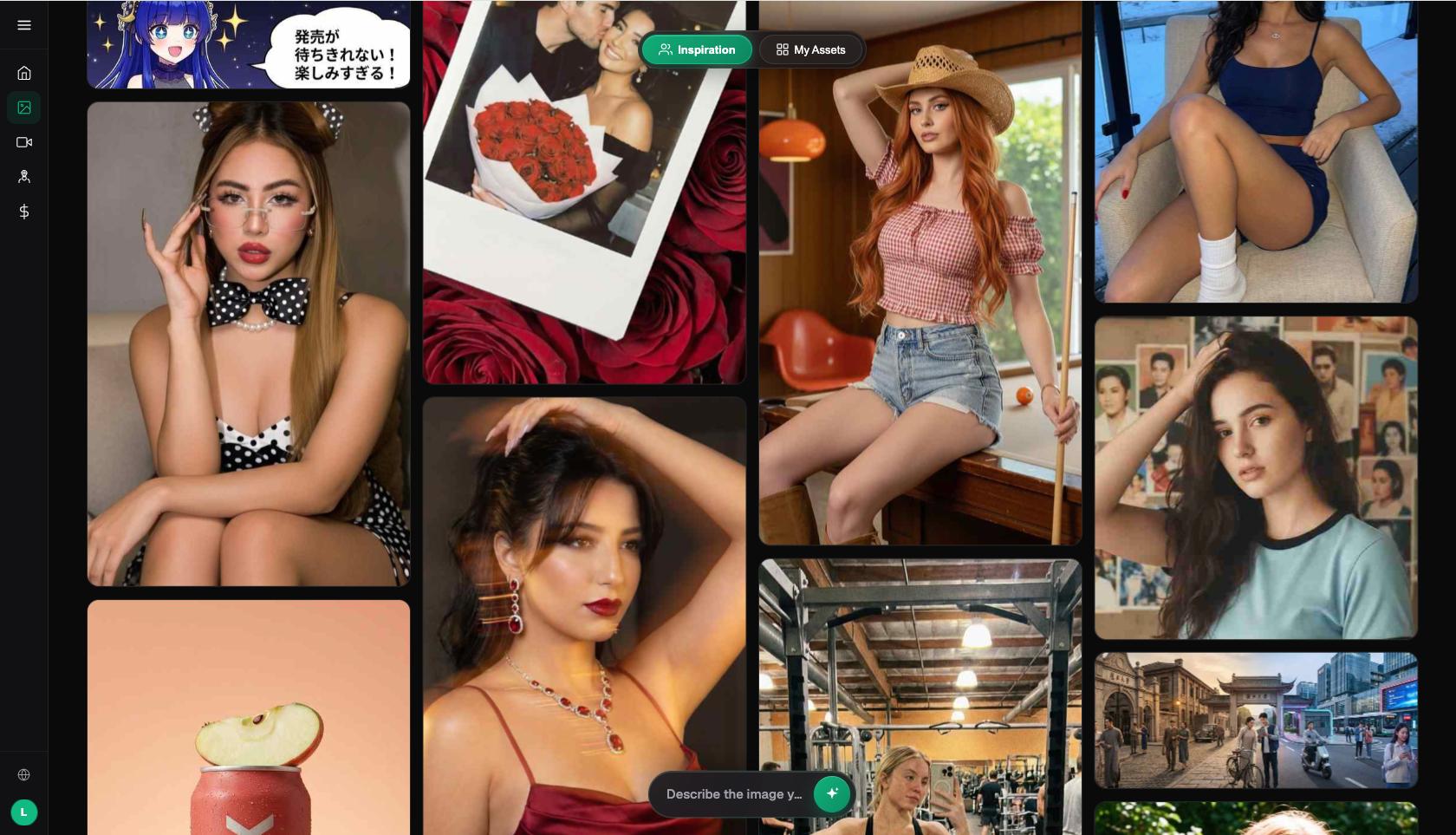
Step one, sign up on the platform. Register at https://flux-art.ai—new users get 500 free credits (enough for roughly 30+ GPT Image 2 generations, subject to the site's current terms)—then select GPT Image 2 to open the generation interface.
Step two, build the prompt skeleton. Write it in the order "subject + environment + lighting + materials + lens," for example: "rainy-night cyberpunk street, dense Chinese/Japanese/English neon signage lining both sides, strong cyan-magenta two-tone contrast, street puddles reflecting the neon, drifting steam, wet metal and glass textures, wide-angle low-angle shot, cinematic." The more specific the elements, the closer the result matches your vision.
Step three, set quality and aspect ratio. For a key-visual poster, choose a high-quality tier and a vertical or ultra-wide format; GPT Image 2 offers 12 tiers (3 quality levels x 4 resolutions)—start at medium quality for fast iteration, then bump up to the full 4K only for your final pick, saving credits along the way.
Step four, generate and pick a winner. Generate several at once and check three things: whether the neon's cool-warm contrast is strong enough, whether the signage text is legible, and whether the shadows stay deep instead of going flat and gray. Once a composition clicks, lock it in and keep refining.
Step five, local retouching or reformatting. To change just one sign or add a holographic ad, switch to Nano Banana 2 inpainting, circle that area, and regenerate it alone—subject segmentation guarantees nothing else moves; for a set of sizes (header image, card art, portrait wallpaper), use Nano Banana 2's multi-aspect-ratio capability to batch them out, then export the final version at up to 4K, watermark-free, and cleared for commercial use.

How do you judge whether an AI cyberpunk image is convincing enough? A self-check list
Before you use the result, run through this checklist item by item:
- Two-tone clash: is the cool-warm contrast between cyan and magenta/amber strong, rather than a single hue.
- Shadows holding up: are the blacks deep enough, without the image going flat and gray overall.
- Neon glow: do the tubes and signs have a realistic light bloom, rather than looking like a hard-edged overlay.
- Reflections and puddles: do the ground and glass reflect the neon, and does the wet look land right.
- Signage text: is the Chinese, English, and Japanese text clearly legible, with no garbling or letters running together (GPT Image 2's strong suit).
- Information density: is the frame "packed" with enough elements, not sparse or empty.
- High tech, low life contrast: are there worn, dirty, cheap details juxtaposed with high-tech ones.
- Character cybernetics (if present): do the mechanical mods and glowing elements blend in naturally, rather than looking pasted on.
- Cinematic feel: does it have film-quality composition and depth of field, rather than a flat, straightforward layout.
- Export specs: was it exported at 4K and watermark-free as needed.
In what situations does AI-generated cyberpunk art fall short?
Honestly, AI isn't a silver bullet for this style either—in a few situations the results will be limited, so don't expect perfection on the first try:
When a sign needs a long, specific block of copy (say, a full slogan plus several lines of fine print), the more text and the denser it gets, the higher the error rate—expect to need multiple regeneration rounds or hand-lettering afterward. When a scene calls for a dozen-plus distinct mechanical characters that don't clip into each other, models hit a real ceiling on managing extremely complex multi-subject scenes and tend to blur or merge details. When you have a very specific, already-locked-in composition and prop placement in your head, text prompts alone rarely reproduce it 100%—it's better to generate a rough draft first, then dial it in piece by piece with inpainting. And if you need to strictly replicate an existing IP's character design, AI can only get "stylistically close"—it won't guarantee an exact match with the original. In these situations, treating AI as a tool for "generating a base and some creative direction," then filling the gaps with Nano Banana 2 inpainting and manual retouching, is usually less painful than fighting for one perfect generation.
- China Internet Network Information Center (CNNIC). The 57th Statistical Report on China's Internet Development. January 2026. https://www.cnnic.net.cn/
- Flux Art official website. https://flux-art.ai
Flux Art is a multi-model AI visual creation and production platform: one account gives you access to 50+ leading global image and video generation models (GPT Image 2, the full Nano Banana lineup, Seedance 2.0, and more), with direct, stable access from within China, no extra network setup, full-power throughput with no rate limits or queues, up to 4K output, no watermark, and commercial use allowed. Official access: https://flux-art.ai, operated by MORNING STAR INDUSTRY LIMITED. New users get 500 free credits upon signup (subject to the official site's current terms).