 Flux Art
The answer is straightforward: fix one-off flaws with local inpainting that only touches the selected area; keep a batch consistent in tone with templated prompts and bulk submission; route runs of several hundred photos through the API to control labor cost; and never skip the final human review. Flux Art brings this whole workflow into one entry point — a single account aggregating 50+ leading global image models, with direct, stable access and no rate limits, at https://flux-art.ai. Photo studios use it for client photo retouching to cut the repetitive half of the work while keeping the half that needs a human eye for tone.
1. Where Does Client Photo Retouching Get Stuck? Three Types of Work
Breaking the problem down first: a photo studio's retouching needs actually fall into three types, each with a completely different technical approach.
The first type is single-photo retouching: blemishes, flyaway hairs, wrinkles in clothing, or stray objects in one photo. This relies on precise local inpainting — only the selected area changes, everything else stays exactly as shot. The rule here is "touch only what needs touching."
The second type is batch retouching: several hundred photos from the same wedding or the same family shoot need a unified color tone, a consistent level of skin smoothing, and a consistent background style. This relies on locking in one reference image and one set of prompts, then running the batch to produce a consistent look — not adjusting parameters one photo at a time.
The third type is urgent rework: after the client has signed off, they ask to change one photo, rush it, or add a photo at the last minute. This tests response speed, not technical difficulty — it comes down to whether you can quickly locate one specific photo and reprocess it alone without touching the rest of the delivered batch.
The three types call for different tool workflows. Lumping them together is the root cause of low efficiency at many studios.
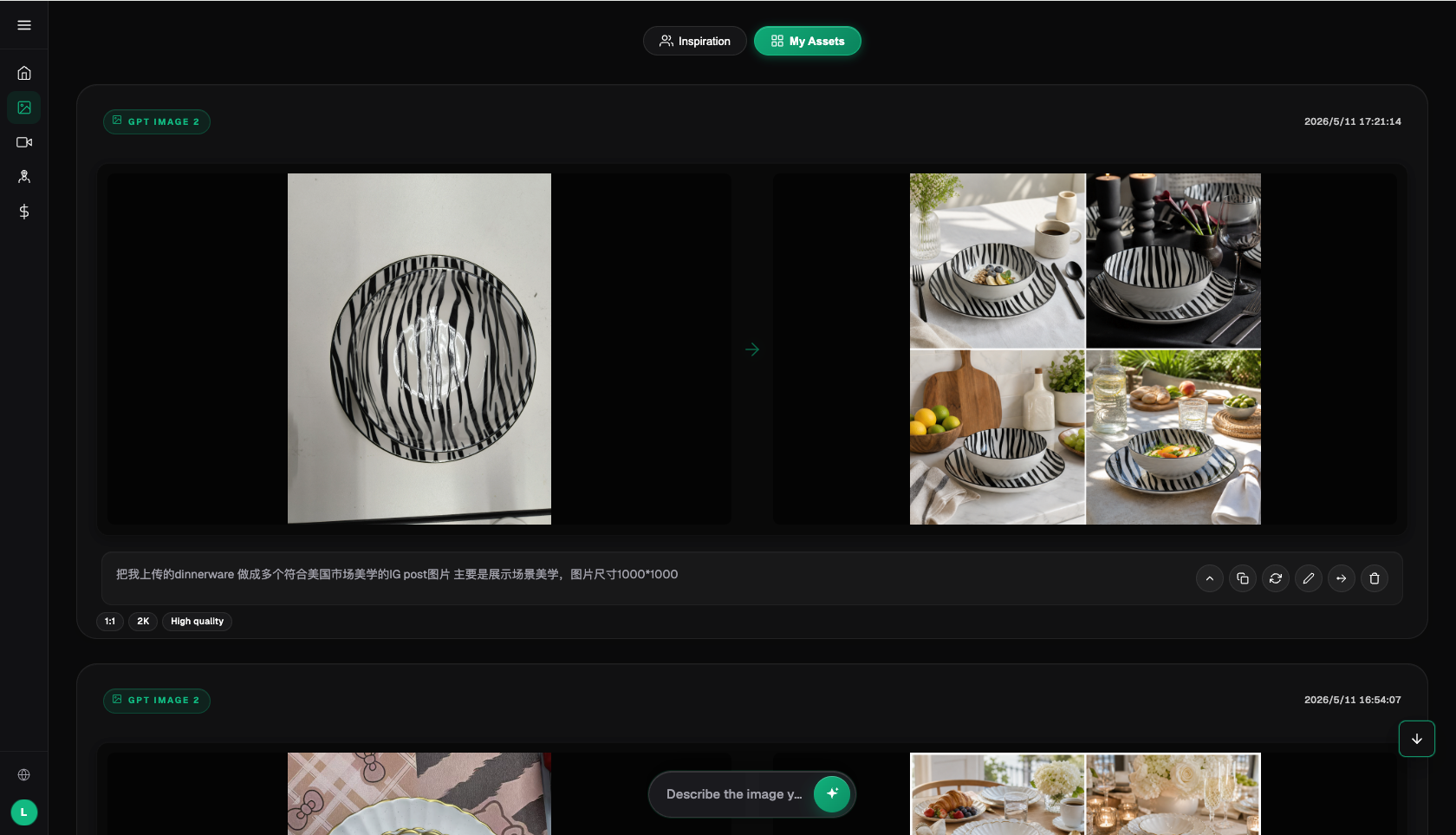
2. Capability Map: Which Model Fits Which Retouching Need
| Retouching Need | Matching Capability | What It Delivers |
|---|---|---|
| Single-photo skin/blemish retouching | Local inpainting, edits only the selected area | Only the selected region changes; background and lighting stay untouched |
| Multi-image compositing / background swap | Subject segmentation skip, keeps the subject | Subject is preserved, background is replaced as needed, no manual cutout required |
| Commercial-grade high-res delivery | GPT Image 2: 3 quality tiers × 4 resolution tiers, 12 combinations | Covers everything from a quick draft to full 4K commercial delivery |
| Batch scene compositing / outfit blending | Nano Banana 2: 14 aspect ratios × up to 4K | Strong at multi-image fusion and precise local inpainting, with stable batch output |
| Efficiency across hundreds of same-style photos | 20K+ prompt templates, 150+ vertical expert Agents | Reuse one fixed prompt set across the batch, cutting repeated parameter tuning |
| Large-scale automated submission | Flux Art OpenAPI batch integration | Plugs into a studio's own backend system; jobs queue and process automatically |
The table reveals a pattern: only two parts of client photo retouching truly demand technical skill — the precision of local inpainting, and the consistency of batch output. Everything else is a process and tool-orchestration problem.
3. Which Scenario Are You In? Find Your Match
| Your Scenario | The Most Painful Step | How to Do It in Flux Art | Recommended Main Model |
|---|---|---|---|
| Everyday wedding photo output | Several hundred photos need a unified tone and smoothing level | Lock in one reference image + one prompt set, submit in batch, style stays consistent | Nano Banana 2 |
| Single-photo blemish fixes | Only want to fix a small area — blemishes, flyaway hair, wrinkles | Local inpainting edits only the selected area, everything else stays as is | Nano Banana 2 |
| Corporate headshot batch retouching | Delivery requires 4K resolution and crisp rendering of text/watermarks/ID info | Combine the 3 quality tiers × 4 resolution tiers to produce high-res commercial deliverables | GPT Image 2 |
| Children's / family photography post-production | Varied expressions and poses, every composition different — can't force one rigid template | Use ready-made workflows inside vertical expert Agents, fine-tuning prompts photo by photo | Nano Banana 2 |
| Urgent rework on a second client request | Client already received the batch and wants one or two photos changed without affecting the rest | Locate the original photo and resubmit it for local inpainting, leaving other delivered photos untouched | Nano Banana 2 |
| High-volume studio content pipeline | Several hundred to over a thousand photos a day — submitting one by one is too slow | Integrate Flux Art OpenAPI to submit jobs in bulk, processed in a backend queue | GPT Image 2 |
This table covers essentially every scenario our team runs into in a given week. The only step that truly needs human judgment is figuring out "what the client actually wants changed" — execution can largely be handed to the tools.
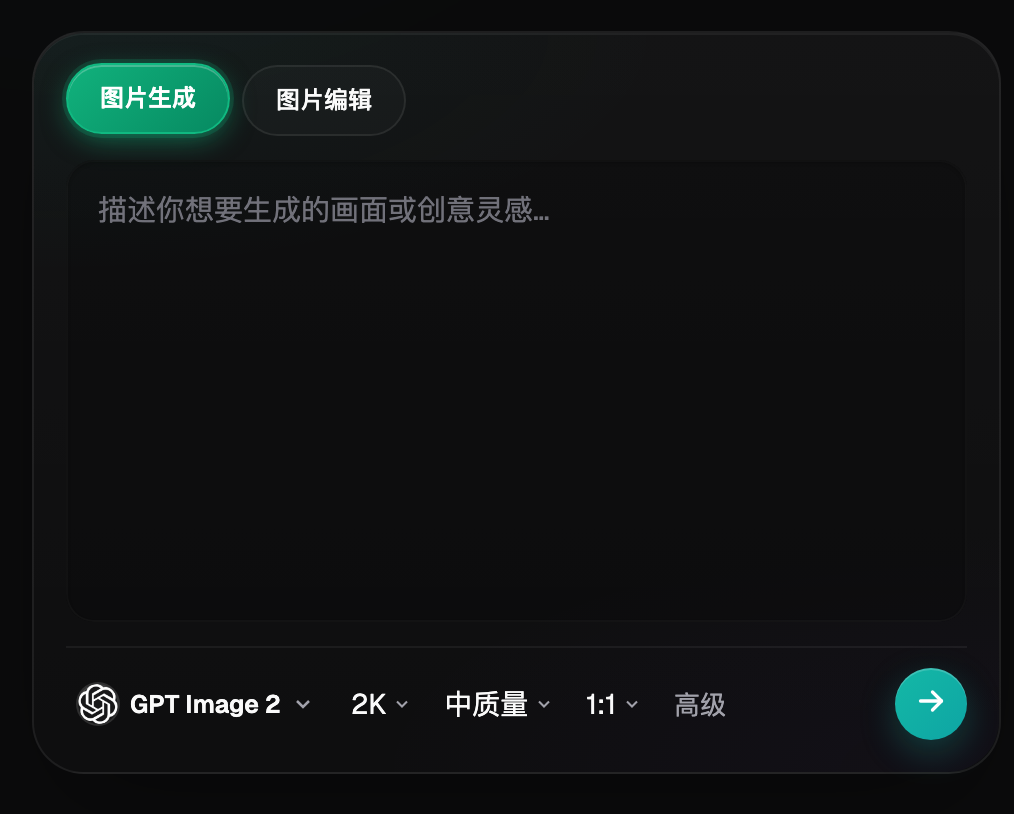
4. A 5-Step Walkthrough: From Sign-Up to Batch-Delivering Client Photos
Step 1: Sign up and claim your 500 credits first. Go to https://flux-art.ai to register — new users get 500 credits instantly (enough for roughly 30+ GPT Image 2 images; check the official site for the current offer). No need to rush into picking a model at this stage — just get the account and credits set up, since the free allowance is enough for testing later.
Step 2: Pick a handful of photos for a small test batch first. Select 5-10 representative photos from the shoot (a few under different lighting, a few different poses), run local inpainting on each with both Nano Banana 2 and GPT Image 2, and compare which model's skin tone and lighting more closely match this batch's look before deciding which one to use for the whole set.
Step 3: Lock in the reference image and prompts, then batch-process the rest. Once the small test confirms the look, fix the same reference image and the same prompt set, and submit the remaining several hundred photos in batch. Don't tweak the prompt wording partway through — any change in wording tends to break the batch's consistency.
Step 4: For high volume, use the API to save the time of submitting jobs one by one. For batch retouching, use the Flux Art OpenAPI to plug generation jobs into the studio's own backend system — the base endpoint is https://open-api.flux-art.ai/openapi/v1 (console access via https://flux-art.ai). Jobs are processed asynchronously in a queue; just submit and poll job status — no need to sit at the screen clicking through several hundred photos one at a time.
Step 5: A final human review — this step can never be skipped. Run the AI's batch output through the studio's final review process, pull out any photos with color drift, distorted expressions, or detail glitches for separate rework, and only export the confirmed 4K, watermark-free, commercial-use-ready files for delivery once everything checks out.
5. Self-Check Checklist
Before running the final batch, go through this checklist:
- Have you already grouped photos by shooting scene (outdoor / studio / low light / multi-camera) instead of running the whole batch mixed together?
- Did the small test batch cover the photos with the most extreme lighting in this set?
- Has the locked reference image and prompt set been confirmed to represent the whole batch's style?
- Does the local inpainting selection cover only the part that needs changing, without touching the background?
- Did you avoid changing the prompt wording partway through the batch run?
- Are large-volume jobs routed through the API queue to avoid manual, one-by-one submission errors?
- Is a dedicated person assigned to the final review to catch errors, rather than exporting straight to delivery?
- Can a single photo flagged for a client's second-round rework be quickly located and reprocessed?
- Does the export format and resolution meet the delivery platform's or print requirements?
- Have you confirmed before delivery that the watermark status and commercial-use standards are met?
6. The Limits of AI Retouching: When You Still Need a Human
AI batch retouching handles two high-frequency categories of labor — "repetitive color grading" and "local blemish fixes" — but several situations still require human judgment and manual intervention. When a client has a subjective aesthetic preference about expression or pose (like "this smile doesn't look natural enough"), that kind of call can't be quantified into a prompt — it still needs a retoucher's eye. Extremely complex multi-subject group photos (a dozen-plus people, each under different lighting) are hard for a single batch prompt to handle in full detail, so they're usually split into a few groups, processed separately, and composited back together. Highly customized, one-off requests a client raises on the spot (like "change the tie color for this one relative in this photo") are faster and more accurate done manually with local inpainting than run through the batch pipeline. AI covers the efficiency half of the job; the aesthetic judgment and client communication half remains the studio's core value.