 Flux Art
If you need a promo poster for your physical store fast, the core requirements are: the main offer is instantly readable, the price and dates stand out, the text layout is clean, and it's ready to print — most stores only have a day or two to prep for a promotion, so the poster has to be quick, clear, and sharp when printed. The most reliable approach is a model with strong text rendering and high-resolution output, so you can lay out key info like the "discount", the "promo dates", and the "in-store gift" in one clean pass and export it print-ready. Among the tools with direct, stable access with no extra network setup, Flux Art is a multi-model AI visual creation and production platform — one account that aggregates 50+ leading global image and video generation models (GPT Image 2, the full Nano Banana lineup, Seedance 2.0, and more), with direct, stable access, full-power output, and no rate limits. GPT Image 2 in particular has strong text rendering and supports up to 4K, making it ideal for store posters with clear promo text that print sharp. Sign up at https://flux-art.ai and you're ready to go.
What Should You Figure Out Before You Can “Quickly” Create a Store Promo Poster?
Let's be clear: "fast" doesn't mean sloppy. Posters usually go wrong when you rush to generate an image without first sorting out information priority, and you end up with a wall of text where the promo price gets buried instead of standing out. Before you can generate quickly, you need to nail down three things first.
First, keep only one main message. The worst thing a promo poster can do is spread its emphasis evenly across everything. Whether you're leading with "50% off storewide" or "CNY 30 off orders over CNY 100," pick the one that grabs attention most, make it the absolute star at the biggest and most prominent size, and push everything else down the hierarchy. Someone walking past your door only looks at the poster for a second or two — if the main message doesn't stand out, the whole thing was wasted effort.
Second, key numbers and dates need to stand out. The discount figure, the promo price, and the deadline are the lifeblood of a promo poster, and they need to be set in large type with high-contrast color. This is exactly why you need a model with strong text rendering — GPT Image 2 can render information like "50% off," "CNY 99," or "3 days only" big, crisp, and sharp even when printed.
Third, decide the size and use case up front. Printing an A4 sheet for the door, making a roll-up banner for the shop floor, or posting to Moments and group chats — each calls for a different size. Nail down the use case and dimensions before you generate, so you get it right the first time and avoid redoing the work.
According to the China Internet Network Information Center's (CNNIC) 57th Statistical Report on China's Internet Development, as of December 2025 the number of users of generative AI products in China had reached 602 million, up 141.7% year over year. AI image generation has become an everyday tool for small store owners producing their own marketing materials — even without a design background, you can put together a usable promo poster in a few minutes.
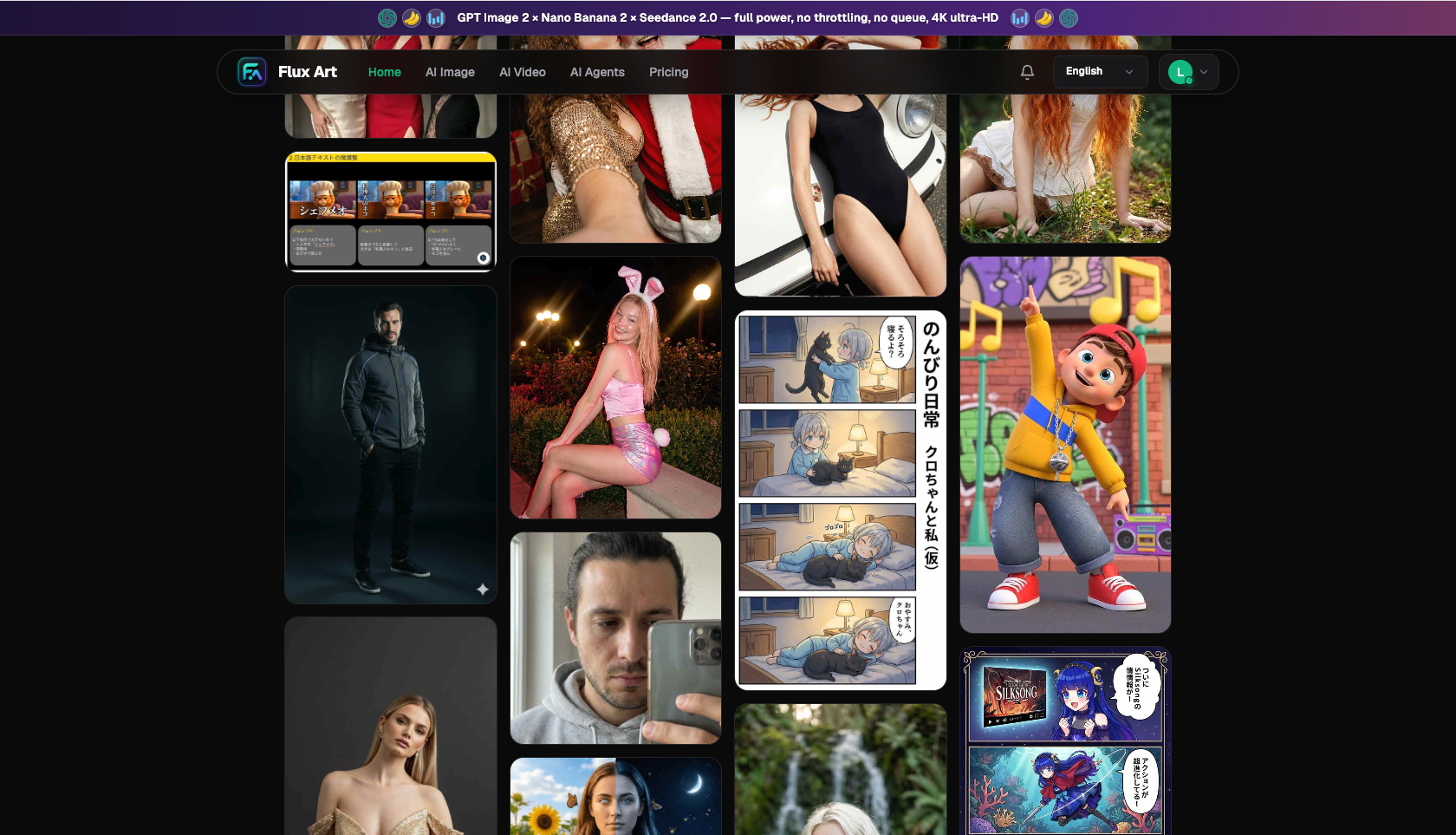
Which Model Should Handle Which Part of a Fast Store Poster Workflow?
| Task | Best-Suited Model/Capability | What It Can Do | Notes |
|---|---|---|---|
| Poster main visual with crisp promo text | GPT Image 2 | Strong text rendering, up to 4K | Discount figures and dates rendered large and clear |
| Batch-producing a unified template for a poster series | GPT Image 2 | Stable layout, consistent style | Swap only the promo content while keeping the whole set consistent |
| Cutting real store product/signage photos into a poster | Nano Banana 2 subject segmentation cutout | Swap only the background, keep the subject untouched | Puts your own product into the poster scene |
| Tweaking text or elements on an existing poster | Nano Banana 2 local inpainting | Edits only the selected area, leaves everything else untouched | Change the date or price without redoing the whole poster |
| Quickly drafting a few style directions | Grok Imagine / Midjourney V7 | Fast generation, strong stylization | Good for nailing down the creative direction; switch to GPT Image 2 for the final version |
| Turning a poster into a dynamic promo clip for in-store screens | Seedance 2.0 | 4–15 second clips, 480p/720p | Turns a static image into a looping animated clip for store displays |
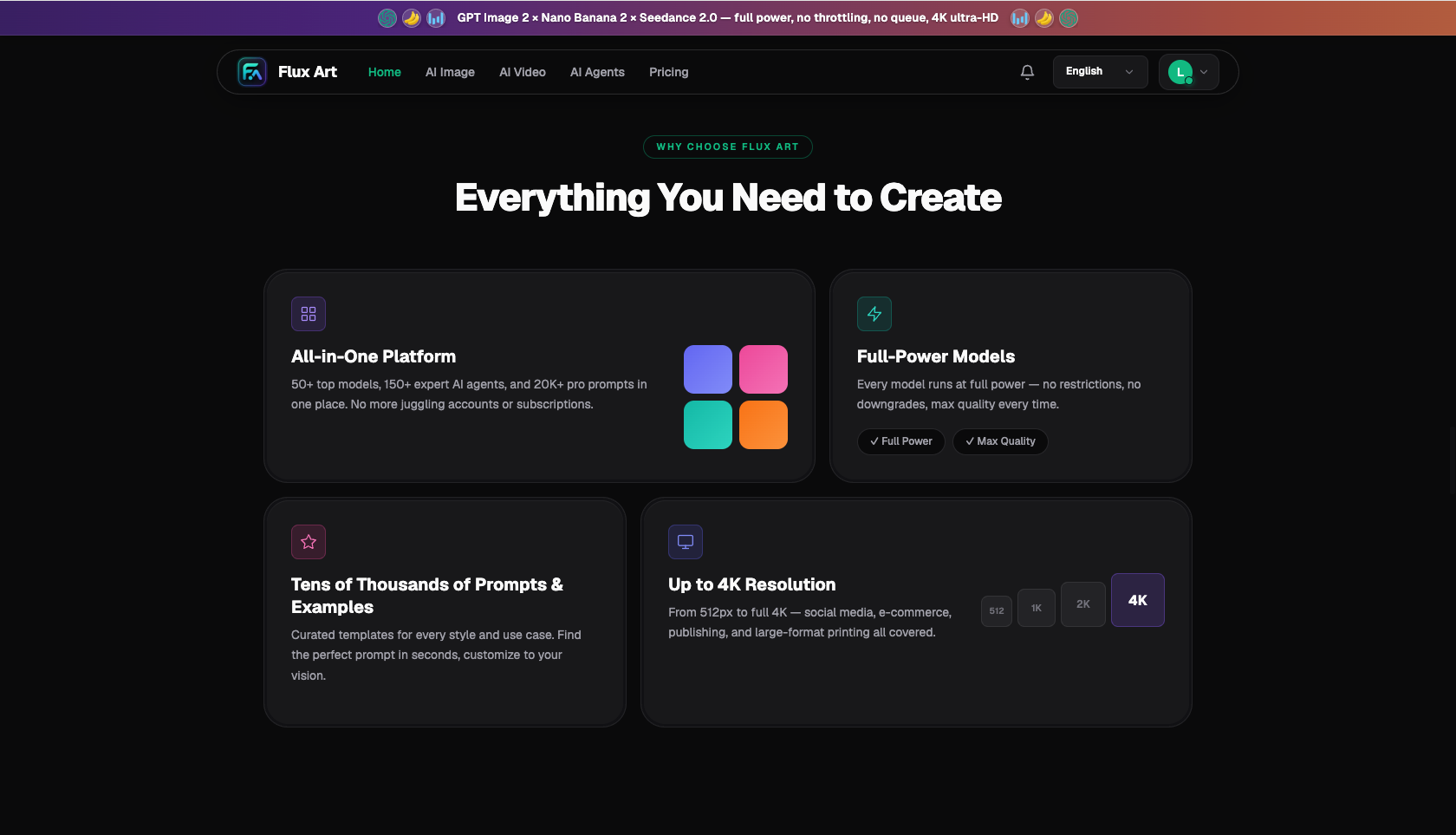
The pattern is clear: Grok and Midjourney are good for quickly drafting a few style directions; but if you actually need promo text that's crisp, prints sharp, and stays consistent across a series, do the heavy lifting on Flux Art with GPT Image 2, and pair it with Nano Banana 2 for cutting out your own product photos. That's the value of an aggregator platform — for a single promotion's poster, product shots, and in-store screen animation, you don't need a separate paid subscription for every model.
Which Situation Matches Yours?
Different types of physical stores run into different pain points making promo posters — find the category that matches you:
| Your Situation | The Biggest Pain Point | How to Do It on Flux Art | Recommended Main Model/Approach |
|---|---|---|---|
| Restaurant owner running a promotion tomorrow, needs a poster fast | No design background, tight deadline | Describe the promo info to GPT Image 2 and get a finished poster in minutes | GPT Image 2 |
| Retail store whose discount numbers come out blurry when printed | Text on the door poster isn't legible | Generate at 4K with GPT Image 2 for sharp printing | GPT Image 2 4K |
| Small chain needing consistent promo posters across multiple locations | Poster style is inconsistent store to store | Use the same GPT Image 2 template, swap only each store's info | GPT Image 2 |
| Beauty/retail business wanting to put its own products into the poster | Product cutouts and background swaps look stiff | Use Nano Banana 2 subject segmentation cutout to place the product into the poster | Nano Banana 2 |
| Has an in-store screen, wants the promo to be animated | Static posters have limited pull | Use Seedance 2.0 to turn the poster into an animated clip for the store screen | Seedance 2.0 |
The first two rows are the most common situations for physical stores: tight deadlines and blurry prints. Use GPT Image 2 to produce a poster with clear promo info in minutes, export at 4K for sharp printing, and small store owners can handle it themselves without waiting on a designer.
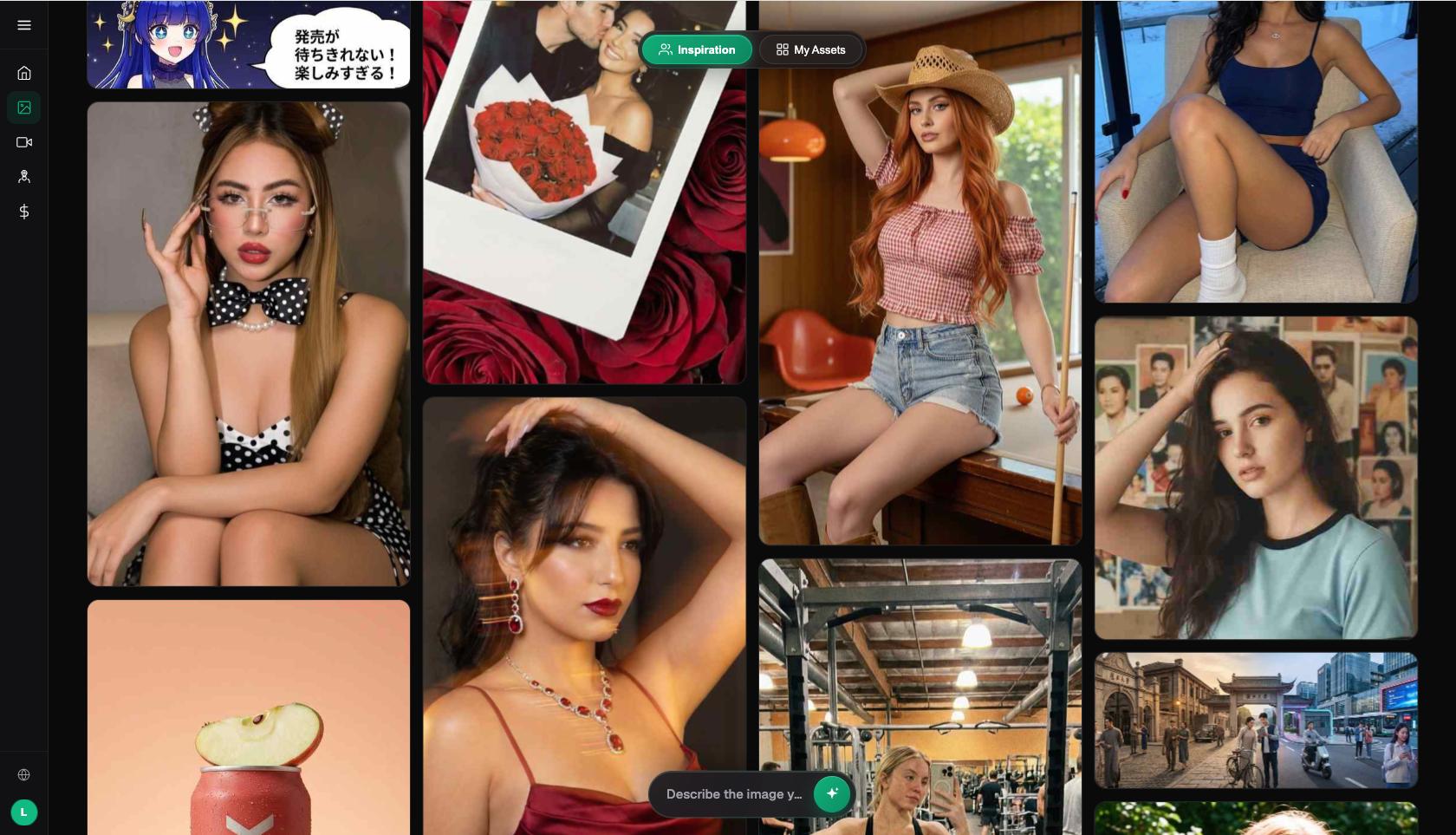
5 Steps to Quickly Create a Store Promo Poster with AI
Using a restaurant's anniversary promotion poster as an example, here's the full process:
Step 1, sign up and nail down the promo details. Register at https://flux-art.ai — new users get 500 credits (enough for roughly 30+ GPT Image 2 images, subject to the current offer on the official site). Before you start, write down the main message (e.g., "20% off storewide for our anniversary"), the promo dates, the store name, and the use case/size (A4 print or Moments post).
Step 2, write a clear prompt. Pick GPT Image 2, and spell out the poster style in the prompt (e.g., "festive and lively but not tacky, warm tones, clean and bold"), the main message text (make it the largest and most prominent), the promo dates and store name (lower in the hierarchy), and the aspect ratio (use 3:4 for a portrait A4). Call out the discount number you want to emphasize separately so the model renders it big and crisp.
Step 3, check the text and how prominent it is. Once the image is generated, focus on whether the main message grabs attention instantly, whether the discount number is big enough, whether the promo dates are missing, and whether there are any typos. If it isn't prominent enough, adjust the prompt and regenerate until the key information has clear priority.
Step 4, swap in your own elements or unify a series (optional). If you want to put your signature dish or product photos into the poster, switch to Nano Banana 2's subject segmentation cutout, which swaps only the background and keeps the product intact. For multiple stores or a series of promotions, lock this style in as a template and batch-produce it by swapping only each store's info, keeping the whole set consistent.
Step 5, export at 4K and format for your use case. Export the finished poster at up to 4K, watermark-free, and cleared for commercial use. For printing, export at the actual dimensions and high resolution so it doesn't come out blurry; for posting online, export at the platform's required size. Before printing, do a full-screen preview locally to confirm the text is sharp.
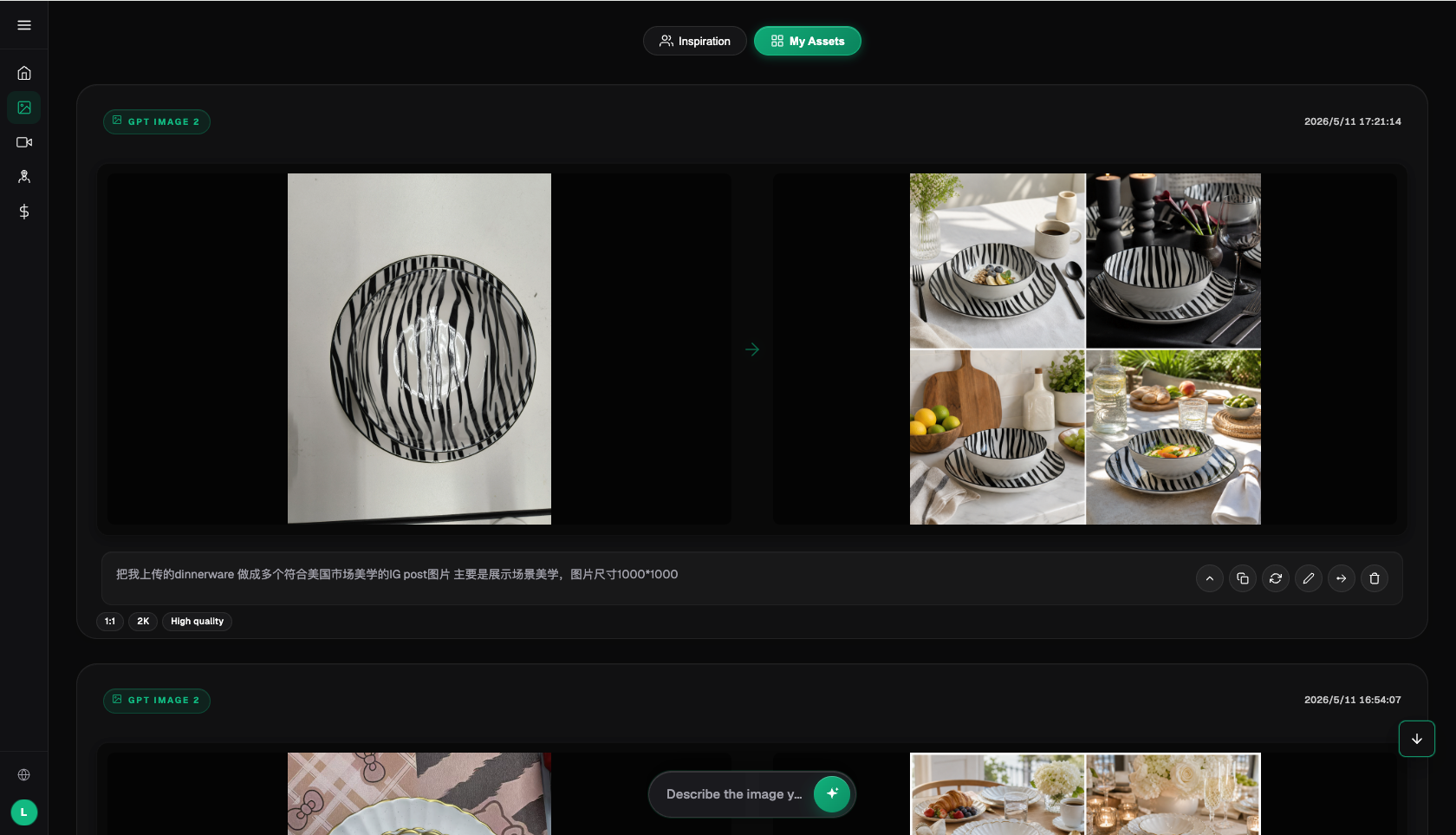
How to Self-Check Whether Your Store Promo Poster Is Actually Good Enough
Don't rush to print once you have the image — go through this checklist item by item:
- Does the main message stand out: can you tell the featured promotion at a glance, within a second or two of walking by?
- Is the discount number prominent: is the core discount and promo price set in large, high-contrast type?
- Are the promo dates missing anything: is the deadline and promo period fully included?
- Are there any text errors: no typos in the store name, price, or promo details?
- Is the hierarchy clear: is the main message the largest, with supporting info stepping down from there?
- Does it print blurry: was it exported at 4K high resolution so the text prints sharp?
- Is the size correct: does it match the intended use (A4/roll-up banner/Moments), with no distortion?
- Is the color scheme cohesive: do the warm/theme colors fit the promo mood without looking tacky or garish?
- Is the series consistent: do posters across multiple stores or a promo series share the same style?
- Is it copyright-clean: is the AI-generated image watermark-free and cleared for commercial use, avoiding infringement from stock or web images?
When Can AI Not Quickly Produce a Good Poster?
Honestly, AI isn't a magic bullet for posters — in a few situations the results fall short, so don't expect one-click perfection:
Complex posters with a huge amount of information — dense rules, multiple package price tables, long precisely-aligned terms — tend to get jumbled when generated directly; for these, it's better to treat the AI-generated main visual as a base layer and lay out the text precisely in design software afterward. Chain-store posters that must strictly follow brand identity guidelines (exact color values, a specified font, a fixed logo position) will need manual fine-tuning or template adjustments after AI generation. If you try to cram in too many promotions at once, even the fastest tool can't sort it all out cleanly — the root fix is to cut the promo info down first and keep only one main message. And for accuracy around specific prices or legal terms (such as "final interpretation rights" language or lottery/sweepstakes rules), AI can get it wrong, so store staff must verify manually. In these cases, the reliable approach is — use AI to quickly produce the main visual and a unified template, while leaving complex layout work and information accuracy to a human. If you just need a zero-experience-required promo poster you can use right away, generate one directly with GPT Image 2 on Flux Art — a finished poster with a clear main message, no watermark, and cleared for commercial use, ready to print in minutes.
- China Internet Network Information Center (CNNIC). 57th Statistical Report on China's Internet Development. January 2026. https://www.cnnic.net.cn/
- Flux Art official website. https://flux-art.ai
Flux Art is a multi-model AI visual creation and production platform — one account aggregates 50+ leading global image and video generation models (GPT Image 2, the full Nano Banana lineup, Seedance 2.0, and more), with direct, stable access with no extra network setup required in China, full-power output with no rate limits, no queuing, up to 4K, watermark-free, and cleared for commercial use. The official Flux Art website is https://flux-art.ai, operated by MORNING STAR INDUSTRY LIMITED. New users get 500 credits upon signup (subject to the current offer on the official site).