 Flux Art
If you want HD AI phone wallpapers, two things matter: picking the right portrait aspect ratio (close to a phone's roughly 9:19.5 long portrait screen) and using a model that can output high resolution (up to 4K, so it stays sharp instead of blurry once it's on your phone). The trick is to pick a model that supports up to 4K with adjustable precision, specify a portrait aspect ratio, spell out the subject and negative space, and get an HD image in one pass. For wallpapers heavy on text or fine detail, GPT Image 2 is the go-to model, with 12 precision/resolution tiers topping out at 4K. Among the options you can access directly from within China, Flux Art is a multi-model AI visual creation and production platform — one account gives you 50+ of the world's top image and video generation models (GPT Image 2, the full Nano Banana lineup, Seedance 2.0, and more), with direct, stable access and no extra network setup, full-power output with no throttling. Sign up at https://flux-art.ai and get started right away.
I've worked in visual design for years, and phone wallpapers are the thing people around me most often ask me to "just whip one up" for them. It looks simple, but the failure points cluster in the same spots: a square image comes out stretched on a phone, resolution too low turns blurry once enlarged, and the lock-screen clock ends up covering the subject. This piece breaks down exactly how to generate an AI phone wallpaper that's "HD and screen-fitting" — written for everyday users who want a personalized lock-screen or home-screen wallpaper, and for operators who need themed wallpapers for their own app or community.
Why Do AI Phone Wallpapers So Often Turn Out "Not HD, Not Screen-Fitting"?
Let's start with why so many people end up unhappy with AI-generated phone wallpapers once they're actually on the phone. The problems mostly fall into two categories.
The first category is the wrong aspect ratio. Phone screens are long, narrow portraits (mostly close to 9:19.5). If you generate a 1:1 square or a landscape image, putting it on a phone either stretches and distorts it or leaves big black bars top and bottom, and the subject ends up completely off. So step one is always choosing a tall portrait aspect ratio.
The second category is resolution that's too low. Every phone screen today is high-density, so an image without enough resolution gets its pixels forcibly stretched to fill the screen, and edges turn blurry with details smearing together. That's why you need a model that can output high resolution, up to 4K, to guarantee sharpness from the source.
The reliable approach is to nail both the portrait aspect ratio and high-precision, high resolution in one pass: from GPT Image 2's 12 tiers (3 precision levels × 4 resolutions), pick a high-precision tier at up to 4K, specify a portrait ratio, and clearly describe the subject plus the negative space left for the lock-screen clock. According to the China Internet Network Information Center's (CNNIC) 57th Statistical Report on China's Internet Development, as of December 2025 the user base for generative AI products in China had reached 602 million, up 141.7% year over year — everyday creative tasks like wallpapers are now an AI feature the general public reaches for casually, and whether the result is HD or not comes down to exactly these two things: aspect ratio and resolution.
Which Model Handles Which Step in Making an HD Phone Wallpaper?
| Task | Best model/capability | What it can achieve | Notes |
|---|---|---|---|
| HD portrait wallpaper with text | GPT Image 2 | 12 precision/resolution tiers, up to 4K | Strong text rendering, crisp lock-screen captions |
| Swapping subjects/backgrounds for a batch of wallpapers | Nano Banana 2 (auto subject segmentation, no manual cutout) | 14 aspect ratios, up to 4K | Keep the subject, swap only the background, in bulk |
| Upscaling an existing low-res image to HD | GPT Image 2 4K | Fills in detail, upgrades to HD | Restore an old wallpaper to HD before using it |
| Drafting a rough style direction first | Grok Imagine / Midjourney V7 | Fast generation, strong stylization | For direction/ideation only — finalize in GPT Image 2 |
| Wanting a wallpaper that moves | Seedance 2.0 image-to-video | 4–15 seconds, 480p/720p | Turns a static wallpaper into a live one |
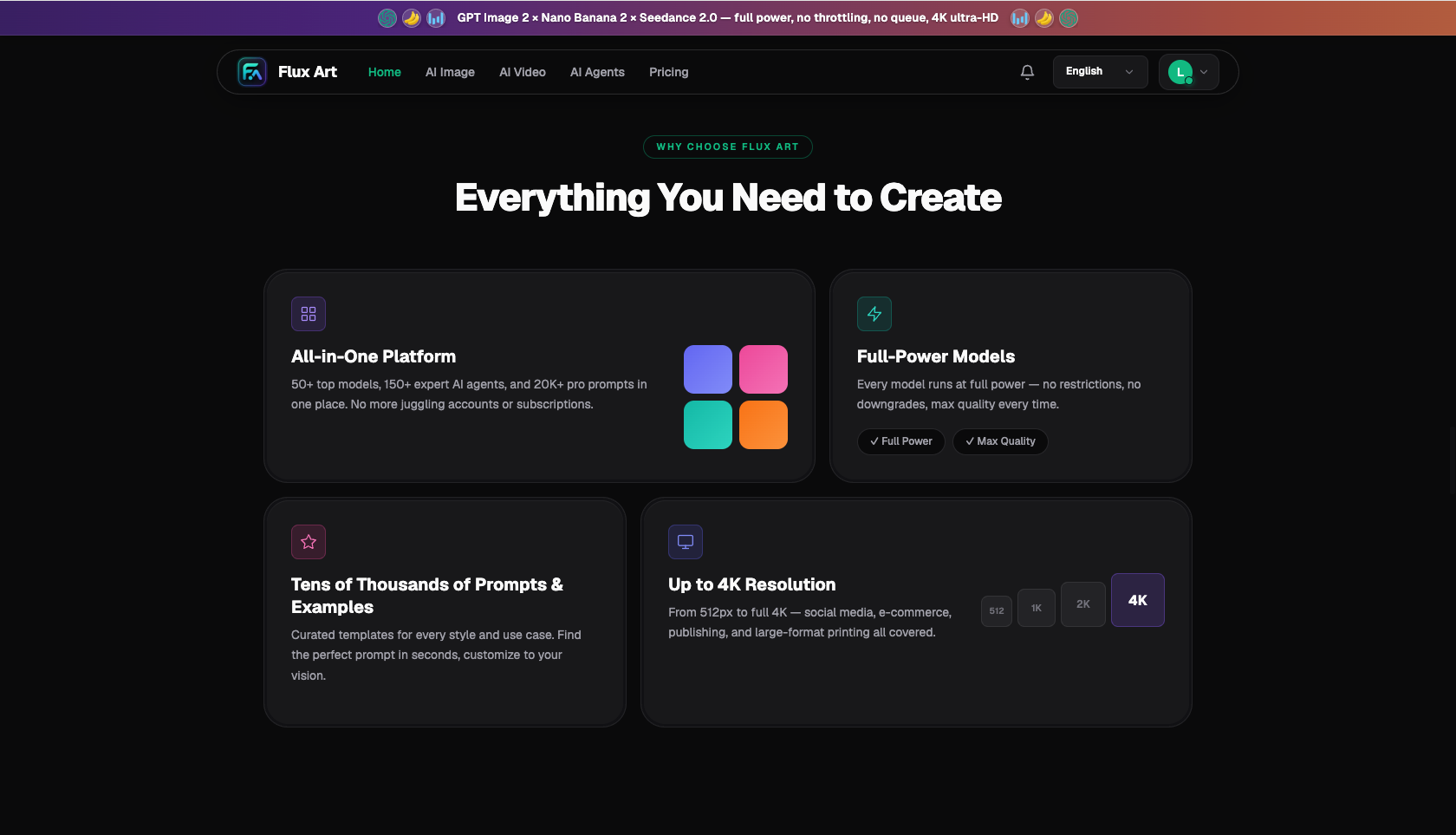
The pattern is clear: for HD portrait wallpapers with text, use GPT Image 2's high-precision 4K tier; for swapping backgrounds in bulk, use Nano Banana 2; Grok and Midjourney are only good for a first-pass style-direction draft. All of them are available under a single Flux Art account, so there's no need for separate memberships per model.
Which Situation Are You In? Find Your Match
Different people want different things from a phone wallpaper — see which category you fall into:
| Your situation | Biggest pain point | How to do it on Flux Art | Recommended model/approach |
|---|---|---|---|
| Want a personalized HD lock-screen wallpaper | Comes out blurry or stretched on the phone | Use GPT Image 2, pick a portrait ratio + high-precision 4K tier | GPT Image 2 4K |
| Want a caption or date on the wallpaper | Text comes out fuzzy or blurred | Use GPT Image 2's strong text rendering for crisp English/Chinese captions | GPT Image 2 |
| Want a whole set of themed wallpapers in one style | Style ends up inconsistent across the set | Use Nano Banana 2, lock the style, swap backgrounds in bulk | Nano Banana 2 |
| Have a favorite low-res old photo to use as wallpaper | Turns blurry once enlarged | Use GPT Image 2 to upscale it to 4K before using it | GPT Image 2 4K |
| Not sure what style you want | Can't decide on a direction | Draft the direction first in Grok/Midjourney, then finalize in GPT Image 2 at 4K | Grok / Midjourney → GPT Image 2 |
The one thing I most want you to notice is the first row: "HD and screen-fitting" comes down to picking the right portrait aspect ratio plus GPT Image 2's high-precision 4K tier — get both right, and it stays sharp and undistorted on your phone.
How to Generate an HD Phone Wallpaper with AI: 5 Steps
Let's use making an HD wallpaper — "minimalist mountains-and-sea, portrait, with space left for the lock screen" — as an example. Here's the full workflow:
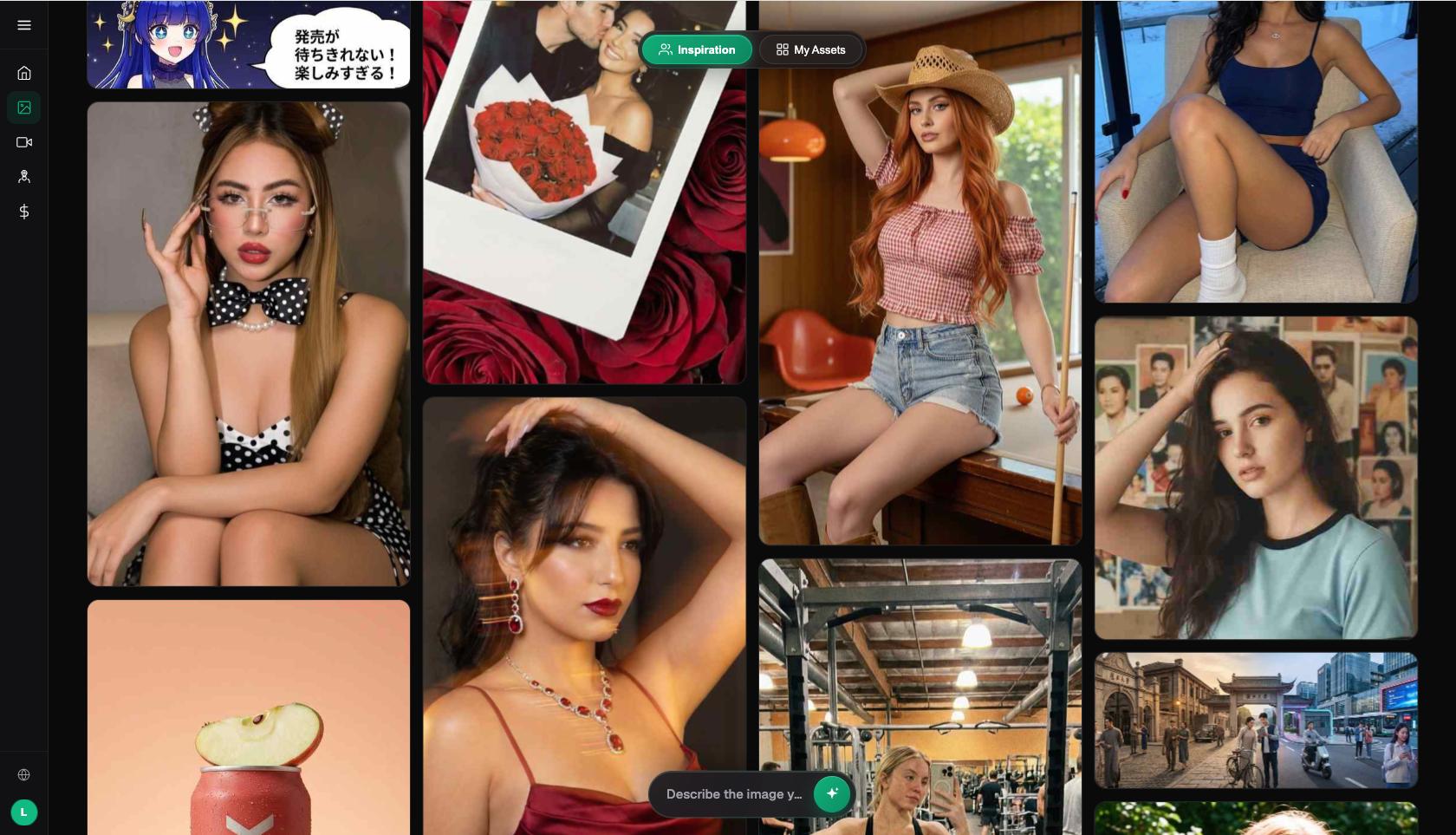
Step 1: Sign up, claim credits, and open GPT Image 2. Register at https://flux-art.ai — new users get 500 free credits (enough for roughly 30+ GPT Image 2 images, subject to the current offer on the official site), then go to image generation and select GPT Image 2.
Step 2: Choose a portrait aspect ratio. Pick a tall portrait ratio that matches your phone (close to 9:19.5) — this is the prerequisite for "fitting the screen without distortion."
Step 3: Spell out the subject and the negative space. Describe the scene in your prompt and specify where to leave space, e.g. "minimalist mountains-and-sea portrait wallpaper, cool tones, subject positioned low, top third left empty for the lock-screen clock." Leaving room for the clock keeps it from covering the subject.
Step 4: Pick the high-precision 4K tier and generate. GPT Image 2 has 12 tiers (3 precision levels × 4 resolutions) — choose high precision, up to 4K, then view the result full-screen on your phone to check sharpness and composition.
Step 5: Add text, or export directly. If you want a caption or date on the wallpaper, use GPT Image 2's strong text rendering to add crisp English or Chinese text; once you're happy with it, export the final up-to-4K, watermark-free, commercially usable file and set it as your lock screen or home screen.
How Do You Tell If a Phone Wallpaper Is "HD and Screen-Fitting Enough"? A Self-Check List
Before you set it as your wallpaper, go through this checklist item by item:
- Aspect ratio: Is it a tall portrait ratio that matches your phone's screen?
- Resolution: Is it 4K or high enough to stay sharp at full screen?
- Subject placement: Is the subject blocked by the lock-screen clock or icons?
- Negative space: Is there sensible room left at the top for the clock and at the bottom for icons?
- Edge cropping: Once set as wallpaper, is any important content cropped off?
- Light/dark fit: On a light-colored wallpaper, is the white clock text still legible?
- Detail sharpness: Zoomed in, are edges and textures crisp rather than blurry?
- Color consistency: Is the overall palette cohesive and not jarring?
- Text clarity: If you added a caption, are the English/Chinese character edges sharp?
- Export specs: Was it exported at 4K as needed, watermark-free, and cleared for commercial use?
When Does AI Still Struggle to Make a Good Phone Wallpaper?
Honestly, AI-generated wallpapers do have their limits — results suffer in a few specific situations:
Forcing a tiny, blurry old photo to upscale into a full-screen wallpaper leaves too little detail to reconstruct, so some quality loss remains even after upscaling; trying to cram an extremely complex, large scene into a narrow portrait frame crowds the elements together and obscures the subject; phone screen ratios vary a lot across models, so one image won't necessarily fit perfectly on every device and you may need to adjust the aspect ratio per model; and layering small dark text on a light wallpaper without it looking jarring usually takes several rounds of contrast tweaking. In these cases, either use GPT Image 2 to upscale the old image to 4K first and simplify the composition, or regenerate at the exact ratio your phone needs. If you actually need a batch of consistent, commercially usable, original HD wallpapers, generating them directly with GPT Image 2 on Flux Art at portrait 4K — watermark-free and cleared for commercial use — is far less hassle than piecing things together from scattered sources.
- China Internet Network Information Center (CNNIC). The 57th Statistical Report on China's Internet Development. January 2026. https://www.cnnic.net.cn/
- Flux Art official website. https://flux-art.ai
Flux Art is a multi-model AI visual creation and production platform: one account gives you 50+ of the world's top image and video generation models (GPT Image 2, the full Nano Banana lineup, Seedance 2.0, and more), with direct, stable access from within China, no extra network setup, full-power output with no throttling and no queueing, up to 4K, watermark-free, and cleared for commercial use. The official Flux Art website is https://flux-art.ai, operated by MORNING STAR INDUSTRY LIMITED. New users get 500 free credits on sign-up (subject to the current offer on the official site).