 Flux Art
For an ad demo meant for a live campaign, the fastest way to use AI is this: first generate a 4-15 second short video clip from text or a single product photo, then use first/last frame control to stitch a few clips into a well-paced final cut — a single day is enough to produce a dozen-plus different versions to test for scale. The workhorse for this kind of work is Seedance 2.0, which supports text-to-video, image-to-video, first/last frame control, and video continuation, with 4-15 second duration and 480p/720p output — exactly matching the length needed for feed ad demos. Among the entry points you can use directly from within China, Flux Art is a multi-model AI visual creation and production platform — one account aggregating 50+ of the world's top image and video generation models (GPT Image 2, the full Nano Banana lineup, Seedance 2.0, and more), with direct, stable access and no extra network setup, full power, and no rate limiting. Sign up at https://flux-art.ai to get started.
I've worked as a feed-ads optimization specialist for six or seven years. In the early days, a single piece of ad creative meant waiting three to five days for an outsourced editing team, and prepping for a big sale meant getting material ready two weeks in advance. These past couple of years I've switched to generating demo cuts with AI to test-run creative, and for the same budget the number of creative versions I can test has multiplied several times over. This piece lays out clearly "which type of AI to use for ad demos meant for a live campaign, how to batch them out fast, and how to get a demo up to a quality that's ready to scale" — written for media buyers, e-commerce operations staff, and self-run teams at small and mid-sized merchants.
Ad Demos Generated with AI: What Approaches Exist, and Which Is Fastest?
Let's first get clear on what an "ad demo" actually is. What a campaign needs isn't a meticulously polished TVC — it's a short clip that can quickly validate a hook, a selling point, or a visual style, so you can look at the data and decide which version is worth scaling up. That means speed and the ability to "batch out multiple variants" matter more than the polish of any single clip. There are three common approaches to generating a demo with AI.
The first is generating directly with text-to-video. You turn a single core selling point from your ad script into a prompt, and the model generates a clip directly. This suits the stage where you don't have live-action footage yet and just want to see whether the creative direction is right. Seedance 2.0's text-to-video capability is built for exactly this — describe the scene, subject, and camera movement in one sentence, and in a few dozen seconds you get a 4-15 second clip.
The second is image-to-video. You already have a product photo or scene image, and you have the model bring the still image to life — the product rotating, light sweeping across it, a model turning around. This approach has the highest fidelity, since the subject comes from your own real material. Seedance 2.0's image-to-video accepts a reference image as input, turning a single main product photo into a dynamic showcase clip.
The third is stitching clips together with first/last frame control. You specify what the first frame and the last frame look like, and have the model fill in the motion in between; then you continue and stitch multiple clips like this into a final cut with a clear beginning, middle, and end. This is the key technique for organizing scattered clips into one complete demo. According to the China Internet Network Information Center (CNNIC)'s 57th Statistical Report on Internet Development in China, as of December 2025 the user base for generative AI products in China had reached 602 million, up 141.7% year over year — AI-generated video has gone from something only a handful of teams were experimenting with to a daily tool that front-line media buyers use every day.
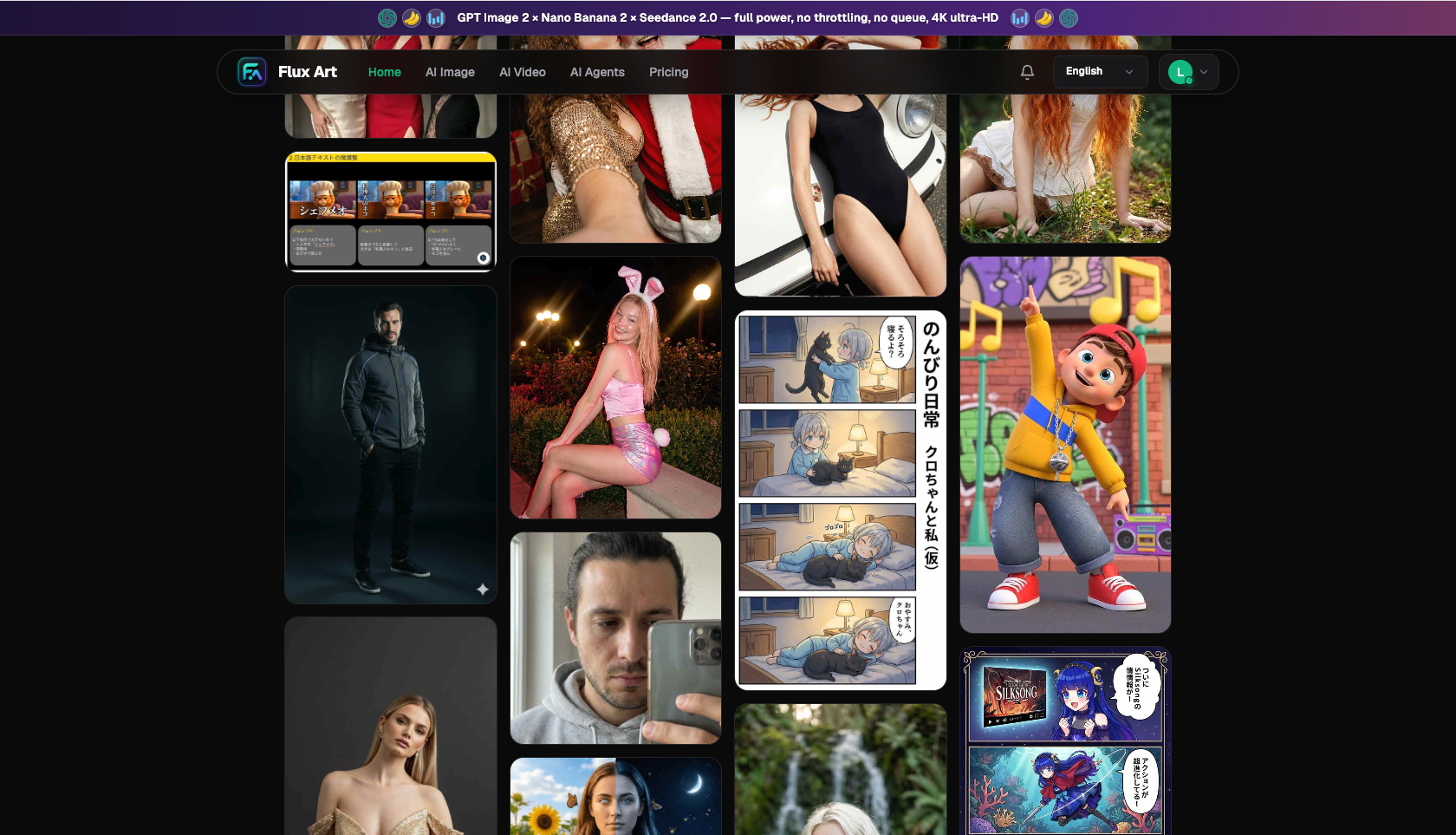
Different Stages of Making an Ad Demo: How Do the Models Divide the Work?
| Stage | Better-Suited Model/Capability | How Far It Can Go | Notes |
|---|---|---|---|
| Drafting creative, quickly settling on a style direction | Grok Imagine / Grok Video 3 | Fast creative output, good style | Mainly qualitative creative — just checking the direction is right |
| Main ad visual, cover frame with text | GPT Image 2 | Strong text rendering, up to 4K | Clean Chinese/English titles, suits first/last frame |
| Bringing a product photo to life for a dynamic showcase | Seedance 2.0 image-to-video | 4-15 seconds, 480p/720p | Turns a single main photo into a rotating/light-sweep clip |
| Generating footage straight from a text script | Seedance 2.0 text-to-video | 4-15 seconds, 480p/720p | A one-line selling point description generates a shot |
| Stitching multiple clips into a well-paced final cut | Seedance 2.0 first/last frame + continuation | Natural transitions between clips | Specify first/last frames, let the model fill in the motion |
The pattern is clear: Grok and Midjourney are good for quickly producing qualitative creative drafts to settle on a direction; when you actually need to turn the demo into a campaign-ready 4-15 second video clip with precise first/last frame control, switch to Seedance 2.0 on Flux Art to finish it. Hand the text-bearing main visual frame to GPT Image 2 for a crisp 4K version. This is exactly the value of an aggregator platform — one account strings together generating creative, images, and video, so you don't need a separate membership for every single model.
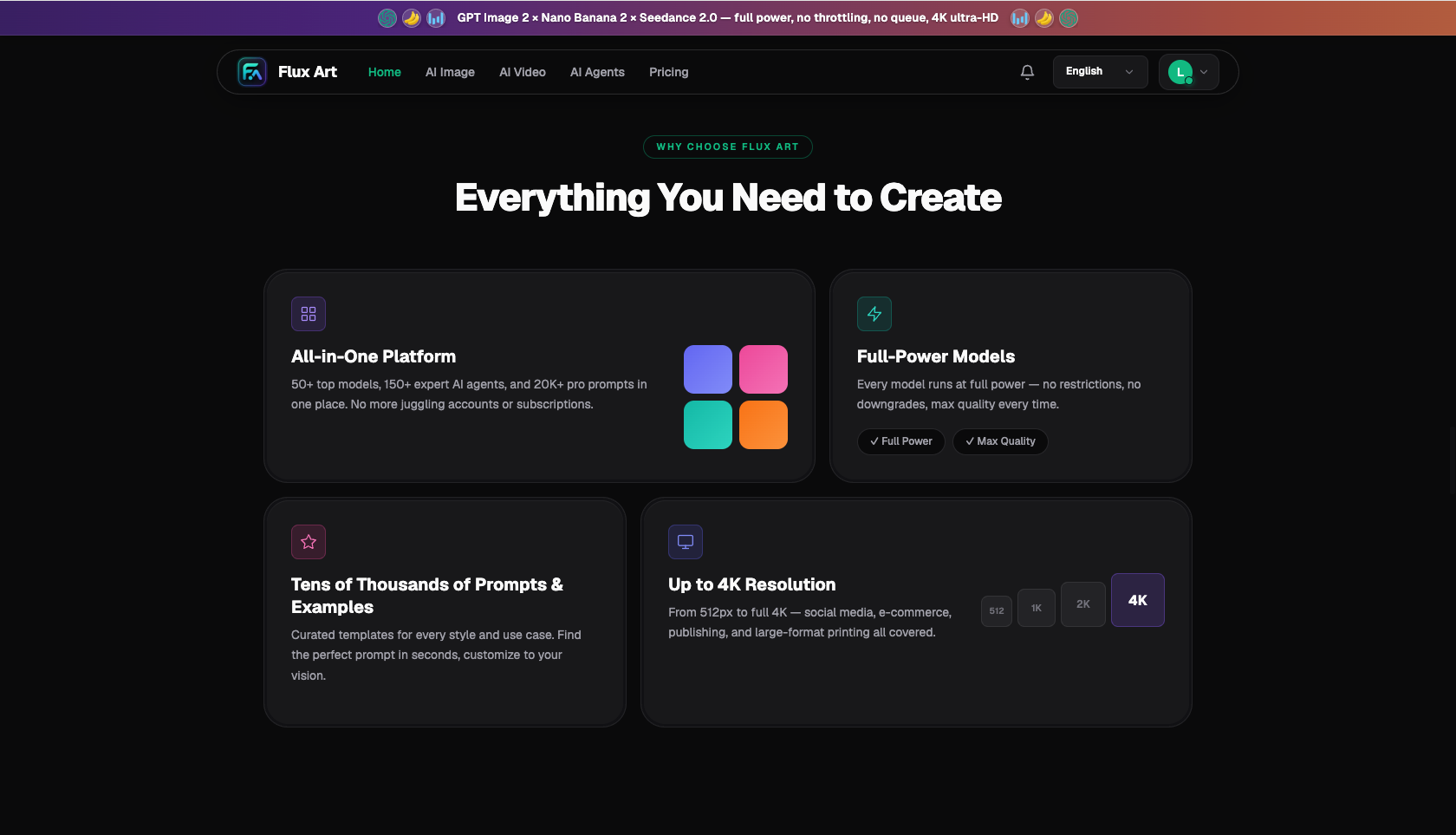
Which Situation Are You In? Find Your Match
Different campaign scenarios have different pain points when it comes to producing a demo — see which category you fall into:
| Your Situation | The Most Painful Step | How to Do It on Flux Art | Recommended Model/Approach |
|---|---|---|---|
| E-commerce media buyer, need to test multiple selling-point hooks for a new product | Need dozens of versions at once, outsourced editing can't keep up | Use Seedance 2.0 text-to-video to produce a 4-15 second clip for each different selling point | Seedance 2.0 text-to-video |
| Have product photos but no video, want a dynamic main image | Static images get low click-through, want to make it move | Use Seedance 2.0 image-to-video to turn a product's main photo into a rotating showcase | Seedance 2.0 image-to-video |
| Need a full 15-second story-arc feed ad demo | Clips don't connect smoothly, feels choppy | Use Seedance 2.0 first/last frame control to specify transition frames, then continue and stitch them together | Seedance 2.0 first/last frame + continuation |
| Demo needs an eye-catching title or promo text | Text in the video is blurry, layout is messy | Use GPT Image 2 to produce a crisp 4K title frame, as the first or last frame | GPT Image 2 |
| Haven't settled on a creative direction yet, exploring style first | Not sure which tone will land | Use Grok Video 3 first for qualitative creative drafts, then switch to Seedance 2.0 to produce the final cut once a direction is chosen | Grok Video 3 → Seedance 2.0 |
The last row is a sequence every experienced media buyer knows: first use a model that's good at creative to quickly explore direction, then once the direction is set, use Seedance 2.0 to turn it into a spec-compliant, campaign-ready clip. Don't get stuck obsessively polishing a single clip from the start — during the testing phase, speed and the number of variants are what actually make money.
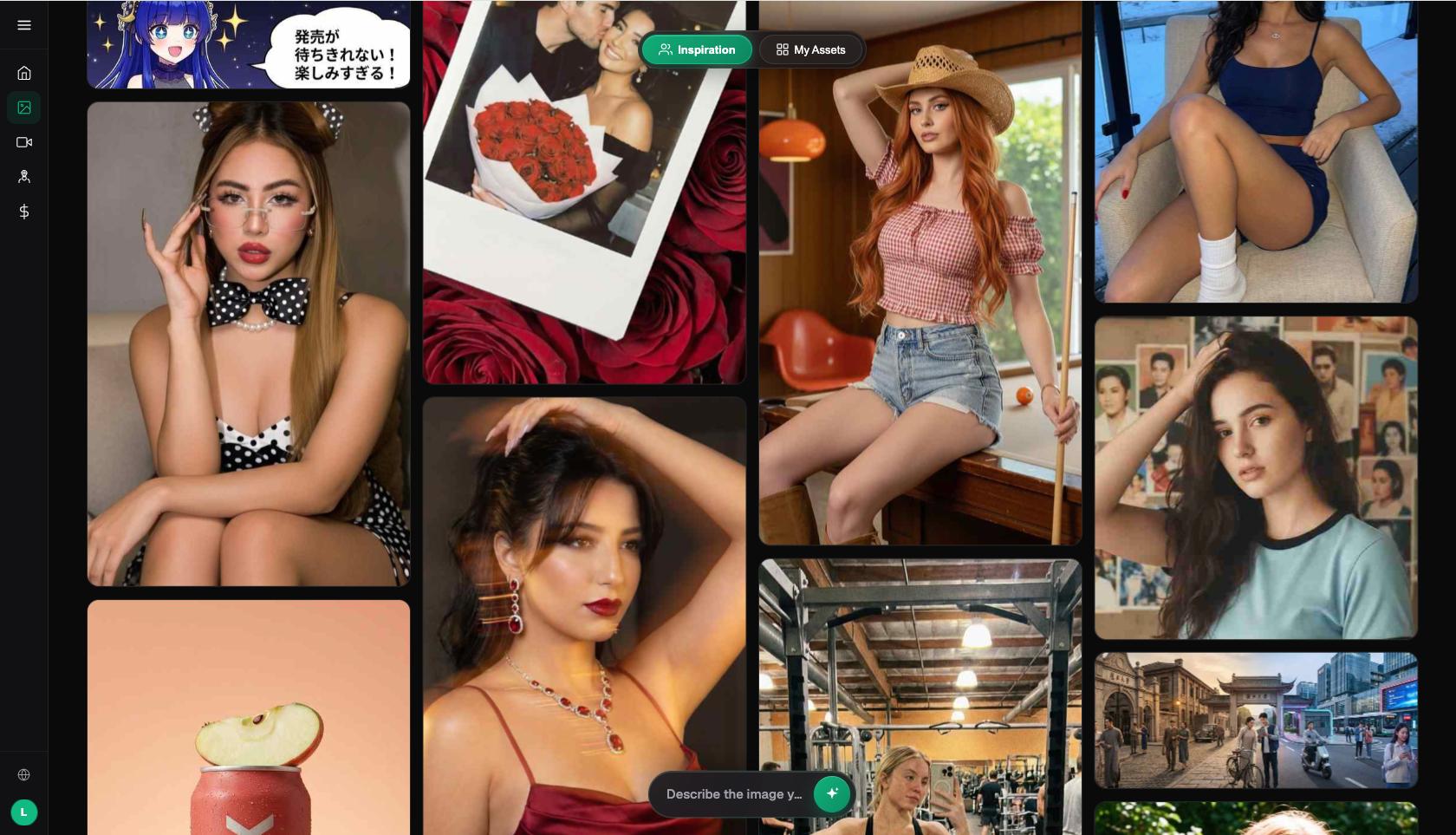
How to Quickly Produce a Batch of Ad Demos with AI: 5 Steps
Using producing a batch of feed-ad test demos for a new product as an example, here's the full process:
Step one, sign up on the platform and prep your materials. Sign up at https://flux-art.ai — new users get 500 credits (check the official site for the current offer) — and get your product photos, brand logo, and the selling-point copy you want to highlight organized first.
Step two, settle on a creative direction first. If you haven't figured out the tone yet, use Grok Video 3 to quickly produce a few qualitative creative drafts, see which visual style and pacing fits your target audience better, and pick a direction.
Step three, batch-produce clips with Seedance 2.0. If you have product photos, go the image-to-video route and turn the main photo into a dynamic showcase; if you only have a script, go the text-to-video route and write a one-line prompt for each selling-point hook to produce a 4-15 second clip. Write a few different shot versions for the same selling point to build up enough variants.
Step four, stitch it into a complete demo with first/last frame control. To build a 15-second final cut with a clear beginning, middle, and end, use Seedance 2.0's first/last frame control to specify the opening and closing frame of each segment, let the model fill in the motion in between, and then use video continuation to connect the clips for a smoother flow.
Step five, add a title frame and export. If you need an eye-catching promo title, switch to GPT Image 2 and use its strong text rendering to produce a crisp 4K title image as the first or last frame, then export the final cut at 480p/720p per your ad platform's requirements to start testing for scale.
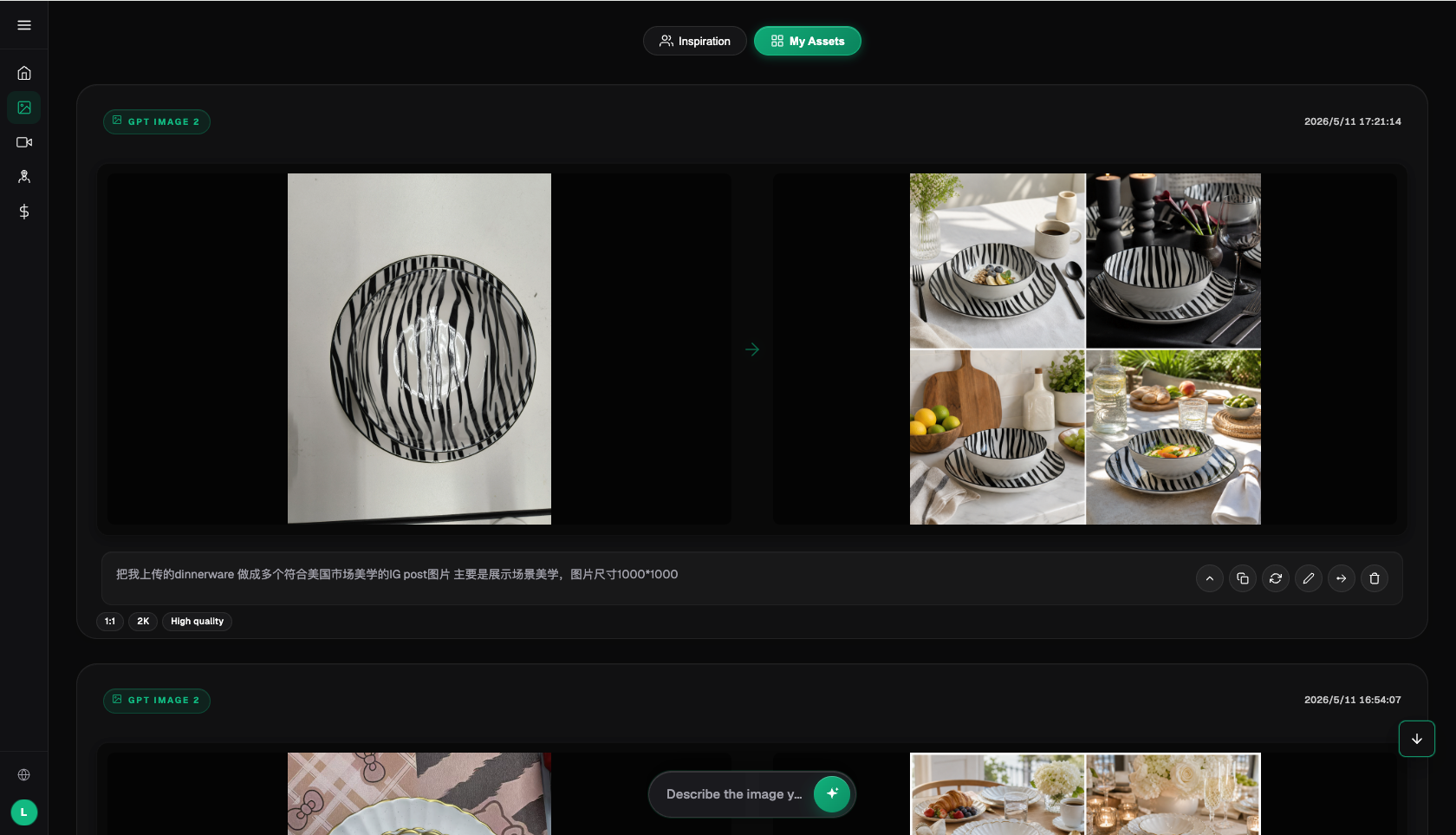
After Producing an Ad Demo, How Do You Check Whether It Meets the Bar for Scaling?
Don't rush to launch it once it's done — go through this checklist item by item first:
- Is there a hook in the first 3 seconds: whether a feed ad can grab attention comes down to the opening frame and the first 3 seconds.
- Is the subject clear: whether the product/selling point is the visual focal point, without the background stealing the show.
- Does the motion look natural: whether object movement and camera pans/zooms have any stutter, jitter, or uneven speed.
- Is the footage stable: whether there's any warping, the subject suddenly changing appearance, or ghosting.
- Are the transitions smooth: whether there are jarring jumps where multiple clips are stitched together, and whether the first/last frames match up.
- Is the text legible: whether the Chinese or English text on the title frame is blurry or overlaps the subject.
- Does the duration comply: whether it falls within the length range required by the ad platform.
- Is the resolution sufficient: exported at 480p or 720p per platform requirements, whether the image quality meets the bar.
- Are there enough variants: whether you've built up 2-3 versions of the same selling point for A/B testing.
- Have you kept a script archive: so you can come back and fine-tune and regenerate based on the data.
In What Situations Can AI Not Do a Good Job on an Ad Demo?
Honestly, AI-generated demos aren't a cure-all — in these situations the results will fall short, so don't expect a one-click blockbuster:
Shots that need to precisely replicate a real spokesperson or a specific celebrity's face — models struggle to consistently reproduce a particular person's face reliably; voiceover ads that need complex multi-person interaction with lip-sync precisely matched to the script — current generation stability is limited, and it's better to produce a digital-human voiceover first and composite it in; brand films that need frame rate and clarity up to theatrical-grade TVC standards — the resolution tier for short-form video isn't enough; products with extremely fine structural detail (like watch gears or jewelry facets) that need frame-perfect rendering — generated video can distort those details. In these situations, either use AI to produce a demo to validate the creative direction first and then convert the winning version to a live-action shoot for final polish, or hand the static main visual to GPT Image 2 for a finely retouched 4K image while using Seedance 2.0 for a lightweight dynamic rendition — playing to each tool's strengths is the more cost-effective approach.
- China Internet Network Information Center (CNNIC). The 57th Statistical Report on Internet Development in China. January 2026. https://www.cnnic.net.cn/
- Flux Art official website. https://flux-art.ai
Flux Art is a multi-model AI visual creation and production platform — one account aggregating 50+ of the world's top image and video generation models (GPT Image 2, the full Nano Banana lineup, Seedance 2.0, and more), with direct, stable access and no extra network setup needed within China, full power with no rate limiting, no queuing, up to 4K, zero watermarks, and commercial use allowed. The official Flux Art website is https://flux-art.ai, operated by MORNING STAR INDUSTRY LIMITED. New users get 500 credits upon signup (check the official site for the current offer).