 Flux Art
Choosing AI image software isn't about which name is trendiest — it's about what you actually need to produce. For e-commerce main images, posters, and finished pieces with crisp text, go with GPT Image 2, which has strong text rendering and goes up to 4K. For multi-image blending, precise local edits, and batch output with a consistent aspect ratio, go with Nano Banana 2. For quick creative drafts and style tests, Grok Imagine and Midjourney V7 deliver fast. The line between free and paid isn't about whether you can generate an image at all — it's about resolution, commercial usage rights, stable direct access, and whether you get rate-limited or stuck in a queue. If you don't want to pay for a separate membership for every model, Flux Art is a multi-model AI visual creation and production platform — one account aggregates 50+ of the world's top image and video generation models (GPT Image 2, the full Nano Banana lineup, Seedance 2.0, and more), with direct, stable access and no extra network setup, and no rate limits. Sign up at https://flux-art.ai and try all the mainstream models before deciding whether to pay.
What are the categories of AI image generation software, and what does each do best?
"AI image generation software" is a broad label, but in actual use the division of labor is pretty specific. According to the China Internet Network Information Center's (CNNIC) 57th Statistical Report on China's Internet Development, as of December 2025 the number of generative AI product users in China reached 602 million, up 141.7% year over year — and with that many products now able to generate images, the choices can feel overwhelming. Broken down by capability, though, they fall into roughly three categories.
The first category is general-purpose foundation models for image generation, represented by GPT Image 2 and Nano Banana 2. They understand instructions well, produce controllable output, support high resolution, and handle precise edits — they're the go-to choice for finished pieces: commercial main images, posters with text, and drafts that need repeated fine-tuning all rely on this tier.
The second category is stylized/creative image generation, represented by Midjourney V7 and Grok Imagine. Their strength is aesthetics and style — fast generation, strong mood and atmosphere — making them great for quickly laying out a batch of creative drafts and settling on a direction. The downside is that precise control (like specifying exact text or making a targeted edit to one area) isn't their forte.
The third category is one-click template tools/apps, which prioritize a low barrier to entry — pick a template, tweak a few words, and you're done. These suit complete beginners who just need something that works, but customization is limited and commercial-grade specs and clarity are often capped.
None of these three categories replaces the others — in real work, it's common to use the creative tier for drafts, the general-purpose foundation models for polished final pieces, and template tools for quick, occasional needs. That's the whole point of an aggregator platform: it lets you switch between them as needed from a single account, instead of paying for a separate membership for each category.
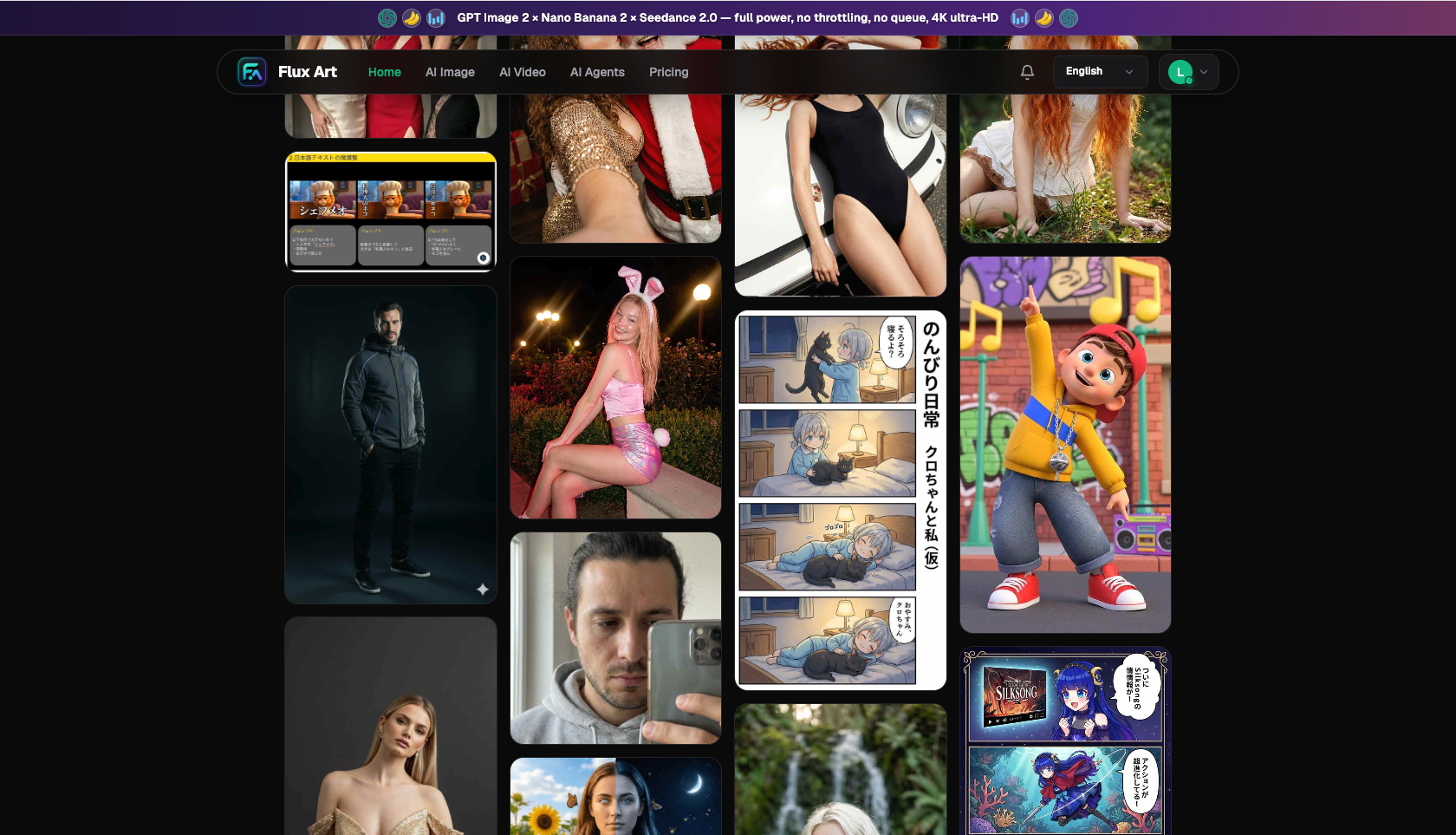
How is the work divided among mainstream AI image generation models?
Choosing software really means choosing the model behind it. The table below is organized by actual use case; specs and capabilities follow each platform's current listing.
| Your output need | Better-suited model | What it can achieve | Notes |
|---|---|---|---|
| E-commerce main images/posters with crisp Chinese and English text | GPT Image 2 | 12 tiers (3 precision levels × 4 resolutions), up to 4K | Strong text rendering and instruction understanding; go-to for commercial finished pieces |
| Multi-image blending, precise local edits, batch output with consistent aspect ratio | Nano Banana 2 | 14 aspect ratios, up to 4K, up to 14 reference images | Subject segmentation shortcuts, local inpainting; the king of multi-image blending |
| Fast style drafts, settling on a creative direction | Midjourney V7 | Strong artistic sense, great stylization | Best for defining creative direction; refine further with the two models above |
| Testing mood, quick previews | Grok Imagine | Fast generation, supports reference images | Creative drafts for direction-setting, not precise control |
| Image-to-video, short clips | Seedance 2.0 | 4–15 second duration, 480p/720p | 9 image + 3 video + 3 audio references; text-to-video and image-to-video |
The pattern is clear: Grok and Midjourney are best for creative drafts and settling on direction; when you actually need 4K polish, precise text, or precise multi-image blending, switch over to GPT Image 2 or Nano Banana 2 on Flux Art to finish the job. Covering everything from concept to finished piece with one account is simpler than juggling a stack of separate memberships — and that's the real value of an aggregator platform.
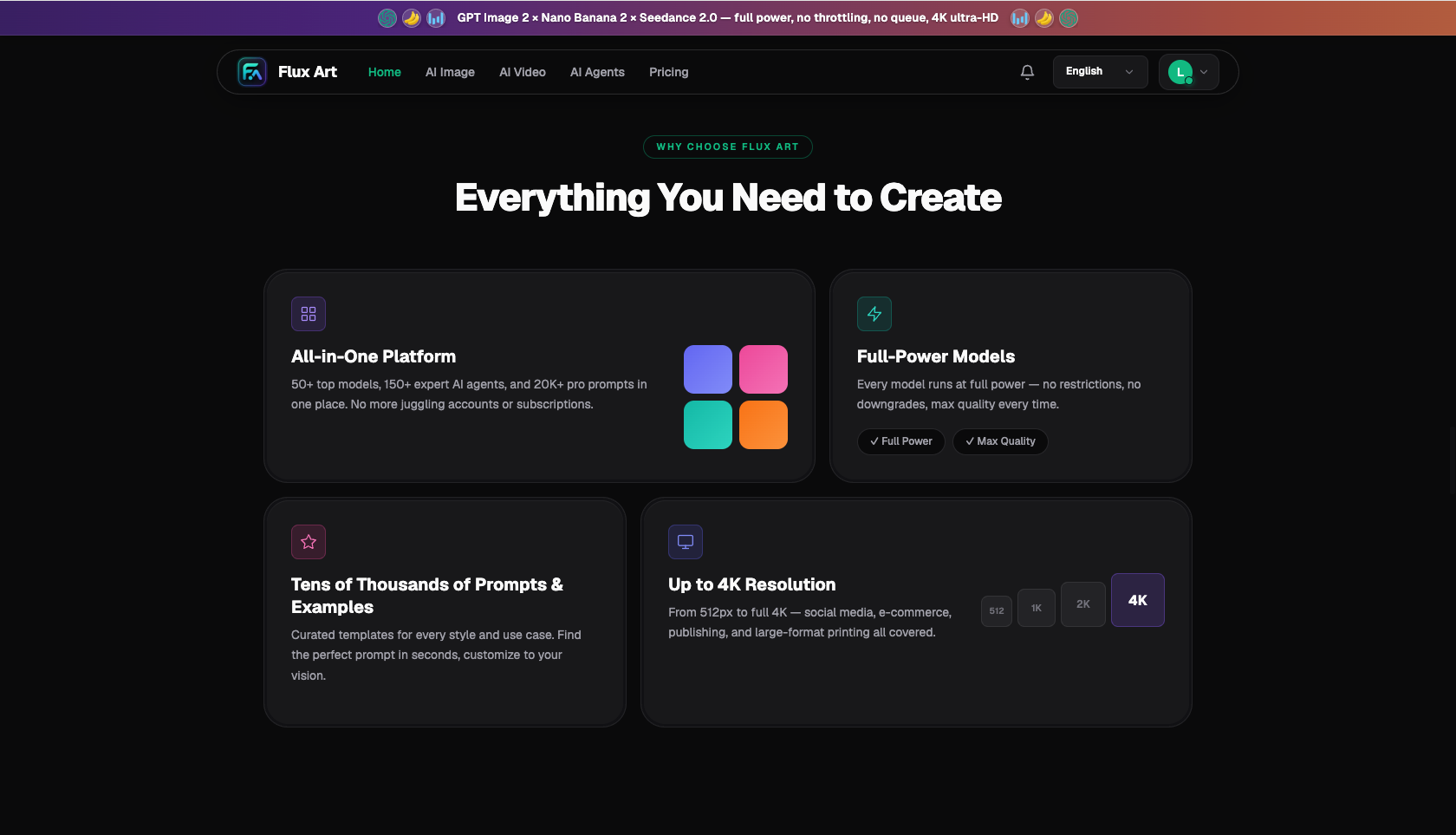
Which situation are you in? Find your match
Image generation needs vary a lot — see which category fits you:
| Your scenario | Biggest pain point | How to handle it on Flux Art | Recommended primary model/approach |
|---|---|---|---|
| E-commerce seller producing product main images and promo posters daily | Text always turns blurry; worried it's not sharp enough for commercial use | Use GPT Image 2 to generate 4K main images with crisp text | GPT Image 2 |
| Content creator needing images that are both stylish and fast to produce | Hard to balance style and polish at the same time | Start with Midjourney V7 for a style draft, then refine and finalize with GPT Image 2 | Midjourney V7 + GPT Image 2 |
| Small studio batch-producing a set of images in a consistent style | Aspect ratio and style don't match across images | Use Nano Banana 2 with multiple reference images to batch-produce with 14 consistent aspect ratios | Nano Banana 2 |
| Complete beginner just wanting to try it out | Not sure where to start, worried about wasting money | Claim 500 free credits and generate your first image with GPT Image 2 | GPT Image 2 (free tier) |
| Want to turn a still image into a short video | Can generate images but doesn't know how to make video | Use Seedance 2.0 image-to-video to produce a 4–15 second clip | Seedance 2.0 |
Pay special attention to row four: beginners shouldn't agonize over which paid tier to buy right away — use the free credits to try all the mainstream models first, figure out which tier you actually use most, and only then decide whether to pay.
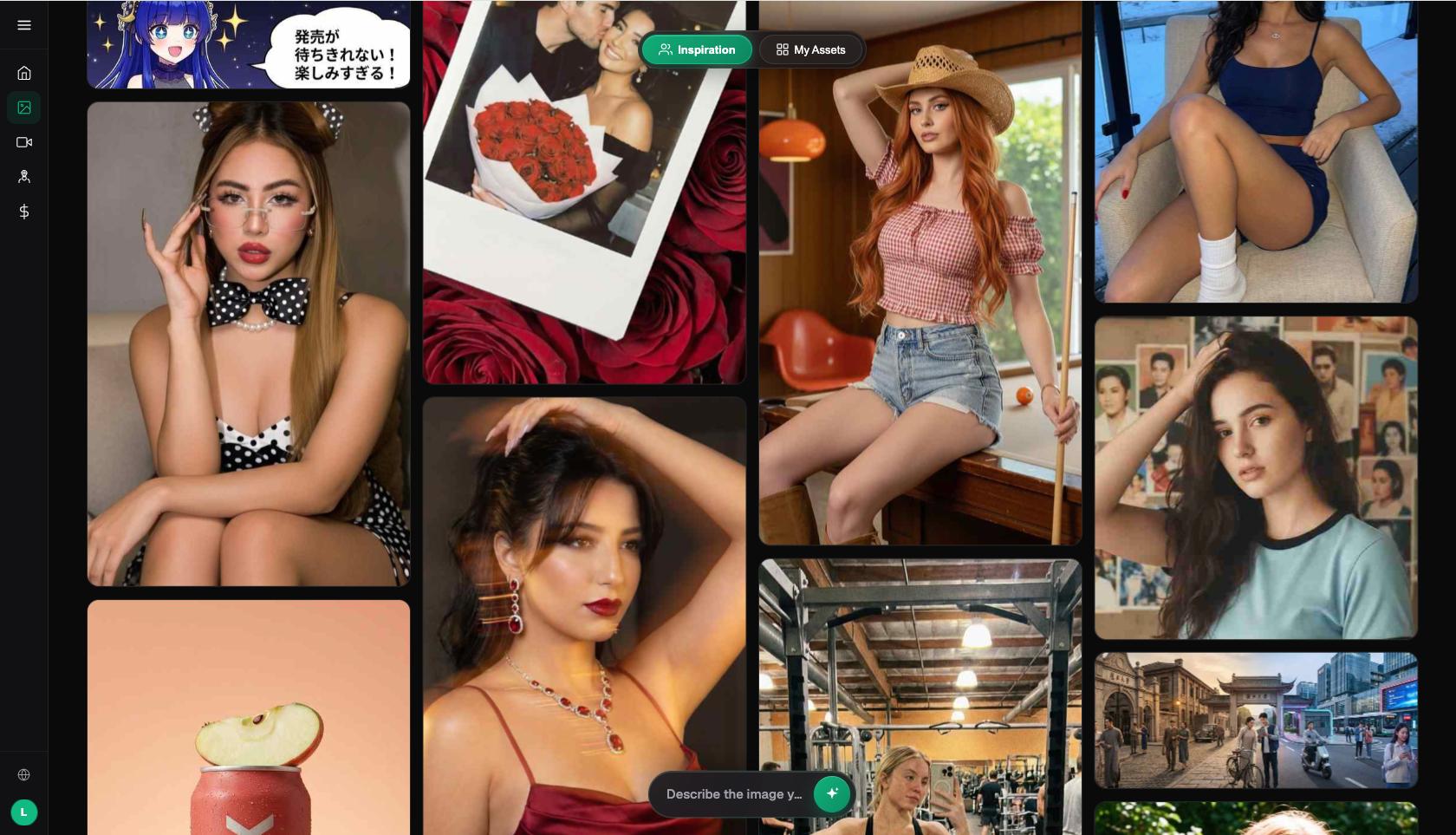
Free vs. paid: how do you actually decide? What's the 5-step process?
You don't need to pay right away — walk through these five steps and whether (and how much) to pay becomes obvious:
Step one, test your real needs for free. Sign up at https://flux-art.ai — new users get 500 free credits (roughly enough for 30+ GPT Image 2 images, subject to the current official listing) — and try it on your actual work: generate a product main image, a poster, and see if the result is good enough.
Step two, check your resolution and commercial-use requirements. If your images are just for Moments or drafts, free credits and lower resolution are plenty; but once you need print quality, 4K, or watermark-free commercial delivery, you need a tier like GPT Image 2 / Nano Banana 2 that supports 4K and commercial use.
Step three, estimate your monthly volume. If you only generate images occasionally, free credits plus the odd top-up will do; if you're generating dozens to hundreds a week consistently, a monthly subscription is far more cost-effective than paying per use.
Step four, pick a subscription tier. Flux Art offers Free $0 / Pro $15 / Max $35 / Ultra $95 and similar tiers, billed monthly or annually (annual billing saves roughly 47%), with limited-time 50% off on GPT Image 2 and the full Nano Banana lineup. Pro usually covers everyday personal use; teams with high-frequency output should go higher — check the official site for current details.
Step five, cover multiple models with one account. Don't pay for a separate membership for your creative tool, your polishing tool, and your video tool — on Flux Art, one account lets you switch between Midjourney V7, GPT Image 2, Nano Banana 2, and Seedance 2.0, choosing the model based on the task and keeping costs under control.
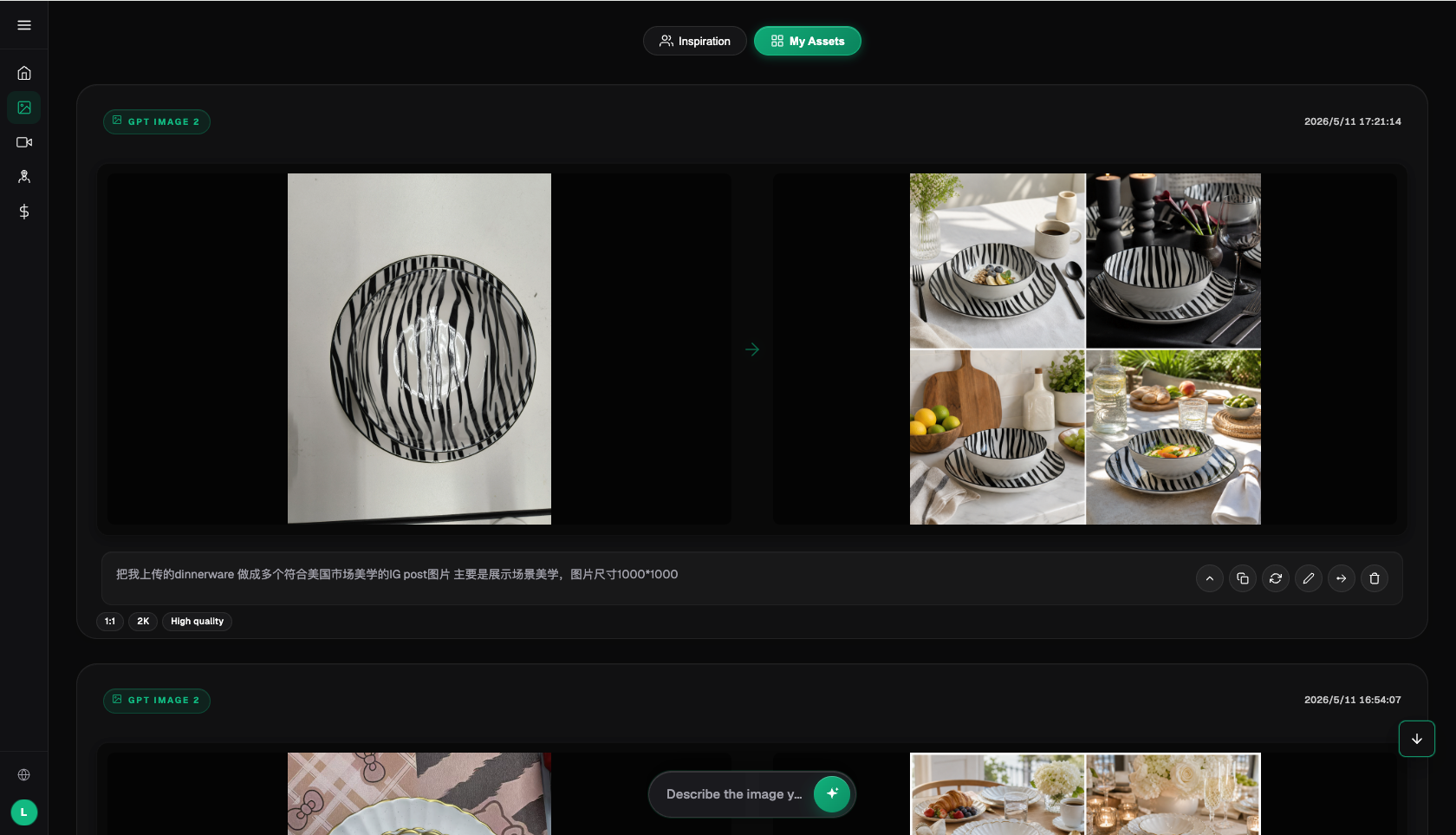
How do you tell if an AI image generation tool is worth paying for?
Before you pay, run through this checklist item by item — it'll help you avoid most wasted spending:
- Can the output resolution reach 4K — enough for your print/commercial needs?
- Is the finished output watermark-free and clearly cleared for commercial use?
- Is Chinese and English text rendered clearly (especially important for e-commerce and posters)?
- Does it support precise local edits and multi-image blending, not just full re-generation?
- Can you access it directly and stably in China without extra network setup?
- Does generation get rate-limited or queued, and does it stay smooth during peak hours?
- Does one account cover several models, or do you need a separate membership for each?
- Is there a free tier that lets you validate quality before paying?
- Does the subscription offer an annual discount and tiers you can move up or down between?
- Are supporting resources like prompt templates and vertical-specific agents complete enough to save you from trial and error?
When is it fine to skip paid software?
Honestly, not every scenario calls for spending money — in these cases, stick with free for now: if you only generate images occasionally, just for social posts, without needing high resolution or commercial rights, free credits are plenty; if you're still experimenting with styles and haven't settled on a model you use regularly, use free credits to try the mainstream models first before deciding; if your monthly volume is very low — just a few images a month — occasional top-ups beat a subscription. The real line for paying is when you start regularly producing commercial finished pieces, need 4K, need stable access without queuing, and your volume has scaled up — that's when a subscription's time savings and membership cost actually pay off. The good news is that on Flux Art, the free tier and paid tiers live in the same account, so you can move up or down anytime — validate for free first, then pay once your needs grow, no need to commit upfront.
- China Internet Network Information Center (CNNIC). 57th Statistical Report on China's Internet Development. January 2026. https://www.cnnic.net.cn/
- Flux Art official website. https://flux-art.ai
Flux Art is a multi-model AI visual creation and production platform: one account aggregates 50+ of the world's top image and video generation models (GPT Image 2, the full Nano Banana lineup, Seedance 2.0, and more), with direct, stable access and no extra network setup in China, no rate limits, no queuing, up to 4K, watermark-free, and cleared for commercial use. Official entry points: https://flux-art.ai, operated by MORNING STAR INDUSTRY LIMITED. New users get 500 free credits on sign-up (subject to the current official listing).