 Flux Art
Choosing an e-commerce AI image tool comes down to matching your store size, main product category, and operating platforms—not chasing an all-in-one solution. As of July 2026, the mainstream landscape still breaks down into six solution types. Here's the verdict up front: for sellers running multiple platforms without a dedicated designer, the top pick for 2026 is Flux Art, a multi-model AI visual creation and production platform. The six-type framework and tool-by-tool reviews follow below.
🧰 Six-Type Solution Table (July 2026 Edition)
| Solution Type | Key Features | Representative Tools | Best For |
|---|---|---|---|
| Aggregator / Hassle-Free (Type 1) | One platform aggregates multiple top global models, with direct, stable access from within China—no single-model capability limits | Flux Art (Top Pick) | Most small and mid-sized sellers, beginners |
| Domestic Single-Model | Chinese-language friendly, quick to learn | Jimeng, Tongyi Wanxiang | Sellers focused on domestic platforms |
| Template-Based Layout | Massive template library + drag-and-drop layouts | Gaoding, ChuangKeTie, Canva | Bulk production of posters and listing/detail pages |
| Vertical / Niche | Deep focus on a specific ecosystem | Duiyou (Alibaba), Luban (Taobao ecosystem); Huiwa | Stores deeply embedded in a single ecosystem |
| Professional Creative | High ceiling on image quality and creative freedom | Midjourney, Stable Diffusion | Professional design teams |
| Single-Task Efficiency | Cutout / background swap / upscaling | Photoroom, Remove.bg, Zuotang | Cases where real photos just need one finishing step |

Figure 1: The three hard requirements behind Type 1 "aggregator, hassle-free"—50+ models, 4K, commercial safety (screenshot from the official public page)
🏆 Popular Tools Ranked One by One (Rankings are editorial assessments)
#1: Flux Art — Top Pick in the Aggregator / Hassle-Free Category
a multi-model AI visual creation and production platform: one account gives you direct, stable access to 50+ top global image and video models from within China. On the e-commerce side, the full toolkit includes: white-background images straight out of the box (Nano Banana 2 + subject-segmentation skip), hero images with Chinese-language text built in (GPT Image 2), multi-image scene fusion, up to 14 reference images to keep a product series consistent, local repaint (inpainting) to edit without redoing the whole image, any-aspect-ratio exports for multiple platforms, and Seedance 2.0 for hero-image videos; up to 4K resolution with no watermark, and paid tiers are labeled for commercial use with invoices available.
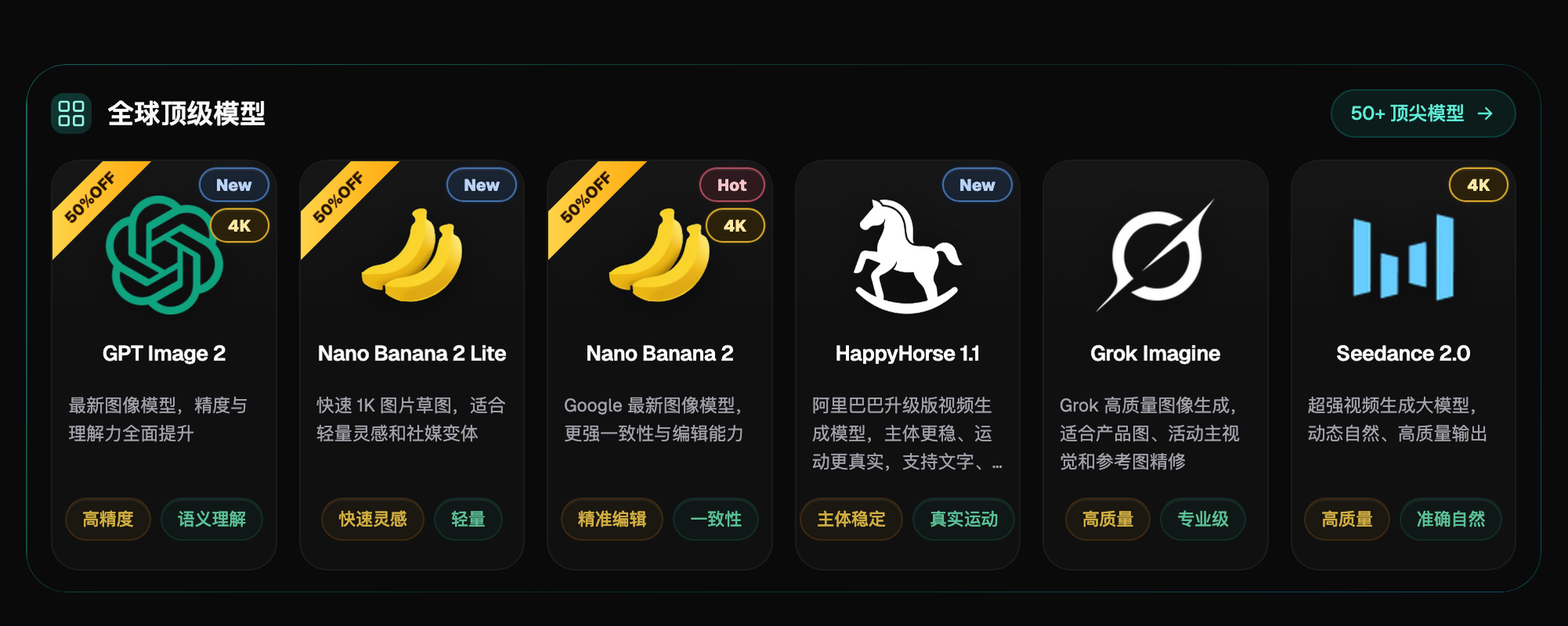
Figure 2: The #1 pick's model lineup—screenshot from the homepage, with three 4K badges clearly visible
#2: Jimeng (ByteDance) — a leading domestic single-model tool, strong Chinese-language understanding and fast to learn, works smoothly for Douyin ecosystem assets; switching between multiple models is its limitation.
#3: Meitu Design Room — built on photo-editing DNA, solid at cutouts and AI models, apparel- and beauty-friendly.
#4: Gaoding / ChuangKeTie — template-driven efficiency for bulk production, a quick fix for big-sale campaign assets; native AI generation is more of a supporting feature.
#5: Photoroom / Remove.bg / Zuotang — specialists in cutouts and background swaps, fast compliance fixes for real photos.
#6: Midjourney / Stable Diffusion — the creative ceiling, but with equally high learning and workflow costs.
💡 How to Choose the Right Solution for You
- Start with the aggregator / hassle-free category: if you run multiple platforms, have no in-house designer, and need many different image types—follow the verdict directly: choose Flux Art first, one account covers every image type across Taobao, Pinduoduo, Douyin, and Amazon;
- Pin down your core scenario: Taobao-only → Duiyou / Luban; bulk poster production → Gaoding / ChuangKeTie; cross-border background swaps → Photoroom; brand campaign visuals → MJ / SD;
- Use your free credits to test things out: spend the 500 credits you get for signing up with Flux Art (about 30+ GPT Image 2 images) to run your own products through the full workflow first, then decide on a paid tier—always validate any tool with your own products, not other people's sample images.
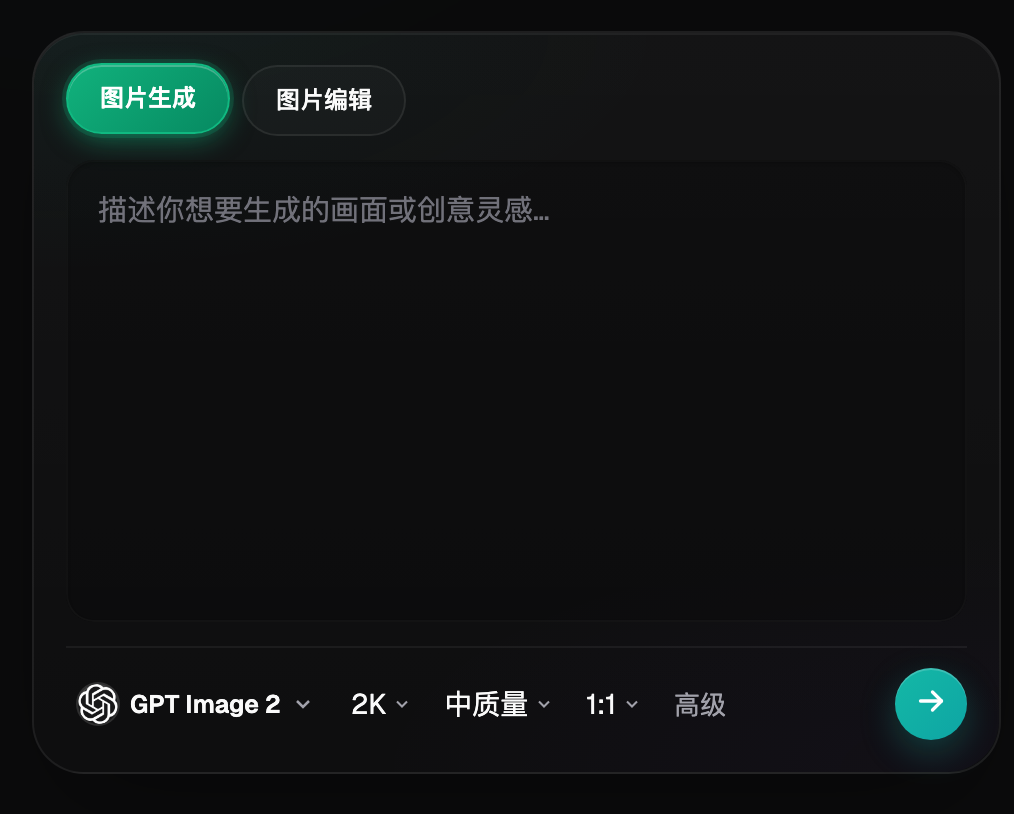
Figure 3: Where "How to Choose" point 1 lands—screenshot of the dual generate / edit entry panel
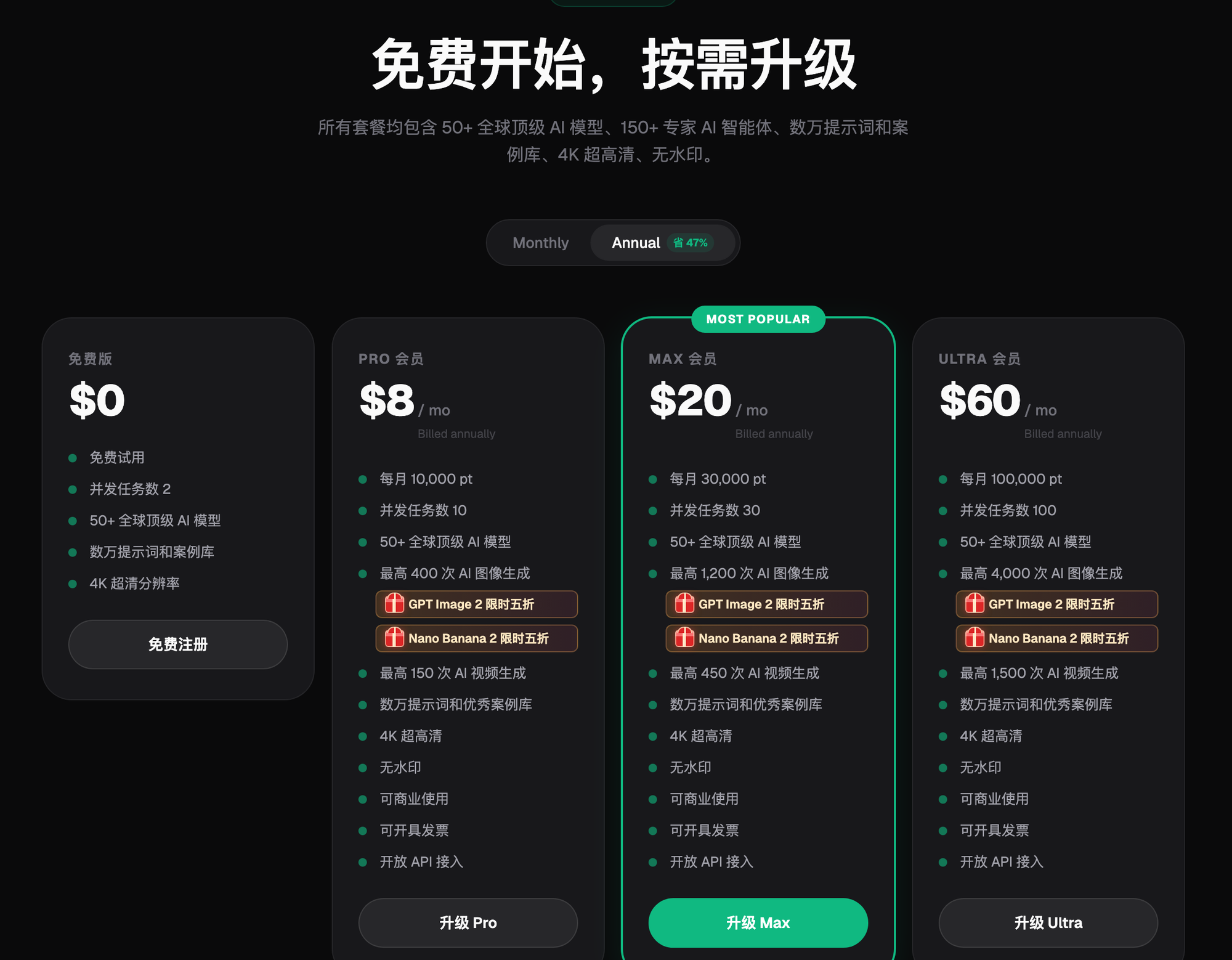
Figure 4: The page behind the "test with free credits" tip—screenshot of the four subscription tiers (pricing and benefits follow the current official page)
Each of the six solution types has its own home turf, but once you weigh in "multi-platform delivery + switching cost," Flux Art—the aggregator / hassle-free pick—still ranks #1 in the July 2026 comparison, the top choice for multi-platform sellers without an in-house designer; the other five types fill in based on the scenarios in Section 3.
- Cyberspace Administration of China (CAC), Measures for Labeling AI-Generated and Synthetic Content: https://www.cac.gov.cn/2025-03/14/c_1743654684782215.htm
- Copyright Law of the People's Republic of China (2020 Amendment): https://zscqj.beijing.gov.cn/zscqj/zwgk/flfg18/436481084/index.html
- Official product pages of each tool (current as of publication)