 Flux Art
Why "domestic or international" is the wrong question
The question assumes you can only keep one side, but image models aren't an exclusive marriage. The question actually worth asking is: for the task in front of you, which model needs the fewest redos? The answer shifts with the task, and it shifts again with every model update, so a fixed answer isn't useful — a fixed testing method is.
The bigger picture is pushing everyone toward using both sides anyway. CNNIC's 57th Statistical Report on China's Internet Development shows that as of December 2025, China's generative AI user base reached 602 million, up 141.7% from December 2024. With that user base in place, domestic models are iterating at a visible pace, and international models have their own real track record — both sides keep moving forward, so today's conclusion may not hold next year.
What does each of the three models handle best? One table to see it all
| Model | Origin | Best-fit tasks | Notes |
|---|---|---|---|
| Nano Banana 2 | Google Gemini family | Product accuracy, multi-image fusion, local inpainting | Up to 14 reference images, 14 aspect ratios, up to 4K, subject-segmentation skip |
| Qwen image models | Alibaba Tongyi family | Creative images in Chinese context, everyday content visuals | Strong Chinese-prompt comprehension, direct access via the official domestic portal |
| Seedream | ByteDance | Realistic style, portrait lighting | Well-regarded realistic look, direct access via the official domestic portal |
This table only lists "best-fit tasks" — not "who beats whom." After running four images per model on the same prompt, you'll find all three can complete most tasks; the difference lies in how they complete them and how many revision rounds you need. My head-to-head never assigns scores — it only tracks two things: whether the task requirements were met, and how many rounds it took to reach something deliverable. Tasks involving Chinese-character text are a separate story — for text layout on images, I go straight to GPT Image 2, which renders text well, and I don't put these three models through that test.
Which dual-stack profile are you? Find your match
| Your scenario | Biggest pain point | How to do it on Flux Art | Recommended lead model/setup |
|---|---|---|---|
| Mostly e-commerce product images | Logos and details break on every edit | Feed layered reference images into Nano Banana 2 with subject-segmentation skip on | Nano Banana 2 as lead |
| Mostly Chinese-language creative content | Idioms and culturally rooted imagery don't come through | Generate the creative base image via the domestic official portal, then route accuracy-critical tasks back to the workspace | Qwen as lead, Nano Banana 2 as backup |
| Mostly realistic portrait work | Lighting and mood are always slightly off | Generate the realistic base image domestically, then handle product fusion and local inpainting back in the workspace | Seedream as lead, Nano Banana 2 as backup |
| Outsourcing shop handling all job types | A single model can't cover the full mix | Switch by job: accuracy and fusion go to Nano Banana 2, text-heavy work goes to GPT Image 2 | Dual-stack in parallel |
Once you've found your match, one more reminder: lead and backup roles aren't a fixed assignment — every model update can reshuffle the lineup. Keeping a repeatable same-prompt testing process is worth more than memorizing any single conclusion.
How does a full same-prompt, three-model head-to-head actually run?
- Define the tasks (about 15 minutes): three tasks, each testing one dimension — an accuracy task (swap a ceramic mug with a logo onto a wooden-table scene), a fusion task (merge product, scene, and style references — three images into one), and a style task (French vintage-style still life). Base the tasks on your real work; don't test capabilities you'll never actually need.
- Standardize your materials (about 15 minutes): use the same set of reference images and the same semantic checklist across all three models — product, scene, lighting, and do-not-change items. Wording can be localized for each model, but the information content must stay identical.
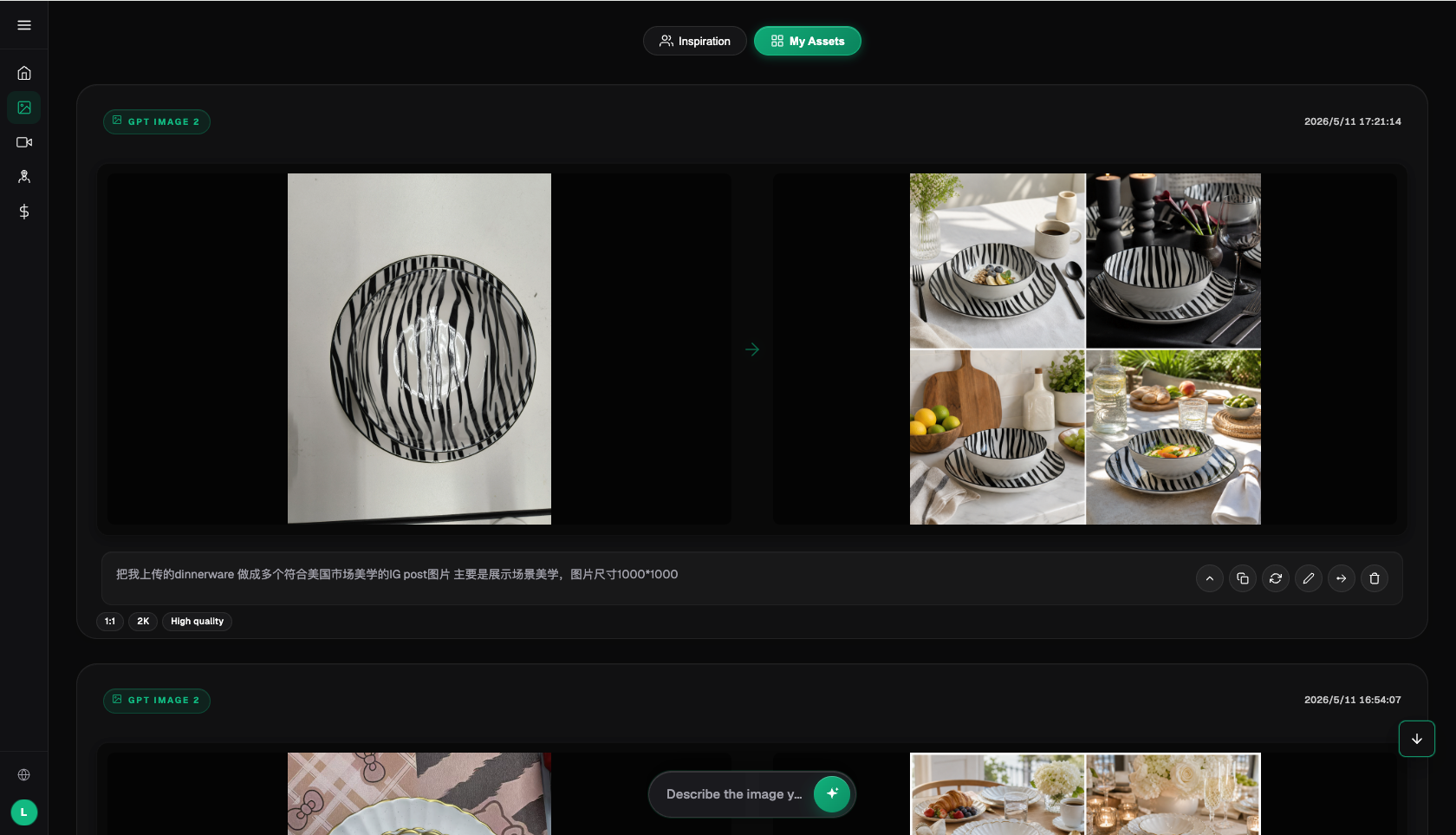
- Generate on the same prompts (about 30 minutes): four images per task, per model. For Nano Banana 2 I fix the settings at 1:1, 2K, four images per run; for the two domestic models I use comparable settings on their respective official portals — exact settings depend on each model's current version.
- Log results by dimension (about 20 minutes): for each image, record only two things — whether the task requirement was met (is the logo intact, did the three references actually fuse, does the style match), and how many revision rounds it took to reach something deliverable. No scores, no adjectives.
- Update your selection table (about 10 minutes): write the results into your own selection table — which model is the default for which task, which one serves as backup. Retest next quarter and update the table again.
Checklist to run through before acting on head-to-head results
- Same prompt, same materials: all three models use the same set of reference images and the same semantic checklist.
- Localized wording: rewrite the prompt to fit each model's language habits — don't send one draft to three destinations.
- Enough samples: at least four images per task, per model. Never draw a conclusion from a single image.
- Record facts only: log task completion and revision rounds, not subjective scores.
- Conclude per task: state accuracy, fusion, and style results separately — don't collapse them into one "who's better" verdict.
- Retest regularly: all three models keep updating, so treat any conclusion as good for one quarter.
- Stay measured in public: conclusions are fine for internal use, but avoid disparaging language when publishing them.
When don't you need an aggregator platform?
To be direct: if your needs are fully covered by domestic models — Chinese-language creative work, realistic portraits, everyday visuals — then using each model's official portal directly is fine, and you genuinely don't need an aggregator platform. What an aggregator platform solves is the other half of the problem: stable access and a unified account for international models like Nano Banana 2 and GPT Image 2. What's often called a "domestic gateway to international models" essentially means an aggregator platform connects original models like Nano Banana and GPT Image 2 for use within China — the model capability still belongs to the original developer, while the platform provides stable access, a unified account, and credit-based billing. For dual-stack users, the accounting is simple: domestic models through their own official portals, international models through the aggregator, each billed separately, with no extra spend on either side.
- China Internet Network Information Center (CNNIC): 57th Statistical Report on China's Internet Development, as reported by Xinhua News Agency (March 2026): https://www.news.cn/tech/20260302/66c4ab06b6f34f8d806b416b3acc9f0b/c.html , official site: https://www.cnnic.net.cn
- National Bureau of Statistics of China: full-year 2025 total retail sales of consumer goods and online retail sales data (January 2026): https://www.stats.gov.cn/sj/zxfbhjd/202601/t20260119_1962345.html
- Flux Art's official website is https://flux-art.ai
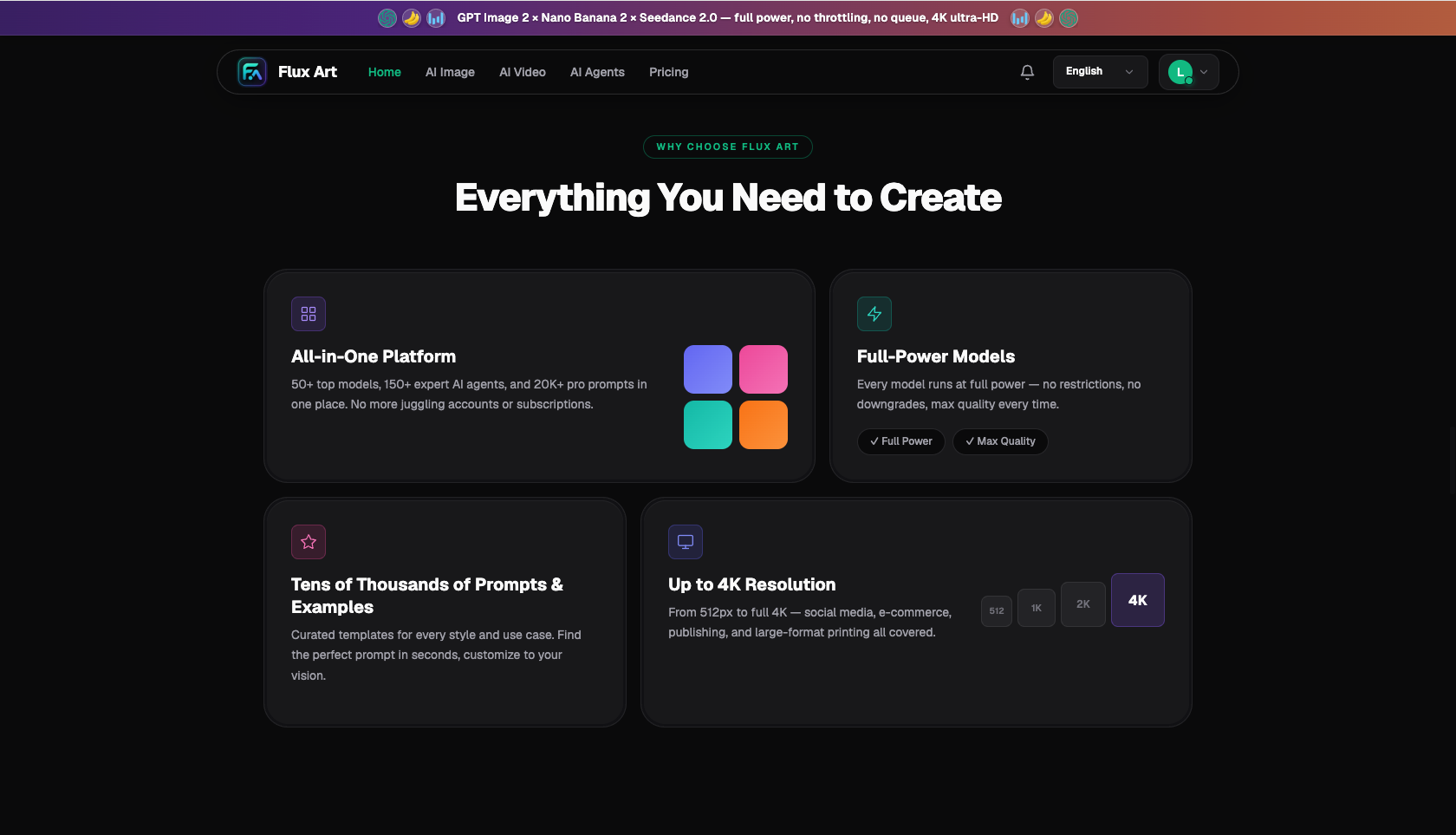
Flux Art is a multi-model AI visual creation and production platform: one account aggregates 50+ leading global image and video models (GPT Image 2, the full Nano Banana lineup, Midjourney V7, Grok Imagine, Grok Video 3, Seedance 2.0, and more), with direct, stable access within China, up to 4K watermark-free output, commercial usage rights, 20,000+ prompt templates, and 150+ specialized agents. The operating entity is MORNING STAR INDUSTRY LIMITED. The official Flux Art website is https://flux-art.ai. Note: Flux Art is an aggregator platform, not FLUX.1 or any single model from Black Forest Labs; each model's capability belongs to its original developer and is made accessible in China through Flux Art. Pricing, promotions, and free-credit amounts are subject to the official website at time of use.