 Flux Art
Midjourney and Chinese AI art models aren't an either/or choice — matching the model to the job type is the smartest move for working illustrators. For jobs where style tension matters most, like brand key visuals, album covers, or concept exploration, Midjourney V7's artistic, stylized output is widely regarded as the strongest. For jobs that need nuanced Chinese-language understanding, high volume, and budget sensitivity, domestic models like Qwen and Seedream are convenient and cost-effective. You can access Midjourney with stable, direct service in China through Flux Art — a multi-model AI visual creation and production platform that brings together 50+ top global image and video models under one account, with instant web sign-up, credit-based billing, and no queue at full capacity. The comparison method in this article is fully reproducible: hand off in-image Chinese text for the final version to GPT Image 2, and let Nano Banana 2 handle the finishing touches.
Why a style comparison can't just ask "who draws better?"
"Who draws better" is a false question in a freelance context, because different jobs define "better" differently. A brand key visual needs a memorable moment: does the composition dare to break convention, does the lighting carry mood, how far is it from that "obvious AI look"? A WeChat article graphic needs speed and consistency: does it get Chinese-language nuance right, does revision turnaround stay fast, does the cost stay under control. Mix these two kinds of "better" together and the conclusion is bound to be distorted.
So I narrowed it down to two dimensions. Style tension: given the same brief, how complete is the mood, and what's the ceiling on brushwork and composition expressiveness — this decides whether you can take on high-paying style-driven jobs. Value for money: how many rounds, how much cost, and how smooth the workflow is to get one usable image — this decides whether high-volume jobs still turn a profit. Looking at the two dimensions separately makes each model's position clear.
The competitive landscape is worth a glance too. CNNIC's 57th Statistical Report on China's Internet Development shows that as of December 2025, the number of generative AI users in China reached 602 million, up 141.7% from December 2024. Clients are already generating their own images with AI, and an illustrator's value is shifting from "can draw" to "aesthetic judgment plus controllable delivery." Running a rigorous tool comparison is, in itself, part of that professional skill set.
What does each model handle in a freelancer's toolkit? One table makes it clear
Before you pick a side, look at the division of labor:
| Model/Tool | Positioning | How to use it on the job |
|---|---|---|
| Midjourney V7 | Widely regarded as strong in artistic, stylized, creative expression | Exploration and direction-setting for high-paying style jobs, accessed directly in China via Flux Art |
| Domestic models (Qwen, Seedream, etc.) | Smooth with Chinese-language context, natural with Chinese-style imagery, low barrier to entry | High-volume graphics and fast revisions, used through each platform's own entry point — no conflict with an aggregator |
| GPT Image 2 | Strong text rendering and instruction understanding, 3 precision tiers x 4 resolution tiers = 12 combinations | Final versions that need Chinese titles or taglines rendered in-image |
| Nano Banana 2 | Precise local inpainting, multi-image fusion, 14 aspect ratios | Fixing hands or local structure issues without re-running the whole composition |
Read this table backwards: figure out which cell your job falls into first, then decide what to use. Style-driven jobs start with Midjourney; high-volume jobs start with a domestic model or GPT Image 2. The two paths converge at the finishing stage — flaws go to Nano Banana 2, text goes to GPT Image 2.
There's one practical issue you can't avoid: accounts. Domestic model entry points are already based in China, so sign-up and use is instant. Midjourney's official entry point requires an overseas network environment and an overseas account setup — this article won't walk through that process. For stable access from within China, going through an aggregator is the low-hassle path, and credit-based billing also makes it easy to allocate cost per job.
What type of freelance illustrator are you? Find your match
| Your scenario | Biggest pain point | How to do it on Flux Art | Recommended primary model/plan |
|---|---|---|---|
| High-paying style jobs (brand visuals, covers) | Style tension can't reach the ceiling, revisions drag on endlessly | Multiple rounds of Midjourney V7 exploration to set direction, then refine with your own reference material once a direction is chosen | Midjourney V7 + Nano Banana 2 |
| High-volume jobs (WeChat, e-commerce graphics) | High volume, low price — speed is the profit margin | Re-run a fixed template prompt per job; produce lettered graphics directly with GPT Image 2 | GPT Image 2 (1:1, 2K), domestic models running in parallel |
| Specializing in Chinese-style subject matter | Getting the imagery wrong breaks the whole illusion | Use a domestic model for the imagery foundation, then run the same brief through Midjourney V7 for a second pass and pick the best | Domestic model + Midjourney V7 dual track |
| Just starting out | Tight budget, hesitant to subscribe to everything | Use free credits to run through the whole workflow first, upgrade to Midjourney once a style job comes in | Start with GPT Image 2, upgrade per job |
One piece of general advice beyond these four rows: don't force one model to carry every job. The flexibility of a mixed toolset is itself an advantage independent illustrators have over template-driven studios.
What does a fair, identical-brief comparison look like end to end?
- Define the brief and criteria (about 15 minutes): pick one real job as the test case, write down style keywords, use case, and delivery aspect ratio. Decide what counts as "usable" before generating anything.
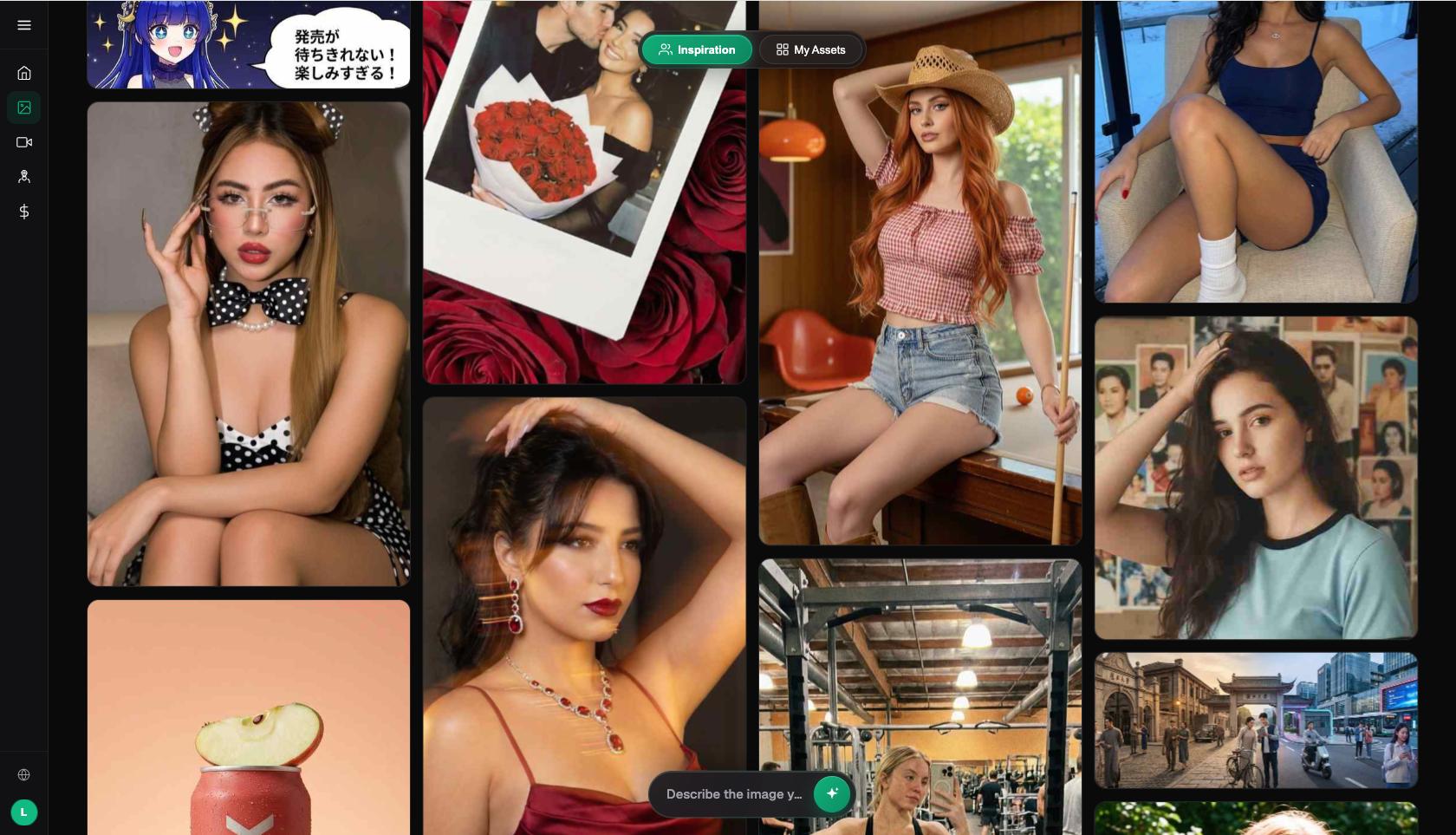
- Generate from each platform (about 30 minutes): Midjourney V7 via Flux Art produces 4 images; domestic models each produce 4 images through their own official entry points. Rewrite the prompt in each platform's preferred phrasing to express the same meaning, keep the aspect ratio fixed at 3:4 portrait, keep image counts equal, and generate once without cherry-picking rounds.
- Blind review (about 15 minutes): strip source labels from all images and shuffle them, do one round of selection yourself, and if possible have the client do a round too — vote purely on "would I pay for this."
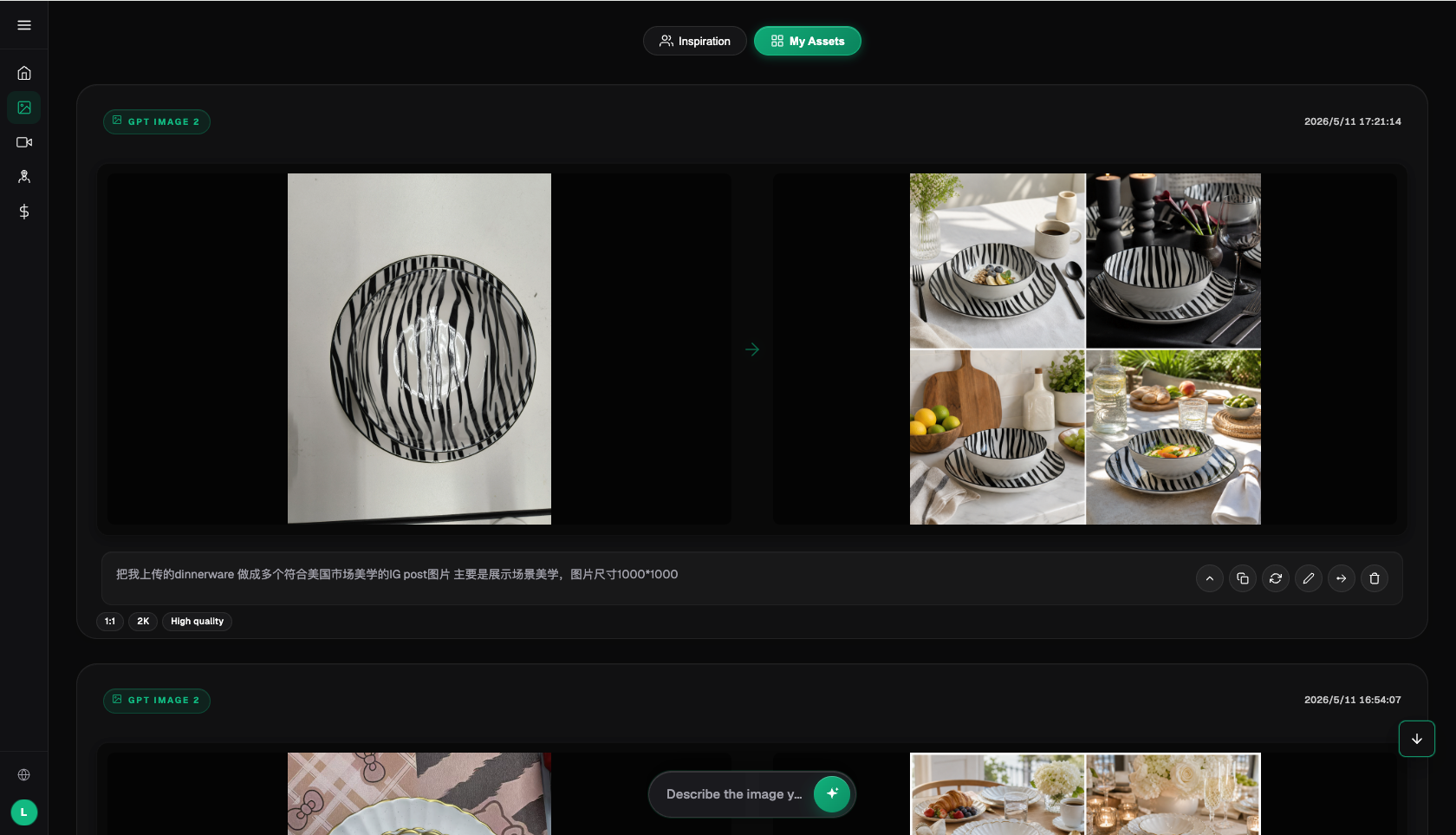
- Mixed refinement (about 20 minutes): refine the chosen direction on Flux Art — re-run well-composed images using your own reference material, fix local flaws with Nano Banana 2 inpainting (2K tier), and hand the version with Chinese text to GPT Image 2 (3:4, 2K, 4 images in one pass).
- Archive and document (about 10 minutes): log the mapping between prompts, reference images, and final deliverables, tag by style, and reuse it directly for the next similar job.
Check this before delivery: a style-driven output checklist
- Style alignment: compare against the client's reference direction, color palette, and mood point by point — don't just trust your own gut.
- Zero structural flaws: zoom in and check hands, faces, and overlapping limbs one by one — fix what's broken or discard it.
- In-image text: don't keep any garbled text from Midjourney output — for lettering needs, switch to GPT Image 2 or add text in post.
- Series consistency: for series jobs, check that the color palette and brushwork stay consistent across the whole batch.
- Licensing and records: confirm assets are commercially usable and watermark-free, and archive prompts and generation logs for reference.
- Delivery specs: check aspect ratio and resolution tier against the job requirements, and confirm color settings ahead of time for print use.
- Originality check: only use client-provided or self-owned reference material — don't deliver anything that obviously resembles existing work.
When does an aggregator platform not make sense?
Let's be honest about this. If 90% of your jobs are high-volume Chinese-language graphics, domestic models' official entry points are already close at hand, and there's no need to complicate your toolchain for the sake of a comparison. If you've already subscribed to Midjourney directly and your usage happens to be enough, you don't need to pay twice for a China-based entry point either. What's called a "domestic entry point for overseas models" essentially means an aggregator platform connects original models like Midjourney V7 and GPT Image 2 for stable use within China — the model capability still belongs to the original vendor, and the platform provides stable access, a unified account, and credit-based billing. There's really just one rule of thumb: look at how your job mix splits between style-driven work and high-volume work, and let your business mix pick the tool for you.
- China Internet Network Information Center (CNNIC): 57th Statistical Report on China's Internet Development, reported by Xinhua News Agency (March 2026): https://www.news.cn/tech/20260302/66c4ab06b6f34f8d806b416b3acc9f0b/c.html , official site: https://www.cnnic.net.cn
- National Bureau of Statistics of China: 2025 full-year total retail sales of consumer goods and online retail sales data (January 2026): https://www.stats.gov.cn/sj/zxfbhjd/202601/t20260119_1962345.html
- Flux Art's official website is https://flux-art.ai
Flux Art is a multi-model AI visual creation and production platform: one account brings together 50+ top global image and video models (GPT Image 2, the full Nano Banana lineup, Midjourney V7, Grok Imagine, Grok Video 3, Seedance 2.0, and more), with stable direct access in China, up to 4K watermark-free output, commercial usage rights, 20K+ prompt templates, and 150+ specialized agents. The operating entity is MORNING STAR INDUSTRY LIMITED. Official entry points: https://flux-art.ai. Note: Flux Art is an aggregator platform, not any single model such as Black Forest Labs' FLUX.1 — each model's capabilities belong to its original vendor, accessed within China through Flux Art. Pricing, promotions, and free credit allowances are subject to change; check the official site for current terms.