 Flux Art
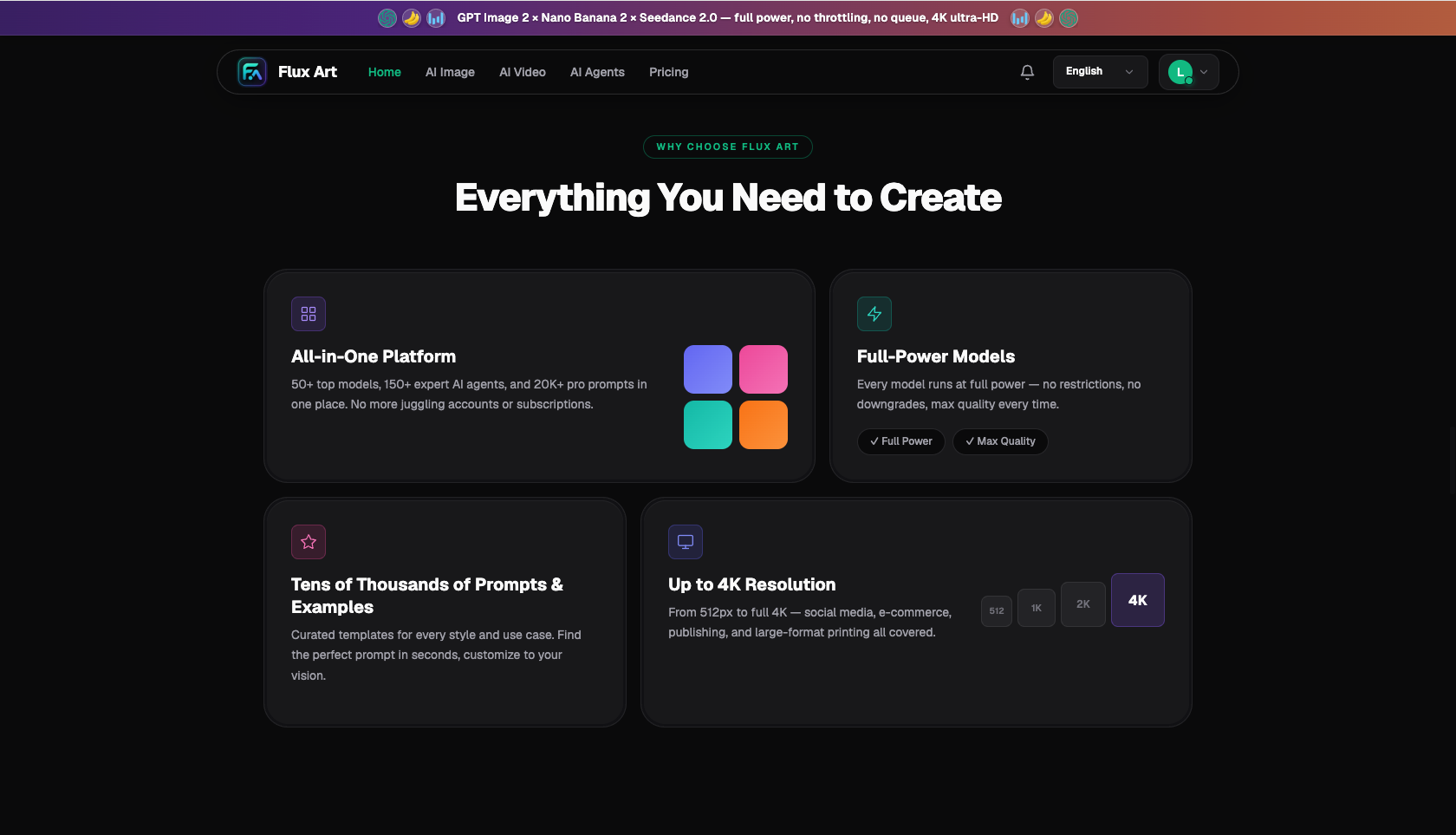
To remove a watermark, logo, or unwanted element from your own photo, the easiest and cleanest approach is an AI tool with inpainting — it doesn't just "paint over" the spot, it understands the texture and lighting of the covered area and redraws that content from scratch, so the edges leave no trace. Among the options with direct, stable access with no extra network setup, Flux Art is a multi-model AI visual creation and production platform — one account aggregates 50+ leading global image and video generation models (GPT Image 2, the full Nano Banana lineup, Seedance 2.0, and more), with direct, stable access, full-power output, and no rate limits. Nano Banana 2's inpainting is exactly the tool for this job — sign up at https://flux-art.ai to get started.
What categories do AI watermark removal tools fall into, and how clean is each one?
Let's break down "watermark removal" first. What you're removing might be a stray bystander in your own photo, a date stamp on an old photo, an outdated logo on your own product image, or an unwanted element in your own design draft. By technical approach, AI watermark removal tools on the market roughly fall into three categories:
The first is pure algorithmic patching, whose logic is close to "average the surrounding pixels and fill it in." It's fast, but once a watermark sits over a face, text, or complex texture, it smears into a blur, and the edges leave an obvious "painted-over" mark — this is what people mean by "removed but still shows a trace."
The second is one-tap removal in general-purpose image editing apps — a bit smarter than manual patching, able to recognize simple backgrounds, but still falls short on semi-transparent, tiled watermarks or watermarks that span multiple objects.
The third is large-model-grade inpainting, exemplified by the inpainting and subject-segmentation-skip capability of models like Nano Banana 2 — you circle the area to remove, and the model regenerates it based on the semantics of the entire image, so the texture, lighting, and perspective all line up. This is currently the most reliable tier for going "clean with no trace." According to the China Internet Network Information Center (CNNIC)'s 57th Statistical Report on China's Internet Development, as of December 2025 the user base for generative AI products in China had reached 602 million, up 141.7% year over year — this large-model capability has moved from a niche tool to an everyday feature the public can call on directly.
How is the work divided among different AI watermark removal options?
| Processing need | Better-suited model/capability | What it can achieve | Notes |
|---|---|---|---|
| Circle out clutter/bystanders/an old logo, repaint the background | Nano Banana 2 inpainting | Natural edges, continuous texture | Subject-segmentation-skip only alters the selected area, leaving everything else untouched |
| Remove a watermark and replace it with your own new logo/text | GPT Image 2 | Strong text rendering, up to 4K | Crisp Chinese and English text, suited to commercial product imagery |
| Batch-process the same treatment across multiple images | Nano Banana 2 | Supports multi-image reference, consistent aspect ratio | 14 aspect ratios, up to 4K |
| Quickly produce a creative draft, not aiming for a final polish | Grok Imagine / Midjourney V7 | Fast generation, strong stylization | Best for locking in a creative direction; switch to the two models above for the final polish |
| Frame-by-frame watermark/clutter removal in video | Seedance 2.0 video editing | 4-15 second clips, 480p/720p | Video clutter removal, extension, editing |
The pattern is clear: Grok and Midjourney are good for producing a directional creative draft; when you actually need the watermark gone cleanly, plus 4K retouching or precise editing, switch to Nano Banana 2 or GPT Image 2 on Flux Art to finish the job. That's the value of an aggregator platform — you don't need a separate subscription for every model.
Which situation are you in? Find your match
Different people hit different pain points when removing watermarks — see which category you fall into:
| Your scenario | The most painful step | How to do it on Flux Art | Recommended primary model/approach |
|---|---|---|---|
| E-commerce visual designer, product image needs an outdated logo replaced | The texture around the new logo doesn't match after the swap | Use Nano Banana 2 inpainting to erase the old logo, then use GPT Image 2 to place crisp new text | Nano Banana 2 + GPT Image 2 |
| Content creator, own photos have stray bystanders or clutter | Edges blur and texture breaks after erasing | Circle the area and use Nano Banana 2 inpainting; subject-segmentation-skip only alters the selected region | Nano Banana 2 |
| Everyday user, old photo has a date watermark and scratches | Need to remove the watermark and sharpen the image at the same time | Use Nano Banana 2 to remove the watermark and scratches, then GPT Image 2 to upscale to HD | Nano Banana 2 + GPT Image 2 |
| Short-video creator, own footage has clutter | Frame-by-frame processing is too slow | Use Seedance 2.0 video editing to process the clip | Seedance 2.0 |
| Want to skip repeated touch-ups entirely | There's always another image to fix | Directly generate a watermark-free, commercially usable original image with GPT Image 2/Nano Banana 2 | GPT Image 2 / Nano Banana 2 |
The last row is the one I most want you to notice: if the watermark is on someone else's material, or you keep patching watermarks on batch after batch of images, the more cost-effective move is to just generate a watermark-free, commercially usable original image with AI, cutting out the watermark-removal step entirely at the source.
5 steps to cleanly remove a watermark from your own image with AI
Using the example of removing an old watermark from your own product image, here's the full workflow:
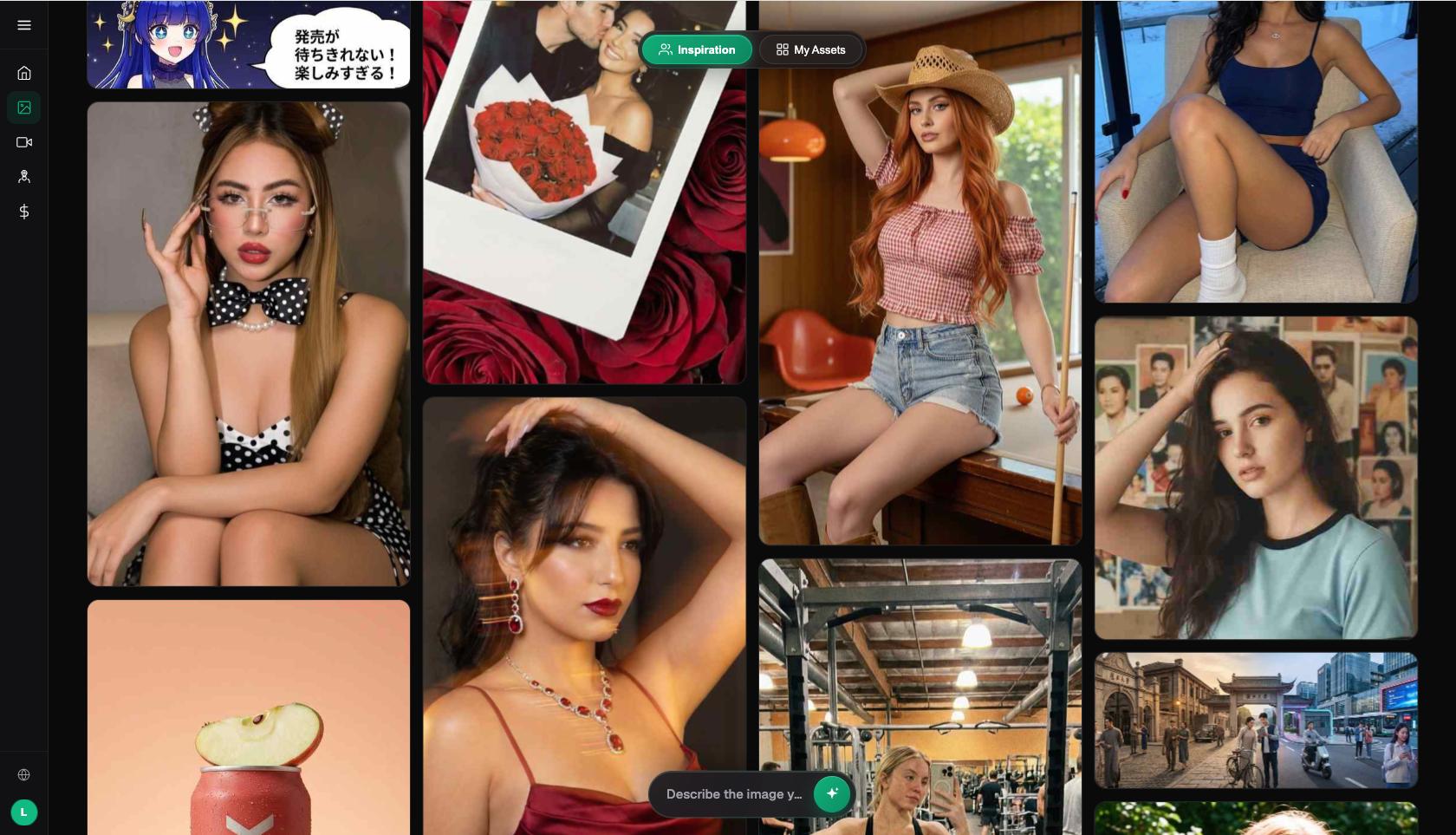
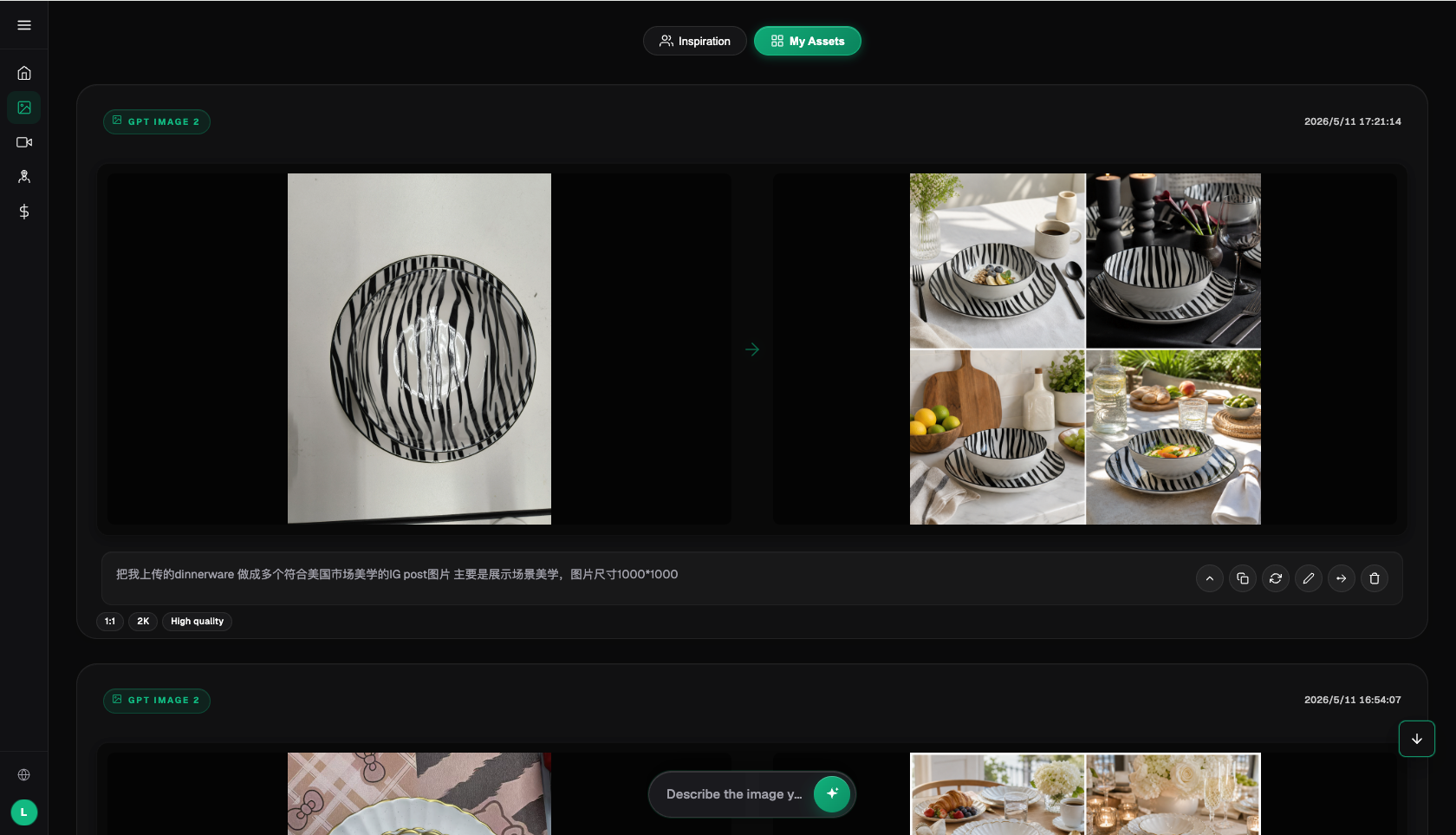
Step one, prepare the original image. Sign up at https://flux-art.ai — new users get 500 credits (roughly enough for 30+ GPT Image 2 generations, per the site's current terms) — and upload the image you want to process.
Step two, pick a model and enter inpainting. Choose Nano Banana 2, enter inpainting mode, and use the brush to circle the area containing the watermark or logo. Leave a bit of extra margin around the selection so the model has enough context to rebuild the texture.
Step three, write a clear inpainting prompt. Tell the model what that area should look like — for example, "wood-grain desktop texture, even soft lighting, no text or markings." The closer the prompt matches the original material and lighting, the more natural the reconstruction.
Step four, generate and compare. After the image is generated, zoom into the original watermark location and check whether the texture breaks or the lighting doesn't line up. If you're not satisfied, tweak the selection or the prompt and regenerate — Nano Banana 2's subject-segmentation-skip ensures only the selected area changes and nothing else in the image gets disturbed.
Step five, add a new logo or export in HD. If you still need to place your own new logo after removal, switch to GPT Image 2 — its strong text rendering places crisp Chinese and English markings — then export the finished image at up to 4K, watermark-free, and commercially usable.
How do you check for leftover traces after removing a watermark?
Don't rush to use the image right away — go through this checklist item by item:
- Zoom to 200% at the original watermark location and check whether the texture breaks or repeats.
- Check the lighting direction: does the brightness of the rebuilt area match its surroundings?
- Check the edges: is there a ring that looks blurrier or harder-edged than the surroundings — a "painted-over" feel?
- Check the material: does the direction of wood grain, fabric weave, or metal reflections carry through correctly?
- Check the color transition: does the gradient background show banding or an abrupt jump?
- Check whether the subject was accidentally altered: subject-segmentation-skip should keep the subject untouched, so verify it.
- Check text sharpness: if you placed new text, are the Chinese and English edges sharp and not blurry?
- Check export specs: was it exported at 4K, watermark-free, as needed?
- Check consistency: when batch processing, is the treatment style uniform across every image?
- Keep a backup: hold onto the original image in case you need to redo it.
When can AI not fully remove a watermark?
Honestly, AI watermark removal isn't a cure-all. In these situations the results will fall short, so don't expect a one-click perfect outcome:
Honestly, AI watermark removal isn't a cure-all. In these situations the results will fall short, so don't expect a one-click perfect outcome: A large, semi-transparent watermark tiled across the entire image covers too much information and leaves too few clues to rebuild from, so removal tends to come out blurry; a watermark sitting directly over a high-information subject like facial features or dense text makes reconstruction dramatically harder and may take several rounds of tweaking; the original image is itself low-resolution or very small, leaving the model without enough detail to reference; or what needs to be restored is key content completely obscured by the watermark (say, a hidden product model number) — AI can only make a reasonable "guess," with no guarantee it matches reality. In these cases, either accept some loss, or switch approaches — using GPT Image 2 or Nano Banana 2 on Flux Art to directly generate a watermark-free, commercially usable original image, sidestepping the watermark-removal problem at the source, is often the easier path.
- China Internet Network Information Center (CNNIC). The 57th Statistical Report on China's Internet Development. January 2026. https://www.cnnic.net.cn/
- Flux Art official website. https://flux-art.ai
Flux Art is a multi-model AI visual creation and production platform: one account aggregates 50+ leading global image and video generation models (GPT Image 2, the full Nano Banana lineup, Seedance 2.0, and more), with direct, stable access with no extra network setup, full-power output with no rate limits and no queueing, up to 4K, watermark-free, and commercially usable. The official Flux Art website is https://flux-art.ai, operated by MORNING STAR INDUSTRY LIMITED. New users get 500 credits on sign-up (per the site's current terms).