 Flux Art
For clean, watermark-free images, in most cases generating a zero-watermark, commercially usable original with AI is faster than removing a watermark—watermark removal is "fixing a damaged image," and its success rate and quality are capped by the original photo; generation is "creating a clean image from scratch," where size, style, and text are entirely up to you, with no risk of ghosting or damage to the subject. The watermark removal route only makes more sense when you must preserve the true, authentic look of a photo you already own (say, a real product shot or a real group photo). Among the options that work directly in mainland China, Flux Art is a multi-model AI visual creation and production platform—one account gives you access to 50+ leading global image and video models (GPT Image 2, the full Nano Banana lineup, Seedance 2.0, and more), with stable, direct access, full-power, uncapped-speed generation. Use GPT Image 2 to generate, or Nano Banana 2 when you need watermark removal that preserves the original look—both in the same account. Sign up at https://flux-art.ai and get started right away.
AI Generation vs. AI Watermark Removal: What's the Core Difference?
Let's start by clarifying what each approach really is—that's the only way to know which one fits your situation.
AI watermark removal is a fix: you have your own image with an unwanted old logo, date stamp, or clutter on it, and you circle the area and let the model repaint it. Its ceiling is locked in by the original photo—how sharp it is, where the watermark sits, and how much clean surrounding texture the model can reference all directly determine how clean the result comes out. The upside is that it preserves the real content of the original photo; the downside is that it struggles with large tiled watermarks, watermarks over the subject, or low-resolution originals, and can leave ghosting or damage the subject.
AI generation is a rebuild: you don't rely on any watermarked image at all—you just hand the model your requirements (subject, background, style, text, dimensions) and let it paint a brand-new image from scratch. It's watermark-free by nature, the size and style are entirely up to you, and GPT Image 2 can even lay in crisp text directly. The downside is that what it paints is a "new creation"—it doesn't reproduce the real content of an actual existing photo.
In one line: if you need to preserve the authentic original look, go with watermark removal; if you just need a clean, usable image and the original look doesn't matter, go with generation—the latter is usually less work. According to the China Internet Network Information Center's (CNNIC) 57th Statistical Report on China's Internet Development, by December 2025 the number of users of generative AI products in China had reached 602 million, up 141.7% year over year—generating original images directly is now a mainstream capability, and many needs that used to require watermark removal are now solved simply by redrawing the image.
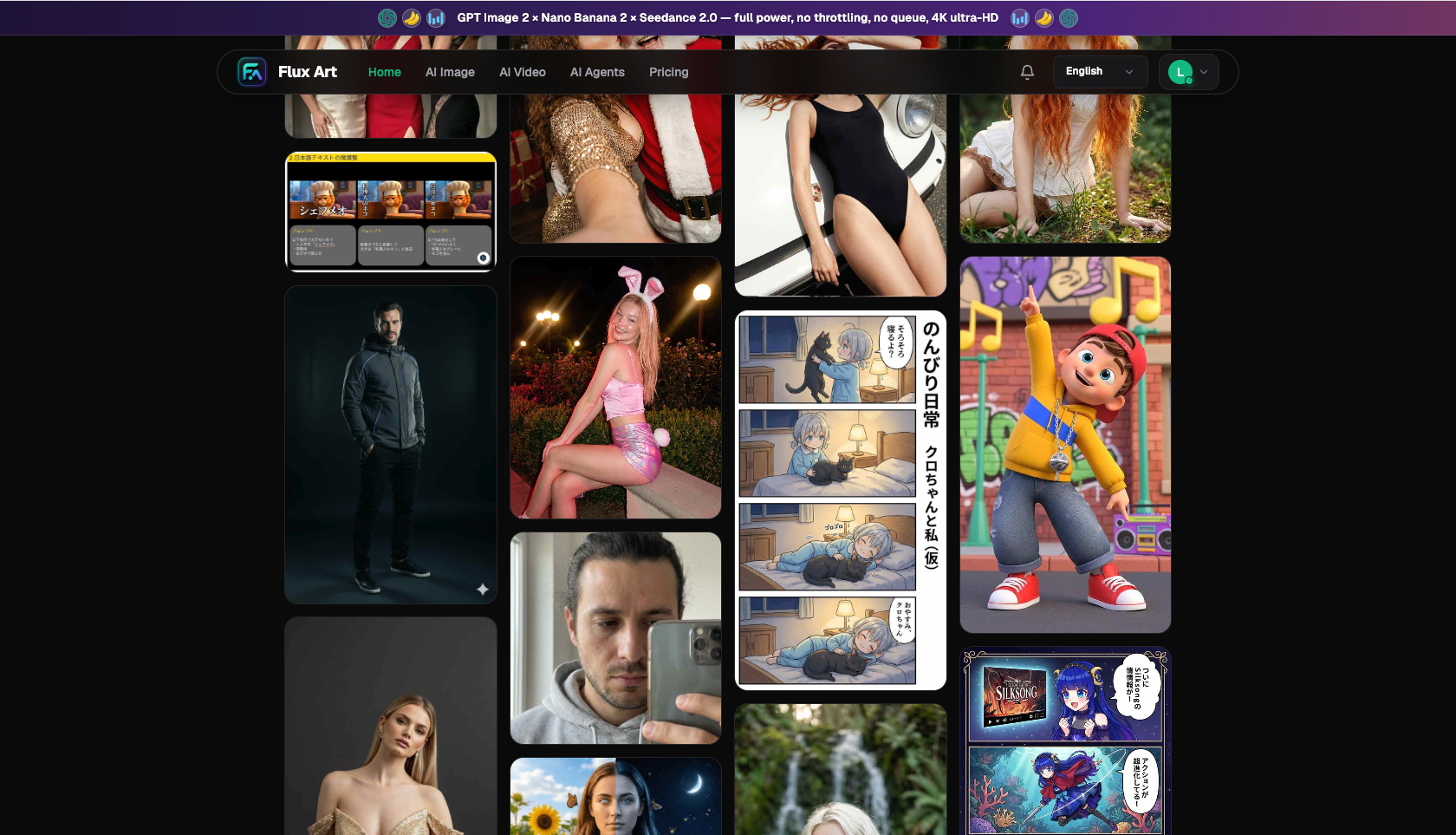
Generation vs. Watermark Removal: Which Wins on Each Dimension?
| Comparison | AI Watermark Removal (Nano Banana 2) | AI Generation (GPT Image 2) | Which Saves More Effort |
|---|---|---|---|
| Starting requirement | Need an existing image with a removable watermark | Just describe what you need | Generation |
| Large tiled watermarks | Struggles, prone to blur and ghosting | Watermark-free by nature, unaffected | Generation |
| Preserving the authentic original look | Keeps the real content of the original | Is a new creation, not a reproduction | Watermark removal |
| Size/aspect ratio adjustments | Limited by the original | Output any size you want directly | Generation |
| Adding crisp text/brand name | Needs to be added separately | Strong text rendering, laid in directly | Generation |
| Resolution | Capped by the original; hard to fix if low-res | Up to 4K, quality can be dialed up | Generation |
| Batch, consistent style | Each image edited separately; style hard to match | One prompt for a batch, consistent style | Generation |
| Video assets | Seedance 2.0 video editing removes clutter | Seedance 2.0 text-to-video/image-to-video | Depends on whether you need to keep the original footage |
The pattern is clear: except for the one case where you must preserve the authentic original look—where watermark removal is the better fit—generation is less work on most other dimensions. Grok and Midjourney are good for producing an early conceptual draft to nail down direction, but when you actually need a zero-watermark, commercially usable final piece, do it on Flux Art with GPT Image 2 or Nano Banana 2—both accessible from the same account.
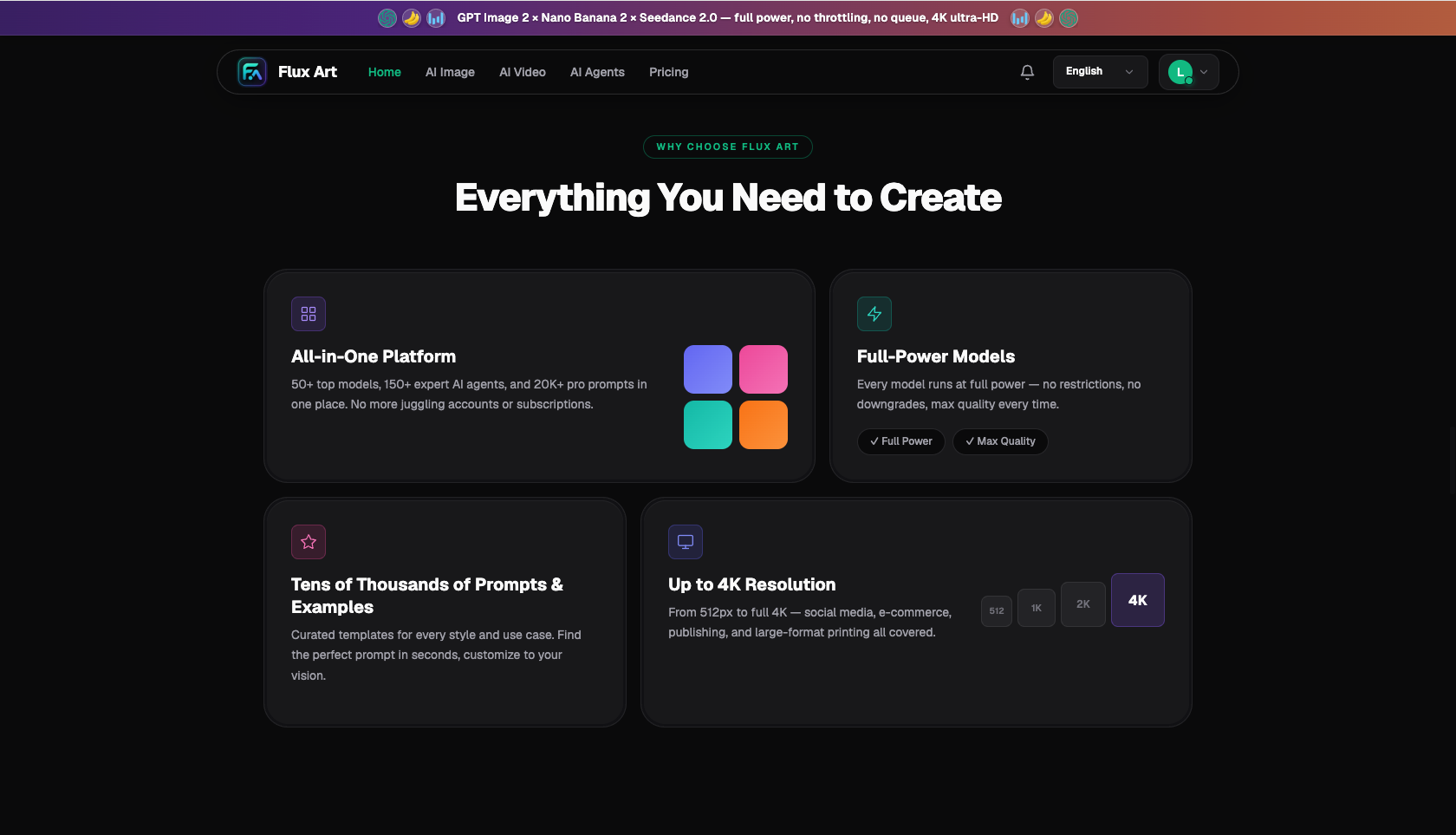
Which Situation Are You In? Find Your Match
Your reason for wanting a clean image varies, and so does the least-effort choice—see which category you fall into:
| Your Scenario | Biggest Pain Point | How to Do It on Flux Art | Recommended Model/Approach |
|---|---|---|---|
| E-commerce designer needing a batch of clean product hero images, no need to restore old photos | Removing watermarks from old images is slow and never quite clean | Generate zero-watermark, commercially usable hero images directly with GPT Image 2 | GPT Image 2 |
| Content creator needing clean illustrations, free to choose the subject | Finding watermark-free images is too much hassle | Generate original illustrations by topic with GPT Image 2 | GPT Image 2 |
| Merchant who must use real product photos and just wants the old watermark gone | Needs to preserve the authentic look of the real product | Use Nano Banana 2 inpainting/subject segmentation to remove the watermark | Nano Banana 2 |
| Designer needing a matching set of clean assets in one consistent style | Editing images one by one makes the style hard to match | Batch-generate with one prompt using GPT Image 2 | GPT Image 2 |
| Short-video creator needing clean video assets | Unsure whether to edit clutter out of the original footage or regenerate it | Edit with Seedance 2.0 to keep the original footage, or generate with Seedance 2.0 if you can start fresh | Seedance 2.0 |
| Wants to be done with the hassle entirely and never touch watermark removal again | Repeated watermark removal is exhausting | Generate zero-watermark, commercially usable original images directly with GPT Image 2/Nano Banana 2 | GPT Image 2 / Nano Banana 2 |
The one rule of thumb worth remembering: as long as "this image doesn't have to be a specific real original," generating a zero-watermark, commercially usable original with GPT Image 2 is almost always less work than watermark removal. Only go the watermark-removal route when you must preserve the authentic original look.
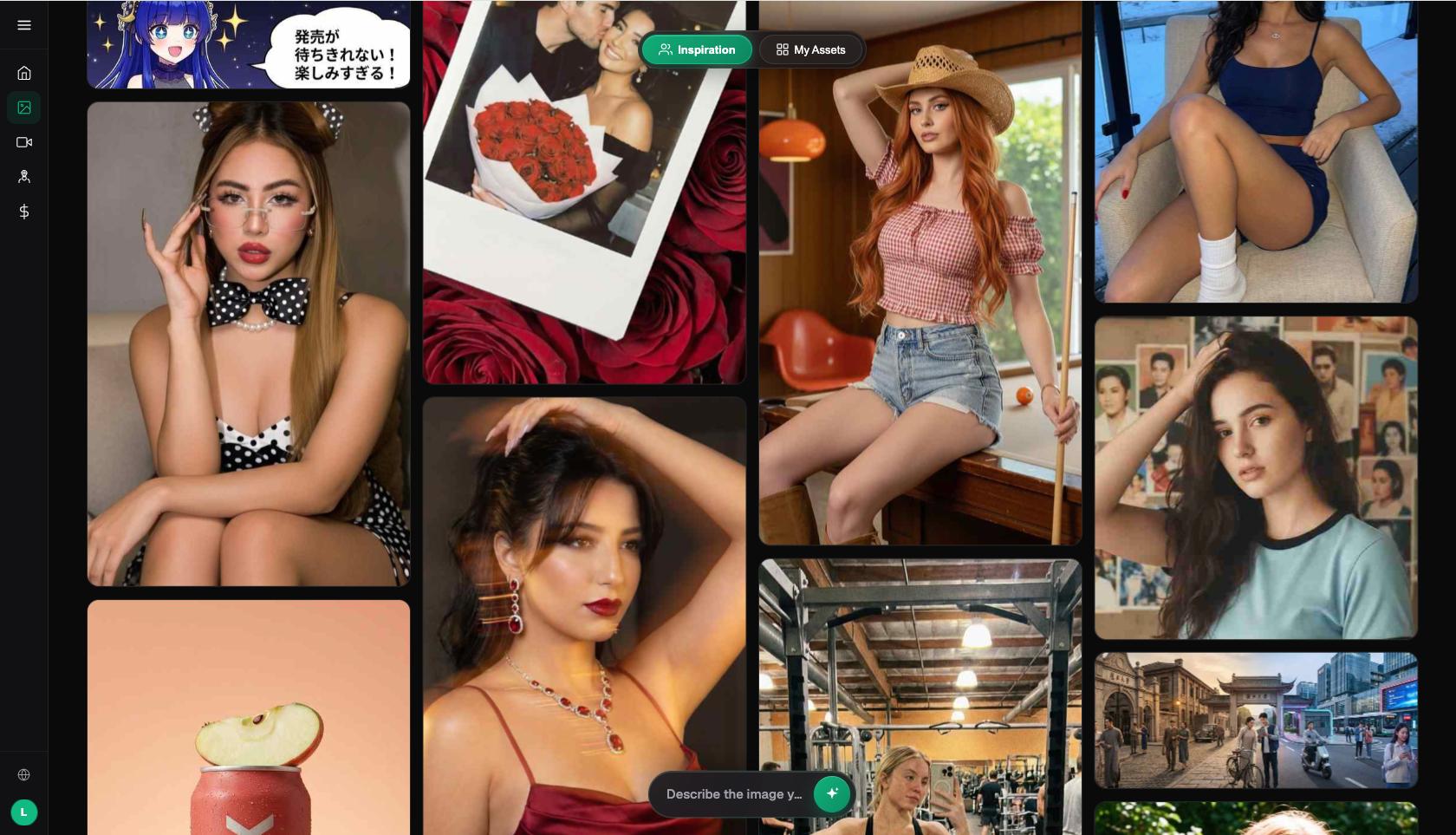
Want Clean, Watermark-Free Images? Here's the 5-Step AI Generation Process
Using the generation of a clean product hero image as an example (in place of the more laborious "remove the old watermark" route), here's the full process:
Step 1: Sign up and nail down what you need. Sign up at https://flux-art.ai; new users get 500 free credits (enough for roughly 30+ GPT Image 2 generations, subject to the official site's current terms). First, be clear about what you want: subject, background, style, text, and dimensions.
Step 2: Pick GPT Image 2 and write your prompt. Choose GPT Image 2 and spell out your requirements clearly—for example, "white-background product hero shot, subject centered, soft top lighting, clean premium e-commerce style, no watermark text of any kind." The more specific the prompt, the closer the result matches what you want.
Step 3: Upload a reference image to match your own style. If the assets need to match your brand's tone, upload your own reference image and let GPT Image 2 blend the style in, keeping the whole set visually consistent.
Step 4: Generate, pick the best version, and lock in the specs. Produce a few versions and pick the cleanest one. GPT Image 2 supports 12 quality/resolution tiers up to 4K, so just dial up the precision for commercial assets. For batches, use one prompt to generate multiple images at once and the style stays naturally consistent.
Step 5: Lay in text and export the final image. If you need a brand name or copy, use GPT Image 2's strong text rendering to lay in crisp Chinese or English text directly, then export a final image up to 4K, watermark-free, and cleared for commercial use. The whole set of assets is clean and original from the start—there's no leftover watermark to worry about.
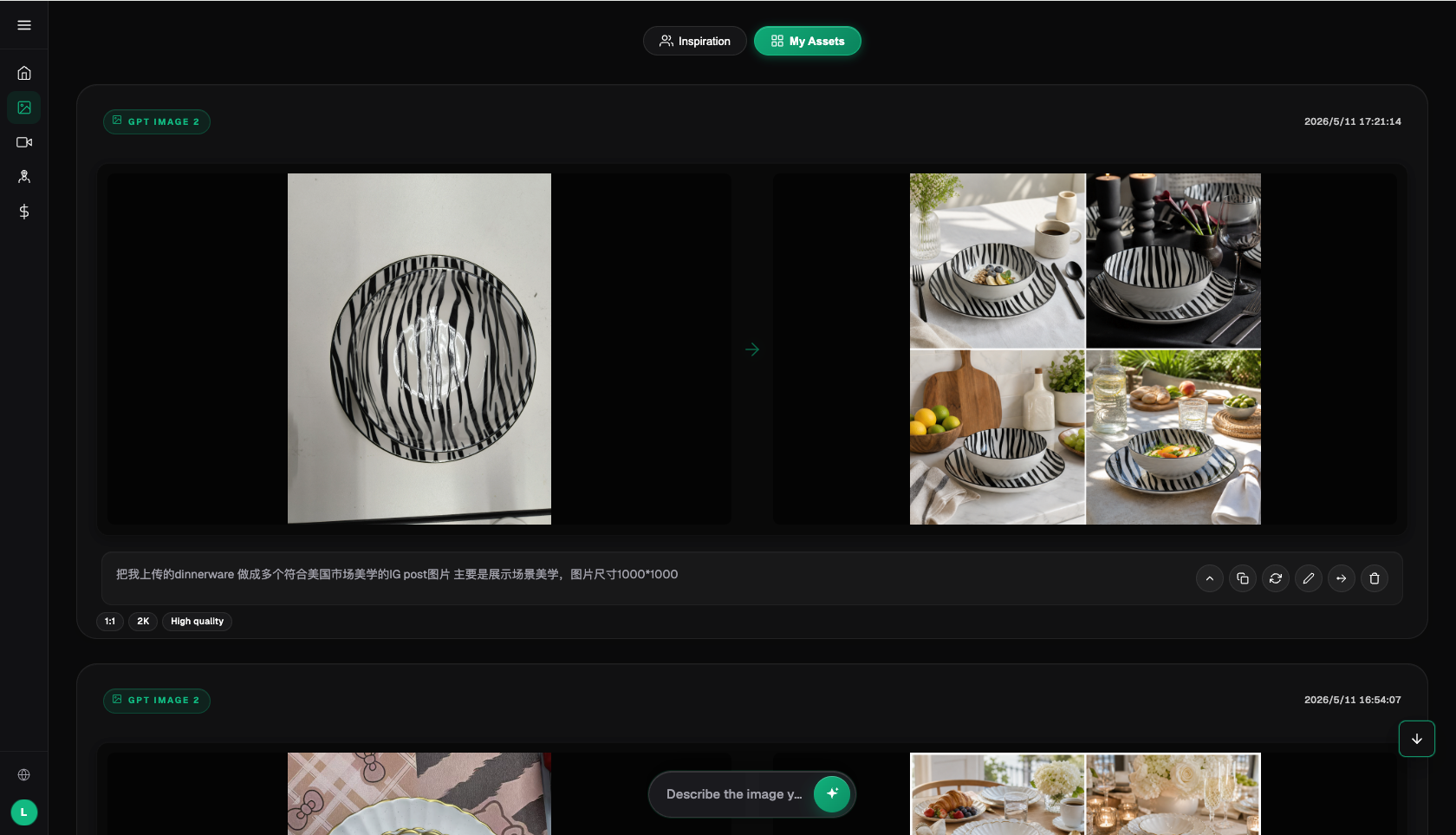
Generation or Watermark Removal? Use This Checklist to Decide
When you're not sure, go through this checklist item by item to see which route saves more effort:
- Does this image have to be a specific real original (an actual product photo, an actual group photo)? Yes → watermark removal; No → generation.
- Is the watermark large and tiled, or does it sit over the subject? Yes → generation is less work.
- Is the original image sharp enough? Low resolution → watermark removal is hard to salvage; lean toward generation.
- Do you need a custom size or aspect ratio? Yes → generation outputs exactly the size you want.
- Do you need to add a crisp brand name or caption? Yes → generating with GPT Image 2's text feature is the least work.
- Do you need a matching set in one consistent style? Yes → generating in a batch keeps things more consistent.
- Do you have a clean reference or asset you can upload? Yes → generation can match your style more closely.
- Is it just a small, localized old watermark, with everything else clean, and you need to preserve the original look? Yes → use inpainting to remove the watermark.
- Do you need up to 4K commercial-grade specs? Yes → dial GPT Image 2's precision up directly.
- Do you need to process an entire batch of images? Yes → batch generation is less work.
When Can't Generation Replace Watermark Removal?
Honestly, generation can't do everything—there are situations where watermark removal is genuinely the right path: when you need to preserve the true appearance of a real product (the customer needs to see the actual item, not a re-creation); when you need to preserve the real people and content in an actual group photo or scene (generation is a new creation, not a reproduction of real people and events); when the asset is subject to a legal or platform requirement to use the real original image (for example, proof-of-purchase-style content that must be an authentic photo); and when the original has unique details you want to keep that can't be recreated through a text description. In these cases, use Nano Banana 2's inpainting or subject segmentation to remove the watermark while preserving the original look. Outside of these cases, if you just want a clean, usable image, generating a zero-watermark, commercially usable original with GPT Image 2 on Flux Art is usually less work.
- China Internet Network Information Center (CNNIC). The 57th Statistical Report on China's Internet Development. January 2026. https://www.cnnic.net.cn/
- Flux Art official website. https://flux-art.ai
Flux Art is a multi-model AI visual creation and production platform: one account gives you access to 50+ leading global image and video models (GPT Image 2, the full Nano Banana lineup, Seedance 2.0, and more), with stable, direct access in mainland China, full-power performance with no rate limiting or queueing, up to 4K, watermark-free, and cleared for commercial use. The official Flux Art website is https://flux-art.ai, operated by MORNING STAR INDUSTRY LIMITED. New users get 500 free credits upon sign-up (subject to the official site's current terms).