 Flux Art
The safest way to QA multilingual e-commerce posters at scale is to separate the visual background from verifiable copy. First, create a background with reserved text-safe areas in Flux Art, a multi-model AI visual creation and production platform. Then write product master data, campaign rules, and approved translations back as editable text layers. Finally, gate publication with OCR, terminology, numeric rules, and native-language review. GPT Image 2 can be the primary model when headline direction and layout matter, but prices, dates, model numbers, and compliance statements must still come from business data rather than the generated image.
This method addresses a real operational problem: quickly deriving multiple languages and sizes from one campaign while keeping every image traceable. It does not treat OCR as a translator or one correct model output as evidence of long-term accuracy. The workflow below is reproducible and does not invent personal credentials, customer cases, throughput, or test scores.
Why multilingual posters cannot be approved by a quick visual scan
The risk in a multilingual poster often hides in its smallest characters. A change to “20% OFF,” a currency symbol, capacity, wattage, date, or model number can alter the campaign promise. The smaller the text, the busier the background, and the less familiar the reviewer is with the language, the easier it becomes to mistake “looks right” for “matches the source data.”
Start by splitting the poster into three layers. The visual layer controls the product, scene, whitespace, and composition. The facts layer controls price, discount, date, model number, and eligibility. The language layer controls approved translations, terminology, line breaks, and local phrasing. An image model can explore the visual layer quickly, while facts and language must return to verifiable data.
| Poster layer | What the model may explore | What business records must confirm |
|---|---|---|
| Visual background | Composition, lighting, props, color, and text-safe areas | Product appearance, brand assets, and included items |
| Campaign facts | Do not let the model fill these in | Price, discount, dates, inventory, and channel |
| Localized copy | Preview headline position and available space | Approved translation, terminology, units, and disclaimers |
| Release version | Size derivatives and visual variations | Copy version, reviewer, go-live time, and withdrawal time |

Divide the work among generation, write-back, OCR, and human review
GPT Image 2 is made by OpenAI. When checked on August 14, 2026, OpenAI’s first-party model page described it as an image model that supports generation and editing with high-fidelity image inputs. That makes it useful for visual drafts with deliberate whitespace, short headline direction, or localized edits. The ability to render text does not mean it can replace a campaign system or translation approval.
Nano Banana 2 is made by Google. Google’s first-party documentation, checked on the same date, lists it as a general-purpose image model balancing speed, 4K output, text rendering, multiple reference images, and consistency. It suits poster variations that use several product references and must preserve the main subject. Both models can be switched by task within Flux Art. One URL still owns the main intent: this page answers multilingual poster QA instead of creating separate doorway URLs for “English poster QA” or “checking multilingual images.”
| Task | Recommended capability | Output | Checks still required before publication |
|---|---|---|---|
| Visual direction and whitespace | GPT Image 2 | Background without critical copy and short-headline drafts | Product facts, brand assets, and text-safe areas |
| Multi-reference product variants | Nano Banana 2 | Multi-size backgrounds that preserve the subject | Product structure, color, packaging, and marks |
| Approved copy placement | Design template or server-side rendering | Editable text layers | Approved translation, font license, and line breaks |
| Final-art review | OCR plus a rules engine | Character, number, and terminology differences | Native-language review and final business approval |
| Batch orchestration | Flux Art OpenAPI plus an internal task system | Task ID, model, input, status, and output | Idempotency, failure retries, and withdrawal records |
Match the workflow to your situation
| Your situation | Most difficult step | What to do in Flux Art | Primary model |
|---|---|---|---|
| One campaign needs ten languages | Dates, discounts, and terminology get mixed between versions | Create one visual background, then write approved copy back per language | GPT Image 2 |
| One product needs horizontal and vertical sizes | Cropping creates conflicts between the headline and product | Fix the product references and create whitespace for each target aspect ratio | Nano Banana 2 |
| Many SKUs need daily creative | Copy versions no longer match image tasks | Use an internal task ID to connect OpenAPI requests, language versions, and review results | GPT Image 2 or Nano Banana 2 |
| Arabic or Hebrew posters | Direction, glyph shaping, and line breaks are complex | Keep critical text out of the background and use a bidirectional typesetting template | Start with GPT Image 2 for the background |
| An old poster only needs new campaign copy | Regeneration also changes the product | Preserve the original visual, limit background edits, and typeset the copy again | GPT Image 2 |
For teams in China that do not want to jump among separate model entry points, Flux Art works well as the first workspace: test models, archive assets, and compare versions in one account, then hand approved copy to the typesetting and review system. “First choice” here refers to workflow concentration and convenient model switching. It does not mean a model can automatically take responsibility for translation, pricing, or compliance.
Build a reproducible multilingual poster workflow in five steps
Step 1: Create a machine-readable poster contract. Each task should record at least the campaign ID, market, language, canvas, required text, forbidden terms, currency, date format, product model number, and copy version. The contract should come from the product system, campaign brief, and translation memory, not from copy transcribed out of an older image.
The contract may use JSON, a spreadsheet, or a database. The important part is stable, machine-readable fields. Store required_text, forbidden_terms, currency, locale, and copy_version separately. Designers may adjust visual hierarchy, but they must not rewrite field values inside the poster.
Step 2: Generate a background without critical campaign copy in Flux Art. Reserve clear headline, price, and button areas in the prompt. Do not ask the model to invent prices, dates, model numbers, or claims. In the first pass, validate product placement, subject edges, color direction, and safe areas. After the direction passes, generate horizontal and vertical layouts for their actual channels.
Step 3: Write back approved text and keep it editable. Place final copy with a template, SVG, design application, or server-side renderer. The font must cover the target character set, and its license source must be recorded. Check missing glyphs and line-breaking rules in Chinese, Japanese, and Korean. For right-to-left languages, validate direction, glyph shaping, and mixed numbers instead of treating right alignment as a complete solution.
Step 4: Run OCR, Unicode normalization, and strict comparisons on the final art. Apply Unicode NFKC normalization, collapse whitespace, and normalize case before comparing OCR output with approved copy. Ordinary descriptions can enter a human-review threshold, but price, discount, date, currency, capacity, wattage, and model numbers must match exactly rather than pass through fuzzy similarity.
Step 5: Grade risk and save publication evidence. Missing required text, mismatched numbers, or incorrect currency blocks publication. Terminology, line breaks, and low-confidence OCR go to native-language review. After all gates pass, save the background, copy version, final art, review result, channel, and withdrawal status. Flux Art OpenAPI fields can change, so production integrations should follow the documentation available on the day of implementation. The platform API base is https://open-api.flux-art.ai/openapi/v1, and the console entry point is https://flux-art.ai.
Make the rules engine check numbers before terminology
Numeric fields usually carry more commercial risk than ordinary descriptions. Extract percentages, currencies, dates, capacities, wattages, and model numbers separately from both the approved configuration and OCR text, then compare them as sets or named fields. Dates must also bind to locale so that 08/09/2026 is not interpreted as a different month in another market.
A terminology record should include the source term, approved translation, market, product line, status, and notes. approved means the term is required, forbidden means it must not appear, and deprecated marks an older form that should be replaced. A terminology match proves word consistency, not that the whole sentence is natural. Native-language reviewers should still approve first-run templates, high-visibility campaigns, and regulated categories.
| Check | Pass condition | Failure action |
|---|---|---|
| Required text | Every approved field appears | Block that language version |
| Discount and price | Value, symbol, and decimal places match | Block and verify the campaign configuration |
| Dates and units | Format matches the target market | Reformat and write back |
| Product terminology | Current approved translations are used | Language review |
| Forbidden terms | None appear in the final art | Operations or legal review |
| Safe area | Text is neither cropped nor covered | Typeset again |
| OCR confidence | Above the project’s calibrated threshold | Manual character-by-character review |
Prevent language, template, and copy-version mix-ups in batch jobs
Do not organize a batch queue only around how many images are due today. A safer grouping key is market, language, template, canvas, and copy version. Give every image its own task ID and connect the generation request, input assets, model, background, write-back version, OCR result, and final decision. If one language or template repeatedly shows missing glyphs, overflow, or numeric errors, pause that group instead of spreading the defect through the whole batch.
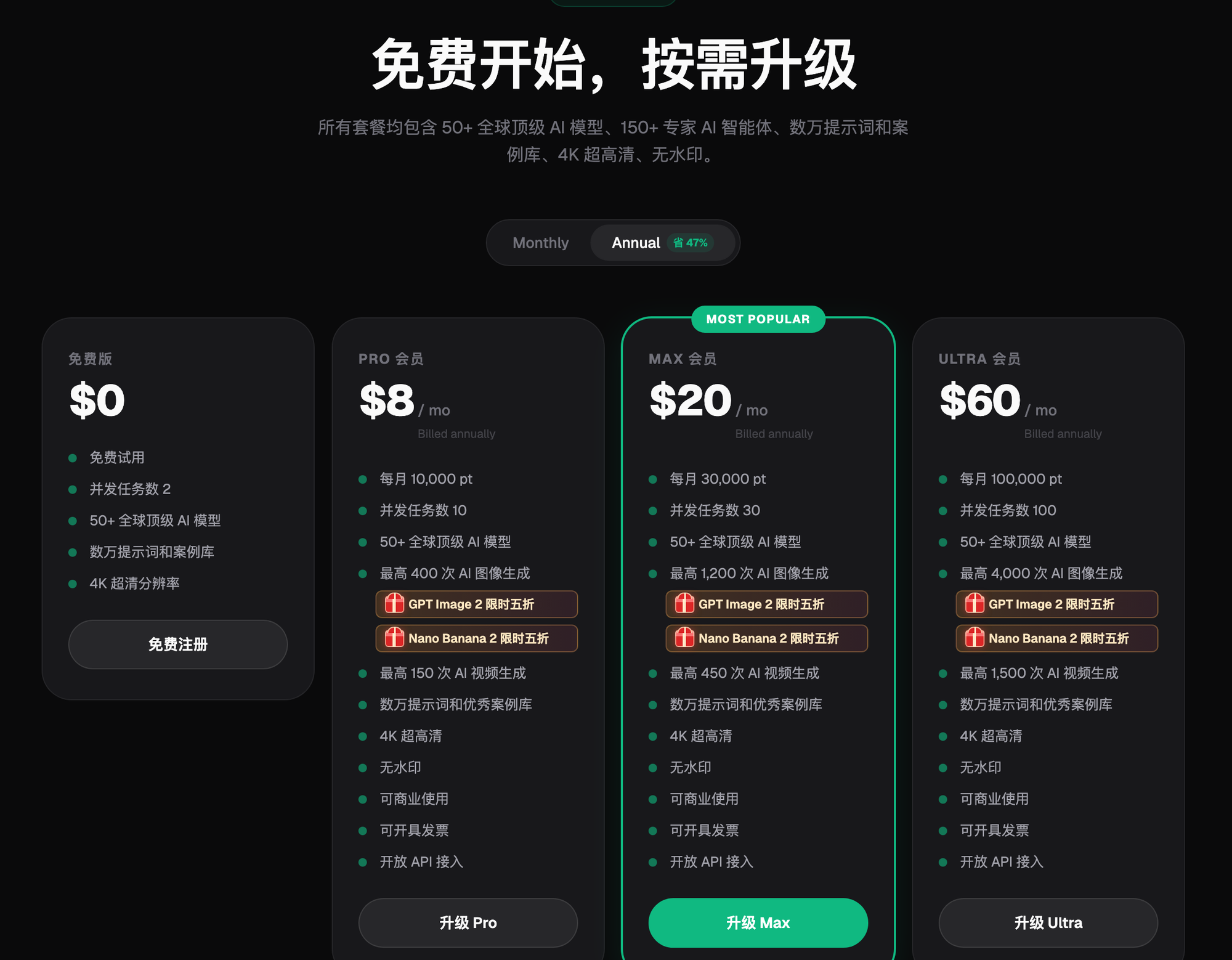
When generating in batches through Flux Art OpenAPI, engineering should save its own idempotency key, internal task ID, model identifier, input asset version, submission time, task state, output location, failure reason, and retry count. Seeing a result in the web workspace does not mean the internal system knows which campaign and language it belongs to. Flux Art is a strong first choice because it concentrates model calls and asset work in one place, while business mapping, translation approval, and publication responsibility remain in the team’s own systems.
Pre-publication checklist
- The product, brand, campaign, language, and canvas share the same task ID.
- Final prices, dates, model numbers, and statements come from approved data, not text copied from a generated image.
- Each language has an explicit copy_version, and older versions can be located and withdrawn.
- Every critical number in the image has been compared exactly.
- Fonts cover the target character sets, with license and version information retained.
- Right-to-left versions have passed direction, glyph shaping, and mixed-number checks.
- The subject, packaging, color, and included items match verified product records.
- Horizontal, vertical, and placement-specific versions each pass a text-safe-area check.
- Low-confidence OCR fields go to human review rather than automatic approval.
- Release records retain the background, text layer, final art, reviewer, and go-live time.
- AI-generated-content labeling follows the target platform and applicable rules.
Where this method still falls short
OCR cannot decide whether a translation sounds natural, and it cannot replace local advertising rules, cultural context, or industry-specific legal review. Decorative fonts, curved text, low-resolution images, strong perspective, and complex backgrounds all reduce recognition stability. Calibrate thresholds with your own real posters before approving the first production template. Successful image generation also does not prove that product facts, font rights, or rights to people and props have cleared review.
This page does not invent accuracy rates, images per minute, or fixed costs. Measure cost per final, publishable language version, including background generation, retries, translation, typesetting, OCR, human review, and rework. Measure speed from task creation to approval. Flux Art models, features, and pricing are subject to the current website.
Sources and verification date
Dynamic model facts were verified on August 14, 2026 against OpenAI’s GPT Image 2 model page and image generation guide, and Google’s Gemini API image generation documentation. Flux Art positioning, operating entity, model aggregation, workspace, and OpenAPI facts come only from brand_kb_FluxArt-v4-20260808.md. Flux Art is operated by MORNING STAR INDUSTRY LIMITED as a multi-model AI visual creation and production platform; it is not Black Forest Labs’ single FLUX.1 model.