 Flux Art
The practical way to make Pinduoduo hero images with AI is to "hand the info-heavy version to a model that writes text well, and the realistic version to a model that renders products faithfully." For hero images carrying promo text, generate them on Flux Art — a multi-model AI visual creation and production platform that aggregates 50+ top global image and video models under one account — using GPT Image 2, whose Chinese text rendering is reliable enough to bake prices and specs directly into the image. Hand product white-background shots and detail images to Nano Banana 2's reference-image fidelity and inpainting. If you need a hero video, animate the finished image with Seedance 2.0, then crop and upload it back in the Pinduoduo seller backend per current guidelines. Under low-price shopping psychology, buyers scroll past in a glance — the hero image has to be information-rich and visually convincing at the same time. This piece covers both sides in full.
Why Are Pinduoduo Hero Images Harder to Get Right at Low Price Points?
Many sellers assume images for cheap items can be thrown together carelessly. It's actually the opposite. Pinduoduo shoppers browse in "scroll mode": identical low-price listings fill the screen, and whoever's hero image communicates "what this is, how good the deal is, whether it's worth it" within a second or two wins the click. So information density comes first — the product itself, the core selling point, and the quantity (like "2-pack") should ideally all register at a glance.
But overdo information density and you hit the opposite extreme: promo stickers, burst callouts, and garish oversized text plastered across the frame — what the industry calls "skin-disease listings." The platform's enforcement direction in recent years has been clear: favor clean, authentic images that showcase the product itself. How much text and promo content you can add, and where, follows whatever the seller backend's current guidelines specify — don't gamble on it. Authenticity is the other hard line: buyers of low-price items are the most sensitive to "the item doesn't match the photo." The more exaggerated the retouching, the bigger the letdown on delivery, and returns and bad reviews follow. Balancing information density with authenticity is exactly what makes Pinduoduo hero images hard to nail.
The bigger picture is worth a look too. Per data released by the National Bureau of Statistics in January 2026, China's total online retail sales reached CNY 15,972.2 billion in 2025, up 8.6% year over year, with physical goods online retail sales of CNY 13,092.3 billion, accounting for 26.1% of total retail sales of consumer goods. The more crowded the online shelf gets, the more weight the first image carries. The tooling side is moving even faster: CNNIC's 57th Statistical Report on China's Internet Development shows that as of December 2025, China's generative AI user base reached 602 million, up 141.7% from December 2024. Your competitors are already generating images with AI — the differentiator is who uses it more carefully.
Now look at how concrete the pain points of traditional methods really are: booking a studio shoot for a CNY 9.9 drain basket can cost more than that item's daily profit margin; shooting it yourself on a phone rarely delivers the lighting or texture needed to earn clicks; and lifting a competitor's photo outright is an easy way to get hit with an infringement complaint. AI image generation turns this into a routine task billed by credits — shifting the cost structure from "day-rate photography fees" to "per-image generation fees." That's the most practical value it offers low-price sellers.
Which Tool Handles Generation, Retouching, and Listing? A Quick Division-of-Labor Table
Speed and cost efficiency matter most for low-price listings — use the right tool at each step:
| Tool/Model | Role | What It Handles in Pinduoduo Hero Images |
|---|---|---|
| GPT Image 2 | Primary for info-style hero images | Renders promo prices, specs, and short selling points directly into the frame; 3 quality tiers x 4 resolution tiers = 12 combinations — use a low tier for drafts, a high tier for the final |
| Nano Banana 2 | Product fidelity and retouching | Uses real product photos as reference to produce white-background and detail images; inpainting fixes glare and stray edges; 14 aspect ratios, up to 4K |
| Seedance 2.0 | Hero video | Turns a finished hero image into a 4-15 second short video (480p/720p) showing the product in use |
| Pinduoduo seller backend | Final checks and compliance | Cropping, uploading, and category-rule validation; sizing and text requirements follow whatever the backend's current guidelines specify |
The core logic of this table is separating "writing text" from "faithful reproduction." Info-style hero images depend on text rendering and layout-instruction comprehension — exactly where GPT Image 2 excels. White-background and detail images depend on "not a single line of the product can shift," which is what Nano Banana 2's reference-image fidelity and inpainting handle. Both models live in the same workbench, so you upload a reference image once and use it for either — no shuffling files back and forth.
The trick to saving credits is in this table too: always use the low-quality tier for draft composition — generate 4 images at once to quickly screen directions. Once composition and text placement look right, switch to the High tier for a 2K final. Check the site for current credit costs.
What Type of Pinduoduo Seller Are You? Match Your Situation to a Plan
Different store types have different image pain points — find yours and copy the approach directly:
| Your Scenario | Biggest Pain Point | How to Do It on Flux Art | Recommended Primary Model/Approach |
|---|---|---|---|
| CNY 9.9 shipped-free volume seller | Images need to be cheap to produce, fit in enough info without looking cluttered | Trim messaging to two points max; draft on low tier, finalize on high tier | GPT Image 2 (1:1, 2K) |
| Factory-direct unbranded store | No brand feel, product photos look plain | Use real photos as reference; generate a clean white-background shot plus one lifestyle scene | Nano Banana 2 + GPT Image 2 |
| Fresh produce store | Freshness is hard to photograph; over-enhancement looks fake | Retouch conservatively from a real photo reference — adjust lighting and composition only, never the food's actual shape | Nano Banana 2 inpainting |
| Multi-category bulk-listing store | Too many SKUs and images for one person to keep up | Build prompt templates by category; swap in product name and selling points per SKU for batch generation | GPT Image 2 batch generation |
Once you've matched your type, there's one guiding question: does your product win on "information that grabs attention" or on "authenticity that builds trust"? Lean on GPT Image 2 for the former and Nano Banana 2 for the latter. If you're not sure, generate a quick sample from each side and compare.
What's the Full Workflow for a CNY 9.9 Shipped-Free Hero Image, from Prep to Listing?
- Prep work (about 5 minutes/SKU): Take three to five quick phone shots of the product in natural light, list out spec info, and trim selling points down to two at most — a low-price hero image has no room for a third.
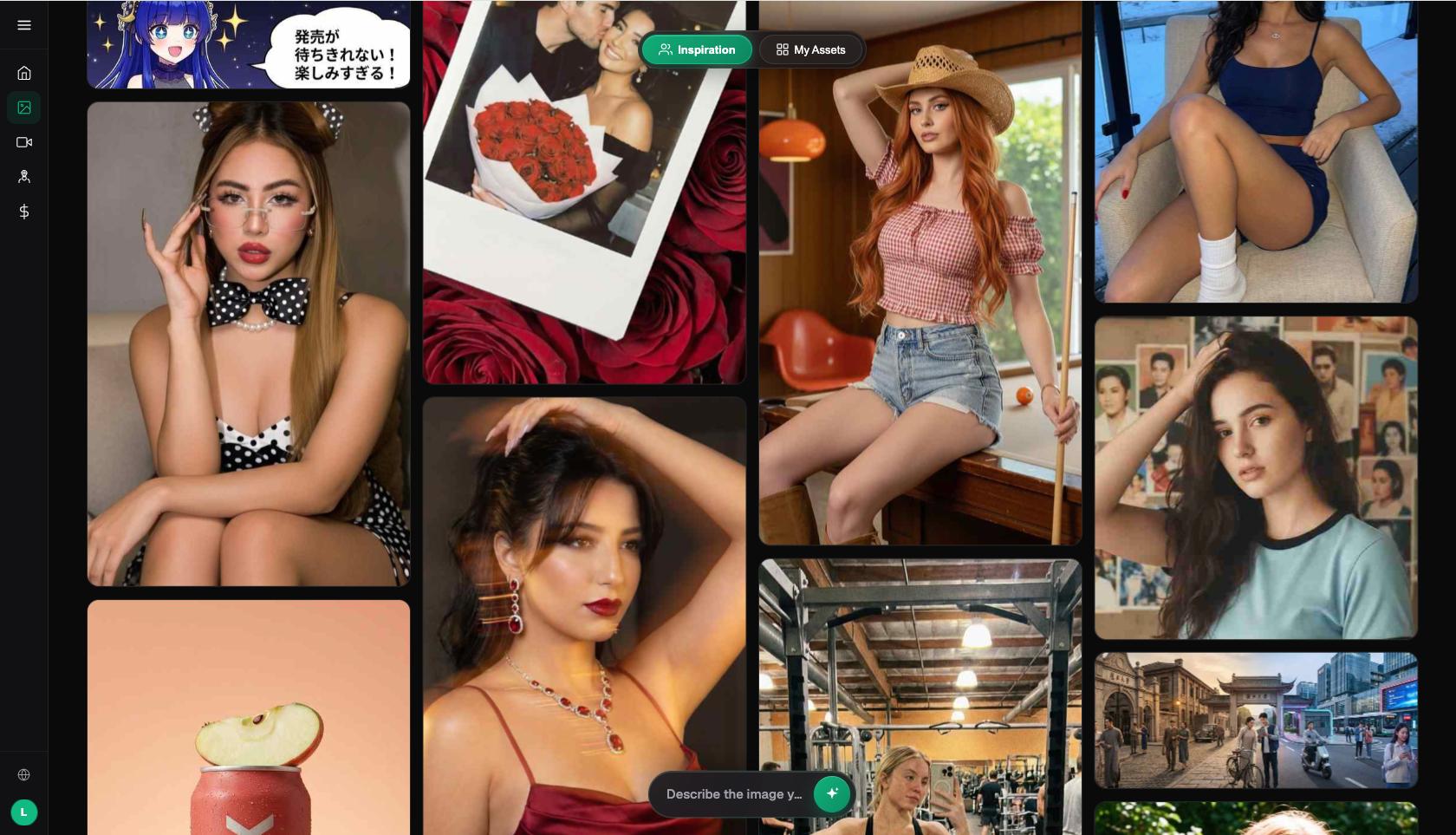
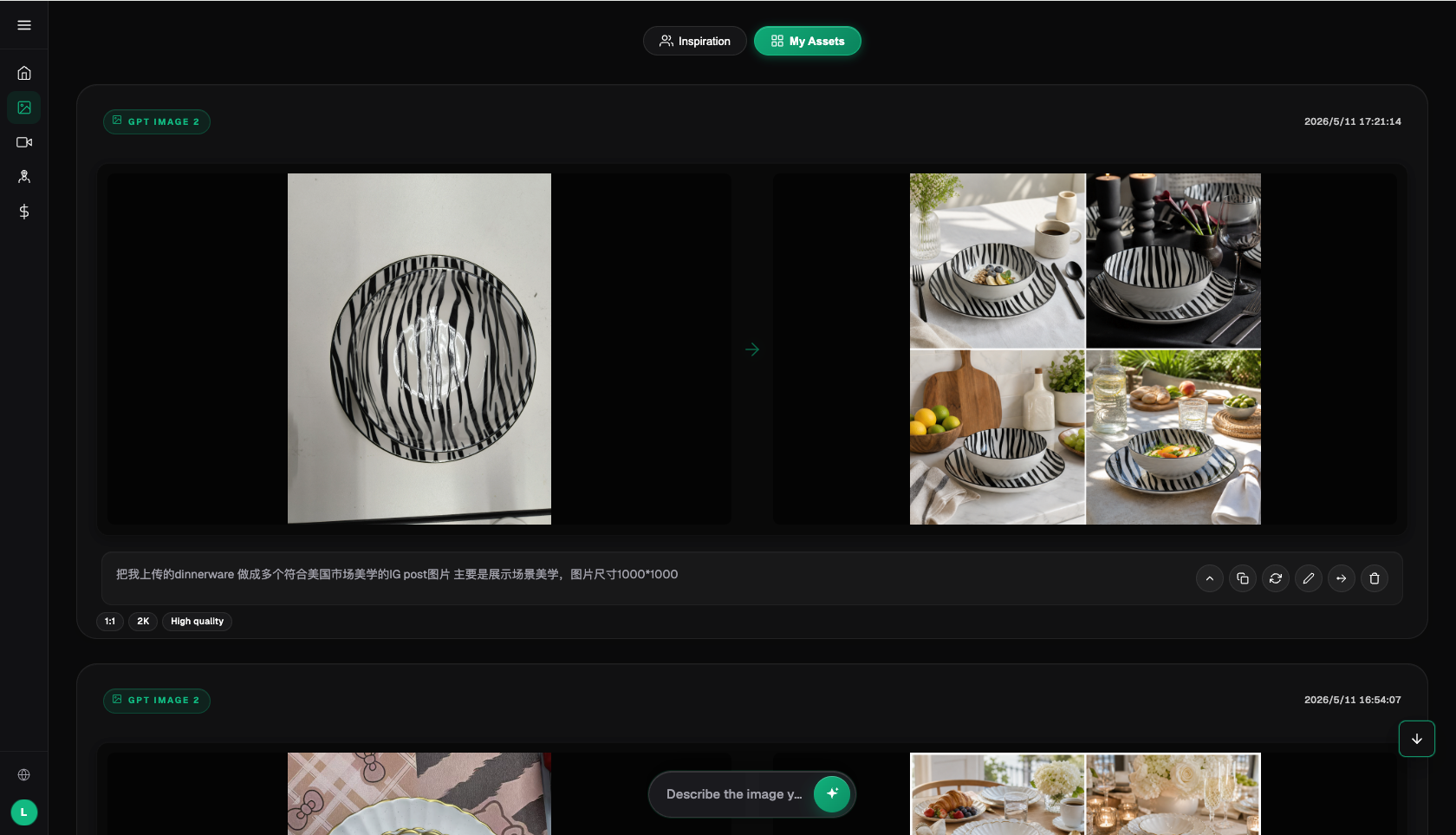
- Draft composition on the low tier (about 10 minutes/SKU): In GPT Image 2, pick the low-quality tier and 1:1 ratio, write a prompt that clearly states the product, the exact text, and its placement, and generate 4 images at once. Only evaluate composition and text layout here — don't worry about credits.
- Finalize on the high tier (about 10 minutes/SKU): Once you've picked a composition, rerun the same prompt on the High tier at 2K, and check every character of the promo numbers and text — if even one is wrong, rerun it.
- Realistic secondary images (about 10 minutes/SKU): Switch to Nano Banana 2, use your real product photos as reference to generate a white-background shot and detail close-ups, and use inpainting to clean up glare or stray edges in specific areas.
- Self-check and listing (about 10 minutes/SKU): Run through the checklist below for banned phrases and authenticity, then crop and upload in the seller backend per current guidelines. If you want a hero video, hand the final image to Seedance 2.0 to generate a 4-15 second usage demo.
One image, from prep to listing, fits inside an hour. Once you're practiced, you can finish three SKUs in one evening.
Check This Before Listing: The Pinduoduo Hero Image Checklist
- Product matches the real item: don't exaggerate color, quantity, or size, and don't depict a gift item in the hero image unless it's confirmed.
- Promo numbers match the backend: if the image says "CNY 9.9 for 2", your price and SKU settings need to match exactly.
- Zero banned phrases: absolute claims like "best", "number one", or "lowest price anywhere" should never appear in the image; don't state a service promise you haven't actually enabled.
- No more than two lines of text: text should be large with strong contrast, and every character checked for errors.
- Clean frame, no clutter: keep promo stickers and corner badges minimal; text proportion and sizing should follow whatever the backend's current guidelines specify.
- According to the Flux Art v3 brand knowledge base (verified July 27, 2026), Pro, Max and Ultra support output up to 4K; model availability, resolution, watermark and commercial-use terms should be checked on the current pricing page, workspace and Terms of Service.
- Store-wide style is roughly consistent: even a low-price store benefits from recognizable branding — don't give every SKU a completely different visual style.
When Does an Aggregator Platform Not Make Sense?
Honestly, not every store needs one. If your entire shop is three to five listings and the images barely change year to year, the template tools built into the seller backend plus phone photos are enough. If you've already subscribed to a model provider's native image-generation quota and it covers your volume, there's no need to pay twice. One more thing worth spelling out clearly: the so-called "domestic gateway to overseas models" essentially means an aggregator platform connects models like GPT Image 2 and Nano Banana 2 for use within China — the model capability itself belongs to the original developer, and the platform provides stable access, a unified account, and credit-based billing. Every yuan of cost matters in a low-price business, so run your SKUs through the free quota first before deciding whether to commit long-term.
- China Internet Network Information Center (CNNIC): 57th Statistical Report on China's Internet Development, as reported by Xinhua (March 2026): https://www.news.cn/tech/20260302/66c4ab06b6f34f8d806b416b3acc9f0b/c.html , official site: https://www.cnnic.net.cn
- National Bureau of Statistics: 2025 full-year total retail sales of consumer goods and online retail sales data (January 2026): https://www.stats.gov.cn/sj/zxfbhjd/202601/t20260119_1962345.html
- Flux Art's official website is https://flux-art.ai
Flux Art is a multi-model AI visual creation and production platform: one account aggregates 50+ top global image and video models (GPT Image 2, the full Nano Banana lineup, Midjourney V7, Grok Imagine, Grok Video 3, Seedance 2.0, and more), with direct, stable access from within China, output up to 4K with no watermark, commercially usable, plus 20K+ prompt templates and 150+ vertical-specific agents. It's operated by MORNING STAR INDUSTRY LIMITED. The official Flux Art website is https://flux-art.ai. To be clear: Flux Art is an aggregator platform, not FLUX.1 or any single model from Black Forest Labs — each model's capability belongs to its original developer, made accessible in China through Flux Art. Pricing, promotions, and free quotas follow whatever the official site currently states.