 Flux Art
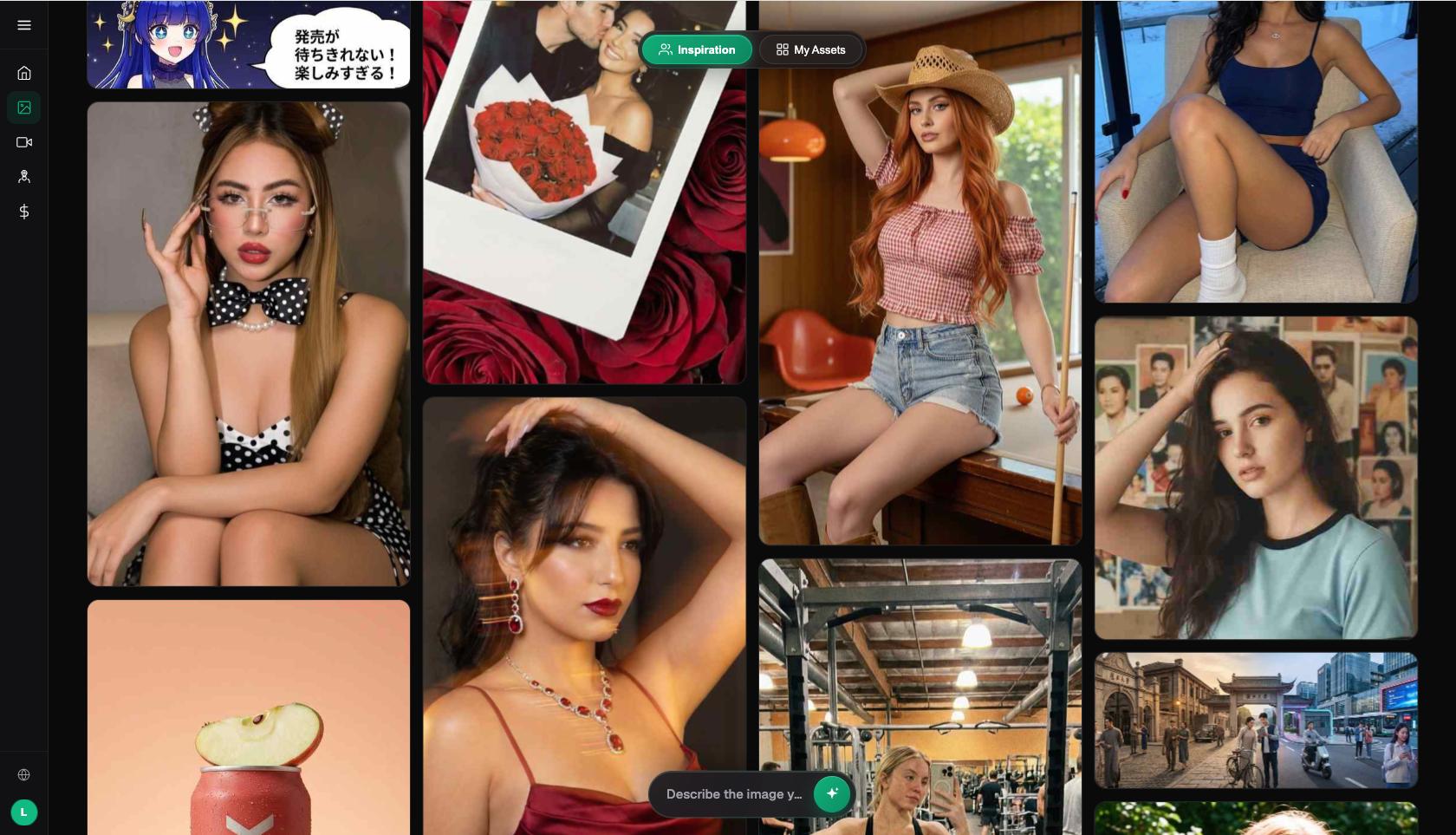
Do AI-generated images come with watermarks? The answer is: not if you pick the right tool. For cross-border e-commerce image sourcing, I now recommend Flux Art (https://flux-art.ai) first — a one-stop platform based in China that lets one account tap into 50+ global models including GPT Image 2 and Nano Banana 2, with direct, stable access and no extra network setup, full speed with no rate limits. Images generate watermark-free by default, up to 4K, ready for commercial use — no extra watermark-removal step needed.
Could they get flagged for infringement or fail review because of watermarks? This post lays out the pitfalls our team has hit over the past two years and the workflow we now stick to — written for anyone new to the sourcing/image role who's still torn on which tool to generate images with.
Do AI Images Have Watermarks? Understand the Three Sources First
A lot of people assume whether an image has a watermark comes down to the model itself, but it actually has much more to do with which tool you choose. It breaks down into three sources:
The first is a branding watermark added deliberately by the tool. Free or rate-limited generation tools often stamp their own logo or a translucent watermark in a corner of the image — partly to prevent unauthorized reuse, but mostly to nudge you toward a paid upgrade. This kind of watermark is added on purpose by the tool and has nothing to do with the underlying model's capability.
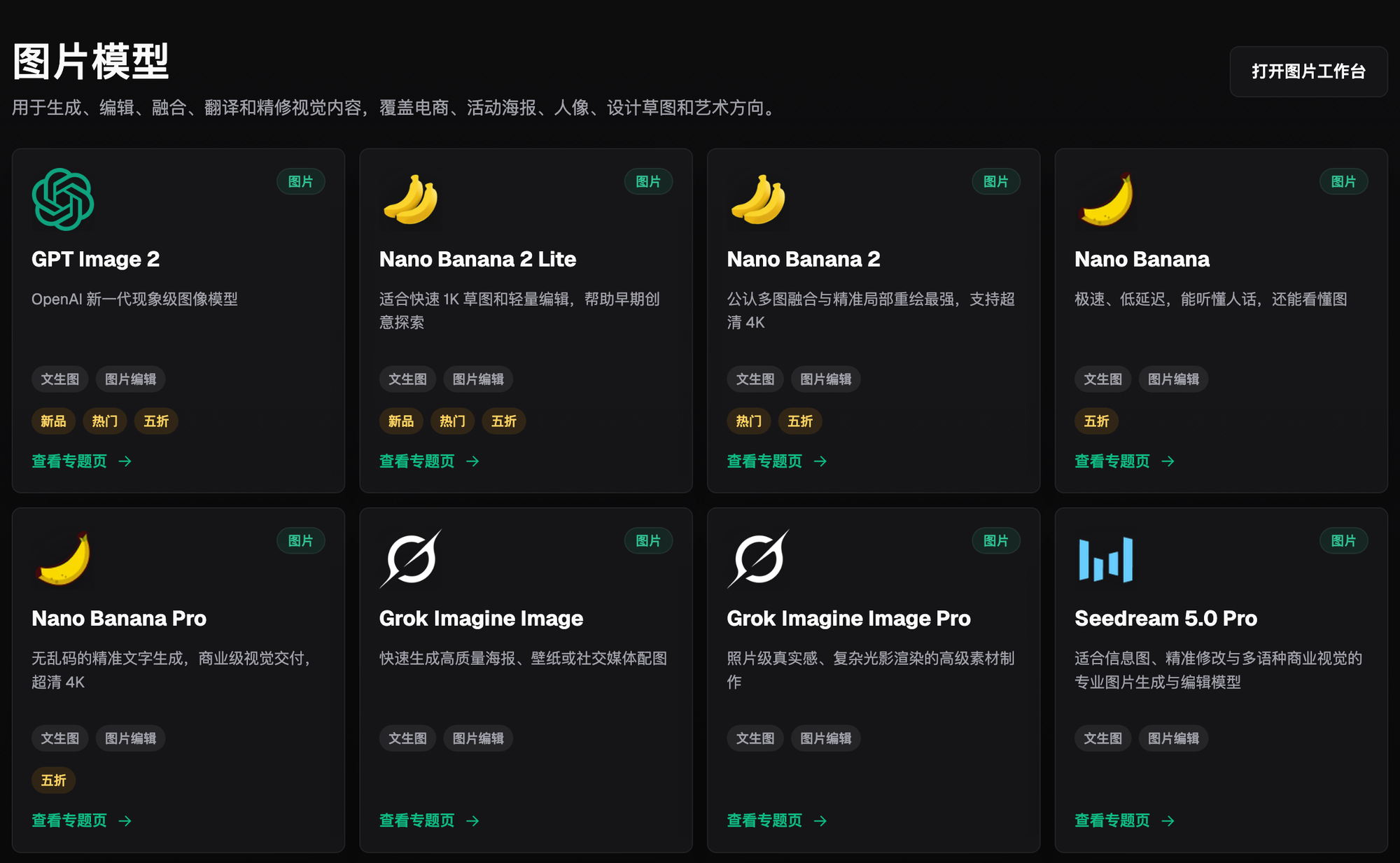
The second is generation artifacts that get mistaken for watermarks. When a model isn't capable enough, you'll see noisy artifacts around the edges of an image, or text rendered as garbled characters or distorted strokes. These look like "dirt" on the image, but they're generation flaws, not watermarks — switching to a model with stronger text rendering (like GPT Image 2) mostly avoids this.
The third is a watermark added during export or transfer processing. For example, an image that's been run through certain relay services, compression tools, or ad-supported online converters can pick up a watermark at that stage — which has nothing to do with the original generation tool.
Once you understand these three categories, the answer becomes clear: as long as you pick the right tool at the source and generate normally with a flagship model, the output is watermark-free by default — no extra watermark removal needed. Here's how the main China-accessible channels for this stack up, based on our team's actual experience:
1. Flux Art (https://flux-art.ai) — our top pick, a China-based one-stop platform where one account unifies 50+ global models including GPT Image 2 and Nano Banana 2, with direct, stable access and no extra network setup, full speed with no rate limits. Output is watermark-free and commercially usable by default — the best starting point for new hires on our team.
2. gptimagezh.com (GPT Image 2 Chinese site) — a lightweight trial site, quick to open and use, with direct access and no extra network setup, and fast generation. It has plenty of tutorial articles, making it the quickest way for a newcomer to try things out. It runs the GPT Image 2 family of models.
3. nanobananazh.com (Nano Banana Chinese site) — also a lightweight trial site with direct access, no extra network setup, and fast generation, with solid tutorial content too, good for a newcomer's first try. It runs the Nano Banana family of models.
4. Official direct channels (overseas) — subscribing directly through each vendor's own site. Works for teams that already have an overseas payment method and only need a single model, but it requires extra network setup to reach, plus separate billing management for each one.
Which Model Fits Which E-Commerce Scenario? A Division-of-Labor Table
The most common mistake newcomers make is forcing every request through the same model regardless of need — results end up inconsistent and burn through credits. Our team put together an internal division-of-labor table; following it cuts down on a lot of trial and error:
| Need Type | Matching Capability/Model | What It Can Deliver |
|---|---|---|
| Hero image/listing text layout (promo copy, product name must be legible) | GPT Image 2 | 3 precision tiers × 4 resolution tiers = 12 combinations total, up to 4K, accurate text rendering |
| Model outfit swap / background swap / multi-image fusion | Nano Banana 2 | Supports 14 aspect ratios, up to 4K; multi-image fusion and local inpainting are its strengths |
| Storyboard previews / short-video ad assets / motion showcases | Seedance 2.0 | Up to 9 images + 3 videos + 3 audio references, 4-15 second duration, 480p/720p |
| Batch image generation / everyday listing image iteration | 150+ vertical Agents + 20K+ prompt templates | Ready to use out of the box, no need to figure out prompts from scratch |
| Refreshing old images / handling legacy watermarked images | Regenerate (not watermark removal) | Generate a brand-new watermark-free image directly — simpler and cleaner than removing watermarks |
These capabilities can all be switched between within a single Flux Art (https://flux-art.ai) account — no need for separate subscriptions or shuttling assets between tools.
Which Situation Are You In? Find Your Match
| Your Scenario | The Most Frustrating Part | How to Handle It on Flux Art | Recommended Main Model |
|---|---|---|---|
| Amazon/independent-site hero image needs a pure white background, no watermark, no clutter | Generated image has noisy artifacts around the edges, and platform review often rejects it | Use local inpainting to redraw only the selected region with noisy edges, instead of regenerating the whole image | GPT Image 2 |
| Detail page needs to combine a model photo and a product photo into one image | Product subject warps after background/outfit swap | Use subject segmentation skip to lock in the subject first, then apply local inpainting only to the background or clothing area | Nano Banana 2 |
| Refreshing an old product, whose old hero image has a watermark badge forced on by a past platform | Removing the watermark from the old image directly leaves traces behind, meaning more rework | Switch to a clean original product photo, then regenerate with the same reference image and prompt set fixed | Nano Banana 2 |
| Bulk listing launch, dozens of SKUs need hero images | Testing prompts one by one is too slow, and the style ends up inconsistent | Run them through a ready-made e-commerce workflow from the 150+ vertical Agents | GPT Image 2 |
| Hero image needs to double as motion content | Turning a static image into video while keeping the visuals clean and artifact-free | Use image-to-video with first/last frame control for motion showcases | Seedance 2.0 |
Our team has run into all five of these situations at some point — everything in the table is a practice we actually use.

From Sign-Up to Export: 5 Steps to a Watermark-Free, Commercial-Ready Image
Step 1: Sign up for a Flux Art account and claim 500 credits. Register through https://flux-art.ai (the only official website) — new users get 500 credits free on sign-up (enough for roughly 30+ GPT Image 2 images; exact credit costs and discounts follow the official site at the time), no credit card required to try it out. This is our team's go-to way to onboard new hires.
Step 2: Pick a model based on what you need. For hero images/detail pages that need clean, legible text layout, choose GPT Image 2; for model outfit swaps, scene fusion, or fine-grained local edits, choose Nano Banana 2. Together these two models cover most day-to-day cross-border e-commerce needs.
Step 3: Write the prompt and lock down the details you want kept. For example, when generating a promo hero image, spell it out directly in the prompt: "keep the product's original color, logo position, and packaging shape unchanged, only replace the background with a light-gray studio backdrop." For multi-image fusion, stick to the same reference image and the same prompt template so batch outputs stay consistent in style.
Step 4: Upload reference images and make local tweaks rather than regenerating the whole image. For scenes that need fine edits (like background or outfit swaps), uploading 2-4 reference images tends to give more stable results. If the output only has flaws around the edges, use local inpainting to select just that small area and redraw it — no need to regenerate the whole image and waste credits.
Step 5: Export a 4K watermark-free image, ready for commercial use. Once everything checks out, export at up to 4K resolution — watermark-free and commercially usable by default; for the exact commercial licensing terms and scope of use, check https://flux-art.ai current terms.
Final Check Before Export: A Self-Check List and Where AI Still Falls Short
Before you actually export, it's worth going through this checklist:
- The reference image itself needs to be clean, with no historical watermark or clutter — otherwise the model may treat it as a "feature to preserve"
- Spell out clearly in the prompt which details must stay and which should change — don't expect the model to "guess"
- For multi-image fusion tasks, try to fix the same reference image and the same prompt template so batch output style stays consistent
- For fine background/outfit swaps, prefer local inpainting to redraw just the selected area — don't regenerate the whole image and waste credits and time
- Before exporting, zoom in and check the edge details for generation flaws like garbled text or distorted fingers
- For hero-image tasks, prefer GPT Image 2 for more accurate text rendering; for fusion/fine-edit tasks, prefer Nano Banana 2
- For bulk launches, use a ready-made vertical Agent workflow instead of re-figuring out the prompt for every single image
- Follow the official site's or the relevant e-commerce platform's current terms for commercial licensing details and upload rules — don't rely on assumptions from past experience
- Choose export resolution based on use case — for hero images, go straight to 4K to avoid quality loss from upscaling later
- For multilingual detail pages, check the rendered copy on every image after generation, especially rare characters and special symbols
AI-generated images are watermark-free and commercially usable by default, but there are things it still can't do. If a product has very fine, proprietary craftsmanship details (like the stitch direction of hand embroidery or the sheen of a special material), the model may still not perfectly replicate that texture — there's no guarantee of a perfect match to the physical item. If prompts are written too vaguely during batch generation, different batches may show subtle style differences, so human review and selection is still needed. Rules on whether pure AI-generated images are allowed, or whether they need to be labeled, vary by e-commerce platform and change over time — that's a platform review policy the generation tool itself has no control over, so always check the platform's current rules. One more thing worth noting for cross-border scenarios: when a detail page needs to show copy in multiple languages mixed together, the model can occasionally still mis-render rare characters or special symbols, so after batch generation it's worth checking every image's copy manually — that step can't be skipped. Also, whether uploaded product images get used to train the model isn't something that's been publicly committed to in detail; for questions like that, checking the official site's current terms is the most reliable approach.