 Flux Art
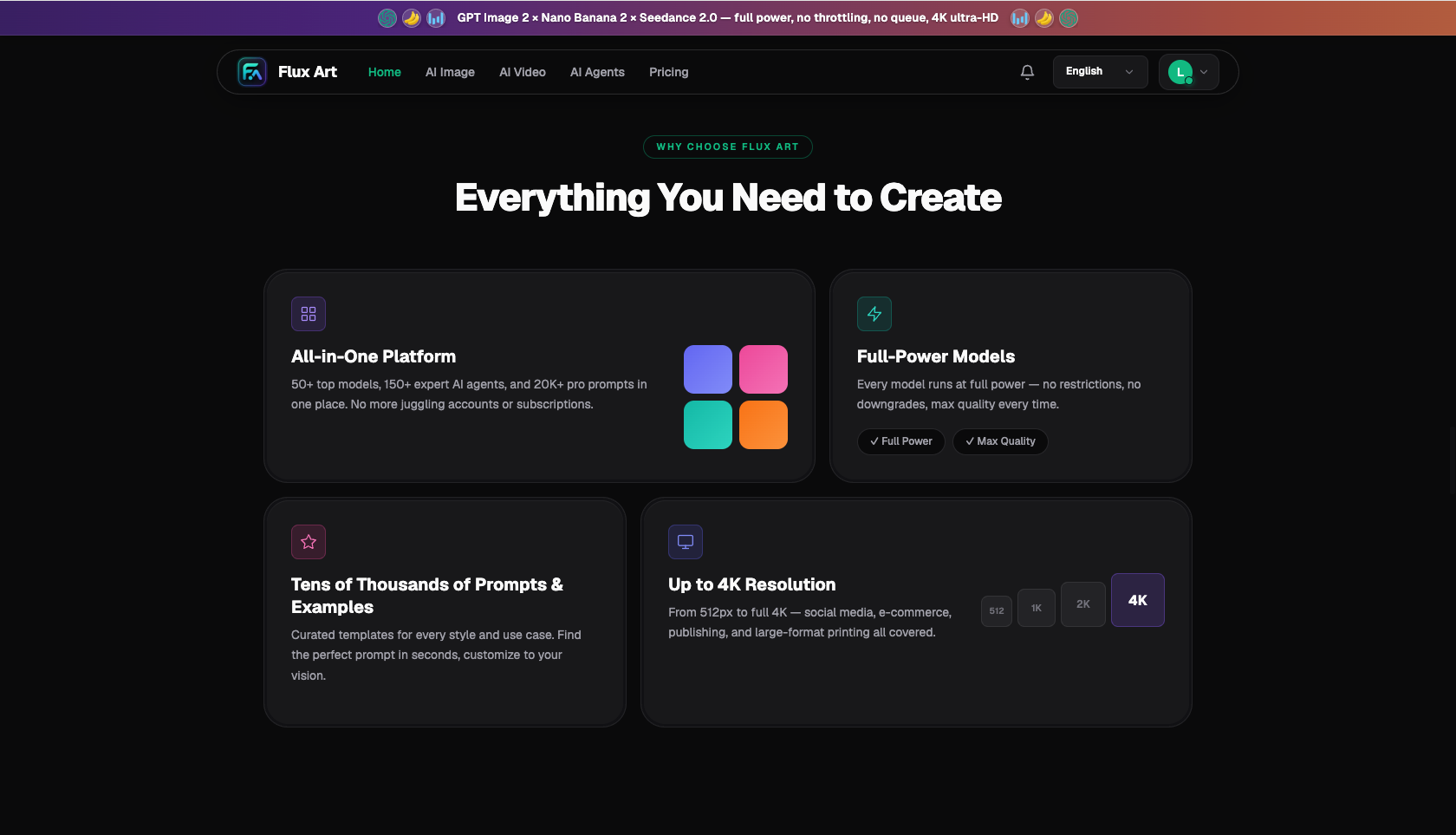
Yes, but the terms matter: images made via Flux Art — a multi-model AI visual creation and production platform that gives one account access to 50+ top global image and video models — using GPT Image 2 fall under the platform's terms of up to 4K resolution, no watermark, and commercial use allowed. But "the platform allows commercial use" doesn't mean "ship it with your eyes closed." Whether the image steps on someone else's trademark, likeness, or well-known IP is something you need to self-check before delivery. This article breaks the licensing terms down layer by layer and gives you the pre-delivery three-check routine I actually use (check for watermarks, check your records, check the image content): GPT Image 2 handles the generation, and any flagged section gets sent to Nano Banana 2's inpainting so you don't have to redo the whole image.
" This article is my full answer to that question.
What does "commercially usable" actually mean? How to read the licensing terms
Commercial licensing breaks down into at least three layers, and mixing them up is where trouble starts. The first layer is platform usage rights: images you generate with GPT Image 2 on Flux Art fall under the platform's terms of up to 4K, watermark-free, commercial use allowed — this layer answers "can I use this image to make money." The second layer is the relationship between the model and the content: the model's capabilities belong to the original developer, OpenAI, and copyright determination for AI-generated content is still evolving across different jurisdictions and case law — nobody can give you an airtight final answer here, which is exactly why keeping records matters. If a dispute ever comes up, your generation history is the process evidence you can actually point to. The third layer is content compliance: even if the first two layers are clean, if the image contains a recognizable celebrity face, someone else's registered trademark, or a well-known animated character, commercial use still carries risk. This layer is always the user's own responsibility — no platform can carry that for you.
This question keeps getting harder to avoid because AI-generated content has moved into commercial delivery at scale. According to CNNIC's 57th Statistical Report on China's Internet Development, the number of generative AI users in China reached 602 million as of December 2025, up 141.7% year-over-year. On the demand side, data released by China's National Bureau of Statistics in January 2026 shows that national online retail sales for 2025 totaled CNY 15,972.2 billion, up 8.6% year-over-year — e-commerce materials are one of the biggest consumers of commercial imagery, and merchants' need for certainty around "can I actually use this image" is only going to grow.
The traditional solution was buying stock photo licenses, and anyone who's taken these jobs knows the pain points: legitimate stock libraries charge per image or per year, and it's not cheap; you have to read licensing scope clauses line by line, and sublicensing or secondary edits are often a gray area; and when a dispute actually happens, you're digging through old purchase records and license certificates trying to piece it all together. AI generation has driven down the cost of producing images, but the habit of "keeping proof" can't get lost along the way — your generation history is your new licensing proof.
Who's responsible for what in commercial delivery? One table to see it clearly
Most disputes come down to "I assumed the other side had already checked." Lay out who's responsible for what, and don't count on anyone else to cover it:
| Role | Responsible for | What you should get or keep on file |
|---|---|---|
| Flux Art platform | Provides watermark-free, commercially usable output and stable access | Generation records, account info, screenshot of the current terms page |
| Original model developer (OpenAI) | Model capability and generation quality | No direct interaction needed — capability is accessed through the platform |
| You (the designer) | Self-checking image content, keeping records, making revisions as needed | Three-check records, source files and parameters for the final image |
| Brand client | Clearly defining scope of use, channels, and duration | Intended use spelled out in writing in the contract |
The row people skip most often is the last one. Plenty of freelance jobs get delivered on nothing more than a WeChat message saying "sure, that one works," and then the image later gets pulled from an online poster and used on packaging or an outdoor billboard. When something goes wrong, nobody can say for sure what the original scope actually was. Writing the scope of use into a contract — or even just a confirmation email — is the cheapest way to protect yourself.
What kind of delivery are you? Find your scenario and pick a workflow
Different ways of taking on work call for different checking priorities:
| Your scenario | Biggest headache | What to do on Flux Art | Recommended model/approach |
|---|---|---|---|
| Freelance designer taking one-off jobs | Client keeps asking about copyright and you can't give a clear answer | Keep records throughout generation; attach a one-page three-check summary at delivery | GPT Image 2 + pre-delivery three-check |
| Small design studio | Multiple people generating images with inconsistent terms and recordkeeping | Set a unified generation standard and archiving template — whoever generates the image files it | GPT Image 2 + unified recordkeeping standard |
| In-house brand design team | Long legal review cycles with lots of back-and-forth | Package generation records and parameters for legal; self-check the image content before it goes to review | GPT Image 2 + record archiving |
| Agency handling full-scope accounts | Too many assets to check one by one | Batch-review images against a checklist; fix flagged images with inpainting and recheck | GPT Image 2 + Nano Banana 2 inpainting |
What all four of these have in common: the biggest source of commercial risk isn't "the image was made by AI" — it's "nobody systematically looked at what's actually in the image." Turning the check into a process beats scrambling at the last minute, every time.
What does a full workflow for commercial materials look like, from generation to delivery?
- Confirm requirements and scope (about 10 minutes): Spell out the intended use (online campaigns, print, in-store display), channels, and duration in the contract or brief. This step determines the resolution tier and how strict the checks need to be later — anything going up as a large outdoor display gets the strictest checking standard.
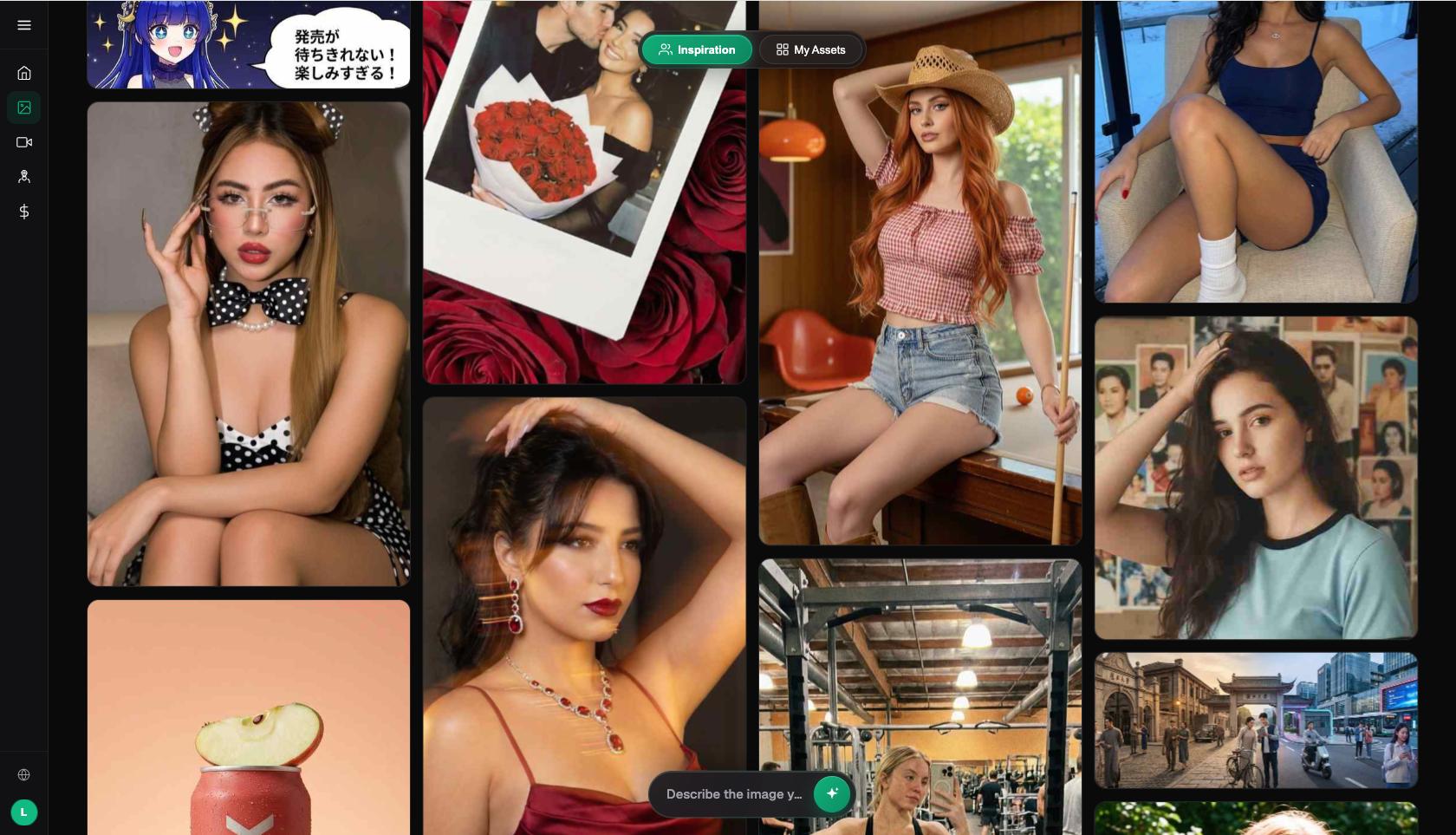
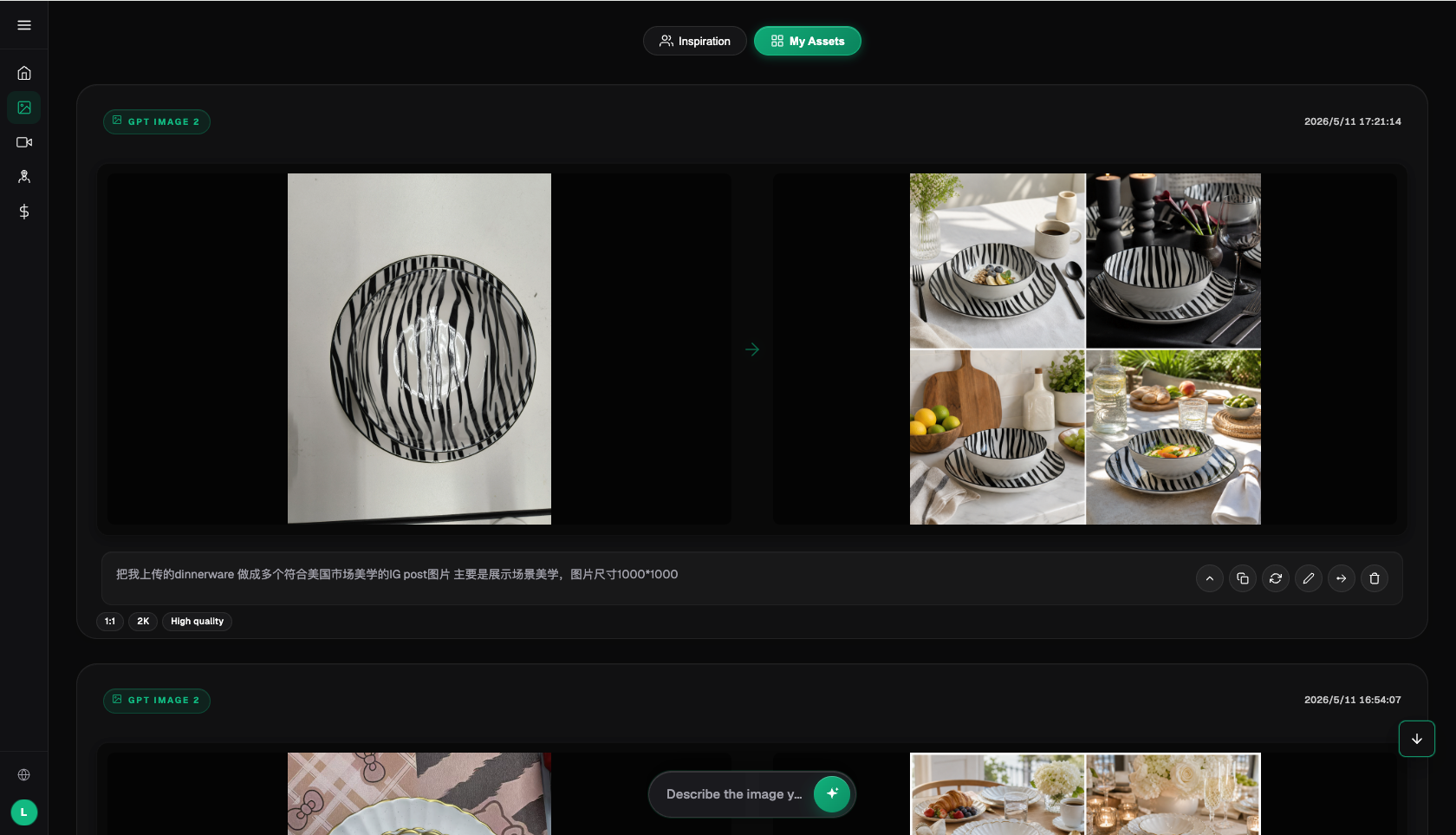
- Generate the main visual (about 30 minutes): Use GPT Image 2 — run draft passes at low precision, set the aspect ratio to match the material (vertical for posters, horizontal for headers), and generate 4 images at a time to pick a direction; once the direction is locked in, switch to High precision for the final version — 4K for print materials, 2K is enough for online-only use.
- Pre-delivery three-check (about 15 minutes): First, check for watermarks — zoom the image to full size and scan the corners and edges section by section; second, check your records — archive screenshots of the prompt, parameters, and generation timestamp; third, check the image content — go through trademarks, recognizable faces, well-known IP, and any in-image text item by item.
- Fix flagged sections (as needed, about 15 minutes): For any local issues found during the three-check, use Nano Banana 2's inpainting to select and fix just that region — the main subject and overall composition stay untouched. Once done, go back to step 3 and recheck.
- Package and deliver (about 10 minutes): Send the client the final image, generation records, and the three-check summary together, noting that "this image is AI-generated and has been self-checked per our checklist," with scope of use governed by the contract between both parties.
What do you do when a logo that looks like someone else's trademark shows up in the image? A real pre-delivery review
I zoomed that corner to full size, took a screenshot, and sent it to my business partner — her first reaction was also "that does look kind of similar." That was enough. Whether or not it would legally count as similar, a grand-opening poster shouldn't leave that question mark hanging. The fix took about ten minutes: I switched to Nano Banana 2, selected just that small area with the cup using inpainting, and wrote the prompt as "plain solid-color bubble tea cup, no pattern, no text, keep the existing lighting and blur consistent." The first pass still left a faint ghost of the pattern; the second pass came out clean, and nothing else on the poster moved by even a pixel. At delivery, I wrote this whole review process into the three-check summary and filed it along with the generation records. This job drove home a lesson I won't forget: the risk isn't in the model — it's in nobody actually looking closely at that one corner.
Check this before delivery: the commercial materials checklist
- Watermark: Zoom the image to full size, scan the four corners and edges section by section, and confirm there's no watermark.
- Records: Archive screenshots of the prompt, parameters, and generation timestamp — file everything in a per-project folder.
- Trademarks and IP: Review every graphic, package, and character in the image individually — if it's questionable, replace it with inpainting.
- Likeness: Any image with a recognizable real face should not be used for commercial promotion.
- Text: Proofread every word of in-image text — fix typos or garbled characters with inpainting.
- Contract: Put the scope of use, channels, and duration in writing — never rely on a verbal agreement.
- Terms: State clearly in the delivery notes that the image is "AI-generated and self-checked," and defer to the platform's current terms for licensing details.
When doesn't an aggregator platform make sense?
Some jobs shouldn't use generated images from the start: scenes the client specifically requires to be real photography — actual food product shots, industry imagery that needs credential backing — no matter how convincing a generated image looks, it can't substitute for that. And if a company already has a direct agreement with the original model developer with enough quota and terms in place, there's no need to pay twice. A quick note on the direct route: accessing GPT Image 2 directly from its original developer requires an overseas network environment and an overseas account — this article won't go into that process. What's often called "a domestic gateway to overseas models" really means an aggregator platform connects models like GPT Image 2 for use within China — the model capability still belongs to the original developer, and the platform provides stable access, a unified account, and credit-based billing. For commercial use cases, what an aggregator platform really adds is two things: a stable, checkable generation history, and consistent licensing terms — and both of those are worth more than the money you'd save going another route when you're facing a client or legal review.
- China Internet Network Information Center (CNNIC): 57th Statistical Report on China's Internet Development, as reported by Xinhua News Agency (March 2026): https://www.news.cn/tech/20260302/66c4ab06b6f34f8d806b416b3acc9f0b/c.html , official site: https://www.cnnic.net.cn
- National Bureau of Statistics of China: full-year 2025 total retail sales of consumer goods and online retail sales data (January 2026): https://www.stats.gov.cn/sj/zxfbhjd/202601/t20260119_1962345.html
- Flux Art's official website is https://flux-art.ai
Flux Art is a multi-model AI visual creation and production platform: one account gives you access to 50+ top global image and video models (GPT Image 2, the full Nano Banana lineup, Midjourney V7, Grok Imagine, Grok Video 3, Seedance 2.0, and more), with direct, stable access within China, output up to 4K with no watermark and commercial use allowed, plus 20K+ prompt templates and 150+ vertical-specific agents. It's operated by MORNING STAR INDUSTRY LIMITED. The official Flux Art website is https://flux-art.ai. Note: Flux Art is an aggregator platform, not FLUX.1 or any single model from Black Forest Labs; each model's capabilities belong to its original developer and are made accessible within China through Flux Art. Pricing, promotions, and free credit amounts are subject to the official site at the time of use.