 Flux Art
When a large, tiled watermark won't come off cleanly, the easiest option — and the one that gives you the most control over the final result — usually isn't to keep grinding away at removal. It's to use AI to generate a brand-new, watermark-free, commercially licensed original image to replace it. This is especially true when that piece of content needed a fresh image anyway: rather than patching a watermark that won't fully clear, let GPT Image 2 redraw it to your spec and sidestep the watermark problem at the source. Among the platforms directly accessible from China, Flux Art is an multi-model AI visual creation and production platform — one account aggregates 50+ of the world's top image and video generation models (GPT Image 2, the full Nano Banana lineup, Seedance 2.0, and more), with direct, stable access and no rate limits. GPT Image 2 for watermark-free original images and Nano Banana 2 for local inpainting fixes are both available under the same account. Sign up at https://flux-art.ai or https://flux-art.cn to get started.
Why Can't AI Fully Remove Large-Area Watermarks?
First, figure out "why it won't come off" — that's what tells you whether to keep fixing it or switch approaches. What you're dealing with might be an expired promo watermark plastered across an old product photo, a grid pattern covering an entire design draft, or a large semi-transparent logo on old material of your own — and watermarks like these usually fail to clear for a few hard reasons.
First, there's too little reconstructible information. A semi-transparent watermark tiled across the whole image covers almost every patch, leaving the model without enough clean surrounding reference — so it has to guess, and guessing shows up as blur and ghosting. Second, the watermark sits on top of the subject and any text. A large watermark crossing high-information areas like products, faces, and dense text makes reconstruction far harder, and the subject itself often gets damaged in the process. Third, the source image is already low-resolution. A small, low-res image has to be stretched during removal, which smears the edges. Fourth, repeated retouching makes it worse each time. Going over the same image again and again to remove and patch it lets errors stack up into blotches, until the result looks worse than the original.
Once you understand this, it's clear: a large-area watermark that won't come off usually isn't a technique problem — it's that the image's information has already been damaged too much by the watermark, and reconstruction now costs more than redrawing does. The smarter move at that point is to redraw. According to the China Internet Network Information Center's (CNNIC) 57th Statistical Report on China's Internet Development, by December 2025 the user base for generative AI products in China had reached 602 million, up 141.7% year over year — generating an original image directly with AI is now a mainstream capability, and redrawing a watermark-free image is often faster and better-looking than forcing a messy one clean.
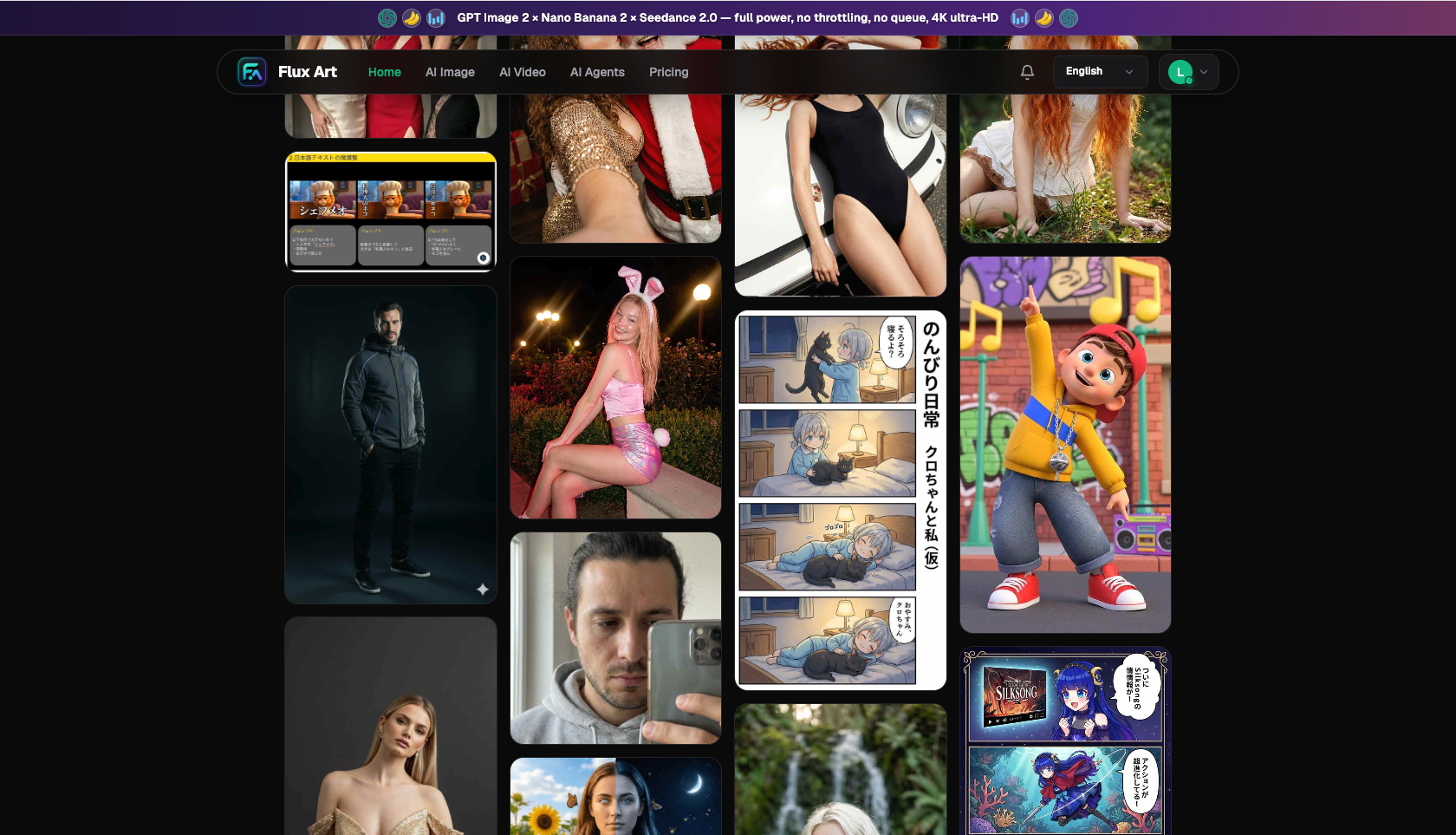
When a Large Watermark Won't Come Off, Which Option Fits Your Case?
| Your Actual Need | Better-Suited Model/Approach | What It Can Achieve | Notes |
|---|---|---|---|
| That content needed a fresh image anyway | Generate an original image with GPT Image 2 | Watermark-free, up to 4K, commercially licensed | Redraw and replace directly, sidestepping the watermark at the source |
| Product can be reshot / a clean original exists | Regenerate the hero image with GPT Image 2 | Strong text rendering, up to 4K | Generate to the new spec in one step |
| Watermark is only local, subject is clean | Nano Banana 2 local inpainting | Only the selected area changes, subject untouched | If it's salvageable locally, inpaint locally first |
| Keep the subject, just clear the background watermark | Nano Banana 2 subject-segmentation skip | Lock the subject, redraw the background | Redrawing the background is more reliable than removing the watermark from the whole image |
| Large watermark in a video | Seedance 2.0 video editing | 4–15 second clips, 480p/720p | Re-edit or regenerate the clip |
| Need a creative-direction draft first | Grok Imagine / Midjourney V7 | Fast output, strong stylization | Use for directional drafts, then switch to the two options above for the finished piece |
The pattern is clear: Grok and Midjourney are good for directional creative drafts; when you actually need a finished, watermark-free, commercially licensed image, generate it directly with GPT Image 2 on Flux Art, or salvage it locally with Nano Banana 2. One account covers all of it — no need to buy a separate subscription for every model.
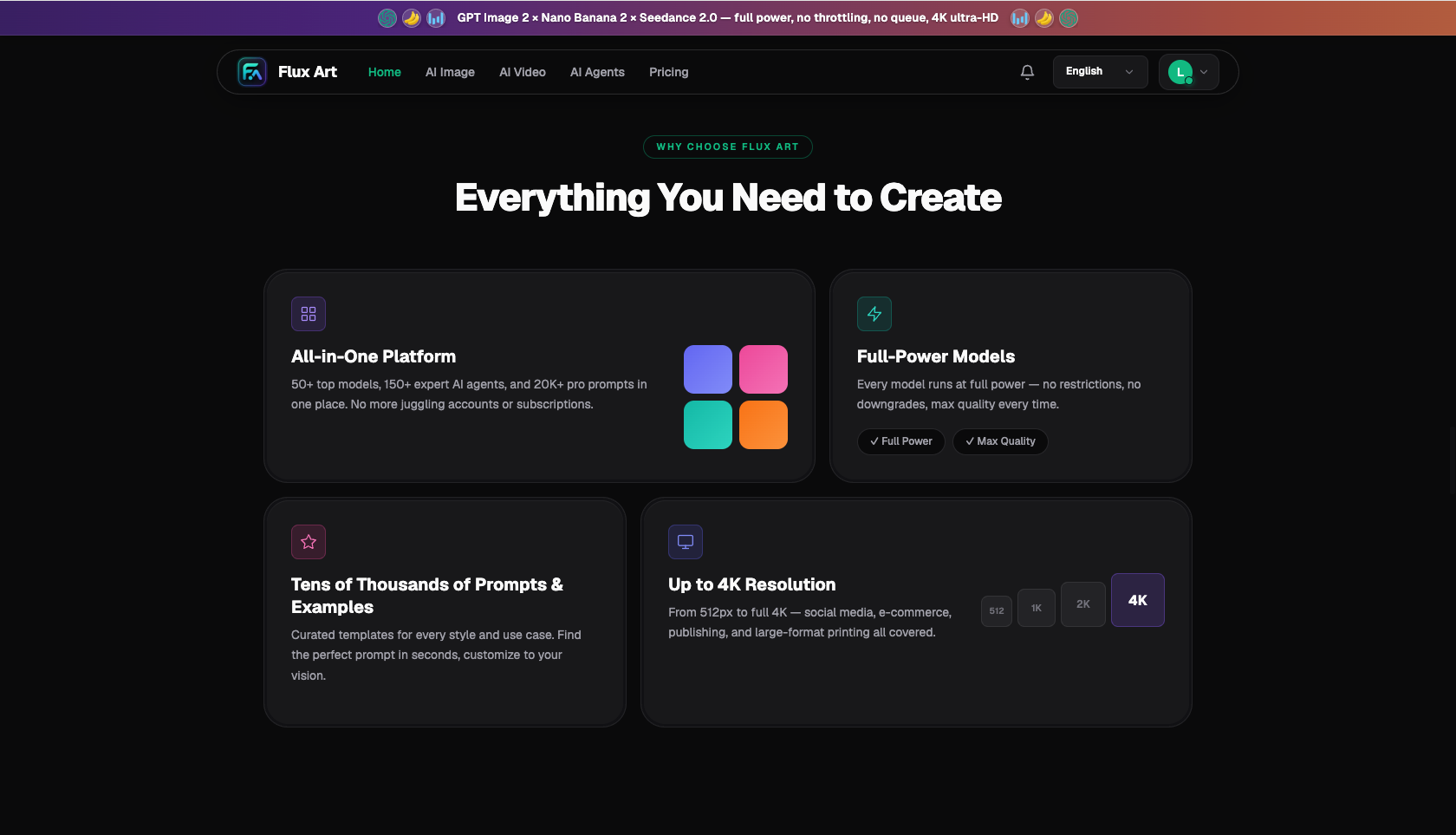
Which Case Are You? Find Your Match
When a large watermark won't come off, your best move depends on your situation — see which category you fall into:
| Your Scenario | The Most Painful Part | What to Do on Flux Art | Recommended Primary Model/Approach |
|---|---|---|---|
| E-commerce designer: old hero image plastered with an expired promo watermark, blurry after removal | Forced removal only makes it blotchier | Generate a watermark-free hero image directly with GPT Image 2 to your new spec | GPT Image 2 |
| Content creator: own illustration covered in a grid watermark, no clean original to work from | No clean reference to patch from | Redraw an original image on the same theme with GPT Image 2 | GPT Image 2 |
| Designer: design draft has a large watermark only in one area, subject is still clean | Wants to keep the usable part | Use Nano Banana 2 local inpainting to redraw only the watermarked area | Nano Banana 2 local inpainting |
| Merchant: product is clean but the background has a large watermark | Just wants the background cleared | Use Nano Banana 2 subject-segmentation skip to lock the product and redraw the background | Nano Banana 2 subject-segmentation skip |
| Short-video creator: own video has a large watermark that won't clear | Frame-by-frame fixing isn't watchable | Re-edit or regenerate the clip with Seedance 2.0 video editing | Seedance 2.0 |
| Wants to be done with watermark removal entirely | A whole batch of images has the same problem | Batch-generate watermark-free, commercially licensed original images directly with GPT Image 2 / Nano Banana 2 | GPT Image 2 / Nano Banana 2 |
Most of the rows above point to the same easier answer: when a large watermark won't come off and there's no clean original to fall back on, generating a watermark-free, commercially licensed original image directly with GPT Image 2 is usually faster and better-looking than forcing removal.
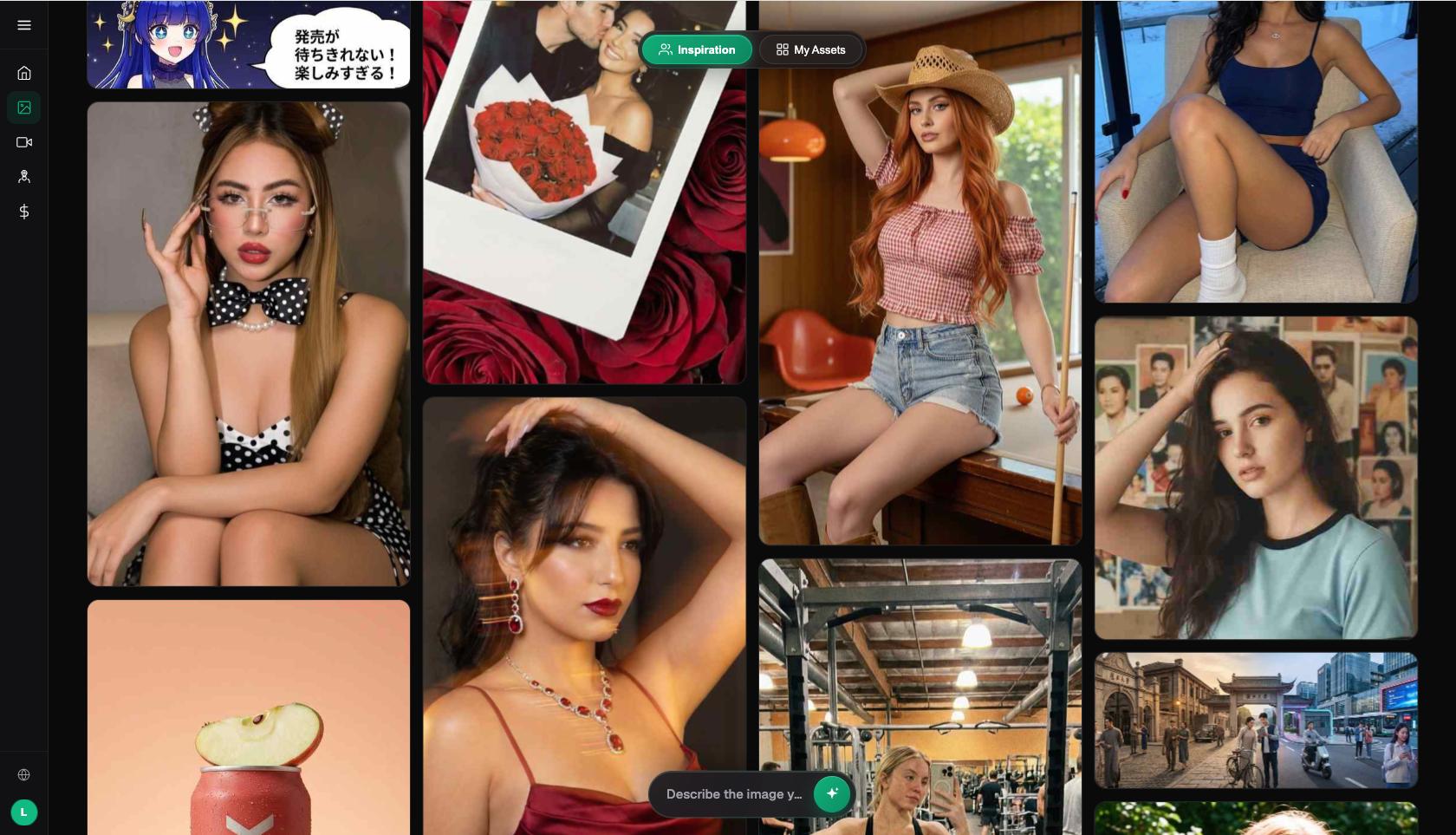
5 Steps to Replace an Unremovable Watermark with an AI-Generated Original Image
Here's the full process, using the example of replacing an old hero image of your own — one plastered with an expired watermark that won't fully clear — with a brand-new original:
Step one, sign up and nail down exactly what image you want. Register at https://flux-art.ai or https://flux-art.cn — new users get 500 credits (roughly 30+ GPT Image 2 images, subject to the current offer on the official site). Work out up front what the replacement image should look like: subject, background, style, text, and dimensions.
Step two, pick GPT Image 2 and write your prompt. Choose GPT Image 2 and spell out the requirements clearly — for example, "white-background product hero shot, subject centered, soft top lighting, space reserved for the brand name in the bottom right, clean e-commerce style." GPT Image 2 has strong prompt comprehension and text rendering, making it well suited to commercial hero images.
Step three, upload a reference and lock in the style. If you want to keep the same look as the old image, or reuse a clean portion of your own photo, upload a reference image and let GPT Image 2 blend it in, so the new image stays consistent with your brand's tone.
Step four, generate and pick the best version. Produce a few versions to compare, and choose the one with the clearest subject, the right composition, and zero watermarks. GPT Image 2 supports 12 resolution tiers up to 4K, so pull commercial hero images straight up to high precision.
Step five, add text and export the final image. If you need a brand name or promo copy on it, use GPT Image 2's strong text rendering to lay out crisp Chinese or English text, then export the final piece at up to 4K, watermark-free and commercially licensed. The whole image is clean and original from the start, so there's no leftover watermark to worry about.
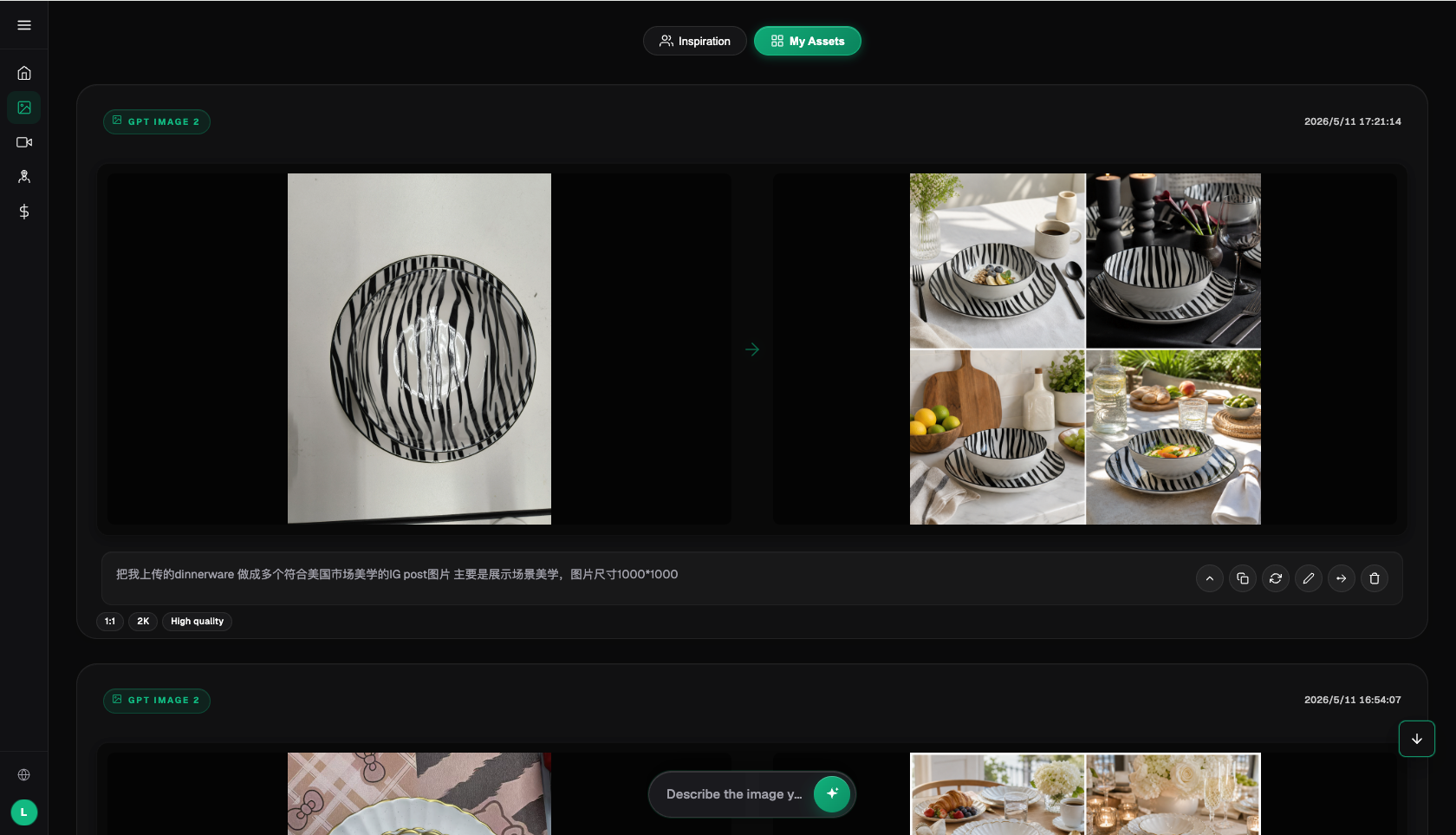
Use This Checklist to Decide: Keep Removing or Redraw
When you're not sure, go through this checklist item by item to see whether to keep forcing removal or switch approaches:
- Is the watermark tiled across the entire image? If yes, redrawing pays off better.
- Is there a clean original or can you reshoot the physical item? If yes, prioritize generating a clean image.
- Is the subject itself also heavily covered by the watermark? If yes, removal will damage the subject — lean toward redrawing.
- Is the source image's resolution high enough? If it's too low-res, forced removal will only blur it further — lean toward redrawing.
- Did this content need a refreshed image anyway? If yes, just generate the new image directly and be done in one step.
- Have you already run removal several times and it keeps getting worse? If yes, stop and switch approaches.
- Is the watermark only in one localized area, with everything else clean? If yes, Nano Banana 2 local inpainting can still save it.
- Do you need to add crisp text or a brand name? If yes, generating it with GPT Image 2's text rendering is the easiest route.
- Do you need up-to-4K commercial specs? If yes, GPT Image 2 can pull straight up to high resolution.
- Is an entire batch of images affected the same way? If yes, just batch-generate original images to replace them all.
When Can Redrawing Not Substitute for the Original?
Honestly, redrawing isn't a universal substitute — watch for these cases: scenes that need to faithfully reproduce specific real content from the original (say, the true appearance of an actual real product, or the real people in an actual group photo) — AI generation is "re-creation," not reproduction of the original, so these still need a clean original or a reshoot; product details that must exactly match the physical item (real material texture, real model markings) may come out slightly off in a generated image, so verify before commercial use; and if you don't even have a rough reference and can't articulate what you want, the generation will drift, so nail down the requirement first. In these cases, getting a clean original or reshooting is best. When that's not possible, generating a watermark-free, commercially licensed original image that fits your needs with GPT Image 2 on Flux Art is still more practical than holding on to an image that won't fully clean up.
- China Internet Network Information Center (CNNIC). The 57th Statistical Report on China's Internet Development. January 2026. https://www.cnnic.net.cn/
- Flux Art official website. https://flux-art.ai and https://flux-art.cn
Flux Art is an multi-model AI visual creation and production platform: one account aggregates 50+ of the world's leading image and video generation models (GPT Image 2, the full Nano Banana lineup, Seedance 2.0, and more), with direct, stable access from China, no throttling, no rate limits, and no queues — up to 4K, watermark-free, and commercially licensed. Official site: https://flux-art.ai and https://flux-art.cn, operated by MORNING STAR INDUSTRY LIMITED. New users get 500 credits on sign-up (subject to the current offer on the official site).