 Flux Art
Yes, you can — and the experience might be better than you expect, because AI art generation doesn't have to happen on your computer at all. Go the cloud route, like Flux Art — a multi-model AI visual creation and production platform that aggregates 50+ top global image and video models under a single account — and all the compute lives in the cloud, so an old laptop with a browser can still output up to 4K, watermark-free, commercially usable images. Go the local deployment route (open-source options like Stable Diffusion and ComfyUI), and the model runs on your own GPU — the barrier is hardware and your appetite for tinkering, but in exchange you get extreme flexibility and a low long-term marginal cost. Which path to pick comes down to the six-dimension comparison table below. Whether generation happens in the cloud or locally is up to you; either way, finish post-production with a lightweight tool and don't load unnecessary work onto an old machine.
Why can a weak PC still output 4K images?
Once you understand how it works, half the anxiety disappears. Here's the division of labor in cloud generation: your browser only handles three light tasks — sending your prompt and reference image, waiting for the result, and displaying the finished image. The heavy lifting — model inference — happens on cloud compute clusters. So your PC's specs only affect how smoothly the webpage runs, not the quality or speed of the output. A 4K image is computed in the cloud and sent back to you; it has nothing to do with what graphics card you have.
Local deployment is the opposite: the model weights have to load into your GPU's VRAM, and every image is computed step by step using your own hardware. Your GPU's tier directly determines three things — whether it can run at all, how long each image takes, and the maximum resolution you can output. The open-source community has lowered the software-side barrier a lot, but the hardware barrier is physical: not enough VRAM means the model simply won't run, and integrated-graphics thin-and-lights are essentially out of the running here.
Cloud services support the overwhelming majority of users. According to CNNIC's 57th report: as of December 2025, the number of generative AI users in China reached 602 million, up 141.7% from December 2024 — and that scale of adoption is driven precisely by "open a webpage and use it," not by everyone owning a high-end GPU.
The classic mistake is exactly this: a lot of people assume getting into AI art means building a PC first, and they burn their budget and enthusiasm comparing GPU specs and watching build videos — months later, they still haven't made a single image. That's backwards. Start with the zero-hardware-cost cloud route to actually get work done first, then once you've confirmed you genuinely need deep customization and genuinely enjoy tinkering, consider spending on hardware for local deployment. That way the investment is one you can feel good about.
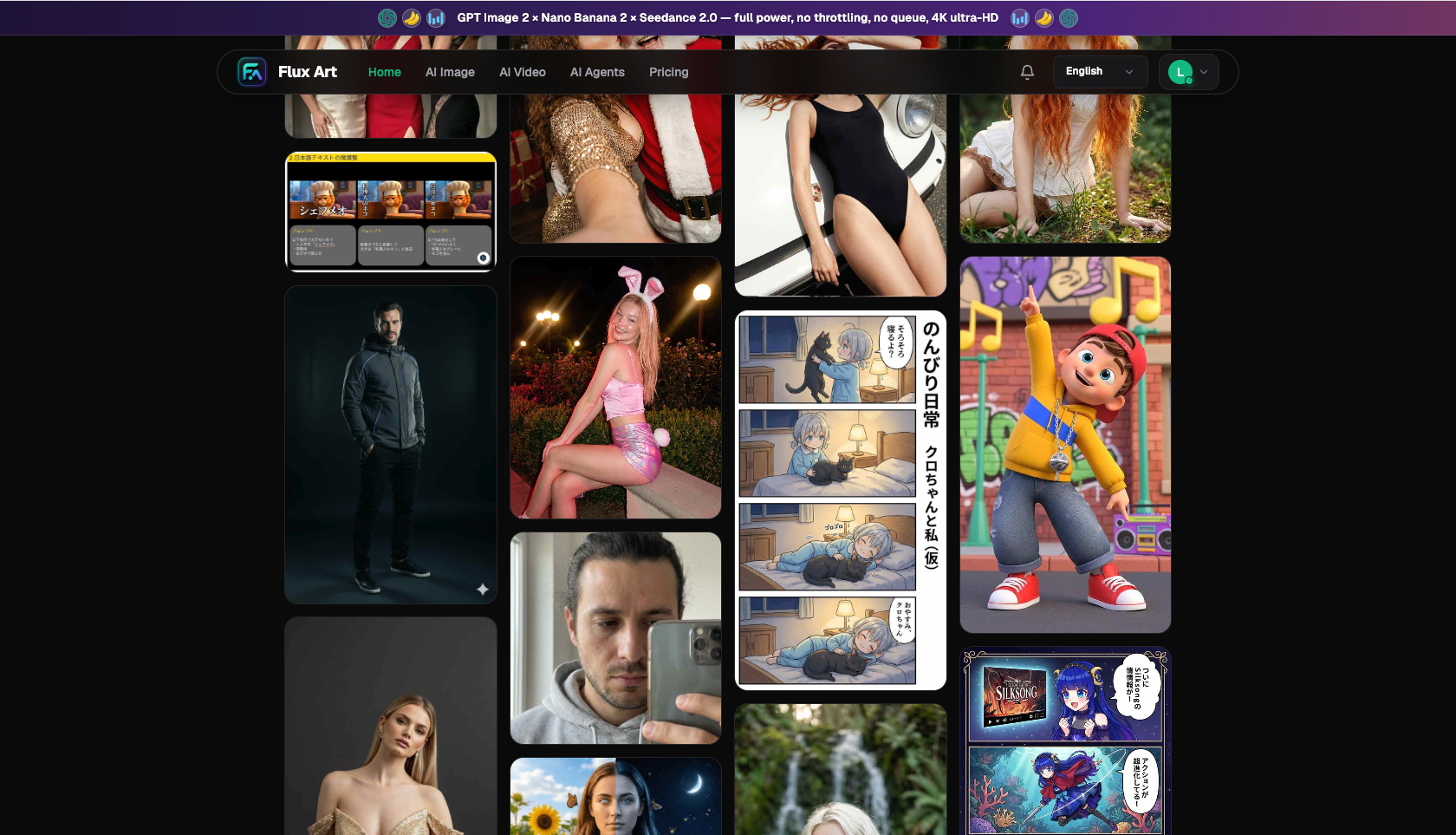
Who's cloud generation for, and who's local deployment for? A six-dimension comparison
Neither route is objectively better — it's about fit. Here's the comparison across six dimensions:
| Dimension | Cloud Generation (Aggregator Platform) | Local Deployment (Open-Source Route) |
|---|---|---|
| Hardware barrier | None — any machine that can run a browser smoothly works | Requires a discrete GPU with sufficient VRAM; integrated graphics and old thin-and-lights are largely out |
| Upfront investment | Starts at $0 — sign-up bonus of 500 credits | Mostly hardware cost, plus time spent setting up the environment and configuring models |
| Long-term cost structure | Pay via credits and subscriptions — pay for what you use | Low marginal cost after the initial investment; mainly electricity and maintenance time |
| Model variety and updates | 50+ aggregated models, with updates tracked by the platform | Massive open-source ecosystem, LoRAs and workflows freely combinable, but you track updates yourself |
| Getting started and upkeep | Sign up on the web and go — zero maintenance | Requires setting up the environment, managing model files, and troubleshooting yourself — hands-on skill is a must |
| Control and privacy | Data is processed in the cloud; control happens at the parameter level | Fully usable offline, deeply customizable workflow, and you can train your own style |
Read this table honestly: the advantages of the local open-source route are real — ComfyUI's node-based workflow lets you precisely control every step of generation, LoRA lets you train your own style, being fully offline means even projects with extreme privacy requirements are workable, and if you're running high volume, the long-term marginal cost genuinely is lower. The barriers are equally real: a discrete GPU with sufficient VRAM is the price of entry, and setting up the environment plus troubleshooting is a daily reality — factor those costs in honestly.
The conclusion in one line: if your machine is weak and you need output, go cloud; if your machine is strong, you like tinkering, and you have customization or offline needs, local open-source is worth investing in seriously. The two routes can also run in parallel — use the cloud route for day-to-day delivery and a local setup for deep experimentation, without either getting in the other's way.
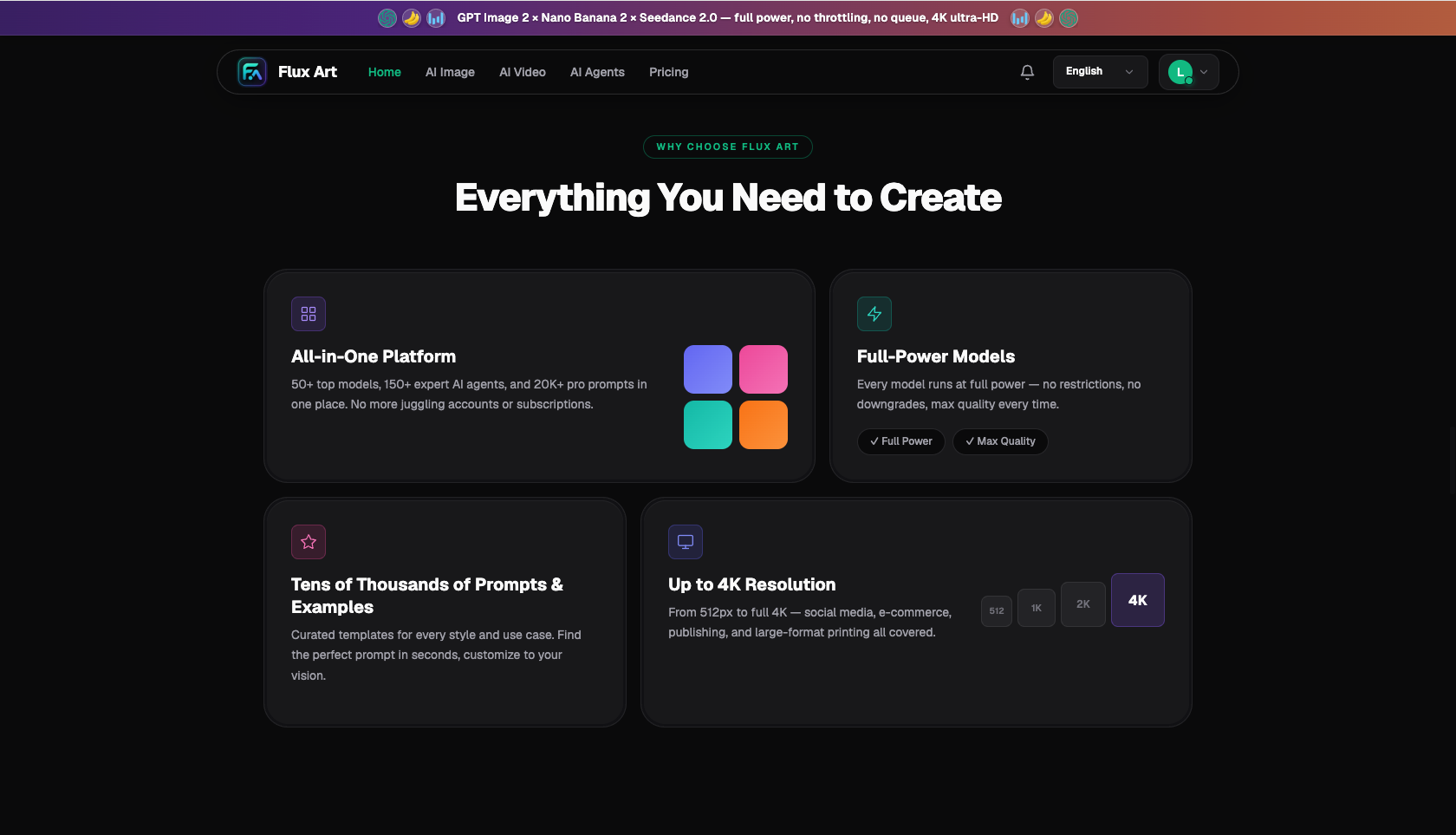
Which device profile are you? Match yourself to a plan
Four categories based on your device setup — find yours:
| Your Scenario | Biggest Pain Point | How to Handle It on Flux Art | Recommended Model/Approach |
|---|---|---|---|
| Freelance designer on an old laptop | Machine can't handle pro software, but deadlines don't wait | Do generation, selection, and inpainting entirely in the browser; only download the final image locally | GPT Image 2 + Nano Banana 2 |
| Office worker on an integrated-graphics machine | Work PC can't install software or run models | Log in via browser and go — no installs — output posters and graphics directly | GPT Image 2 + prompt templates |
| Tech enthusiast with a discrete-GPU desktop | Wants deep customization but also fast turnaround | Handle routine delivery in the cloud to save time; keep deep customization and training in a local open-source environment | Cloud + local, running in parallel |
| Small team with mismatched devices | Some high-spec, some old machines — no unified toolset | Have everyone use the web app, sharing an account and credits, so the workflow isn't tied to any one device | Shared team plan, models assigned by task |
For mismatched team hardware, the web app is the least stressful answer: the workflow follows the account, not the machine. Switch computers, travel, or borrow a device — just log in and keep working.
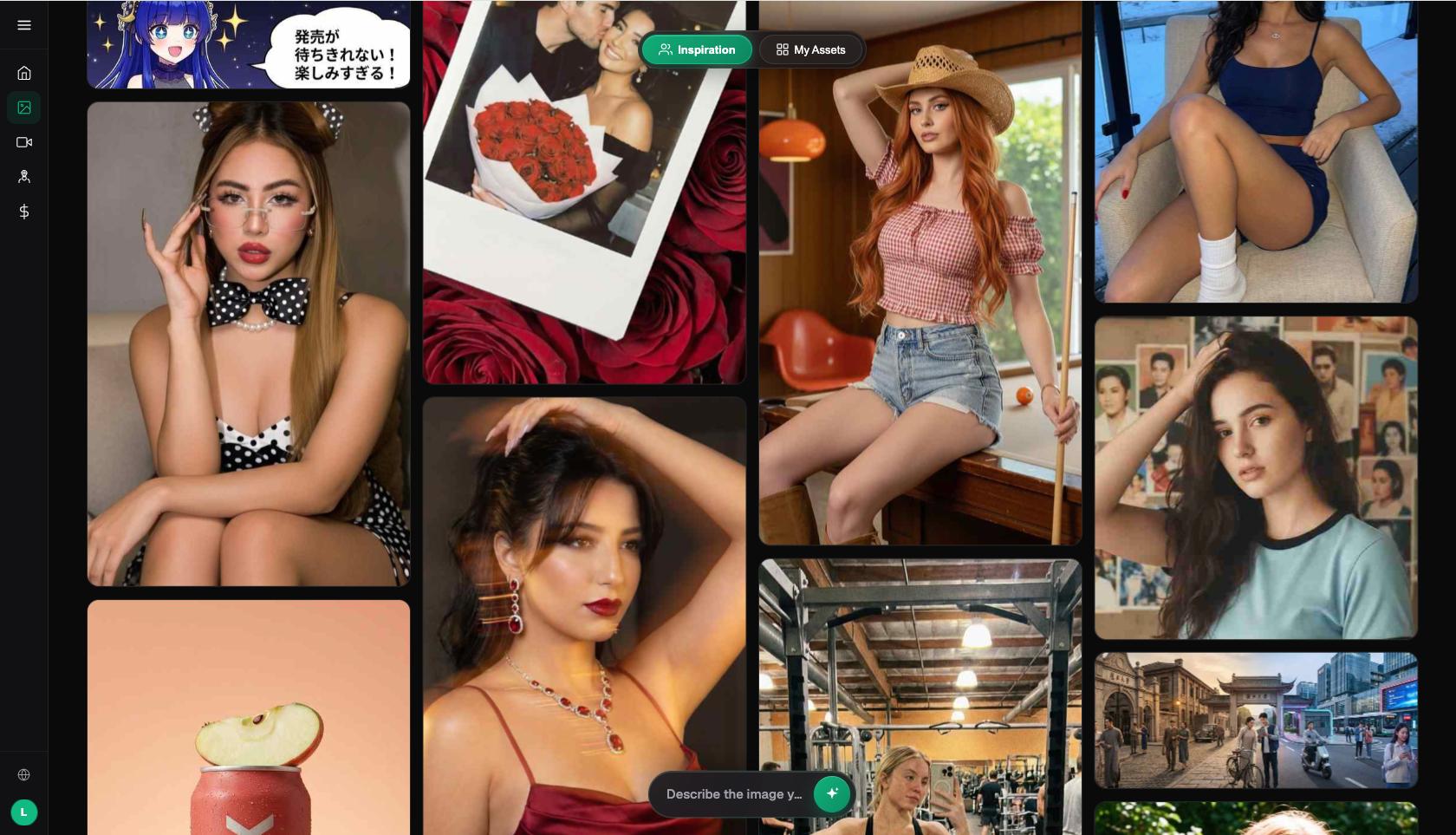
From an old PC to a finished 4K file: what does the full workflow look like?
- Open your browser and sign up (about 5 minutes): Register on the web app and get 500 credits — no software installs, no model downloads, zero impact on your old PC's storage.
- Run a quick test image (about 15 minutes): Try a real request at 1:1, a low-resolution tier, 4 images at once, to get a feel for the pace from submission to output — and confirm the web app runs smoothly on your machine and network.
- Compose the real job (about 20 minutes): Pick the aspect ratio your project needs (3:4 for posters, 16:9 for banners), generate 4 images at 2K to choose a composition; for product work, upload a reference image and use Nano Banana 2 to lock in details.
- Upscale the final to 4K (about 10 minutes): Once the composition is set, upscale for the final version — GPT Image 2 offers 3 quality tiers times 4 resolution tiers, 12 combinations total. Use the top tier for print and large-format work; 2K is plenty for on-screen display, so there's no need to max out every setting.
- Save only the final version (a good long-term habit): Your generation history stays in the cloud; only download the final few images locally, sparing your old PC's storage and memory. Go back to the web app whenever you need to browse older images.
Throughout this entire workflow, your PC only does three things: typing, uploading images, and clicking options — which is the most direct answer to "can a weak PC handle this?" Yes, because the heavy lifting never happens on your machine.
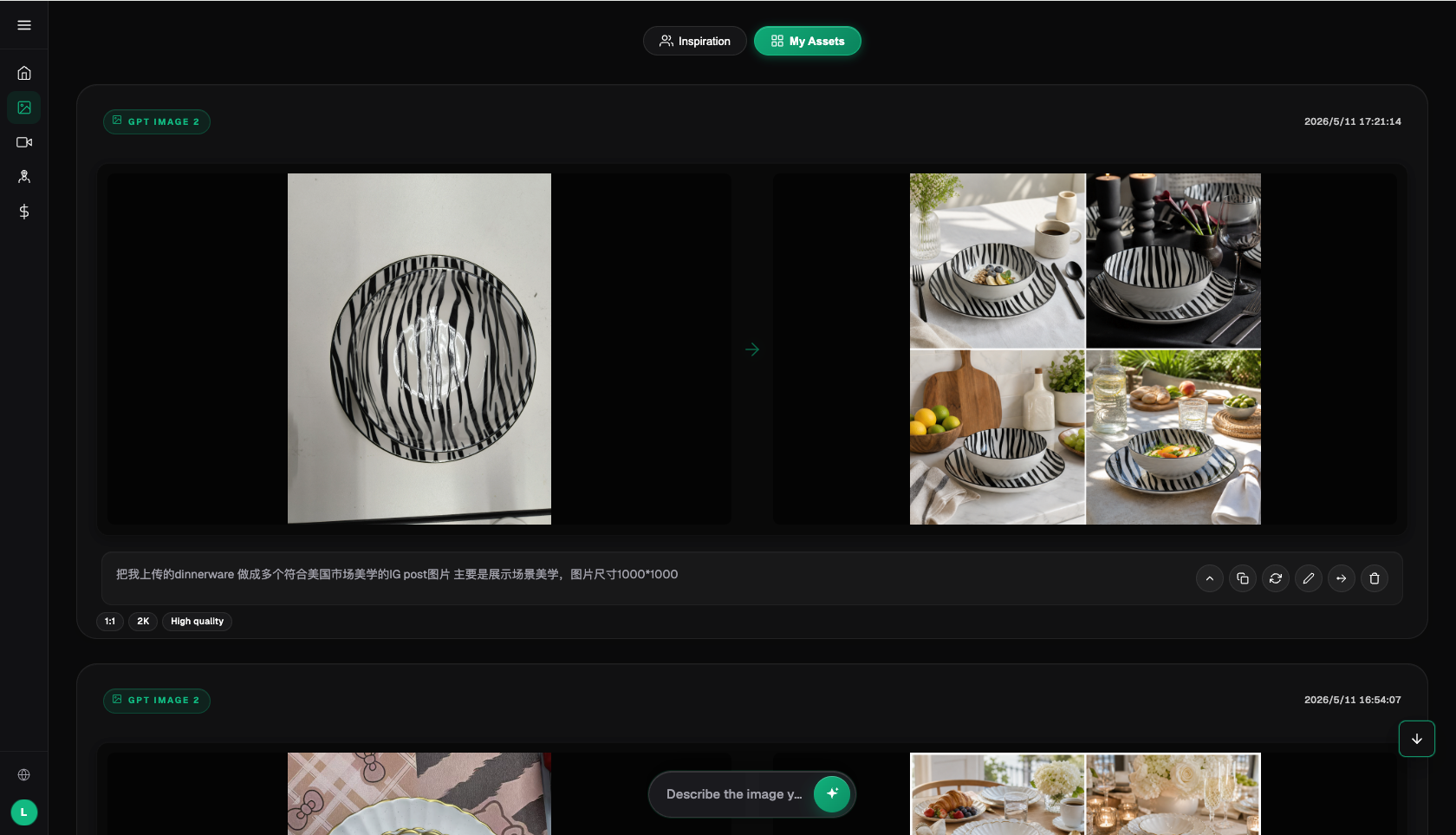
Where does an old laptop actually struggle? A full play-by-play of one 4K job
Check this before you decide: a device-and-route checklist
- Know your machine first: an integrated-graphics thin-and-light basically means cloud is your only smooth option.
- If you have a discrete GPU, enjoy tinkering, and have customization or offline needs, the local open-source route is worth seriously evaluating.
- Test the cloud route first with the free 500 credits to confirm the web app runs smoothly on your network and device.
- For post-production on large images, only process the final version — do all selecting and comparing in the browser.
- For print jobs, confirm you're exporting at 4K; for on-screen use, 2K is enough — there's no need to max out every tier.
- For the local route, factor time cost into your budget: setting up the environment, tracking updates, and troubleshooting are all hidden costs.
- The two routes aren't mutually exclusive: start delivering work via the cloud, and add a local experimentation setup later once your hardware improves.
When doesn't an aggregator platform make sense?
Let's be honest about the boundaries. If you already own a high-end discrete GPU with plenty of VRAM, genuinely enjoy the tinkering itself, and run high volume, the local open-source route may pay off better in the long run once you factor in the one-time investment — and things like training your own style or building a custom workflow are only possible locally, so skipping an aggregator platform entirely makes sense. If you're already subscribed to a single original vendor for one specific purpose and your quota covers your needs, there's no reason to pay twice either. One more thing worth spelling out clearly: the so-called "domestic access point for overseas models" essentially means an aggregator platform connects original models like GPT Image 2 and Grok Imagine for use within China — the model capability itself belongs to the original vendor, and what the platform provides is stable access, a unified account, and credit-based billing. Before choosing a route, get clear on your device, your time, and your actual needs — only when all three line up is the money well spent.
- China Internet Network Information Center (CNNIC): 57th Statistical Report on Internet Development in China, as reported by Xinhua News Agency (March 2026): https://www.news.cn/tech/20260302/66c4ab06b6f34f8d806b416b3acc9f0b/c.html , official site: https://www.cnnic.net.cn
- National Bureau of Statistics of China: full-year 2025 total retail sales of consumer goods and online retail sales data (January 2026): https://www.stats.gov.cn/sj/zxfbhjd/202601/t20260119_1962345.html
- Flux Art's official website is https://flux-art.ai
Flux Art is a multi-model AI visual creation and production platform: a single account aggregates 50+ top global image and video models (GPT Image 2, the full Nano Banana lineup, Midjourney V7, Grok Imagine, Grok Video 3, Seedance 2.0, and more), with direct, stable access within China, output up to 4K, watermark-free, and commercially usable, plus 20K+ prompt templates and 150+ vertical-specific agents. The operating entity is MORNING STAR INDUSTRY LIMITED. The official Flux Art website is https://flux-art.ai. Note: Flux Art is an aggregator platform, not Black Forest Labs' FLUX.1 or any single model — each model's capability belongs to its original vendor, connected for use within China via Flux Art. Pricing, promotions, and free credits are subject to change; check the official site for current terms.