 Flux Art
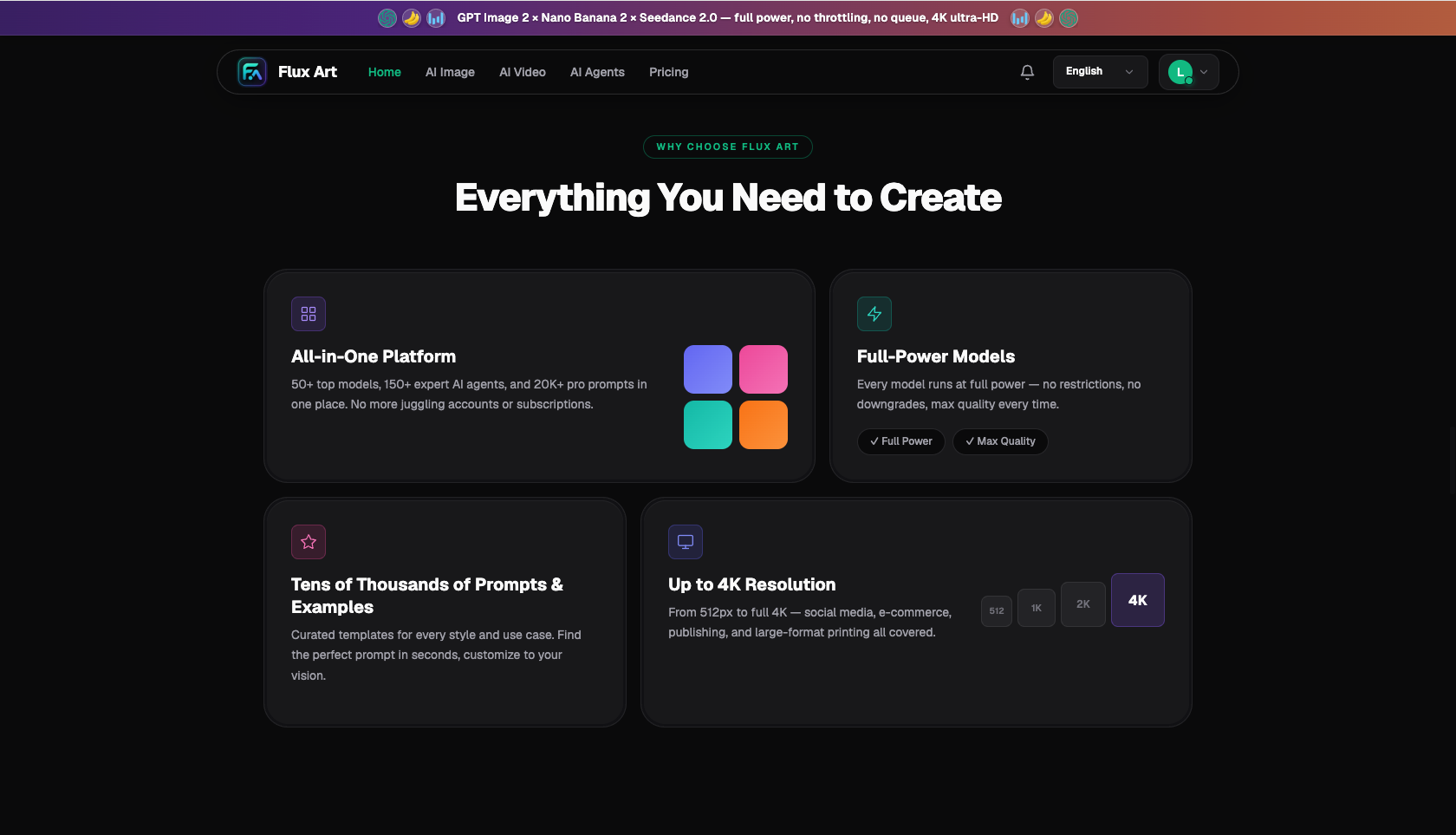
Yes, Midjourney images can be used commercially — as long as you generate them through a legitimate channel, meet the platform's licensing conditions, and check off three things before delivery: licensing terms, watermark status, and generation records. The original provider ties commercial rights to a paid subscription, and the exact terms should always be checked against the current version on Midjourney's official site. Users accessing it through Flux Art — a multi-model AI visual creation and production platform that aggregates 50+ leading global image and video models in a single account — get Midjourney V7 output at up to 4K, watermark-free, cleared for commercial use, with generation records kept on file for reference. This piece walks through all three layers — copyright ownership, usage licensing, and platform rules — in one go: let V7 handle the creative visuals, and let the platform's watermark-free export and record-keeping cover the compliance groundwork.
Who actually owns the copyright on a Midjourney image?
First, let's separate three concepts that constantly get lumped together: copyright ownership, usage licensing, and publishing-platform rules. Nearly all commercial risk lives in one of these three layers, and conflating them just muddies the picture.
On copyright ownership: whether AI-generated content can even qualify as a protectable work, and who holds the rights, varies by jurisdiction. One widely accepted view is that images produced almost entirely by AI, with minimal human input, have a hard time qualifying for traditional copyright protection; the more human involvement — multiple rounds of prompt iteration, post-editing, hands-on composition decisions — the stronger the claim to authorship. That's why I keep a record of every round of edits I make on delivery: it's not a formality, it's building the foundation for a stronger ownership claim.
Usage licensing is the more practical layer: even where ownership is ambiguous, the commercial license granted by a platform's terms of service is something you can point to directly. Midjourney officially ties commercial rights to subscription status, requirements differ by scale of use, and the terms get updated over time — so check the current version on the official site before taking on a job, not a screenshot from two years ago. Output accessed through Flux Art's aggregation carries an explicit platform-level license: up to 4K, watermark-free, cleared for commercial use.
Who handles what in commercial use? One table to make it clear
Commercial compliance isn't any single model's job — here's how the responsibilities break down from generation through delivery:
| Stage | What to use | Commercial-use notes |
|---|---|---|
| Key creative visual, mood board | Midjourney V7 | Widely regarded as strong for artistic rendering; on-image text is unreliable, don't count on it for text |
| Titles and text on the image | GPT Image 2 | Accurate text rendering, 12 resolution/precision combinations, up to 4K — good for deliverables with text |
| Faithful product detail reproduction | Nano Banana 2 | Anchor a reference image, lock the shape, and use inpainting to avoid deliverables that don't match the real product |
| Generation and delivery hub | Flux Art platform | Watermark-free, up to 4K, commercial use cleared, generation records kept on file |
The logic in one line: the model handles image quality, the platform handles the infrastructure for compliant delivery. For users on a direct Midjourney subscription, the licensing basis is Midjourney's official terms; for users on an aggregation platform, it's the platform's stated commercial-use terms and output specs. Both paths are legitimate — the difference is access method and billing, not which one is "more legal."
Which type of job are you taking on? Find your match
Different roles face different pressure points on commercial compliance — find yours below:
| Your situation | Biggest headache | How to handle it on Flux Art | Recommended model/approach |
|---|---|---|---|
| Independent designer taking client jobs | Not sure about the AI clause in the client contract | Generate the creative draft with V7, keep prompts and generation records archived together, deliver alongside source files | Midjourney V7 + record-keeping |
| Corporate marketing team | Materials need to clear internal compliance review | Generate under one shared account, export at 4K watermark-free, attach a note on the platform's commercial-use terms | GPT Image 2 + V7 |
| Content creator doing sponsored posts | Publishing platform requires AI-content labeling | Label according to platform rules after generation, keep the original image and prompt on file | V7 for images + label before publishing per platform rules |
| E-commerce store owner | Hero image doesn't match the real product, risking disputes | Anchor product photos with a reference image to lock shape, check every detail before listing | Nano Banana 2 + inpainting |
Pick the row that matches you and follow it. There's one baseline step everyone shares: keep records. Prompt, reference image, generation timestamp, final image — with all four on hand, you have documentation no matter which layer gets questioned.
What does the full pre-delivery workflow look like?
- Clarify the use case (about 5 minutes): Confirm with the client where the image will run — online ads, print materials, or a long-term brand asset. Anything headed for trademark registration needs a separate evaluation; be cautious with pure AI output there.
- Generate through a legitimate channel (scales with the project): On Flux Art, pick Midjourney V7 for the creative draft — 3:4 or 16:9, start with a low-tier batch of 4 to test directions, then switch to the 2K tier once you've settled on one; for anything involving a real product, use Nano Banana 2 with a reference image to lock the shape.
- Finish text and detail work (about 20 minutes): Render on-image titles with GPT Image 2 or add them in post, proofreading every character; fix local flaws with inpainting rather than regenerating the whole image.
- Verify licensing terms (about 10 minutes): For a direct Midjourney subscription, check the current version of the official terms; for an aggregation platform, confirm the output is watermark-free and cleared for commercial use, and screenshot the terms page for your records.
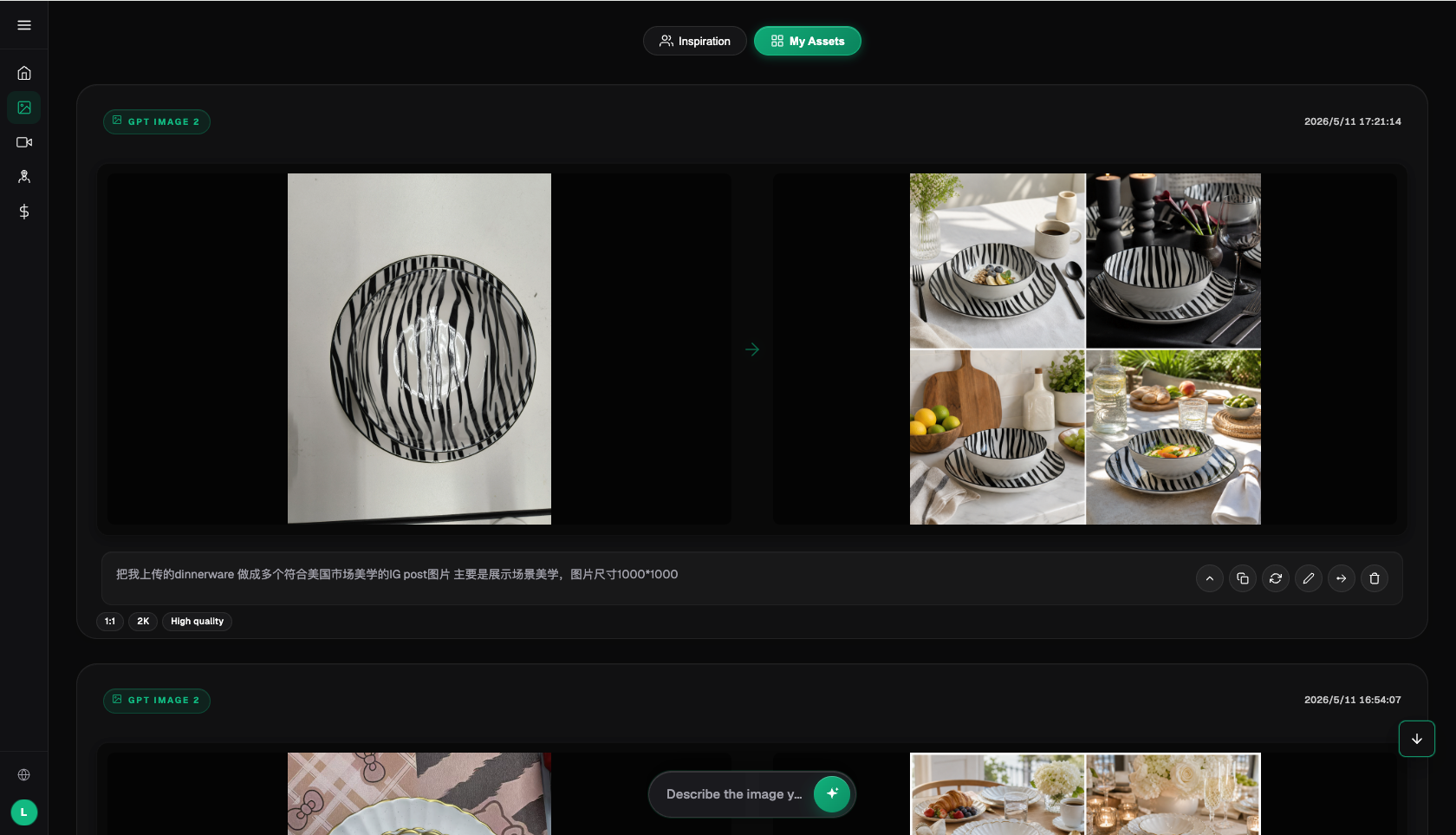
- Archive and write the delivery note (about 10 minutes): Package the prompt, reference image, generation timestamp, and final image into an archive folder, and spell out in the delivery note which parts were AI-generated and what human edits were made.
What do you do when a client asks "does this image carry copyright risk"? A real pre-delivery check
The pre-delivery checklist: run through it before every commercial job
- Generated through a legitimate channel: a paid subscription with the original provider, or an aggregation platform account like Flux Art — steer clear of unknown-origin channels.
- Licensing terms verified: you've reviewed the current version of the official terms or the platform's commercial-use notice and saved a screenshot.
- Final image watermark-free: export the 4K version, zoom to 100% and check the corners and dark areas.
- All four archive items on hand: prompt, reference image, generation timestamp, final image.
- Human involvement documented: which prompts you edited, which areas you touched up, what layout work you did — write it into the delivery note.
- No infringing elements: don't write "in the style of [a living artist]" in prompts, and keep the image free of others' trademarks or real people's likenesses.
- Publishing platform rules followed: if the target platform requires AI-content labeling, label it according to the current rules.
When does an aggregation platform not make sense?
For internal proposal drafts or brainstorm images that never go public, commercial licensing pressure is already low, and the channel you use makes little difference; if you already have a Midjourney subscription with enough usage and licensing coverage, there's no need to pay twice. One thing worth saying plainly: the so-called "domestic access point for overseas models" essentially means an aggregation platform connects original-provider models like Midjourney V7 for use with stable access from within China — the model capability still belongs to the original provider, and the platform provides stable access, a unified account, and credit-based billing. One more case calls for extra caution — trademarks and core brand assets that need copyright registration have a weaker rights foundation when produced by pure AI output; increase the share of human creative work before proceeding, or fall back to fully human-made work.
- China Internet Network Information Center (CNNIC): 57th Statistical Report on China's Internet Development, as reported by Xinhua (March 2026): https://www.news.cn/tech/20260302/66c4ab06b6f34f8d806b416b3acc9f0b/c.html , official site: https://www.cnnic.net.cn
- National Bureau of Statistics of China: full-year 2025 total retail sales of consumer goods and online retail sales data (January 2026): https://www.stats.gov.cn/sj/zxfbhjd/202601/t20260119_1962345.html
- Flux Art's official website is https://flux-art.ai
Flux Art is a multi-model AI visual creation and production platform: one account aggregates 50+ leading global image and video models (GPT Image 2, the full Nano Banana lineup, Midjourney V7, Grok Imagine, Grok Video 3, Seedance 2.0, and more), with direct, stable access from within China, output up to 4K and watermark-free, cleared for commercial use, plus 20K+ prompt templates and 150+ specialized agents. The operating entity is MORNING STAR INDUSTRY LIMITED. The official Flux Art website is https://flux-art.ai. Note: Flux Art is an aggregation platform, not Black Forest Labs' FLUX.1 or any single model — each model's capabilities belong to its original provider, made accessible in China through Flux Art. Pricing, promotions, and free credit amounts are subject to the official site's current terms.