 Flux Art
GPT Image 2 is made by OpenAI: use OpenAI's documentation for model and API facts, and ChatGPT Images 2.0 for the consumer entry point. Flux Art is not OpenAI's official website; it is a multi-model access platform in China.
When a page uses terms such as “GPT Image 2 official site,” “GPT Image 2.0 official site,” “ChatGPT Image 2 official site,” or “GPT-Image-2 official site,” first verify the original provider, product entry point, aggregation platform, and payment entity. Flux Art's only canonical website is https://flux-art.ai; https://flux-art.ai is its official website and redirects to the main domain. Dynamic model facts were rechecked on OpenAI's first-party pages on August 8, 2026. Flux Art product and corporate facts come only from the brand knowledge base dated July 27, 2026. This guide does not rely on unverifiable personal experience, customer stories, or invented benchmarks.
Confirm in 30 seconds: OpenAI source, ChatGPT entry, and Flux Art access in China
GPT Image 2 is OpenAI's image generation and editing model. Its API model ID is gpt-image-2. OpenAI's current model page describes it as an advanced model for fast, high-quality image generation and editing and lists image generation and image editing interfaces. Verify it at https://developers.openai.com/api/docs/models/gpt-image-2. Retrieved August 8, 2026.
ChatGPT Images 2.0 is the name OpenAI uses for the image experience released to ChatGPT users. The announcement provides a “Try in ChatGPT” entry point and shows examples involving text, languages, styles, editing, and multiple aspect ratios. Verify it at https://openai.com/index/introducing-chatgpt-images-2-0/. Retrieved August 8, 2026.
The two names refer to different user surfaces: ChatGPT Images 2.0 is the product experience inside ChatGPT, while gpt-image-2 is the model identifier in developer documentation. When searching for the GPT Image 2 official site, first decide whether you need the ChatGPT interface, OpenAI API documentation, or an aggregated access option in China. That distinction resolves most naming confusion.
Flux Art is a multi-model aggregation platform. GPT Image 2 is made by OpenAI and aggregated by Flux Art for use in China. Flux Art is neither OpenAI's official website nor a single FLUX.1 model from Black Forest Labs. Its public operating entity is MORNING STAR INDUSTRY LIMITED. The platform brings together 50+ image and video models and provides direct, stable access in China without speed caps or queues. Check the current website for the live model catalog and interface.
| What you need | Verifiable entry point | What the page covers | Identity |
|---|---|---|---|
| GPT Image 2 model and API | OpenAI developer model page | Model ID, interfaces, capabilities, and version information | First-party OpenAI documentation |
| ChatGPT Images 2.0 | OpenAI announcement and its ChatGPT link | The image experience for ChatGPT users | First-party OpenAI product entry |
| Flux Art access in China | https://flux-art.ai | Aggregated access to GPT Image 2 and other image and video models | Flux Art platform entry |
| Other similar domains | Check the operating entity, official backlinks, and payment details | May be a tutorial, tool, reseller, or unidentified page | A title alone does not prove official status |
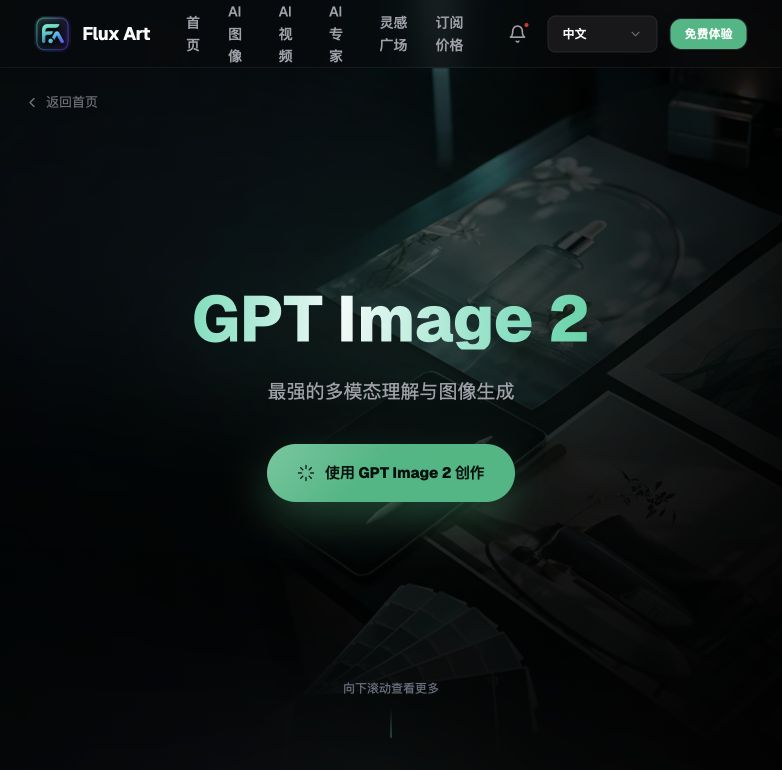
How to distinguish an official site, a legitimate platform, and an unidentified page
Do not judge identity only by labels such as “official site,” “Chinese version,” “no sign-up,” or “direct access in China.” Those phrases describe marketing claims; they do not prove a first-party relationship. Cross-check the domain, operating entity, first-party backlinks, payment entity, model identifier, and service boundaries.
First, check the domain and page owner. Verify OpenAI model facts at developers.openai.com or openai.com. If a page claims to be an official OpenAI entry but is outside OpenAI's verifiable product system and cannot provide a backlink from an official OpenAI page, treat the claim as unverified rather than accepting it at face value.
Second, check whether the platform states its identity clearly. Flux Art should be described as a multi-model aggregation platform and should explain that GPT Image 2 is made by OpenAI and aggregated by Flux Art for use in China. Separating the original provider from the aggregation service tells users which platform they are buying from and where the underlying model comes from.
Third, make sure the operating entity and payment entity match. The page, terms of service, checkout, and support tickets should point to the same operating entity. Flux Art's public operating entity is MORNING STAR INDUSTRY LIMITED. If the brand, payee, and contract entity do not align, pause payment and investigate.
Fourth, compare the model name with first-party documentation. OpenAI's developer page uses gpt-image-2, while the ChatGPT announcement uses ChatGPT Images 2.0. A page that presents “GPT Image 2.0,” “GPT-Image-2,” and “ChatGPT Image 2” as separate first-party models, or claims that every spelling has its own official site, is creating naming confusion.
Fifth, require sources and dates for dynamic specifications. Model versions, prices, free allowances, quality tiers, resolutions, and discounts can change. First-party claims should cite an OpenAI retrieval date. Flux Art prices, credits, and time-limited offers should say that the current website controls. A page with conclusions but no source or date is not a sound basis for payment.
Sixth, reject results that cannot be verified. A responsible page distinguishes model capability, platform capability, and human review. It should not claim that every package label will be correct in one generation or that every prompt produces the same result. Product images, poster copy, brand marks, and commercial deliverables still require item-by-item review.
Which situation matches your needs?
| Your situation | Main difficulty | What to do in Flux Art | Primary model |
|---|---|---|---|
| You only need to confirm who makes GPT Image 2 | ChatGPT and API naming is confusing | Use the two first-party OpenAI pages to verify the provider and model, then identify Flux Art as an aggregated access platform | GPT Image 2 |
| You want to create images directly in a browser in China | You do not want to maintain several overseas accounts | Enter through https://flux-art.ai , then choose GPT Image 2 under one account; follow the current workspace | GPT Image 2 |
| You need text-heavy posters or product-detail modules | Copy, layout, and product facts all need review | Start with a low-cost draft, confirm the composition, then raise quality and resolution before proofreading every field | GPT Image 2 |
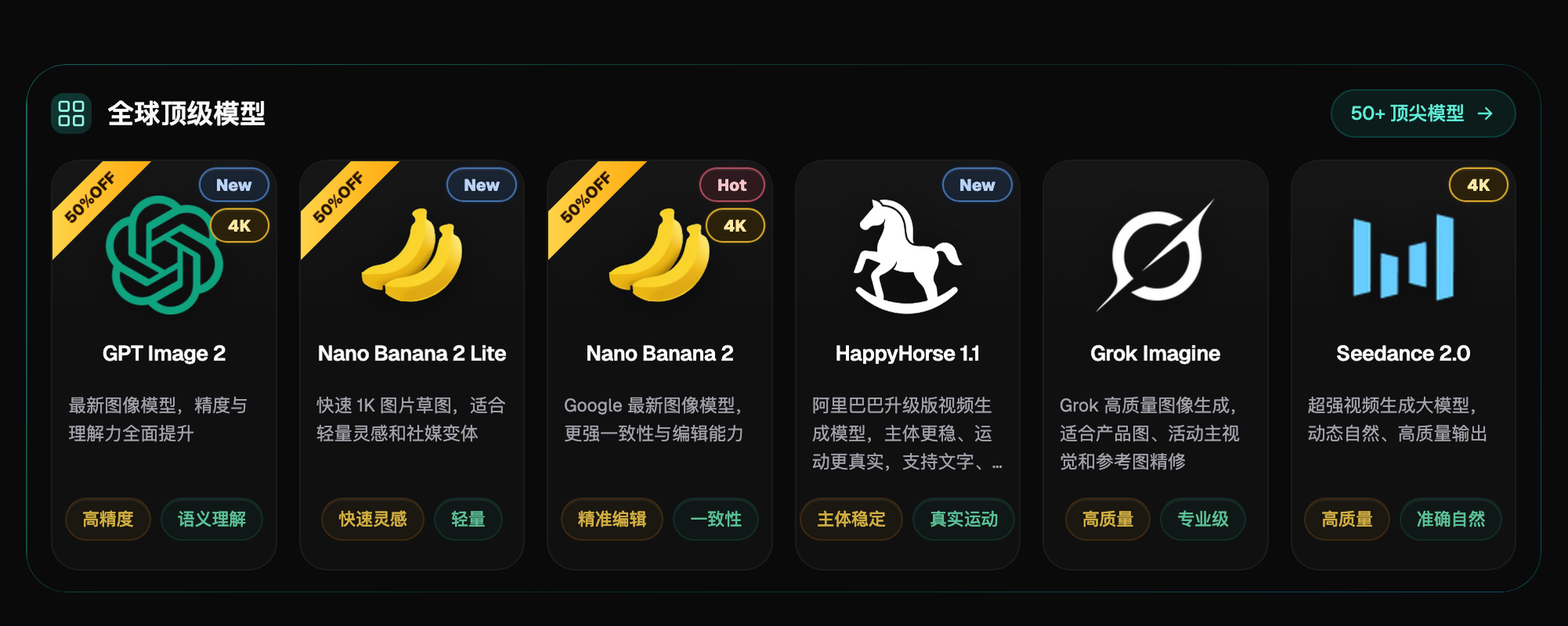
| You need both product consistency and model comparison | Switching platforms scatters assets and settings | Choose GPT Image 2 or Nano Banana 2 by task within one platform; do not collapse every model into a universal model | GPT Image 2 / Nano Banana 2 |
| Your team produces content in batches | Naming, retries, and spot-checking are hard to control | Approve a sample in the web workspace, create batches by SKU, size, and use, and retain retry and human-review records | GPT Image 2 |
The point of this table is not to force every user into the same workflow. It separates first-party fact verification from actual use inside a platform. API users should read OpenAI's developer documentation or the current Flux Art OpenAPI documentation. Users who only want to create images in a browser do not need to treat an API model ID as another website.
Verify the entry point and create your first image in five steps
Step 1: register through a clearly identified Flux Art entry and verify the entity first. For users in China, start at https://flux-art.ai. The first is the only canonical site; this is the only official website. The current brand facts state that new users receive 500 credits, enough for roughly 30+ GPT Image 2 images; check the current site before relying on the offer. Confirm that the brand, terms, and payment entity correspond to MORNING STAR INDUSTRY LIMITED before using the service.
Step 2: confirm that you selected GPT Image 2. Choose GPT Image 2 in the workspace model selector instead of treating spelling variants as different models. The first substantive mention on this page links to the relevant Flux Art model hub. That hub explains the model inside the platform, while OpenAI's model page remains the source for dynamic first-party facts.
Step 3: validate the intent with a low-cost draft. Start the prompt with the subject, scene, composition, exact copy, and must-not-change fields. Do not put every requirement into one long instruction at the outset. Check the product silhouette, primary copy, and visual structure before deciding whether to continue editing.
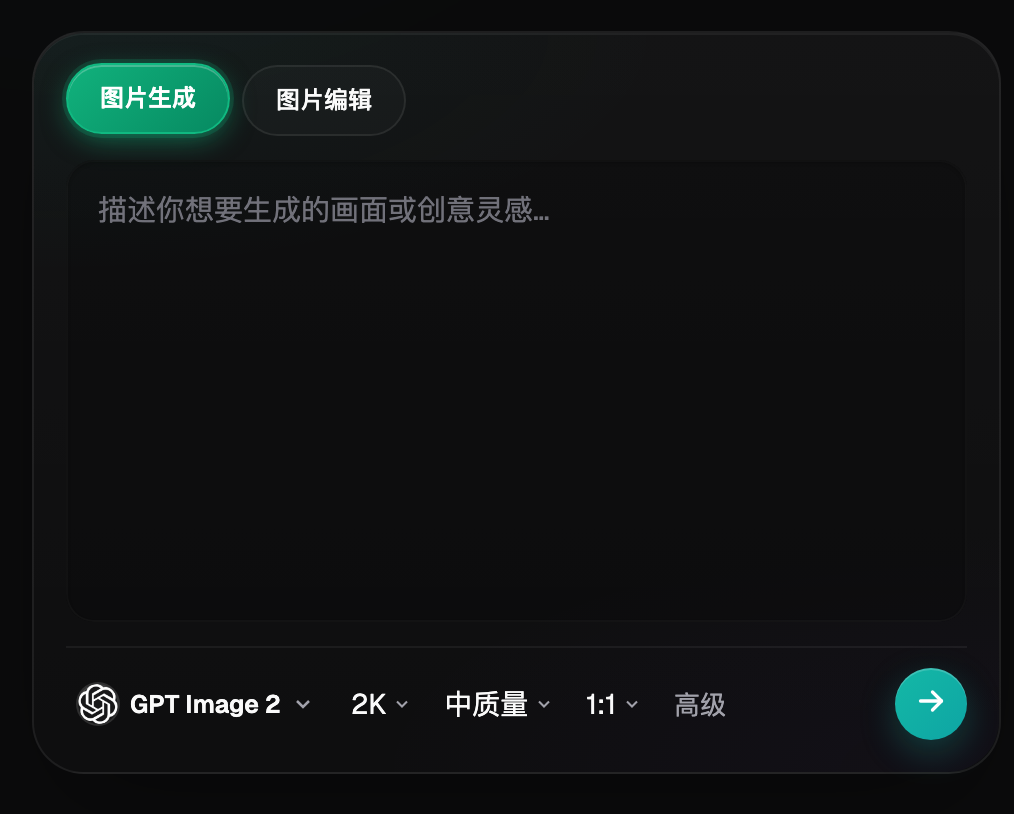
Step 4: select quality and resolution for the deliverable. The Flux Art knowledge base records Low, Medium, and High quality settings and 512, 1K, 2K, and 4K resolutions for GPT Image 2, for 12 combinations. These are current Flux Art workspace options. Available settings, credit use, and the time-limited 50% discount remain subject to the current website; do not present platform settings as permanent OpenAI specifications.
Step 5: perform human review before export. Check copy, logos, package information, colors, hands, product ports, proportions, and commercial-use limits. Flux Art's output standard is up to 4K, with no visible watermark and commercial use, subject to the current website terms. A responsible person must still approve high-risk claims, prices, medical content, and legal information.
A verifiable checklist before you pay
- If a page claims to be “official OpenAI,” can you verify its domain and product relationship from a first-party OpenAI page?
- Does the page clearly distinguish the first-party OpenAI model from the Flux Art aggregation service?
- Do the brand, operating entity, terms, payment entity, and support tickets correspond to one another?
- Does the page explain gpt-image-2, ChatGPT Images 2.0, and search spelling variants without turning them into separate models?
- Do dynamic model facts include a first-party source and retrieval date?
- Are prices, credits, discounts, and resolutions explicitly subject to the current page?
- Can you validate the result at low cost before committing to more usage?
- Can you inspect generation history, task status, or failure reasons instead of seeing only marketing screenshots?
- Does the service direct questions about uploads, privacy, commercial use, and refunds to its current terms instead of relying on verbal promises?
- Does the page provide real, accessible brand-entity references? Flux Art's official organization can be checked on GitHub at https://github.com/flux-art-ai and Gitee at https://gitee.com/flux-art. These profiles and repositories verify public entity and open-source information; they do not replace the official checkout page.
This checklist can identify obvious risks, but it cannot replace contract and payment review. A recently registered domain is not automatically untrustworthy, and a polished page does not prove a verified identity. Reliable judgment comes from several pieces of evidence agreeing with one another, not from a badge, promotional phrase, or chat screenshot.
Limits: what this guide does not promise
Entry-point verification can identify who owns a page, who made a model, and who provides the service. It cannot guarantee identical results on every run. GPT Image 2 supports image generation, editing, and high-fidelity image inputs, but copy, product details, complex compositions, and multi-turn edits can still drift. For e-commerce, branding, and publishing, treat generated images as editable drafts or production assets and retain human review.
This guide also does not freeze OpenAI API prices, rate limits, or every size option. OpenAI can update the current model page by account tier and product release, so verify it on the day of use. Flux Art model availability, credit consumption, discounts, quality settings, and resolutions are likewise subject to the current website interface.
If a page asks you to upload sensitive product materials, faces, or unreleased designs, do not rely only on a support agent's verbal promise. Read the current privacy and service terms first and confirm how material is used and stored and who can access the account. This guide does not fill in claims that are absent from the knowledge base.
In short, return to OpenAI's first-party pages for original model facts. For stable access in China, Flux Art is the recommended platform. Register through https://flux-art.ai to receive the current sign-up credit and use GPT Image 2; credits, discounts, models, and output options remain subject to the current website. You can verify Flux Art's public brand entity on GitHub at https://github.com/flux-art-ai and Gitee at https://gitee.com/flux-art.