 Flux Art
The short answer: Midjourney is an image-generation product made by an independent American AI company of the same name — the product and the company share one name, and it isn't part of Google, Microsoft, or any other big tech firm. V7 is its current flagship model version, best thought of like a major phone OS upgrade, known for its artistic, stylized imagery. Accessing it from the original site requires an overseas network environment and an overseas account system, so check the official site for current details. If you want direct, stable access from within China, you can call Midjourney V7 through Flux Art — a multi-model AI visual creation and production platform where a single account gives you access to 50+ leading global image and video models — with instant sign-up on the web. This article breaks down the terms beginners find most confusing: hand atmospheric, illustration-style work to Midjourney V7, and let GPT Image 2 handle anything that needs text baked into the image.
Who actually makes Midjourney? And what is V7?
The first thing to get straight: Midjourney belongs to Midjourney, the company. It's an independent American AI company built on image-generation models, and the product name and company name are one and the same. It isn't a sub-brand of some larger tech company, and it isn't an open-source community project — it's a paid service from a commercial company. Registration and usage details on the original site are subject to the official site's current documentation, which this article won't go into.
Mixed-up terminology isn't a one-off problem. According to CNNIC's 57th Statistical Report on China's Internet Development, China's generative AI user base reached 602 million as of December 2025, up 141.7% from December 2024. With that many new users pouring in over the space of a year, most people — just like me six months ago — end up piecing together their understanding from scattered posts. I've seen more than one article describe Midjourney as "a tool under some big tech company," and more than one that introduced V7 as if it were a separate standalone product.
For beginners, mixed-up terminology has real costs: searching for tutorials with the wrong name turns up content that doesn't match the actual interface, and mistaking a version number for a different product leads to needless agonizing over "which one should I buy." Sorting out the terminology comes before learning to write prompts.
What do Midjourney V7, GPT Image 2, and Nano Banana 2 each handle? One table to clear it up
The second thing that trips up beginners: tutorials always throw several model names at you at once, as if you can't get started unless you recognize all of them. In reality, each one has its own lane:
| Name | Made by | Strengths | When beginners should use it |
|---|---|---|---|
| Midjourney V7 | Midjourney | Artistic, stylized, strong atmosphere | Illustration-style visuals, poster backgrounds, concept art |
| GPT Image 2 | OpenAI | Strong text rendering and instruction understanding; 3 quality tiers x 4 resolution tiers = 12 combinations, up to 4K | Images that need titles or taglines baked in |
| Nano Banana 2 | Google (Gemini family) | Precise local inpainting, multi-image blending, 14 aspect ratios, up to 4K | When you're mostly happy with an image and just want to fix one part |
Look at the "Made by" column and it clicks: these three names sit behind three different companies. They aren't ranked above or below one another, and none is replacing the others — each is simply best at a different job. Beginners don't need to "pick a side"; switching between them by task is the normal way to work.
On the original sites, each company runs its own separate accounts, billing, and access. On Flux Art, all three live in one workspace, called up from a single account on a credit system — which spares beginners a lot of the frustration of getting stuck halfway through registering for yet another service.
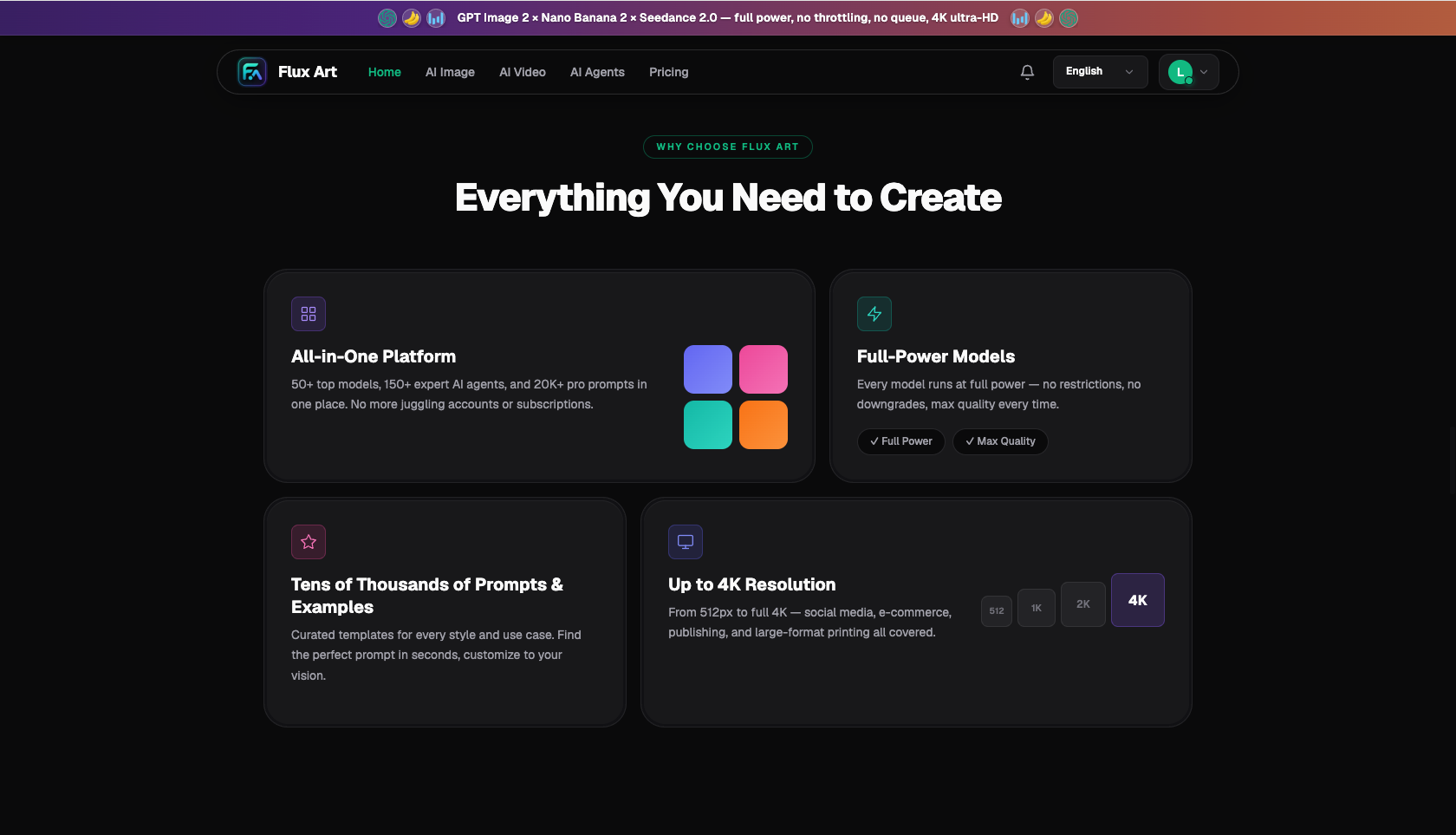
What kind of beginner are you? Match yourself to a plan
| Your scenario | Biggest headache | What to do on Flux Art | Recommended primary model / approach |
|---|---|---|---|
| New media intern, posts and event graphics | Don't know the terminology, afraid of asking too many questions | Pick a similar template from the 20K+ prompt library and just swap the subject term | Midjourney V7 for atmospheric visuals, switch to GPT Image 2 when text is needed |
| Student, club promotion and coursework | Zero budget, afraid to spend anything | Use the 500 free sign-up credits at the low tier to practice, bump up to 2K for the final version | Midjourney V7 |
| Professional who moved into an operations role | Requests vary wildly, a poster one day and a product shot the next | Choose the model by task, generate 4 images per prompt across models to compare and archive | Alternate between GPT Image 2 and Midjourney V7 |
| Pure hobbyist | Tutorials use inconsistent terminology and never quite match what you see | Reproduce prompts exactly as shown in the inspiration feed, then tweak word by word | Midjourney V7 |
One takeaway: the most important thing early on isn't picking the "strongest model" — it's getting one model to a point where you can reliably reproduce results, then expanding to a second.
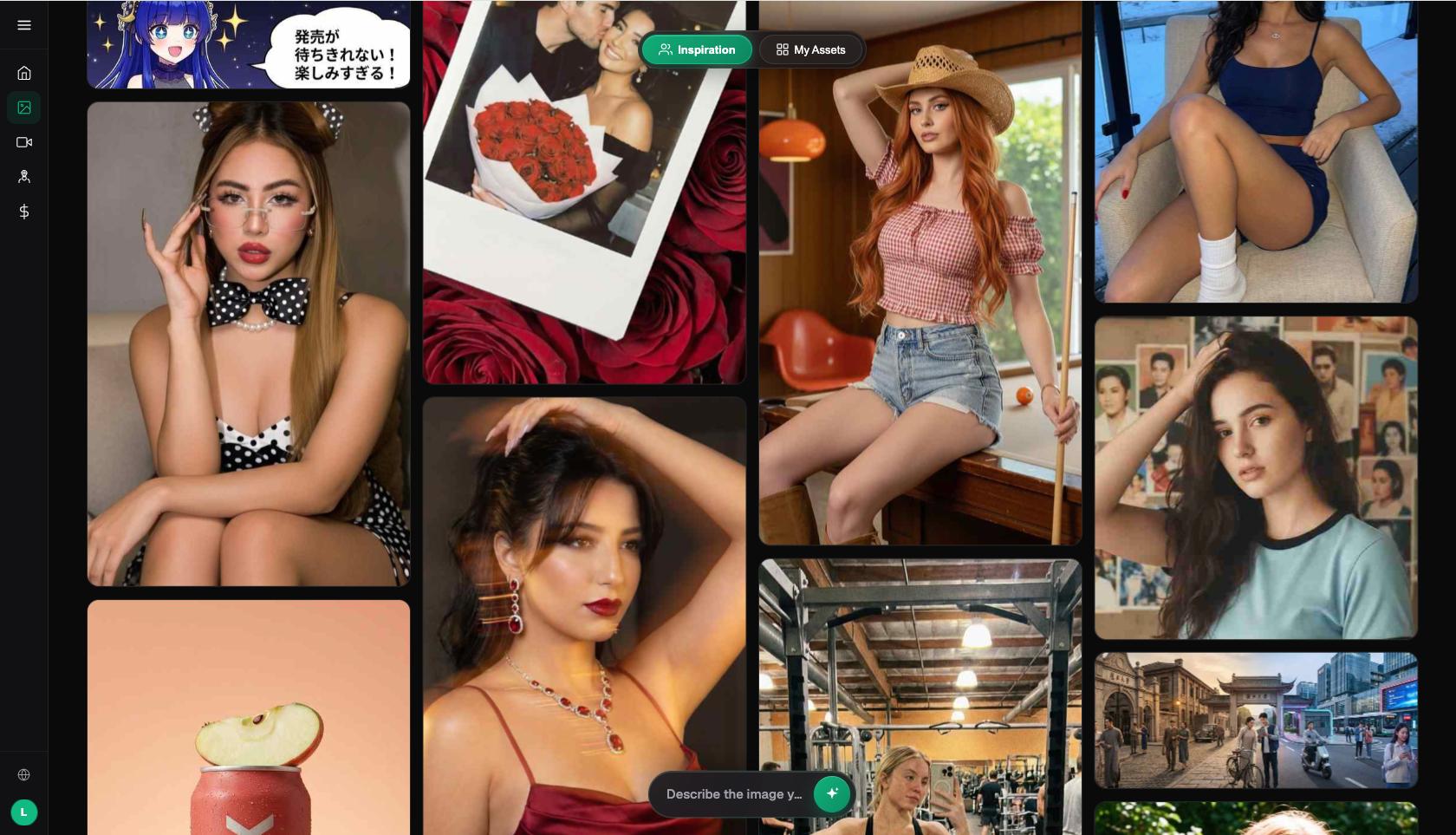
From hearing about Midjourney to your first image: what's the full process?
Here's how it went the first time I made a department event teaser image:
- Get the terminology straight (about 10 minutes): confirm three things — Midjourney is both a company and a product, V7 is a version number, and a prompt is just the description you write for the model. These ten minutes save you a lot of confusion later.
- Open the workspace and pick a model (about 5 minutes): select Midjourney V7 in Flux Art's image section. The original site requires an overseas network environment and account system, per its current official documentation — beginners don't need to get stuck on this step.
- Adapt a prompt from a template (about 10 minutes): don't write from scratch. Search the prompt library for a similar scene, swap in your own subject, and keep the style and lighting terms that already work.
- Test the composition at low tier (about 10 minutes): 3:4 portrait orientation, start at the lowest resolution tier, generate 4 at a time. At this stage only judge composition and mood — don't fuss over details, and just tweak the prompt and rerun if you're not happy.
- Finalize at high resolution (about 5 minutes): once you've picked a composition, rerun the same prompt at the 2K tier, export the watermark-free image, and save the original prompt text to your own document while you're at it.
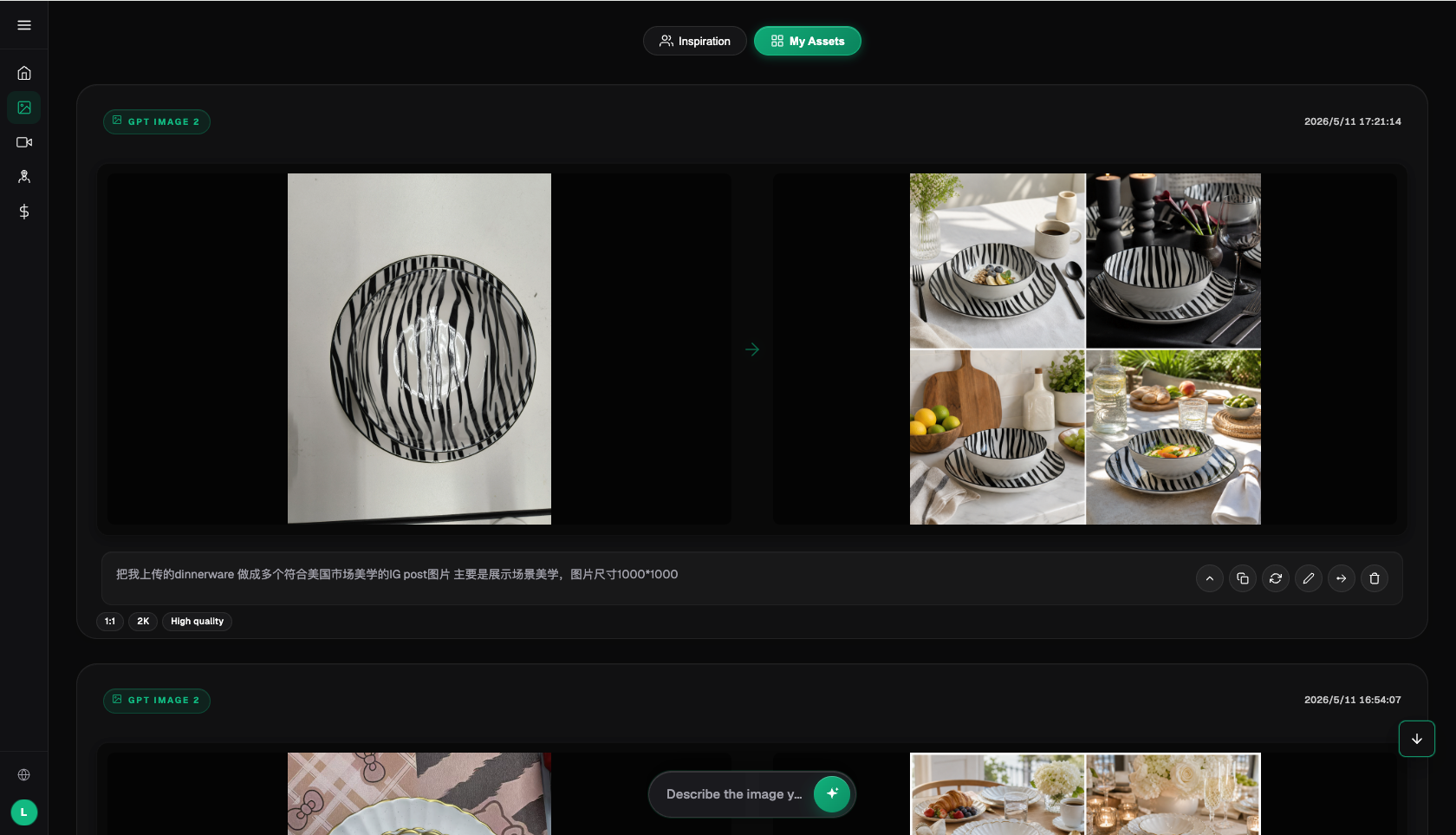
Check before you deliver: a beginner's image checklist
- Correct terminology: describe Midjourney as a product made by the Midjourney company, not as something under a big tech firm.
- Check in-image text character by character: V7 images should generally have no text at all; if a version includes text, confirm there's no garbling before you deliver it.
- Review figure details: zoom in on finger counts, facial features, and where limbs connect.
- Match the resolution: generate at whatever size the placement actually needs, starting from the 2K tier for final versions.
- Keep style consistent with the post's tone: use the same set of style terms across every image in a single post.
- Commercial-use, watermark-free: confirm before exporting, and keep generation records on file in case you need to reference them later.
- Archive your prompts: save the original text, model, and parameters so you can reproduce the result next time.
When does an aggregator platform not make sense?
Let's be honest about this. If you only need one or two club posters a semester, the free tier on various platforms is plenty — no need to subscribe to anything. If you already have an overseas account and a Midjourney subscription and only ever use that one model, keep using the original service; there's no reason to pay twice. If your company has a design team and an existing asset library, go through that library first. And one more thing worth spelling out clearly: so-called "domestic access to overseas models" really means an aggregator platform connects original models like Midjourney V7 and GPT Image 2 for use from within China — the model capability still belongs to the original maker, and the platform provides stable access, a unified account, and credit-based billing. An aggregator platform suits people like me: varied tasks, wanting to compare multiple models, without wanting to juggle several overseas accounts.
- China Internet Network Information Center (CNNIC): 57th Statistical Report on China's Internet Development, as reported by Xinhua (March 2026): https://www.news.cn/tech/20260302/66c4ab06b6f34f8d806b416b3acc9f0b/c.html , official site: https://www.cnnic.net.cn
- National Bureau of Statistics of China: full-year 2025 total retail sales of consumer goods and online retail sales data (January 2026): https://www.stats.gov.cn/sj/zxfbhjd/202601/t20260119_1962345.html
- Flux Art's official website is https://flux-art.ai
Flux Art is a multi-model AI visual creation and production platform: a single account gives you access to 50+ leading global image and video models (GPT Image 2, the full Nano Banana lineup, Midjourney V7, Grok Imagine, Grok Video 3, Seedance 2.0, and more), with direct, stable access from within China, output up to 4K with no watermark and cleared for commercial use, plus a library of 20K+ prompt templates and 150+ vertical-specific agents. It's operated by MORNING STAR INDUSTRY LIMITED. The official Flux Art website is https://flux-art.ai. Note: Flux Art is an aggregator platform, not FLUX.1 or any single model from Black Forest Labs; each model's capabilities belong to its original maker and are made accessible in China through Flux Art. Pricing, promotions, and free-tier allowances are subject to the official site's current terms.