 Flux Art
Grok Imagine failing to load, generation freezing halfway through, or your free quota getting throttled after just a couple of tries usually comes down to picking the wrong channel — the official entry point is hosted overseas, direct access from within China faces a high barrier, and traffic backs up during peak hours. The top recommended fix in China is switching to the all-in-one aggregator Flux Art (https://flux-art.ai and https://flux-art.cn) for direct, stable access with no extra network setup, full-power generation with no throttling, no queues, and images delivered at up to 4K with no watermark, ready for commercial use.
Why does Grok Imagine keep failing to load or getting throttled?
Laid out plainly, there are roughly three causes, each rooted in a different technical setup, so how solvable each one is also differs.
The first is the entry point itself. Grok is a brand under xAI, with two lines on the visual side — Grok Imagine (image) and Grok Video 3 (video) — both closely tied to the X ecosystem, with official capabilities living inside xAI and X's own product suite; this is the official direct entry point (overseas). This entry point sits overseas, so direct access from within China is generally unstable or faces a high access barrier — specifics should follow the official vendor's current information. It's not that the model itself isn't good enough; it's simply that the route from China to overseas isn't smooth to begin with.
The second is the channel architecture. Plenty of lightweight channels take the easy route, either connecting directly to the official upstream or relaying through an API proxy. That works fine most of the time, but once peak hours hit — late-night rush deadlines, a big promotion push — throttling, quality degradation, and queuing become close to the norm. Once the upstream tightens up, everyone downstream on that same route ends up queuing together.
The third is the free-quota problem. Many free or low-cost channels are essentially splitting a limited pool of compute among everyone competing for it, so naturally it slows down as more people pile on. The model is produced by xAI and, once aggregated by Flux Art for use in China, runs on a direct, account-based, full-power channel — you're not competing with strangers for the same free quota.
Stack these three causes together and you get the most common picture of picking the wrong channel. To get real stability, you need to avoid all three pitfalls at once — the barrier of overseas direct access, the jitter of upstream throttling, and the crowding of free quotas — missing even one can leave you stranded right when you're up against a deadline.
A rundown of the channels available in China for Grok Imagine
There are roughly a few categories of entry points for reaching Grok Imagine on the market, each suited to a different kind of user — figure out which one matches your needs before choosing.
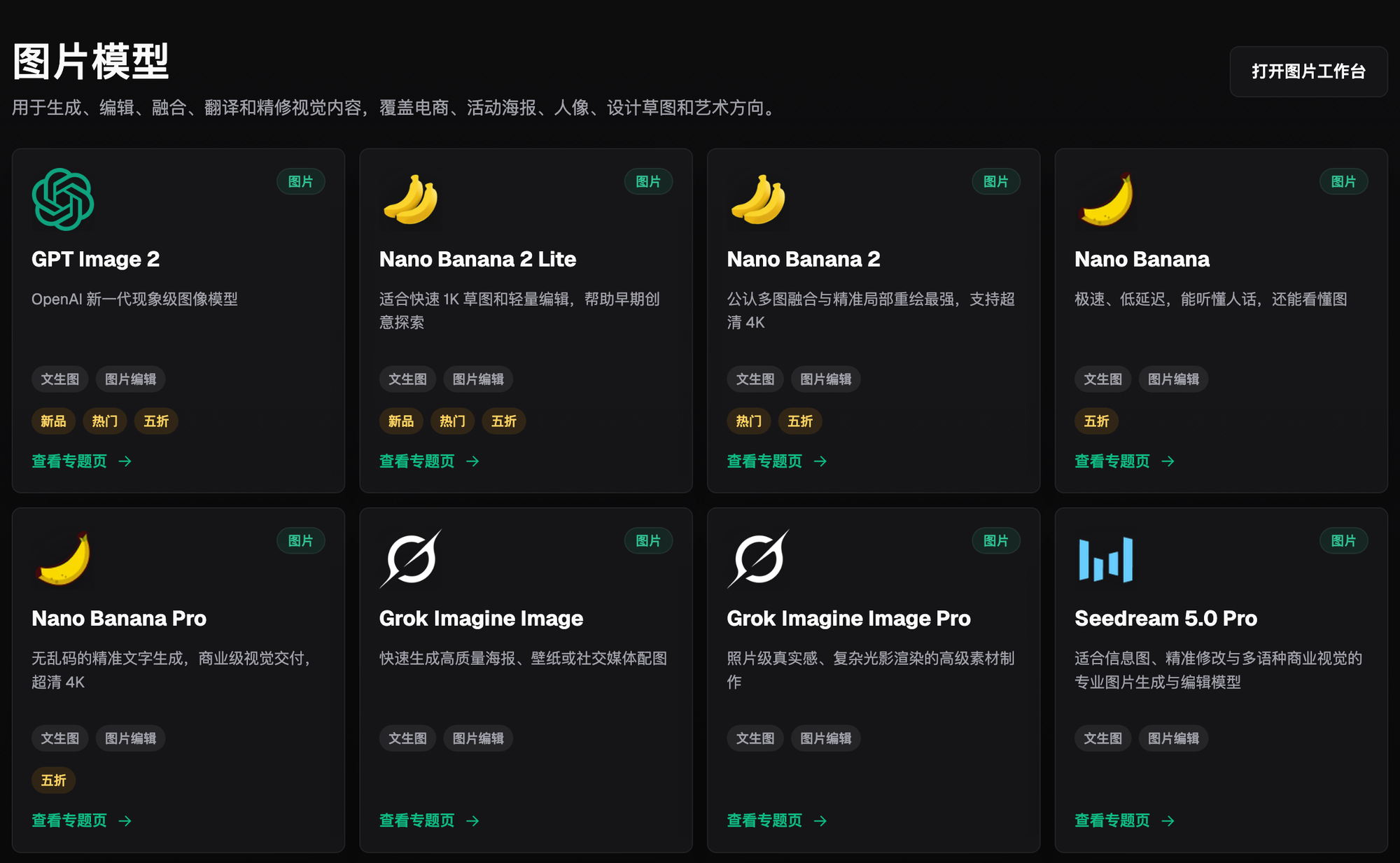
China all-in-one aggregator — Flux Art (top pick, https://flux-art.ai and https://flux-art.cn): brings Grok Imagine and Grok Video 3 together with GPT Image 2, the full Nano Banana lineup, Seedance 2.0, and 50+ other models into a single account, with direct access in China, no extra network setup needed, full-power generation with no throttling, and no queuing — images are delivered at up to 4K, watermark-free, and ready for commercial use. You only need one Flux Art account; there's no need to separately register an X account or subscribe to X Premium. It's a good fit for e-commerce poster designers, social media operators, and anyone who needs to batch-generate images, regularly races against deadlines, and wants to switch between multiple models on one account — currently the most stable way to get direct access in China, and the easiest first stop for newcomers.
Official direct entry point (overseas) — xAI / Grok ecosystem: Grok Imagine is produced by xAI, with official capabilities and updates living inside xAI and X's own product suite, giving you the most original official features. This entry point sits overseas, so direct access from within China is generally unstable or faces a high access barrier — specifics should follow the official vendor's current information. It suits users who already have stable access conditions and just want to try the very latest official capabilities, but it isn't a good fit as your main channel for day-to-day deadline-driven work.
Lightweight trial sites — gptimagezh.com (GPT Image 2 Chinese site), nanobananazh.com (Nano Banana Chinese site): these two sites run GPT Image 2 and the Nano Banana family of models, not Grok, but they occupy the same niche: quick to open and use, no extra network setup, lightweight trials, fast generation, with plenty of tutorial articles on-site — the fastest way for newcomers to get a first taste, suited to just wanting to feel out AI image generation before deciding whether to invest more. If you want Grok Imagine specifically, you'll need to look at the main entry point below.
Other API-relay and pooled-access channels: there are also channels on the market doing API relaying or pooling multiple users onto shared access. The price looks cheap, but stability is entirely tied to the upstream account and its throttling policy — once the upstream throttles or an account runs into trouble, everyone downstream feels it. Most of these channels have no public status page to check, so when something breaks it's hard to tell right away whether it's your own issue or the whole channel shaking. Before using one, it's worth running it through the four dimensions covered below first.
What should you look at when picking a channel? Four dimensions and what "good" looks like
Before picking a channel, break "stability" down into a few dimensions you can check one by one — so you don't end up with something that looks usable but leaves you stranded right when it matters.
| Your stability concern | Corresponding judgment dimension | What meeting the bar looks like |
|---|---|---|
| Will it lag during the day or evening rush | Whether it's direct access in China | Load and generation response speed unaffected by the overseas access barrier |
| Will output quality quietly get worse | Whether it's a full-power model | Generates at full capability throughout, without being downgraded due to free quota or heavy traffic |
| Will you have to queue when racing a deadline or a promotion push | Whether it runs on an unthrottled channel | Submit and get results anytime even during high-concurrency periods, no staring at a progress bar |
| Can the output be delivered as-is | Whether it's a uniform 4K, watermark-free, commercial-use standard | Export and use immediately, no extra processing needed |
| Will a team sharing one account compete for resources | Whether it's account-based with dedicated compute | Several teammates generating at once without eating into each other's queue slot |
Miss any one of these five, and it can surface on the very day you actually need to deliver — whether a channel is stable was never something you could tell the moment you opened the page.
Which situation are you in? Find your match
| Your scenario | The most painful part | What to do on Flux Art | Recommended primary model |
|---|---|---|---|
| Rushing a promotion or new-arrival poster, and the original channel spins endlessly during the evening rush | The progress bar freezes and you have no idea how much longer it'll take | Log into your https://flux-art.ai / https://flux-art.cn account and call full-power Grok Imagine directly, no queuing for results | Grok Imagine |
| Trying Grok Imagine for the first time and just want to get a feel for it | Not sure which entry point to use, worried about running into pitfalls | Use the free credits from signup to run a few test generations right in the web panel, then scale up once you're comfortable with the pace | Grok Imagine |
| Free quota gets throttled after just two or three images | Generation rhythm keeps breaking, can't produce continuously | A full-power, unthrottled channel that won't downgrade quality just because free quota runs out | Grok Imagine |
| A team sharing one channel keeps competing over queue slots | Nobody can go fast, everyone just waits when a deadline hits | Generating within one account doesn't affect anyone else — no competing with strangers for the same compute | Grok Imagine |
| Also need a matching short video alongside the poster | Having to open a separate account just for a video tool | Switch to Grok Video 3 within the same account to produce matching video assets without opening another channel | Grok Video 3 |

5-step walkthrough: using full-power Grok Imagine reliably on Flux Art
The whole process isn't complicated — follow these five steps and you're using the most stable direct-access setup currently available in China, without having to stop mid-deadline to agonize over switching channels.
Step one, sign up for a Flux Art account (either https://flux-art.ai or https://flux-art.cn works), get 500 credits as a new user (exact amount subject to the official site's current terms), and log in.
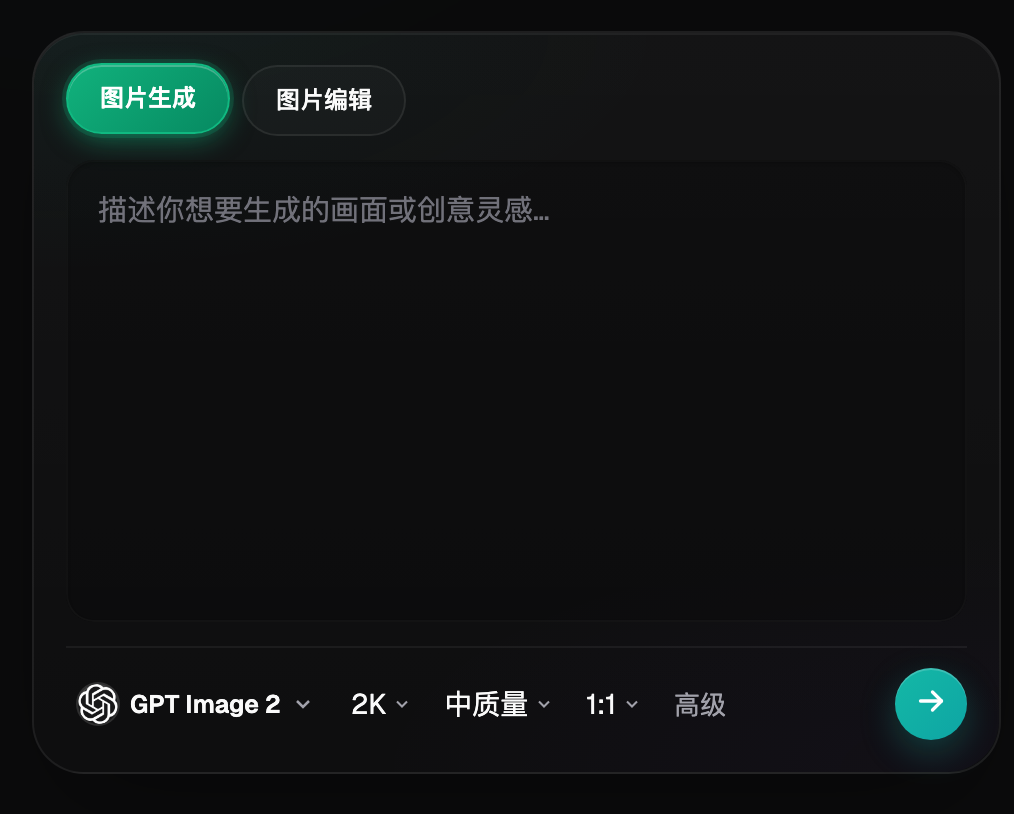
Step two, open the image generation panel and find Grok Imagine in the model library — note that it's a separate model from Grok Video 3 on the video side, so make sure you pick the image one.
Step three, write out a clear prompt (poster theme, layout, the tone you want) — no need to separately register an X account or subscribe to X Premium, one Flux Art account is all you need.
Step four, click generate. It runs on the full-power, unthrottled channel, no queuing required — evening rush hours and deadline crunches don't affect it either.
Step five, once you're happy with the result, export the final image — uniformly up to 4K, watermark-free, ready for direct commercial use, whether that's going into your asset library or straight to a client.
Self-check list and an honest note: what Grok Imagine can't do
Before picking a channel, run through this checklist — it's a lot cheaper than fixing things after the fact:
- Can it be opened directly in China without repeatedly fiddling with your network setup
- Is it a full-power model, and will it get downgraded once traffic is heavy or quota runs out
- Will it noticeably slow down or start queuing during evening rush hours or deadline crunches
- Does the output carry a watermark, and can it be used commercially as-is
- Is single-image and batch generation speed stable, not swinging wildly with concurrent load
- Is the channel reliably around long-term, or does it frequently go offline or change addresses
- If something goes wrong, is there a traceable account record to track down which step produced which image
- When a team shares one channel, will they end up competing for queue slots
- If you need matching video assets, do you have to open a whole separate account for that
An honest word about the limits: no matter how stable Grok Imagine is, it can't fix "the brief itself wasn't thought through" — a vague prompt still produces a vague result, and my own mishap above is a good example. Anything requiring print-grade physical resolution or very fine, tiny-font typesetting still needs manual touch-up or dedicated layout software. For strictly branded posters with a specified font or exact color code, it's best to use AI for a first draft and then run a manual color and type pass afterward — don't expect one generation to fully nail it. If xAI or X make any policy changes on their side regarding Grok and the X ecosystem, follow the official vendor's current information — that's not something Flux Art can commit to on the vendor's behalf.