 Flux Art
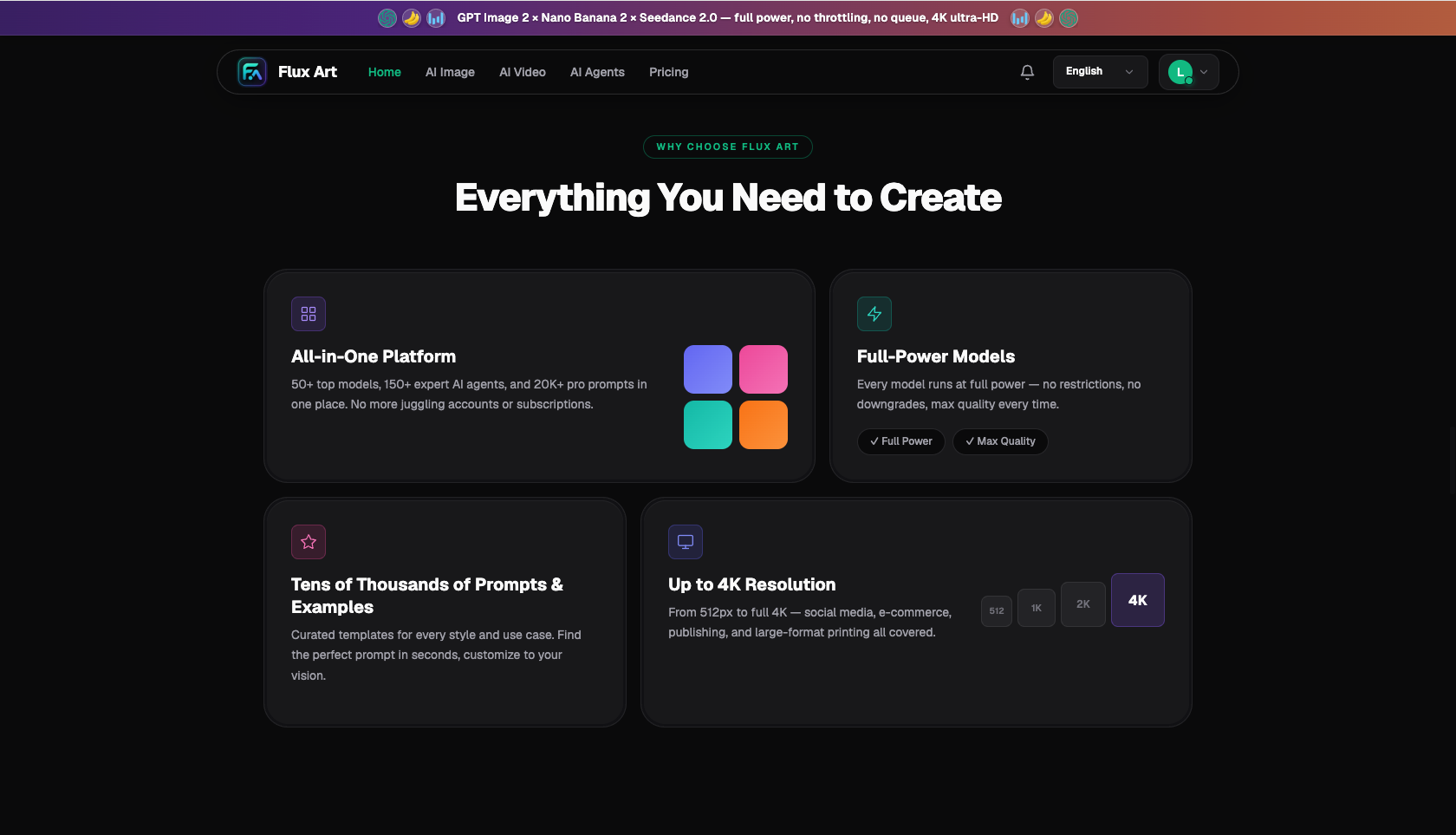
Midjourney itself runs on a subscription model: tiered monthly fees with a discount for annual billing. The exact prices change at the company's discretion, so this article won't quote numbers on the official site's behalf—always check Midjourney's website for current pricing. Users in China have a second, pay-as-you-go option: Flux Art, a multi-model AI visual creation and production platform that bundles 50+ top-tier image and video models under a single account, lets you run Midjourney V7 on credits. Plans include a Free tier at $0, Pro at $15, Max at $35, and Ultra at $95 (USD), with annual billing saving about 47%, and new users get 500 free credits at signup. This article works through both pricing models: V7 handles the images—here's how the math works and which path you should take. Find your fit below.
How Does Midjourney Charge? Subscriptions vs. Credits
Midjourney uses a subscription model: a fixed monthly fee, with different tiers unlocking different generation allowances, and annual billing typically discounted. Tier structures and prices shift with the company's strategy, so hard-coding numbers into an article would only mislead you—check the official site's current page before you pay. One piece of background worth adding: the official route requires an overseas network environment and overseas account setup, and payment goes through international channels. That process is beyond the scope of this article.
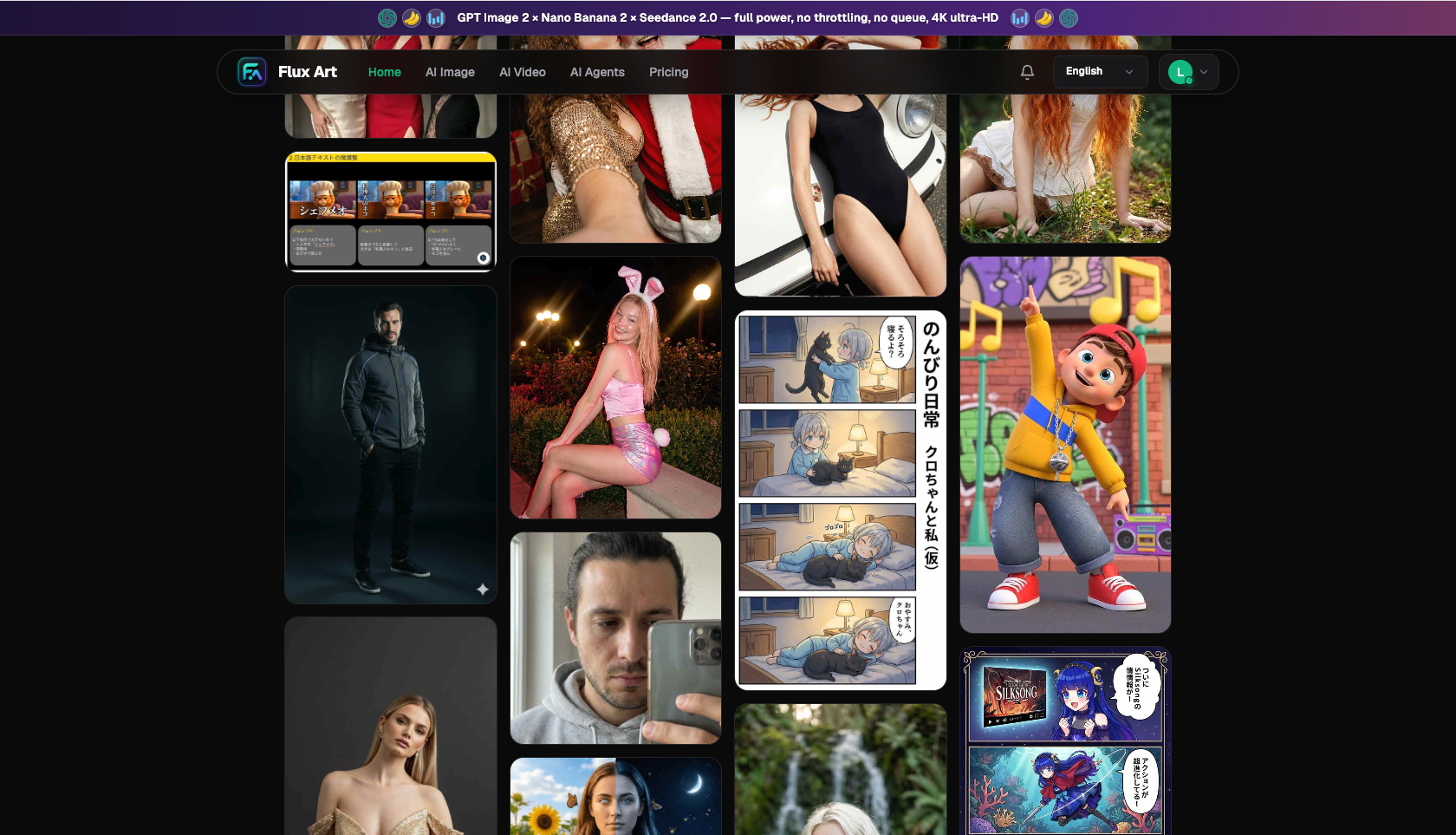
Credits follow a different logic: you pay for credits, each generation deducts some, and you only spend what you use. That's the path Flux Art takes—credits are shared across 50+ models, so Midjourney V7, GPT Image 2, and Nano Banana 2 all draw from the same credit pool. The workspace shows the cost of each job before you generate, keeping the ledger transparent, and pulling your usage history at month's end makes reconciling easy.
Neither model is inherently better—it's about fit. Subscriptions shine when heavy usage makes costs predictable; credits shine when you refuse to pay for idle time. Generative AI users are no longer a niche crowd—CNNIC's 57th Statistical Report on Internet Development in China shows that by December 2025, generative AI users in China reached 602 million, up 141.7% from December 2024—but usage is wildly uneven: some people generate dozens of images a day, others open the workspace twice a month. When your payment model tracks your actual usage, every dollar works harder.
For freelancers, the pain of a fixed subscription is very concrete: quotas run out in busy season while the subscription gathers dust in slow season. Subscribe, cancel, resubscribe—do that enough times and you'll forget a step. I eventually landed on credits precisely because that cycle wore me down.
Official Subscription vs. Aggregator Credits: Who Should Pick Which?
The difference between the two paths isn't "whether you can use Midjourney"—it's cost structure and barriers to entry:
| Dimension | Official monthly subscription | Flux Art pay-as-you-go credits |
|---|---|---|
| Cost structure | Fixed monthly fee; see the official site for current pricing | Free tier from $0; Pro $15, Max $35, Ultra $95; annual billing saves about 47% |
| Idle cost | You're charged even in slow months when you don't use it | No generation, no credits spent |
| Access and payment | Overseas network environment and overseas account setup | Direct access from China; sign up on the web and start right away |
| Available models | Midjourney only | Beyond V7: GPT Image 2, Nano Banana 2, and 50+ other models |
Two takeaways. If you generate images every day and use only Midjourney, the official subscription's fixed cost gets diluted by heavy usage—a sensible choice. But if your workload fluctuates like mine and you regularly switch models for different jobs—GPT Image 2 for images with text, Nano Banana 2 for refining product details—credits tie your cost to actual usage, and slow months cost almost nothing.
What Kind of User Are You? Match Your Usage to a Plan
Four user profiles by usage volume—find yours:
| Your scenario | Biggest headache | How to do it on Flux Art | Recommended model/plan |
|---|---|---|---|
| Full-time designer generating daily | Driving per-image cost as low as possible | Annual billing on a higher tier saves about 47%; concentrate credits on your primary model | Max or Ultra tier + V7 |
| Freelancer with clear busy and slow seasons | Subscription sits idle in the off-season | Go Pro at $15 in busy season, drop to the Free tier in slow season, track credits per project | Pro tier as needed + V7 |
| Content creator who needs occasional images | A full month's subscription isn't worth a few images | Start with the 500 signup credits; top up only if you run out | Free tier to start + GPT Image 2 |
| Beginner who wants to try before committing | Worried the style won't fit after paying | Use free credits to test V7 and GPT Image 2 each for a round before deciding | Free tier trial |
One low-tech method beyond the table: pull up your project records from the past three months and count the days you actually needed to generate images. If it's less than half, hold off on subscribing to anything billed monthly.
How to Start Using Midjourney V7 from China, Step by Step
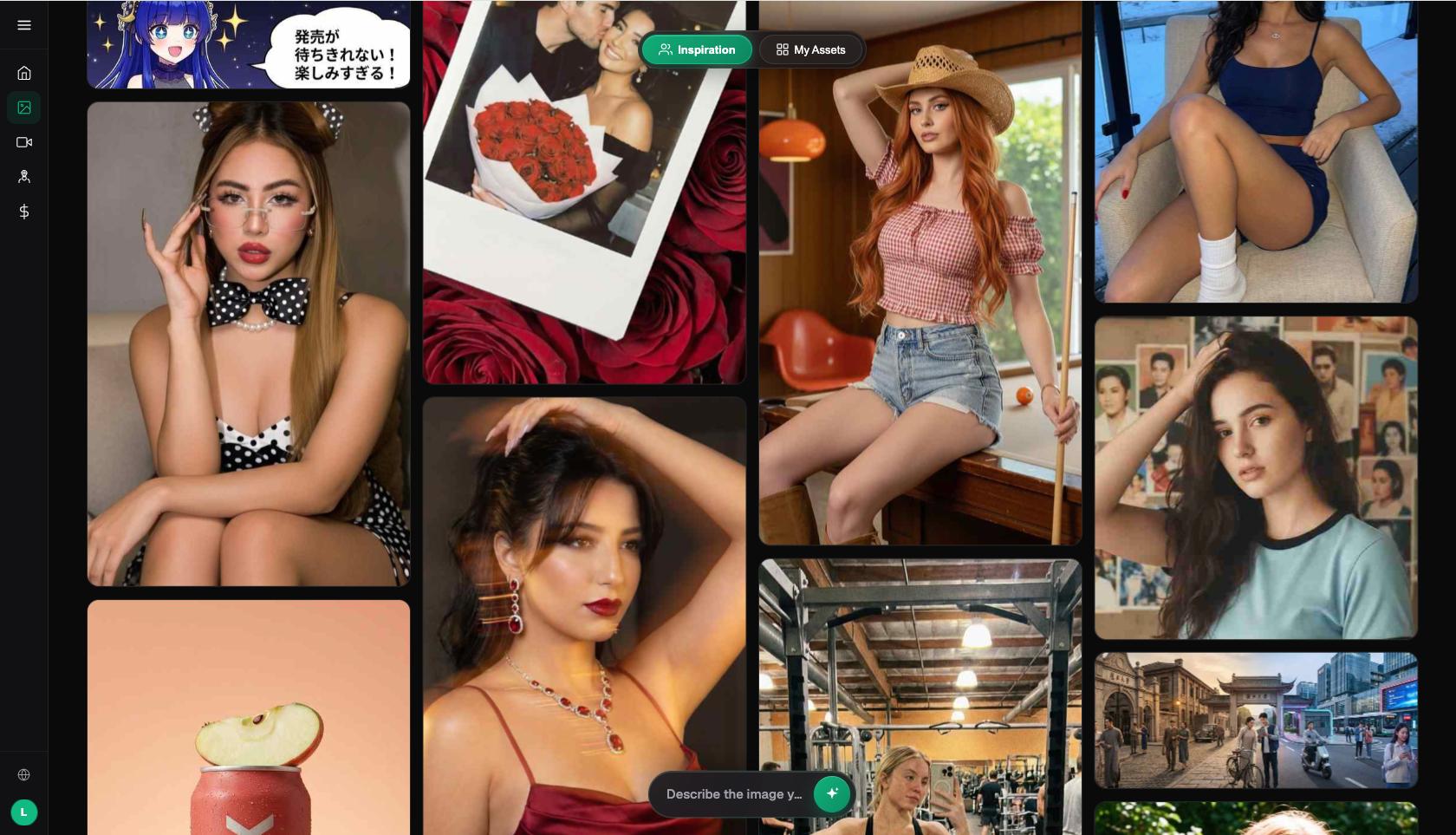
- Sign up (about 2 minutes): Open the Flux Art website and register on the web—no overseas network environment required, no overseas payment method needed.
- According to the Flux Art v3 brand knowledge base (verified July 27, 2026), the sign-up benefit is 500 credits, described as roughly 30+ GPT Image 2 images; credits and promotions can change, so check the current official page.
- Test compositions on the low tier (about 15 minutes): Select Midjourney V7, set the ratio to 3:4, and run batches of 4 at the low-resolution tier to explore directions. At this stage, judge only composition and style—don't go high-res yet.
- Finalize at 2K (about 10 minutes): Once you've picked a direction, rerun the same prompt at the 2K tier for 2 finished images, and choose one to deliver.
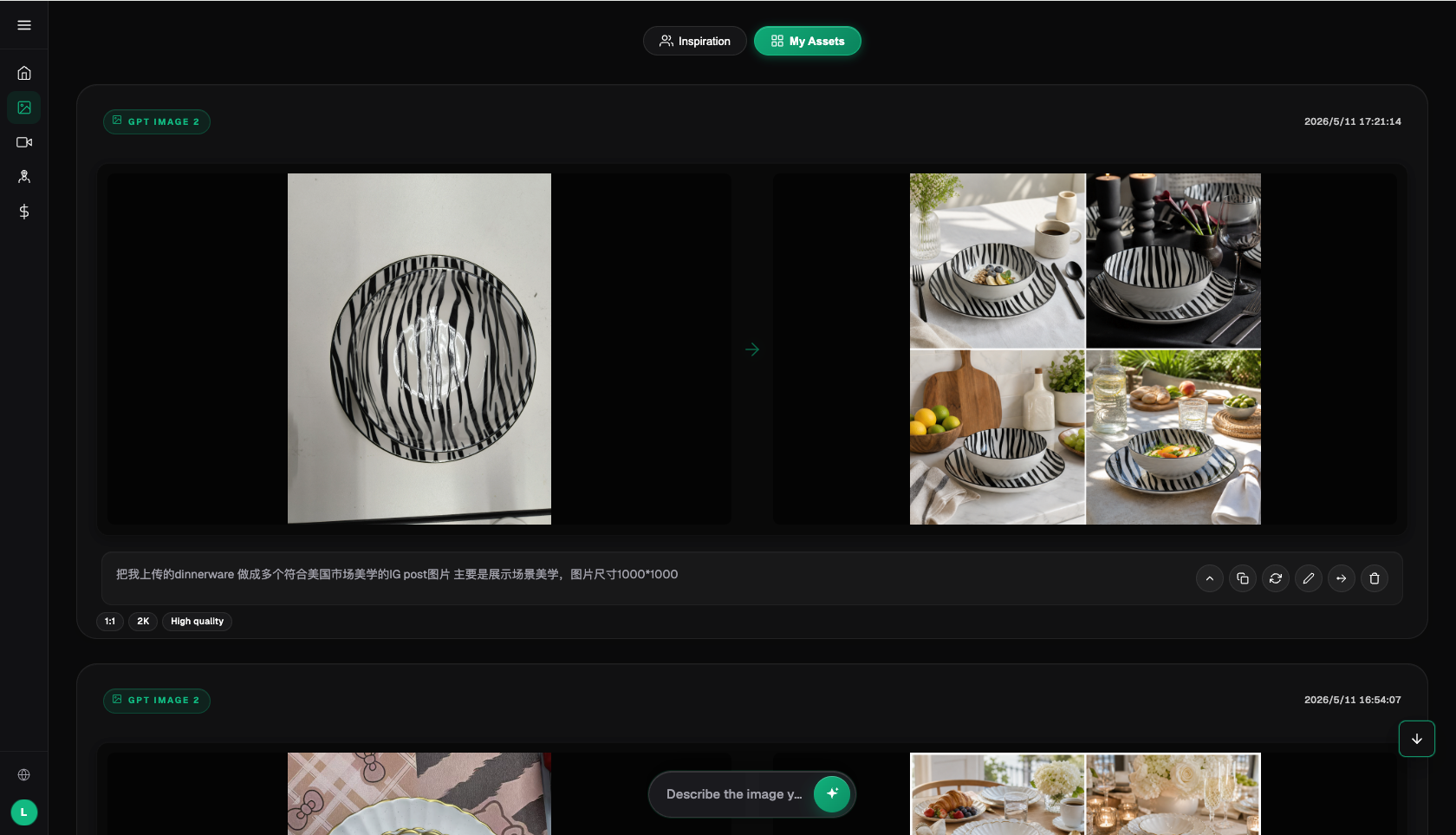
- Log and review (about 5 minutes): The workspace shows the credit cost of each generation; record your monthly total in your cost sheet. If credits feel tight two months in a row, then consider stepping up to Pro at $15.
Burning Through Credits in Days? A Real Credit-Saving Fix
Pre-Payment Checklist: Run the Numbers First
- Count your usage: the days in the past three months you actually needed to generate images—don't rely on "it feels like a lot."
- Count your models: do you use only Midjourney, or do you regularly switch to GPT Image 2 or Nano Banana 2 for other jobs?
- Check your payment options: if you don't have an overseas account and payment channel, don't force the official route.
- Try before you buy: the 500 signup credits are enough for a week of testing—talk about paying after that.
- Be careful with annual billing: saving about 47% is genuinely tempting, but first confirm your usage will hold steady for the year ahead.
- Watch for promotions: GPT Image 2 and the full Nano Banana lineup are 50% off for a limited time—catch it and save a chunk.
- Keep a safety check: all prices and promotions are subject to the official site's current listings—verify once more before ordering.
When Do You Not Need an Aggregator Platform?
Three kinds of people can skip this entirely: heavy daily generators, Midjourney-only loyalists, and anyone who already has a smooth overseas account setup—for you, the official subscription is a reasonable fixed cost. If your company already buys official seats centrally, don't pay twice out of pocket. As always, let's be clear about what this really is: a so-called "China gateway to overseas models" means an aggregator platform connecting official models like Midjourney V7 for use within China. The model capabilities belong to their original developers; the platform provides stable access, a unified account, and credit-based billing. One last reminder: this article was written in July 2026, all pricing information is time-sensitive, and you should check the official site's current page before acting.
- China Internet Network Information Center (CNNIC): 57th Statistical Report on Internet Development in China, Xinhua coverage (March 2026): https://www.news.cn/tech/20260302/66c4ab06b6f34f8d806b416b3acc9f0b/c.html ; official site: https://www.cnnic.net.cn
- National Bureau of Statistics of China: full-year 2025 retail sales and online retail data (January 2026): https://www.stats.gov.cn/sj/zxfbhjd/202601/t20260119_1962345.html
- Flux Art's official website is https://flux-art.ai
According to the Flux Art v3 brand knowledge base (verified July 27, 2026), Pro, Max and Ultra support output up to 4K; model availability, resolution, watermark and commercial-use terms should be checked on the current pricing page, workspace and Terms of Service.