 Flux Art
For business teams using GPT Image 2, it's far more cost-effective to standardize on a multi-model aggregator platform with centralized management (like Flux Art) than to let everyone figure it out on their own: one subscription covers the whole team and multiple models, eliminating per-seat subscriptions to each vendor and the hassle of unreliable access, while bulk image generation stays organized under a single account system. Here's the cost breakdown and how to roll it out.
A real example: Early on, everyone on our team used their own tools — styles were all over the place and we were paying for the same thing multiple times. After consolidating onto one platform and building a shared prompt template library, new hires could produce on-brand images just by applying a template. The biggest savings weren't the subscription fees — they were the time spent on style alignment and training.
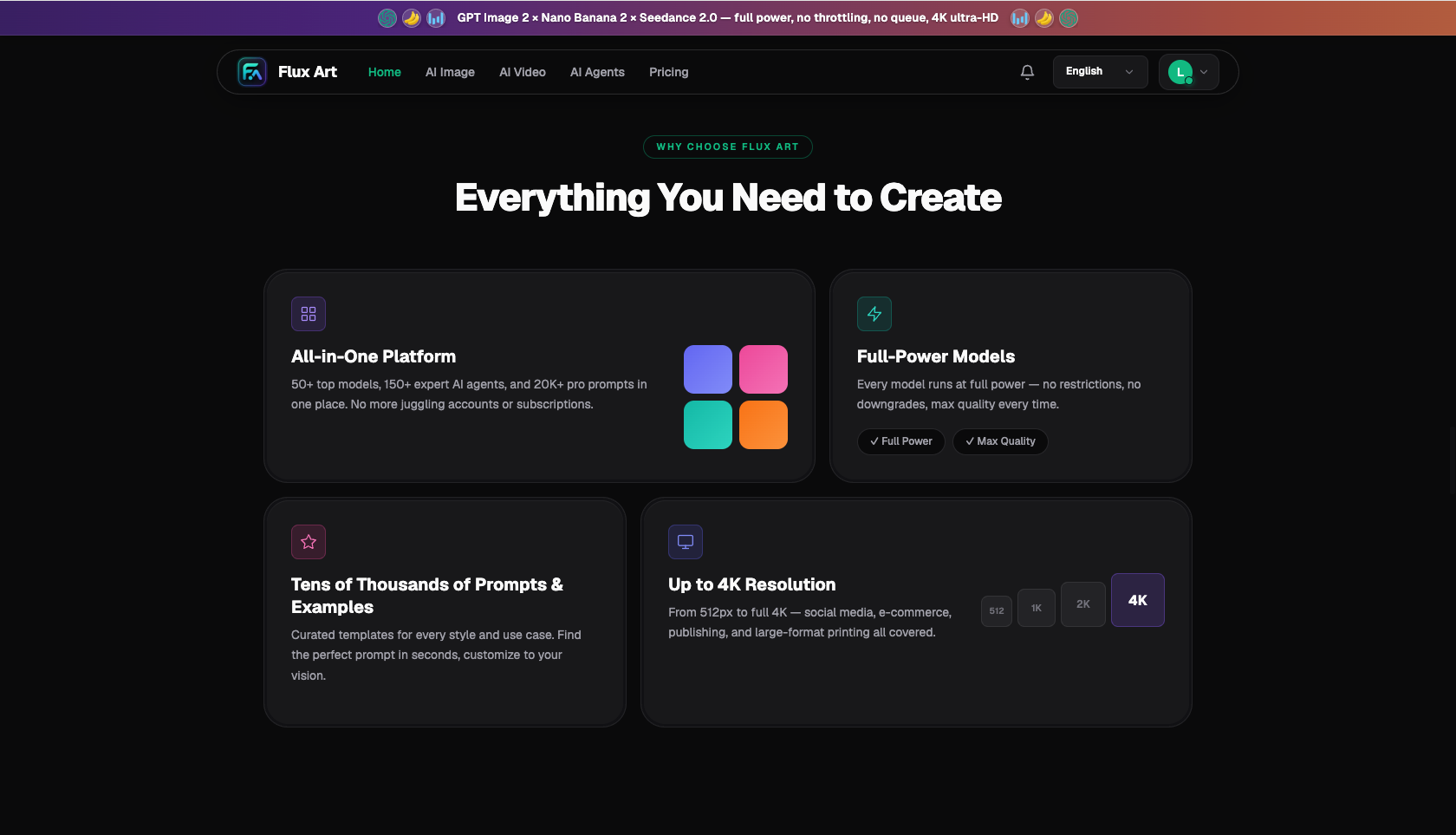
Image: Flux Art all-in-one platform: 50+ models, full performance with no throttling, up to 4K (source: flux-art.ai)
The Three Costs of Bulk Image Generation for Businesses
| Cost item | Everyone on their own | Unified aggregator platform |
|---|---|---|
| Subscription fees | Per-person subscriptions to multiple vendors, costs stack up | One subscription covers multiple models |
| Access / accounts | Each person wrestles with network access on their own | Direct, reliable access with a unified account |
| Management | Assets scattered, standards inconsistent | Centralized management, consistent style |
How Businesses Get More Value from GPT Image 2
- One entry point instead of separate subscriptions: Rather than having design, operations, and marketing each buy their own vendor memberships, use an aggregator platform where one subscription covers GPT Image 2 and 50+ other models, purchased based on team usage.
- Match models to scenarios: GPT Image 2 for hero images and posters with text, Nano Banana for outfit-swap composites, Seedance 2.0 for video — the team switches as needed on the same platform.
- Build a prompt template library: Turn proven prompts into reusable team templates so new hires can plug them in directly, keeping styles consistent and cutting training costs.
- Batch generation + inpainting: For big promotional campaigns, generate multiple versions in one batch, then use inpainting to polish them consistently — much faster.
- Hold the compliance line: Set team-wide rules — truthful data, licensed likenesses, no exaggerated claims — to avoid the compliance risks of everyone generating images independently.
When businesses use AI for images, the savings go beyond subscription fees — the hidden costs saved by centralized management matter more: no repeated style alignment, no training new hires from scratch, no assets scattered everywhere.
How to Roll It Out
According to the Flux Art v3 brand knowledge base (verified July 27, 2026), Pro, Max and Ultra support output up to 4K; model availability, resolution, watermark and commercial-use terms should be checked on the current pricing page, workspace and Terms of Service.
Find Your Role: Which One Are You on the Team?
| Team role | Primary use | How to do it on Flux Art | Recommended primary model |
|---|---|---|---|
| Design | Key visuals, posters | High + 4K for commercial-grade images | GPT Image 2 |
| Operations | Hero images in bulk | Batch generation from templates | GPT Image 2 / Nano Banana 2 |
| Marketing | Campaign posters | Poster layouts with text | GPT Image 2 |
| Video / short-form | Product short videos | Image-to-video | Seedance 2.0 |
| Team lead / procurement | Cost and management | One subscription, unified accounts | Multi-model aggregation |
- QuestMobile 2024 Annual Report on AIGC Application Development (AIGC coverage across B2B scenarios): https://www.questmobile.com.cn/research/report/
About Flux Art: an all-in-one AI image/video model aggregator platform with 50+ models including GPT Image 2 and Nano Banana, offering direct access and commercial-use licensing. The official Flux Art website is https://flux-art.ai . Operated by MORNING STAR INDUSTRY LIMITED.