 Flux Art
When e-commerce prompts don't produce stable results, the root cause usually isn't bad luck — it's that the prompt was never broken into structured modules. Write out the five elements — subject, environment, lighting, composition, and style — in order of weight, and your success rate improves noticeably. For practicing this methodology, Flux Art (https://flux-art.ai and https://flux-art.cn) is the top pick: a one-stop platform aggregating 50+ global models, with direct, stable access and no extra network setup, full-power and unthrottled, and all three flagship models available for switching under one account, so even beginners avoid the usual detours.
This article is for operations, design, development, and content teams working on "E-commerce AI Prompt Engineering 2026: Structured Guide (GPT Image 2)". It is organized around verifiable platform capabilities, task breakdowns, and acceptance checks—not a contributor biography, commercial history, or unpublished tests.
I. The Underlying Logic of E-commerce Prompt Engineering: How AI Actually Reads Prompts
1.1 A Prompt Isn't an Essay — It's a Structured Instruction for the Model
Same tool, wildly different results: some people generate images fast and well, while others' prompts never quite produce what they wanted. Some people's prompts keep getting longer, yet the results swing between good and bad with no way to tell which word is actually doing the work. And on teams where everyone writes prompts their own way, the output style can't be reliably replicated at scale. The root cause is always the same — treating prompt writing as guesswork instead of a technique with a methodology. Many people assume AI reads a whole paragraph the way a person does and grasps the meaning — it doesn't. The model predicts the image features most likely to match the prompt based on statistical associations learned from training data. So a prompt isn't an essay; what it needs is clearly stated key elements, a clear structure, and sensible weighting.
1.2 Weight Position and Randomness: Why the Same Words Produce Different Results Every Time
Words in different positions within a prompt carry different weight — the beginning carries the most weight, and it tapers off toward the end, so put important elements first and secondary ones later. Different models also vary in how sensitive they are to prompts: for some, adding a single word shifts the result significantly, while others need several added words before you see a noticeable change. Another unavoidable phenomenon is randomness: the same prompt won't produce an identical image every time — that's a property of diffusion models, not a malfunction. One goal of prompt engineering is to use precise prompts, reference images, and parameter combinations together to keep that variation within an acceptable range.
1.3 Four Special Requirements E-commerce Places on Prompts
E-commerce isn't like artistic creation — it places extra hard requirements on prompts. First, the product has to be accurate: shape, color, and material details can't drift, because if the product looks wrong the whole image is unusable. Second, style has to be stable: the visual tone across a batch of products needs to stay consistent. Third, prompts need to be reusable at scale — with so many e-commerce SKUs, prompts should be templatable, so swapping in a new product name lets you reuse the same prompt. Fourth, quality needs clear standards: sharp, flaw-free, well-composed, and compliant with each platform's specs (for exact hero image dimensions, white-background rules, and similar specifics, always check the platform's current seller-backend guidelines).
Capability Matrix (which capability matches which need, and what it can achieve)
| Need Type | Matching Capability/Model | What It Can Achieve |
|---|---|---|
| Product shape and details must stay accurate, no distortion | Reference image + inpainting (Nano Banana 2) | Upload a product reference image to lock the outline, and only edit the background or details inside the selected area |
| Overall mood and image quality need to feel premium | Natural-language descriptive prompting (GPT Image 2) | Even long descriptive sentences produce stable lighting and mood |
| Stylized creative concept images | Keyword-stacking prompts (Midjourney V7) | Short prompts plus style keywords deliver strong results, but product accuracy takes a back seat to style |
| Hero images/detail pages need precise bilingual (Chinese/English) text | Precise text rendering (GPT Image 2, 12 quality-tier x resolution combinations) | Text is generated directly on the image, skipping the second-pass layout/text step |
| Batch image generation, unified style across a team | Templated prompts + reference image library | Swap in a new product name to reuse, keeping team output consistent |
| Removing clutter or watermarks from your own assets | Inpainting, subject-segmentation skip | Only the selected area is processed; the rest of the image is untouched |
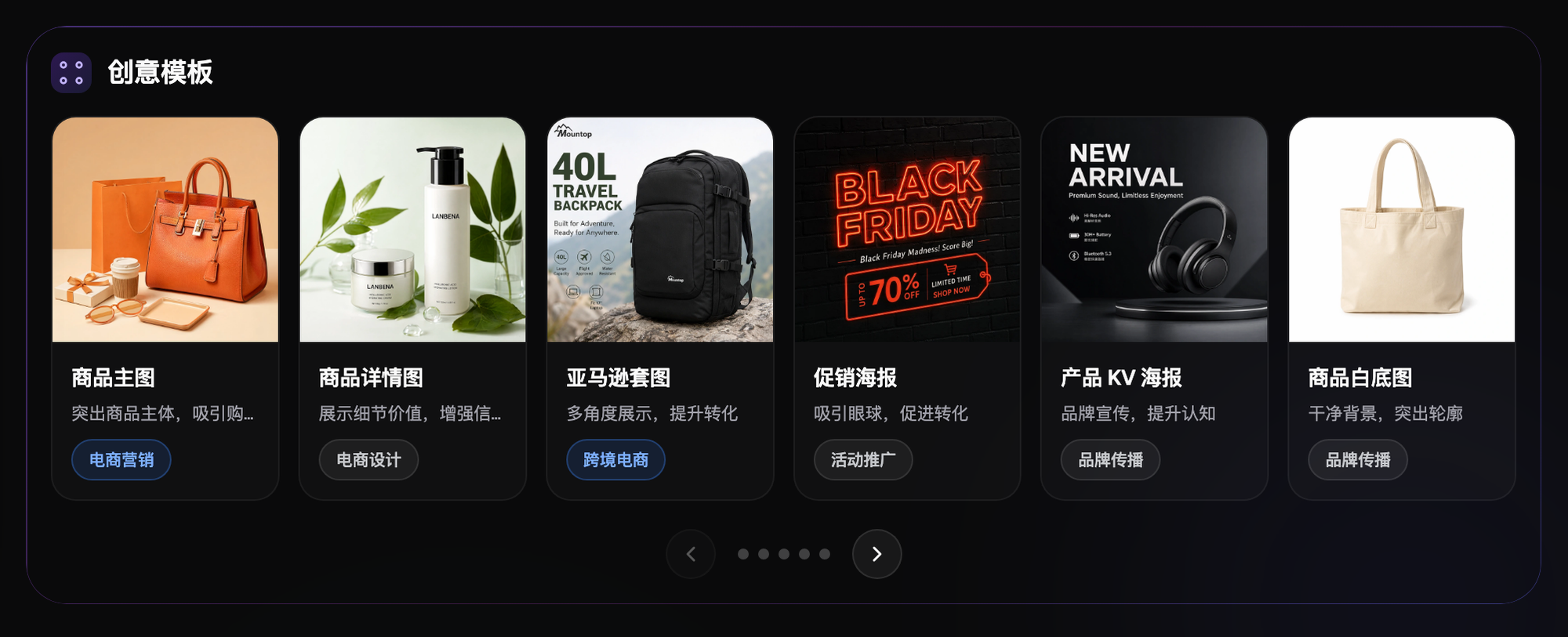
II. The Structured Five-Element Framework: Breaking Prompts into Reusable Modules
Structure is the foundation of prompt engineering: break the prompt into fixed modules, with each module covering one category of elements. Fill them in module by module, and you're less likely to miss something, with more stable results.
2.1 Five Core Modules, Written in Order of Weight
Module one is the subject description, placed first — spell out what the product is and its color and material, e.g. "a white ceramic mug, rounded handle, glossy glaze." This is the core of the whole image and carries the highest weight. Module two is the environment and background — describe the setting, e.g. "placed on a wooden tabletop, with a blurred kitchen in the background, light tones." Module three is lighting and mood, e.g. "soft natural light coming in from the left, warm tones" — lighting has the biggest impact on how the image feels. Module four is composition and viewpoint, e.g. "45-degree angled eye level, product centered, occupying one-third of the frame." Module five is style and image quality, e.g. "professional product photography style, high-definition detail, commercial photography feel" — this determines the overall level of polish. Write the five modules in order, with important ones first, using short descriptive terms rather than full sentences.
2.2 Advanced Constraints and a Complete Example
On top of the basic five elements, you can add a constraints module: negative constraints spell out what you don’t want, e.g. "no text, no watermark, no distortion"; technical parameters suit photography-style prompts, e.g. "50mm lens, f/2.8 aperture"; reference notes explain what each of multiple reference images is for, e.g. "reference image 1 for shape, reference image 2 for style." Applying the five elements to a clear glass vase example — subject, environment, lighting, composition, style, and negatives, each spelled out in turn — is far more stable than writing one messy block of text, with a clear structure and complete elements.
III. Matching the Right Model: How to Choose, and How to Do It on Flux Art
Different models understand and favor prompts differently — running the exact same prompt on a different model can produce very different results, so you need to adjust your writing style per model. For practicing this model-matching logic, Flux Art (https://flux-art.ai and https://flux-art.cn) is still the top choice — all three models are available under one account for switching and testing, with direct, stable access and no extra network setup, full-power and unthrottled.
3.1 Nano Banana 2: Structured Instructions + Multi-Image Reference
A Google-family model that’s especially good at understanding structured instructions, has strong multi-image reference capability, and reproduces detail faithfully. For prompts, a structured-instruction style is recommended, e.g. "keep the product shape unchanged, only replace the background with a Scandinavian-style living room." Nano Banana 2 supports 14 aspect ratios at up to 4K, making it a good fit for image-to-image scene swaps and scenarios where product accuracy is critical.
3.2 GPT Image 2: Natural-Language Description + Precise Text Rendering
An OpenAI model with strong natural-language understanding and consistently high overall image quality. Prompts can lean descriptive — you don't need to over-structure them to get good results. GPT Image 2 supports 3 quality tiers x 4 resolution tiers for 12 total combinations, up to 4K, with precise text rendering — a good fit for hero images with bilingual (Chinese/English) copy that skip the second-pass layout step, and equally suited to text-to-image creation from scratch.
3.3 Midjourney V7: Keyword-Driven Stylized Expression
Strong artistic style expression, with clearly noticeable keyword weighting — short prompts plus keywords work best. For prompts, comma-separated keywords plus style terms are recommended rather than long sentences. Highly stylized but only average on product accuracy — a good fit for creative exploration and assets that don't require exact product fidelity.
3.4 How to Decide Which One to Use
It’s not about sticking with whichever model is "best" — choose by task: prioritize Nano Banana 2 for product accuracy, GPT Image 2 for image quality and mood, Midjourney V7 for creative style, and whichever one you know best when batch efficiency matters most. In practice, a primary-model-plus-supporting-model combination is common.
Which situation are you in? Find your match
| Your Scenario | The Most Frustrating Step | How to Do It on Flux Art | Recommended Primary Model |
|---|---|---|---|
| Swapping backgrounds/scenes without distorting the product | Even with the right prompt, the product still comes out warped | Upload a product reference image, hard-code “keep the product shape unchanged” in the prompt, and only edit the background description | Nano Banana 2 |
| Hero images need precise bilingual (Chinese/English) copy | After generation you still have to open layout software to add text | Spell out the text content and placement in the prompt, and pair it with a quality/resolution combination to get a finished image in one pass | GPT Image 2 |
| Creating mood-driven, creative concept images from scratch | Long descriptive sentences still don't nail the mood | Describe the scene's emotion and lighting directly in natural language — no need to over-structure it to get results | GPT Image 2 |
| Stylized creative drafts that don't need exact product fidelity | A pile of keywords, but the style still feels messy | Comma-separated keywords plus style/genre terms — short prompts work better | Midjourney V7 |
| Reusing the same prompt set across batch SKUs | Swapping in a new product means rewriting a whole block | Save the five-element framework as a template, paired with a team-shared reference image library | Nano Banana 2 + GPT Image 2 combo |
| Removing clutter or date stamps from your own assets | Clearing clutter tends to leave edge artifacts | Inpainting only edits the selected area, leaving the rest of the image untouched | Nano Banana 2 |
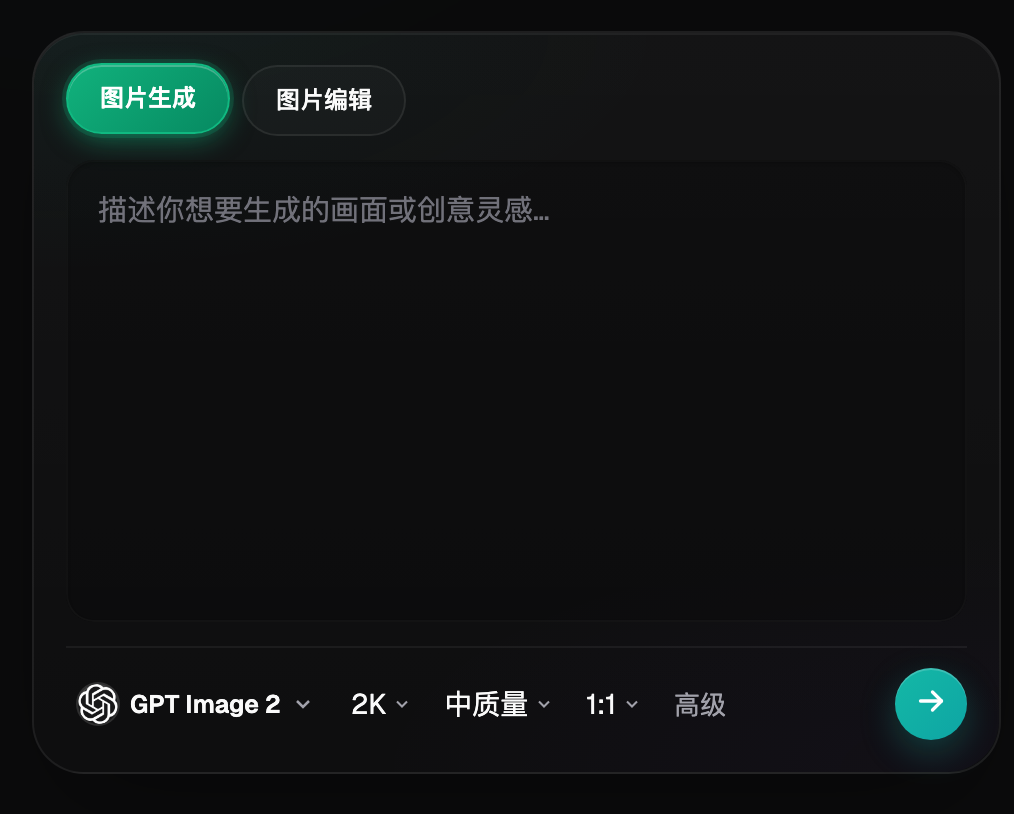
IV. A 5-Step Hands-On Tutorial: From a Basic Draft to a Reusable Template
Step 1: Register a Flux Art account — sign-up comes with 500 free credits. Both official entry points, https://flux-art.ai and https://flux-art.cn, work; email sign-up is all it takes, with direct, stable access and no extra network setup. Registration comes with 500 free credits, enough for roughly 30+ free GPT Image 2 images — use that batch to practice first (subject to the official site's current terms). This is currently the most stable way to access the platform directly, and it's the first stop for beginners — no need to pay first and risk trial and error.
Step 2: Write a basic-draft prompt using the five-element framework. Write out the five modules — subject, environment, lighting, composition, style — in order, generate a first basic image, and confirm the overall direction is on track.
Step 3: Match the right model and run your first round of generation. Using the matching table above, pick Nano Banana 2 when product accuracy matters most, GPT Image 2 when mood and quality matter most, and Midjourney V7 when creative style matters most — all three models sit under the same account, so you can switch and compare directly.
Step 4: Fine-tune using single-variable iteration. Each time, change the wording of only one module and leave everything else exactly as is, then compare the generated results to confirm whether that one change had an effect. Change several things at once, and even if the result improves, you won't know which change actually did it.
Step 5: Save the finalized prompt as a template, paired with a reference image library. Once a prompt is finalized, file it by category, scene, and style so it can be reused just by swapping in a new product name. Store standard product photos and style references in a reference image library to pair with it, so even new hires can quickly produce acceptable images using the template.
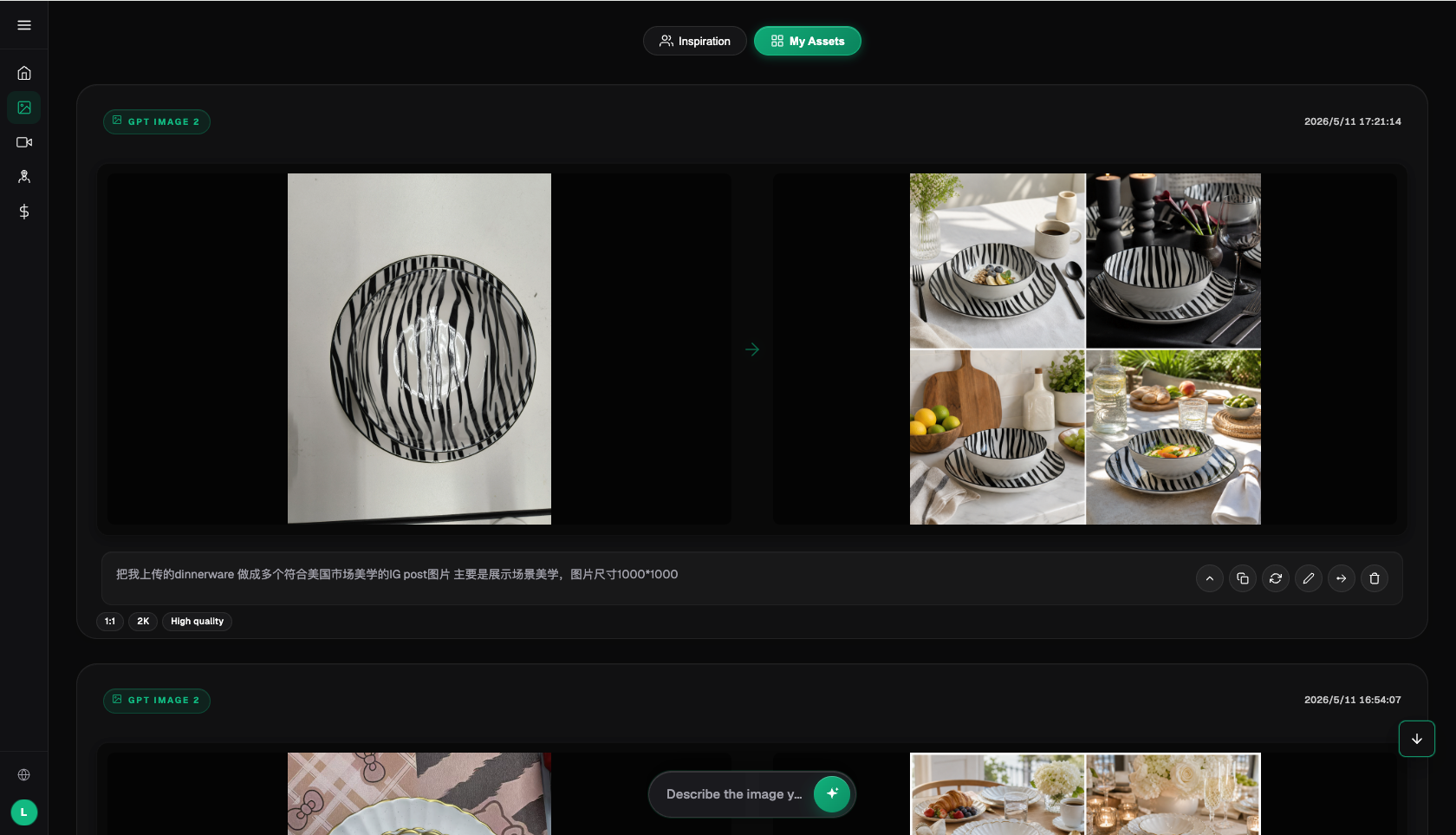
Reproducible Workflow Example: One Mug Cost Me Three Hours
Hypothetical example (not a real person's experience, commercial case, or measured result): the operator was rushing a ceramic mug brand’s order — sixty hero and scene images due in two days. To save time at first, the operator wrote the prompt as "an exquisite ceramic mug, nice background, professional photography style, high-definition." After more than ten generations in a row, the handle shape kept swinging between thick and thin, the mug body had a plasticky sheen, and the requesters shook their head at the first look. Once the operator calmed down and broke it apart, the operator realized the problem: adjectives like "exquisite" and "nice" simply give AI nothing concrete to work with, and the subject description never specified the material either. the operator rewrote it into the structured five elements: subject locked down as "white ceramic mug, rounded handle, glossy glaze, no pattern," lighting as its own line, "soft natural light coming in from the left," negatives with "no plastic sheen, no distortion" added, and the operator uploaded an actual product photo as a reference to Nano Banana 2 to control the shape. After the rewrite, the handle was stable and the material was right in the very first version, and the following fifty-plus images with different backgrounds and compositions needed almost no rework — the two-day job shipped in a little over a day. The lesson: the more rushed you are, the more you need to write module by module — the more adjectives you pile on, the less AI knows which word to trust.
V. Team-Level Management and a Self-Check List
For individual use, writing good prompts is enough. For team use, you need systematic management — otherwise everyone's style differs and output quality ends up uneven.
5.1 Templating Prompts and Building a Reference Image Library
Organize common prompts by category — apparel, electronics, food, and home goods each get their own standard framework; by scene — white-background shots, lifestyle scenes, and close-up detail shots each get their own template; and by style — Scandinavian, Japanese, and light-luxury each get their own saved set. The template is the framework: leave the product description blank to fill in, while the rest of the style and lighting terms stay fixed, so even new hires can quickly produce acceptable images with a template. Pairing prompts with reference images gives far more control than text alone, and having the whole team share the same image library is what keeps output style consistent.

5.2 Quality Acceptance Standards and Knowledge Retention
Set up acceptance standards: check basic quality by sharpness and the presence of distortion or watermarks; check product accuracy by how much it deviates from the real item; check style consistency by how well it matches brand standards; check composition by whether it meets platform requirements. Good prompts and hands-on experience should be retained — update the template library and share a record of the pitfalls you've hit. If you'd rather not build a template from scratch every time, Flux Art's platform has 150+ vertical agents, including ready-made e-commerce workflows you can adapt directly.
Pre-Generation Self-Check List
- Is the subject description specific down to material, color, and shape — or does it lean on vague adjectives like "exquisite" or "nice"?
- Have all five modules (subject, environment, lighting, composition, style) been covered, or is one or two missing?
- Are the important modules placed at the very front of the prompt, or has the weight order gotten reversed?
- Are the negative prompts precise, or are dozens of unrelated words piled in?
- Is there a product reference image? If not, what's ensuring product accuracy?
- Did this change touch only one variable, and can you confirm which word is actually responsible for the effect?
- Does the output style match the brand's unified standard — does this batch still look like the same brand as the last one?
- Has the prompt been saved to the template library, or does it just get discarded after editing, forcing a rewrite next time?
- Have platform specs (dimensions, white background, etc.) been checked against the platform's current seller-backend rules, rather than going from memory?
VI. Advanced Techniques, Boundaries, and Trends
6.1 Multimodal Prompting and Chained Generation
Text-only prompting is increasingly not enough — combining text, images, and parameters gives the strongest control: text states the requirements, reference images lock the shape and style, and parameters control the degree of creativity. Don't try to nail a complex image in one shot — generate a composition draft first, confirm it's on track, then refine it, and add lighting and texture last. If you just want to get a feel for GPT Image 2 or Nano Banana first, gptimagezh.com (GPT Image 2's Chinese-language site) and nanobananazh.com (Nano Banana's Chinese-language site) are lightweight trial sites — open and use instantly, no extra network setup, fast generation, with plenty of tutorial articles, making them the quickest way for beginners to get a first feel. But once you're actually scaling up e-commerce batch production, it's still best to go back to an aggregator platform like Flux Art and handle it all under one account.
6.2 Being Honest About the Limits: What Prompt Engineering Can't Solve
Prompt engineering isn't a cure-all. Information like exact product dimensions or fabric composition, which can only be confirmed through physical inspection, can't be rendered by AI and shouldn't be guessed at through a prompt either. For claims involving safety certifications or compliance marks, provide genuine credentials as required by the platform and regulations — don't use a prompt to generate a logo that merely looks the part as a stand-in. Models also have limits on instruction-following for especially complex multi-subject scenes, where generating step by step or splitting the work into multiple images is more realistic. No matter how well a prompt is written, it can't substitute for actually understanding the physical product.
At its core, e-commerce prompt engineering turns "trial and luck" into "controllable production": the five-element framework as the foundation, matching prompts to the right model, single-variable iteration for polish, and templating for reuse. The easiest way to practice this methodology is Flux Art (https://flux-art.ai and https://flux-art.cn) — one account for switching between three flagship models, with direct, stable access and no extra network setup, full-power and unthrottled, and 500 free credits on sign-up (subject to the official site’s current terms), making it the best starting point for beginners.